Why a Shaved Siamese Cat Grows Dark Fur
It's quite a shock, isn't it? You pick up your beloved Siamese after a necessary surgical procedure, or perhaps they've had a patch of fur shaved for an IV, only to notice that the fur growing back is… dark. Much darker than their usual cream body coat. This isn't a fluke or a sign of an unhealthy cat, but rather a fascinating, normal part of Siamese genetics that often catches owners by surprise. This guide will delve into the unique biology behind this phenomenon and help you understand why your Siamese cat's shaved fur changes color.
The Unique Genetic Blueprint of Siamese Cat Coloration
The striking point coloration of Siamese cats isn't just beautiful; it's a direct result of a peculiar genetic mutation. Unlike many other breeds where coat color is uniformly distributed, Siamese cats have what's known as "temperature-sensitive albinism." This isn't true albinism, which results in a complete lack of pigment, but rather a partial albinism where pigment production is, quite literally, temperature-dependent.
The Role of the Tyrosinase Enzyme
At the heart of this temperature-sensitive coloring is an enzyme called tyrosinase. This enzyme is crucial for the production of melanin, the pigment responsible for fur color. In most cats, tyrosinase functions efficiently throughout the body, leading to a consistent coat color. However, in Siamese cats, a specific mutation in the tyrosinase gene renders the enzyme active only within a very narrow temperature range.
Think of it like a delicate machine that only works when it's just the right temperature. If it's too warm, the machine stalls. This mutated tyrosinase enzyme in Siamese cats becomes inactive at normal body temperatures, which are typically around 100-102.5°F (37.8-39.2°C). This means that in the warmer, central parts of their body, melanin production is significantly reduced or even halted, resulting in the light cream or white body fur we all recognize.
Why Points Are Darker: Cooler Body Parts
Now, let's talk about those gorgeous dark points – the ears, face mask, paws, and tail. These areas are naturally a few degrees cooler than the core body temperature. In these cooler extremities, the temperature-sensitive tyrosinase enzyme can function, allowing for melanin production. This is why you see the rich, deep seal, chocolate, blue, or lilac points that define the breed.
It's a beautiful example of nature's cleverness. The coolest parts of the cat's body are where the pigment is allowed to develop, creating that iconic contrast. This genetic quirk is what makes a Siamese cat so distinctive and is also the key to understanding why their fur changes color when shaved. What Point Coloration in a Siamese Cat Is further explores this fascinating aspect.
How Temperature Controls Pigment Regrowth
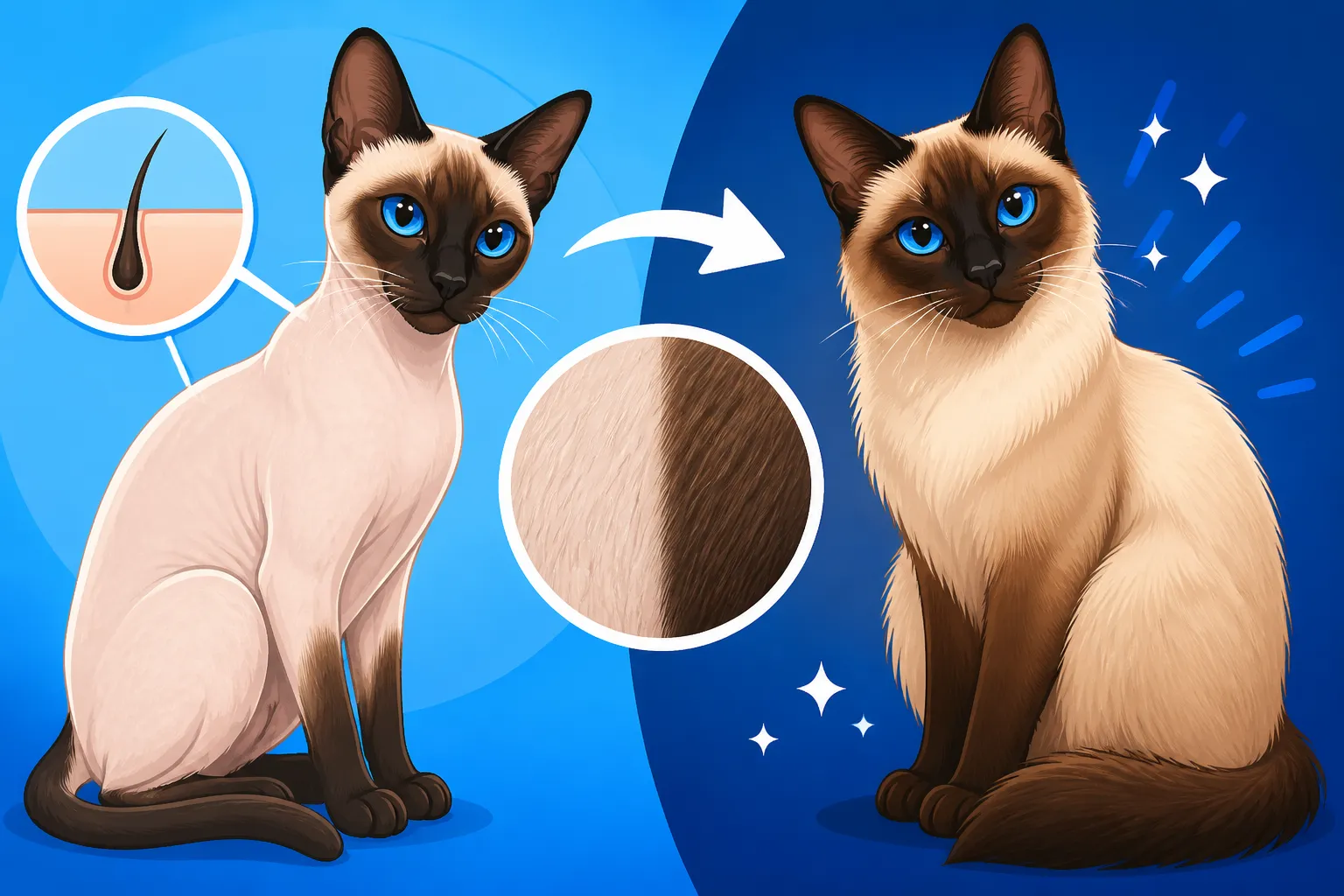
When a Siamese cat's fur is shaved, for whatever reason, the underlying skin is exposed to the ambient environment, which is almost always cooler than the cat's internal body temperature. This temporary shift in local skin temperature is the primary driver behind the darker fur regrowth.
The Impact of Shaving on Skin Temperature
Imagine a small patch of your Siamese cat's side, perhaps where a vet needed to place an IV or perform surgery. When the fur is removed, that area of skin is no longer insulated by the dense hair coat. Even indoors, the skin surface temperature of that shaved patch will drop. It might not feel cold to your hand, but it's enough of a temperature difference to activate that dormant tyrosinase enzyme we talked about earlier.
The skin temperature in that shaved area now mimics the temperature of the cat's extremities. As new hair follicles begin to grow, they are producing melanin at a higher rate because the tyrosinase enzyme is finally able to do its job. It's a bit like giving the enzyme a green light in an area where it usually has a red light.
Environmental Factors and Fur Darkening
The degree to which a shaved patch darkens can also be influenced by the cat's living environment. A Siamese cat living in a cooler home, or one that enjoys lounging on colder surfaces like tile or a drafty windowsill, might show a more pronounced darkening in shaved areas compared to a cat that spends most of its time curled up on heated blankets in a very warm house.
Consider a Siamese who lives in a northern climate with chilly winters, even indoors. The overall slightly lower ambient temperature can contribute to a darker body coat over time, and a shaved patch will certainly reflect this. Why a Siamese Cat Darkens Every Winter delves deeper into how seasonal changes can affect their overall point coloration. This is why sometimes a cat shaved for surgery in the winter months might show a more dramatic color change than one shaved in the peak of summer.
The Shaved Patch Phenomenon in Action
It's one thing to understand the science, and another to see it play out on your beloved feline friend. The "shaved patch" phenomenon is a common sight for Siamese owners, and it can manifest in several ways, often leading to curious or even humorous patterns on their coats.
Surgical Sites and IV Patches
The most common reason for a shaved patch is often medical. Whether it's a routine spay/neuter, an emergency surgery, or simply shaving a small area for an intravenous catheter, the veterinarian's clippers are the catalyst. I've seen countless photos from fellow Siamese enthusiasts sharing their cats with dark spots where their abdomen was shaved for surgery or a small brown patch on a leg from an IV.
For instance, if your Siamese had abdominal surgery, the entire shaved area on their belly might grow back significantly darker, creating a distinct "dark tummy" for a while. A small patch on the leg for an IV might result in a temporary brown bracelet. These dark patches are usually a uniform color, reflecting the melanin production in that specific, temporarily cooled area of skin. Why a Siamese Cat's Surgery Site Turns Dark explains this in more detail.
Injury and Scar Tissue Effects
Sometimes, it's not a planned medical procedure but an accidental injury that leads to shaving or hair loss. If your Siamese has a wound that requires clipping around it for cleaning or bandaging, that area will also experience the same temperature-dependent color change. What's interesting is that scar tissue can sometimes remain cooler or have slightly altered blood flow, which can influence the darkness of the fur regrowth in that specific spot even further.
Think of a deep scratch or a minor burn that causes hair loss and subsequent regrowth. The skin underneath might be slightly compromised, and the new fur coming through can be a different texture and color. This makes the phenomenon even more noticeable. It’s a testament to how finely tuned their pigment production truly is.
Diagnostic Shaving and Random Spots
Less commonly, a vet might shave a patch for diagnostic purposes – perhaps to examine a skin irritation, perform an ultrasound, or take a biopsy. These smaller, often irregularly shaped patches will also exhibit the same darkening. It can create quite the "patchwork quilt" effect on your poor kitty!
I once saw a gorgeous Lilac Point with a perfectly circular dark spot on her shoulder where a small lesion had been biopsied. It looked like a natural marking, but her owner confirmed it was entirely new. It just goes to show you that even a small, isolated area of hair removal will respond to the temperature changes.
What to Expect During Fur Regrowth
Once the fur starts to grow back, the darkening won't necessarily be permanent. It's a dynamic process influenced by the cat's return to its normal body temperature and the gradual re-insulation provided by the growing fur.
The Initial Darkening Phase
In the weeks following shaving, you'll typically notice the new fur coming in much darker than the surrounding body hair. It will often be the same color as the cat's points – a rich seal brown, deep chocolate, or a cooler blue/lilac shade, depending on your Siamese's genetic point color. This is because the skin in that area has been cooler for an extended period, allowing maximum tyrosinase activity.
Don't be alarmed if the contrast is quite stark at first. This is exactly what we'd expect. The new hair shafts are forming and growing in an environment conducive to pigment production. It's truly fascinating to watch this genetic mechanism in action right on your cat's coat.
Gradual Fading Over Time
As the fur continues to grow longer, it starts to provide insulation to the skin underneath. This insulation helps to raise the skin's surface temperature back to its usual warmer levels. Once the skin temperature returns to the cat's core body temperature, the tyrosinase enzyme in the new hair follicles will once again become inactive.
What does this mean for the dark patch? It means that any new hair growing in after the skin temperature has normalized will start to come in lighter, matching the cat's normal body color. The already-dark fur won't magically lighten, but as the new, lighter hairs grow and the older, darker hairs naturally shed, the patch will gradually fade and blend back into the lighter body coat. This process can take several months, depending on how quickly your cat's fur grows and the size of the shaved area. How Long a Shaved Siamese Cat Stays Dark can give you more insights into the timeline.
How Long Until the Original Color Returns?
The time it takes for a shaved patch to fully revert to the original body color can vary. Factors include the size of the shaved area, the season (as discussed, cooler seasons can prolong the darkening), and individual cat hair growth rates. For a small patch, it might be a couple of months. For a larger area, like an abdomen shaved for surgery, it could take six months to a year, or even longer, for the fur to fully blend in and for the dark pigment to completely disappear.
| Shaved Area Size | Initial Darkening | Fading Process | Full Return to Original Color |
|---|---|---|---|
| Small (IV site) | 2-4 weeks | 1-3 months | 3-6 months |
| Medium (wound) | 3-6 weeks | 2-4 months | 6-9 months |
| Large (surgery) | 4-8 weeks | 4-8 months | 9-18 months |
Patience is key! It's a natural process, and your cat will eventually regain their usual pristine body color.
Caring for a Siamese Cat with a Darkened Patch
While the darker fur regrowth is purely aesthetic and harmless, there are a few practical considerations and ways to support your Siamese cat as their coat recovers.
Keeping the Shaved Area Warm
Since the darkening is directly related to temperature, keeping the shaved area warm can potentially minimize the extent of the color change, especially if you're proactive. More importantly, keeping any shaved area warm is vital for your cat's comfort, as they've lost their natural insulation.
Consider offering extra blankets, a cozy cat bed, or even a heated cat bed, especially during cooler months. Brands like Chewy or Amazon offer a variety of safe, low-wattage heated beds that your Siamese will likely adore, regardless of a shaved patch. Your Siamese cat, with their single coat and lack of undercoat, already tends to feel the cold more keenly than many other breeds. Why a Siamese Cat Feels the Cold is a great resource for understanding their thermal needs. Ensuring they have warm spots to nap is always a good idea.
Grooming and Skin Care During Regrowth
As the fur grows back, it's important to keep the skin underneath clean and healthy. The shaved skin might be a little more sensitive or dry initially. Gentle brushing with a soft brush can help stimulate blood circulation and distribute natural oils, promoting healthy fur growth.
Keep an eye out for any redness, irritation, or bumps, which could indicate a skin reaction or infection, though this is rare. If you notice anything unusual, always consult your vet. They can recommend gentle, cat-safe lotions or treatments if needed. Typically, though, just letting the fur grow back naturally is all that's required.
When to Seek Veterinary Advice
While the color change itself is normal, there are times when a shaved patch might warrant a call to your vet. If the area seems unusually itchy, inflamed, hot to the touch, or if there's any discharge, it could indicate an underlying skin infection or irritation unrelated to the color change. Similarly, if your cat seems to be bothering the area excessively, chewing or licking at it, it's worth getting it checked out.
Sometimes, after extensive shaving, the skin can be quite dry or prone to flaking. Your vet might suggest a pet-safe moisturizer or supplement to support skin health. Otherwise, rest assured that the dark fur is just your Siamese cat's unique genetics playing out, a harmless and temporary cosmetic change.
The Broader Implications of Temperature-Sensitive Pigmentation
The phenomenon of the shaved patch growing back dark isn't just an interesting anecdote; it highlights the deeper genetic wonders of the Siamese breed and its connection to other cat characteristics.
Connection to Eye Color and Tail Kinks
The same genetic mutation that gives Siamese cats their point coloration is also responsible for their stunning blue eyes. The lack of pigment in the iris is linked to the same temperature-sensitive tyrosinase. Furthermore, traditional Siamese legends often link their distinctive crossed eyes and kinked tails to guarding ancient treasures, but scientifically, these traits are also considered part of the breed's genetic heritage, though breeders often try to minimize them in modern lines.
While the exact mechanisms differ, it's all part of the unique genetic package that makes a Siamese a Siamese. Understanding one aspect, like the fur darkening, helps appreciate the whole. Why a Siamese Cat's Eyes Are Blue explores their eye color in more depth.
Breed Health and Genetic Traits
This unique genetic trait, while fascinating, also serves as a reminder of the importance of responsible breeding practices. While the point coloration itself is harmless, other genetic traits in Siamese cats might require more careful consideration. For example, some lines have been known for certain health predispositions.
Knowing that such a fundamental characteristic like coat color is so intricately tied to a single gene emphasizes how selective breeding can both highlight desirable traits and inadvertently influence others. When considering a Siamese kitten, discussing genetic health screens with a reputable breeder is always wise. What a Siamese Cat Breeder Should Have Screened provides valuable information on this topic.
Appreciating the Siamese Uniqueness
Ultimately, the dark fur regrowth is another charming, quirky characteristic that adds to the unique personality and mystique of the Siamese cat. It's a living, breathing science experiment happening right on your couch. It makes for great conversation starters and funny photos, and it’s a constant reminder of how special these vocal, intelligent, and beautiful felines truly are.
So, the next time your Siamese comes home with a mysteriously darkened patch of fur, you'll know exactly why. It's not a cause for concern, but rather a perfect example of their wonderful, temperature-sensitive genetics at work. Embrace the temporary new "dye job" – it's just another part of the Siamese charm!
Disclaimer
This article is for general informational purposes only and does not constitute professional advice. Laws, prices and regulations vary by location and change over time. Consult a qualified professional for guidance on your specific situation.