Whether Early Weaning Causes Siamese Cat Wool Sucking
Early weaning and genetics drive wool sucking behavior in Siamese cats, explaining this perplexing feline habit and offering practical support steps.
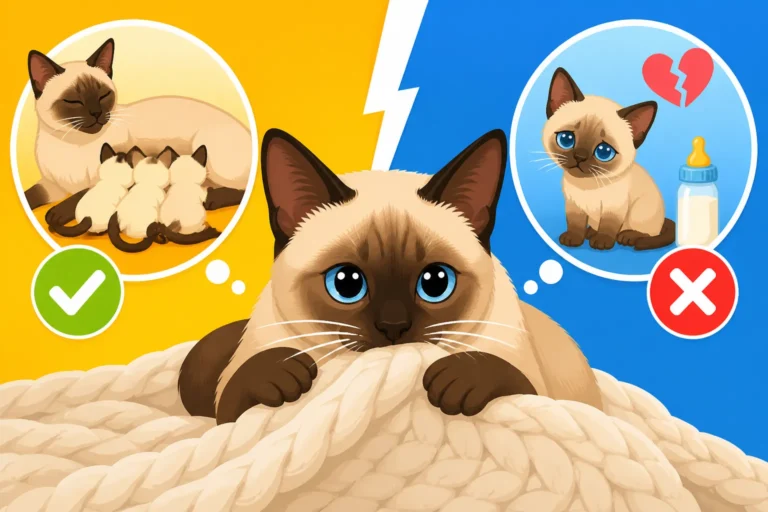
Early weaning and genetics drive wool sucking behavior in Siamese cats, explaining this perplexing feline habit and offering practical support steps.
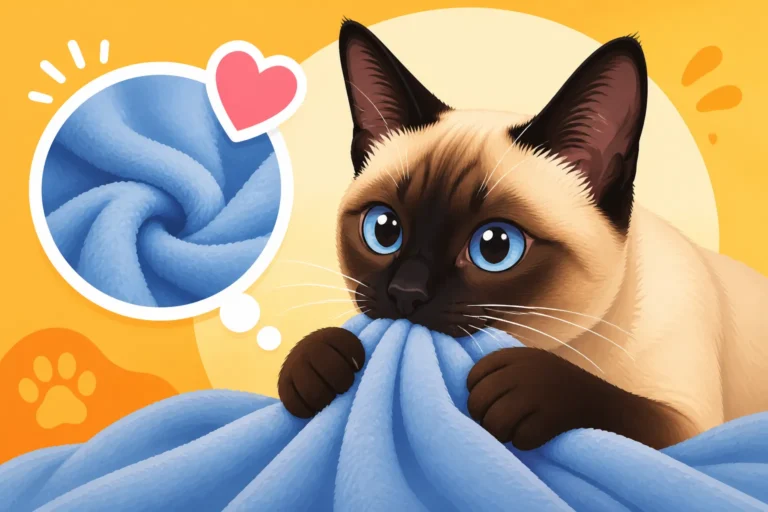
Siamese cat wool sucking is a specific form of pica linked to a genetic predisposition in the breed that causes repetitive suckling.
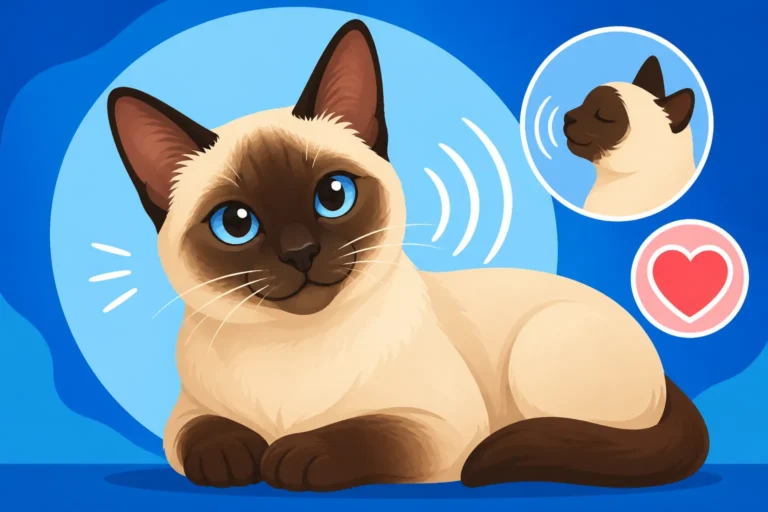
Siamese cat purrs produce deep, resonant vibrations and distinct tones that express happiness or demand attention from owners.
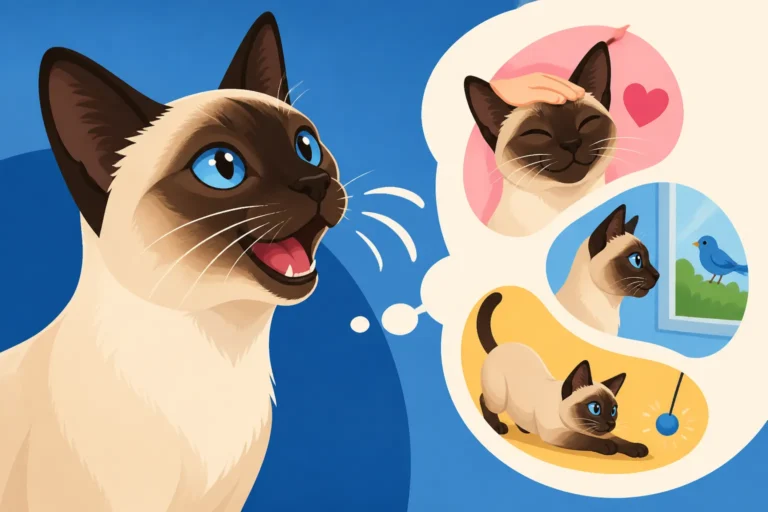
Siamese cats chirp, trill, meow, purr and yowl, and the yowl can sound like a crying baby, so each sound carries its own intention.

Siamese cat chirps are short, high-pitched trilling sounds that express excitement, observations of birds, and invitations to play.
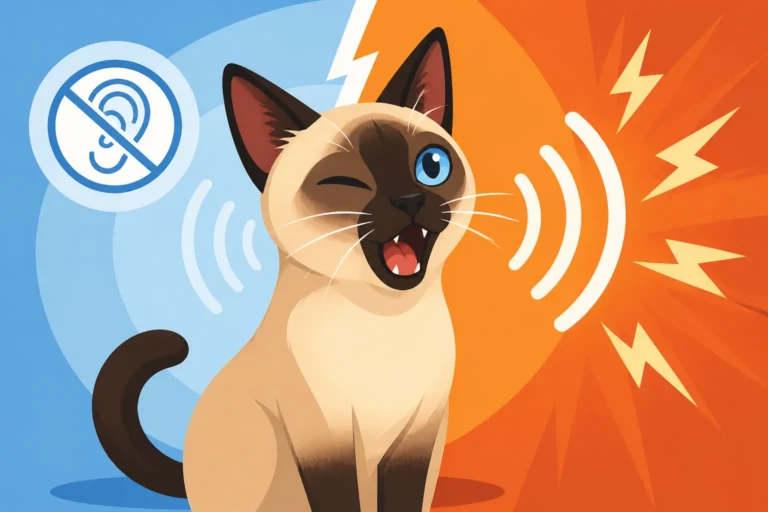
Deaf Siamese cats often become unmodulated and louder because they lose auditory feedback and cannot hear their own vocal output.
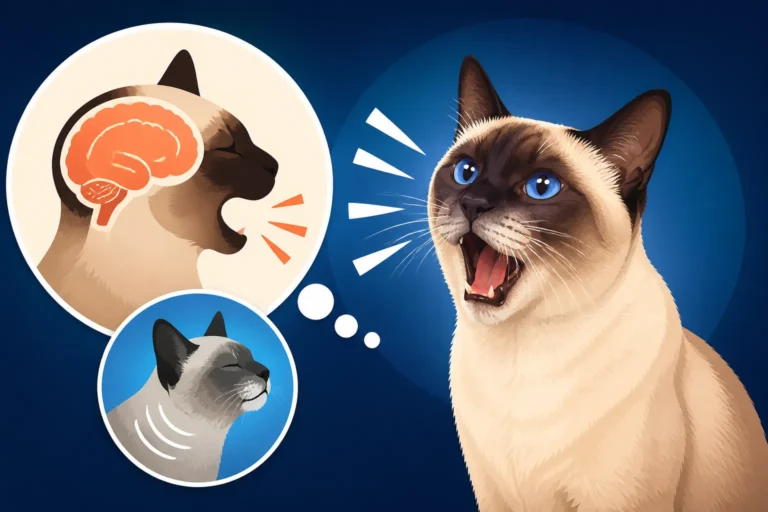
Aging Siamese cats yowl more because feline cognitive dysfunction, sensory loss, and anxiety create profound disorientation and distress.
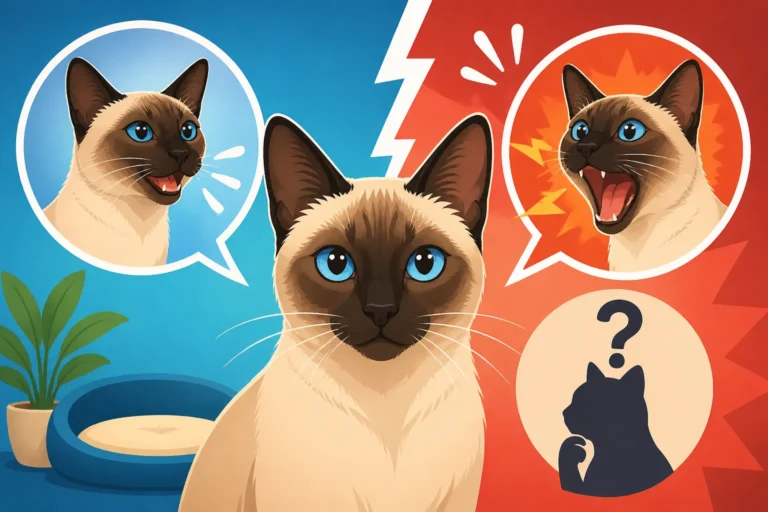
A sudden voice change in a Siamese cat can signal throat irritation, inflammation, or mild infection requiring attention.
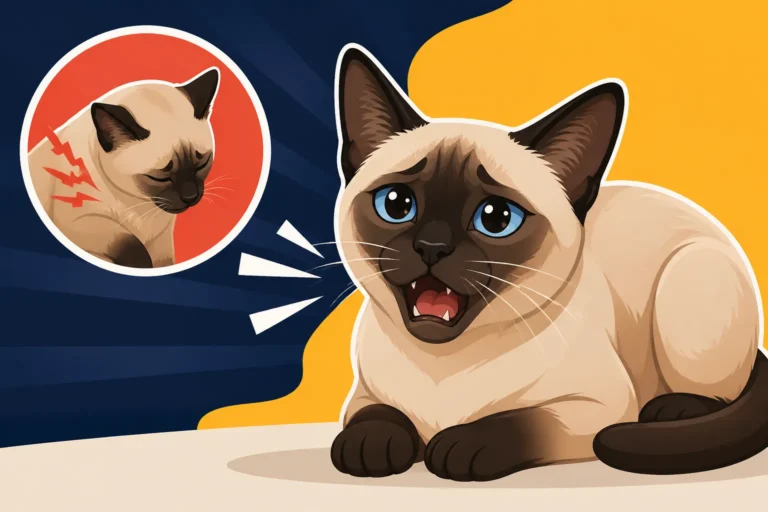
Siamese cat vocalizations help owners identify pain by recognizing uncharacteristic cries, sudden changes, and distress signals.
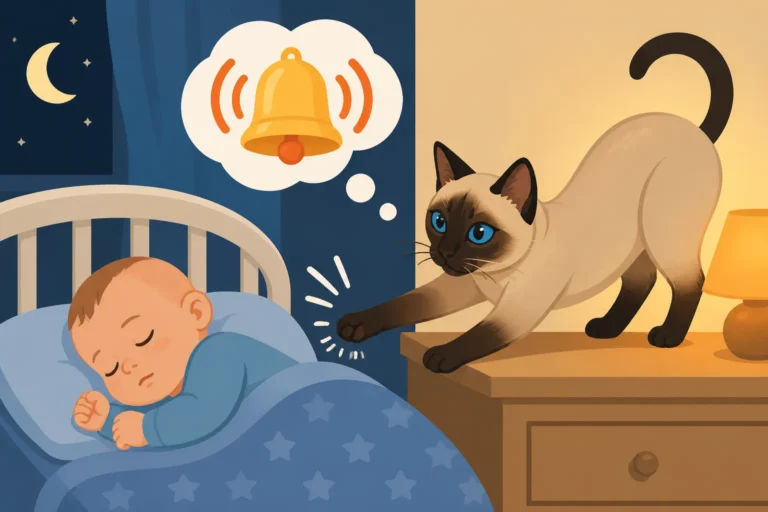
Siamese cat vocalizations and high energy levels near a sleeping baby create challenges, but practical advice helps cats adjust.