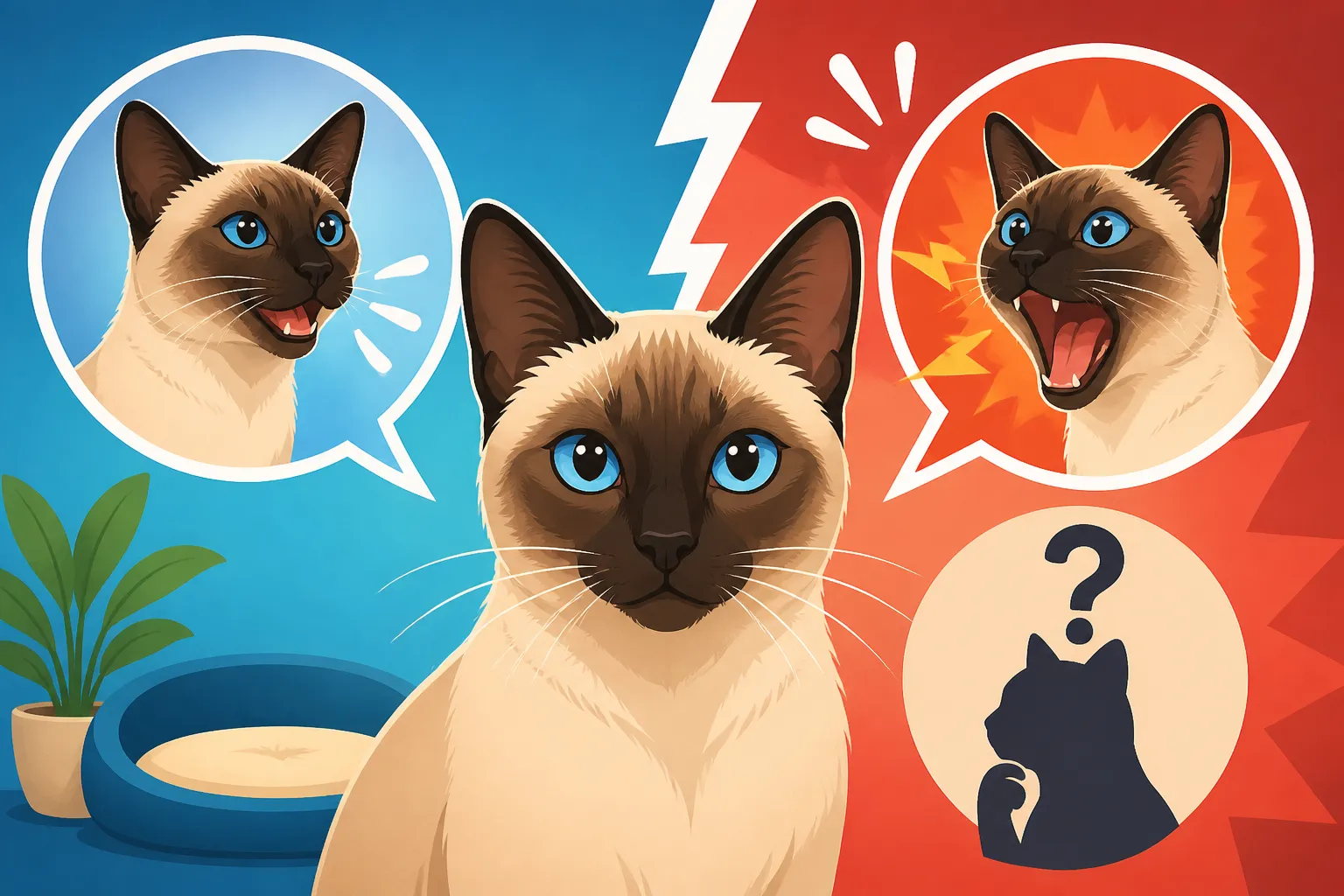
Whether a Sudden Change in a Siamese Cat’s Voice Matters
As a Siamese cat parent, you know that their voice isn't just a sound; it's a conversation, a demand, a declaration of love, and sometimes, a true opera. So, when that familiar, distinctive vocalization suddenly changes—whether it becomes hoarse, softer, more frantic, or entirely different in pitch—it's incredibly unsettling. You might wonder if you're overthinking it, or if this shift is actually a subtle cry for help. It’s a valid concern, because a sudden change in your Siamese cat's voice often carries a significant message about their health and well-being, and understanding what those changes mean is crucial for their care.
The Symphony of a Siamese: Understanding Their Normal Vocal Range
Siamese cats are legendary for their vocal prowess, and it's one of the defining characteristics that makes them so beloved. If you've ever lived with one, you know "quiet" isn't usually in their vocabulary! They are renowned for their wide range of sounds, often described as anything from a baby crying to a full-blown argument, and yes, that distinctive "Meezer yowl." This isn't just random noise; it's how they communicate, express their feelings, and engage with their human companions.
Their vocal cords are truly a marvel, allowing them to produce a spectrum of sounds from soft trills and chirps to piercing yowls that can carry through an entire house. This conversational nature is why many people fall in love with the breed. They demand attention, ask for food, comment on your activities, and express displeasure with a vocabulary that seems endless. If you're new to the breed, it might feel like they never stop talking, and you might even find yourself having full conversations with them. It’s their way of being part of your life, an active participant rather than just a quiet observer. However, this very characteristic makes any deviation from their norm even more noticeable and, frankly, worrying. You know their normal repertoire, so when the performance changes, you can't help but pay attention. For more on their typical vocal habits, you might find How Loud a Siamese Cat Is or Why a Siamese Cat Meows So Much helpful reads.
When the Melody Shifts: Types of Voice Changes and What They Might Indicate
When your typically talkative Siamese suddenly sounds different, it's not something to dismiss. These changes aren't just quirks; they can be important signals. Pay close attention to the nature of the change, as different alterations can point to different underlying issues.
Hoarseness or Aphonia: The Disappearing Act
Imagine trying to talk when you have a terrible sore throat—that’s often what hoarseness feels like for your cat. If your Siamese's powerful meow is suddenly weak, raspy, or even entirely gone (a condition called aphonia), it’s a strong indicator of inflammation or irritation in their throat or vocal cords. This might manifest as a struggle to produce sound, or the sound might come out as a whisper instead of their usual robust call. You might notice them opening their mouth to meow, but only a faint puff of air comes out, or a very rough, gravelly sound.
This change is almost always due to some sort of local irritation. Think about what might cause a human to lose their voice: a cold, yelling too much, or even an allergic reaction. For cats, the principles are similar. They might have inhaled something irritating, have a minor injury to the throat, or, more commonly, be battling a mild infection. This isn't usually an emergency unless accompanied by other severe symptoms, but it definitely warrants a closer look and likely a vet visit if it persists for more than a day or two.
Muffled or Quieter Voice: A Subtle Shift in Tone
Sometimes, it's not hoarseness, but a general quieting or muffling of their voice. Their meows might seem softer, less resonant, or they might simply be less inclined to vocalize at all. This subtle shift can be harder to pinpoint than outright hoarseness, but it’s no less important. A muffled voice suggests that something is interfering with the normal vibration of their vocal cords or the passage of air. This could be due to swelling in the throat area, congestion in their nasal passages, or even pain in the mouth or jaw that makes opening their mouth wide or vocalizing uncomfortable.
A quieter demeanor and less vocalization, especially in a breed as chatty as the Siamese, can also be a more general sign of feeling unwell. Cats are masters at hiding pain and illness, so a decrease in a normal, prominent behavior like vocalization should always be taken seriously. If your cat who usually greets you at the door with a full-throated "hello" now just offers a silent head-nuzzle, that's a clue. It might not be dramatic, but it’s a departure from their usual exuberance and warrants investigation.
Increased Volume or Different Pitch: The Uncharacteristic Crescendo
Conversely, some Siamese cats might suddenly become more vocal, or their voice might change in pitch, perhaps becoming higher-pitched, more urgent, or even more mournful. This can be one of the most distressing changes for an owner, particularly if it happens at unusual times, like in the middle of the night. Why a Siamese Cat Yowls in the Middle of the Night explores some reasons for nighttime vocalizations, but a sudden increase across the board is different. A louder, more insistent meow or yowl can be a sign of pain or significant discomfort, as they try to alert you to their distress. Think of it as an emergency siren, rather than a conversational tone.
Sometimes, an unusually high-pitched cry can indicate acute pain or even fear. Other times, an older cat might develop a louder, more frequent vocalization due to cognitive dysfunction, essentially feline dementia, where they become disoriented and call out for reassurance. Certain medical conditions, like hyperthyroidism, can also lead to increased vocalization due to changes in metabolism and anxiety. It’s easy to dismiss persistent meowing as "just a Siamese being a Siamese," but when it's a sudden change from their own baseline, you absolutely must consider underlying issues.
Unmasking the Causes: Medical Reasons for a Vocal Shift
While sometimes a sudden vocal change can be attributed to something simple like having a hairball caught in their throat, more often than not, it points to a medical concern that needs your attention. The sensitive nature of a Siamese cat's throat and respiratory system means they can be prone to certain issues.
Upper Respiratory Infections (URIs)
Just like humans get colds, cats can too. Upper respiratory infections, often caused by viruses like feline herpesvirus or calicivirus, are one of the most common culprits behind a hoarse or muffled voice. These infections can inflame the nasal passages, throat, and larynx (voice box), making vocalization painful or difficult. You might notice other symptoms such as sneezing, runny eyes, a snotty nose, or a reduced appetite. Imagine trying to talk when your throat is scratchy and your nose is completely blocked – it's tough!
Even without a full-blown cold, simple environmental irritants can trigger mild inflammation. Dust from certain cat litters, strong cleaning chemicals, or even secondhand smoke can irritate their delicate respiratory system, leading to a temporary change in voice. Ensuring good air quality in your home, perhaps with an air purifier (you can find many options on Amazon), can sometimes help prevent these issues.
Laryngitis or Pharyngitis
Laryngitis, inflammation of the larynx, or pharyngitis, inflammation of the pharynx (throat), can occur independently or as part of a URI. When the vocal cords themselves become swollen, they can't vibrate normally, leading to hoarseness or even a complete loss of voice. Sometimes, excessive vocalization, perhaps due to stress or trying to communicate something urgent, can even lead to self-induced laryngitis, much like a human singer overusing their voice.
A cat might develop laryngitis from vomiting, which irritates the throat, or from something foreign getting stuck briefly. While often not life-threatening, it's uncomfortable for your cat and needs veterinary assessment to rule out more serious causes and to get them on the path to recovery.
Asthma and Other Respiratory Issues
Siamese cats, unfortunately, can be prone to Asthma in a Siamese Cat. If your cat's vocal change is accompanied by coughing, wheezing, or difficulty breathing, asthma or another lower respiratory condition could be the cause. An asthma attack or chronic inflammation in the airways can make it challenging to produce clear sounds, leading to a raspy or quieter voice as they struggle for breath. The effort of breathing might take precedence over vocalizing, or the inflamed airways simply can't support their usual strong meow.
It's crucial to differentiate between a simple hairball cough and an asthmatic cough; Whether a Siamese Cat's Cough Is Asthma or a Hairball offers more insight. If you suspect asthma, prompt veterinary attention is vital. Your vet can provide treatment options, which may include inhalers (often prescribed with a special spacer device found on Amazon), to manage their condition.
Dental Disease
It might seem unrelated, but severe Dental Disease in a Siamese Cat or Gingivitis in a Siamese Cat can cause pain that radiates to the jaw and throat. If your cat is experiencing significant oral pain, they might be reluctant to open their mouth widely to vocalize, leading to a softer or muffled meow. Sometimes, the pain might even make them more irritable and prone to an anxious, louder vocalization.
Look for other signs of dental issues like bad breath, drooling, pawing at the mouth, or a reluctance to eat hard food. Untreated dental problems can lead to serious health complications, so if you suspect this is contributing to their vocal changes, a dental check-up is in order.
Thyroid Issues (Hyperthyroidism)
In older Siamese cats, hyperthyroidism is a relatively common condition. An overactive thyroid gland can lead to a host of symptoms, including increased appetite with weight loss, hyperactivity, and, yes, often an increase in vocalization. This might present as a more frequent, louder, or even more insistent meow or yowl. Their increased metabolic rate can make them anxious and restless, which they often express through their voice.
If your senior Siamese has suddenly become much more vocal, especially at night, and is losing weight despite eating well, hyperthyroidism should definitely be on the differential list. Your vet can easily diagnose this with a simple blood test. Hyperthyroidism in an Older Siamese Cat provides more details on this condition.
Growths or Tumors
While less common, any growth or tumor in the throat, larynx, or chest can physically impede vocal cord function or put pressure on the airways, leading to a change in voice. Lymphoma, for instance, can occur in the mediastinum (the area between the lungs), leading to respiratory distress and voice changes. Mediastinal Lymphoma Signs in a Siamese Cat highlights what to look for. These are serious conditions, and any persistent vocal change, especially if accompanied by difficulty swallowing, breathing, or a palpable lump, requires immediate veterinary investigation.
Pain and Discomfort
Sometimes, a vocal change simply reflects general pain or discomfort from any underlying issue. A cat in pain might become quieter and withdraw, or conversely, might become more vocal, using their cries to signal distress. If your cat is usually very talkative but suddenly goes quiet, it could be a sign they’re hiding pain. Or, if they suddenly start yowling more frequently and insistently, especially when being handled, it could be a plea for help. When a Siamese Cat's Meowing Means Pain delves deeper into discerning painful vocalizations.
Age-Related Changes
As Siamese cats enter their senior years, their bodies undergo natural changes, and their voice is no exception. Just like human voices can change with age, a senior Siamese might experience weakening of the vocal cords, leading to a softer, more gravelly, or less controlled meow. Cognitive dysfunction, often referred to as feline dementia, is another factor in older cats. They can become disoriented, especially at night, leading to increased and often mournful vocalizations as they search for their human or simply express confusion. Why an Old Siamese Cat Yowls More touches upon these aspects of aging.
Your Next Steps: When to Call the Vet and What to Expect
If you notice a sudden and persistent change in your Siamese cat's voice, it's always best to err on the side of caution and consult your veterinarian. Given their stoic nature, a vocal change is often one of the more overt signs that something is amiss, especially with such a famously talkative breed.
When to Seek Immediate Veterinary Attention
You should contact your vet without delay if the voice change is accompanied by any of the following:
- Difficulty breathing: Open-mouth breathing, gasping, wheezing, or labored chest movements. This is an emergency.
- Persistent coughing or gagging: Especially if they seem to be struggling or trying to clear something.
- Sudden lethargy or weakness: A significant drop in energy levels.
- Loss of appetite or refusal to drink.
- Vomiting or diarrhea.
- Swelling around the face, neck, or throat.
- Drooling or pawing at the mouth.
- Visible pain or discomfort when touched or moving.
- Any suspicion of an ingested foreign object or toxin.
Even if none of these acute symptoms are present, if the voice change lasts for more than 24-48 hours, a vet visit is warranted.
What to Tell Your Veterinarian
When you call or visit the vet, be prepared to provide as much detail as possible. This information is invaluable for diagnosis.
- When did the change start? Was it gradual or sudden?
- What exactly does the voice sound like now? (Hoarse, quiet, louder, different pitch?)
- Are there any other symptoms? (Sneezing, coughing, discharge from eyes/nose, changes in appetite, litter box habits, energy levels, behavior?)
- Has anything changed in the household? (New pets, new people, new cleaning products, recent stressful events?)
- What is your cat's normal vocalization like? This helps the vet understand the baseline.
- Are they eating and drinking normally?
The Veterinary Examination and Diagnostics
Your vet will perform a thorough physical examination, paying close attention to your cat's mouth, throat, and respiratory system. They might gently palpate the neck area to check for swelling or pain.
Depending on their findings, they may recommend further diagnostic tests, such as:
- Bloodwork: This can help identify infections, inflammation, hyperthyroidism, or other systemic issues. What a Siamese Cat's Yearly Bloodwork Should Cover details typical blood tests.
- X-rays: Chest X-rays can reveal issues in the lungs, trachea, or surrounding structures, such as fluid buildup, masses, or signs of asthma. What a Siamese Cat's Chest X Ray Costs gives an idea of what to expect.
- Endoscopy: In some cases, a small camera might be used to visualize the larynx and trachea directly, especially if a foreign body or growth is suspected.
- Biopsy: If a mass is found, a biopsy might be necessary to determine its nature.
Treatment and Management
Treatment will, of course, depend entirely on the underlying diagnosis. It could range from:
- Antibiotics for bacterial infections.
- Anti-inflammatory medications to reduce swelling and pain.
- Cough suppressants (use only under vet guidance).
- Asthma medications: Inhalers like those mentioned for How a Siamese Cat's Asthma Is Treated might be prescribed.
- Thyroid medication for hyperthyroidism.
- Fluid therapy if dehydrated.
- Surgery for growths or foreign bodies.
- Environmental adjustments: This might include using a humidifier, changing to a dust-free litter (many excellent options available on Amazon), or reducing household allergens and irritants.
Remember, early detection and treatment are always key to a better outcome. Never try to self-diagnose or medicate your cat based on online information. Your vet is the best resource for your beloved feline friend.
Table of Voice Changes and Potential Causes
To help you quickly identify what might be going on, here's a brief summary of common voice changes and their possible reasons:
| Voice Change Type | Description | Potential Causes | Urgency (General) |
|---|---|---|---|
| Hoarseness / Aphonia | Raspy, weak, or completely absent meow. | Laryngitis, URI, throat irritation, excessive vocalization, minor throat injury | Moderate |
| Muffled / Quieter Voice | Softer, less resonant, or reduced vocalization. | Pain/discomfort, congestion, swelling in throat, general illness, lethargy | Moderate to High |
| Increased Volume / Pitch | Louder, more frequent, higher-pitched, or frantic. | Pain, anxiety, hyperthyroidism, cognitive dysfunction (older cats), stress | Moderate to High |
| Coughing / Wheezing | Accompanying vocal changes or difficulty breathing. | Asthma, URI, foreign body, allergies, heart disease | High (potentially emergency) |
| Gagging / Swallowing Issues | Difficulty vocalizing with signs of struggling. | Foreign body, inflammation, growth in throat, dental pain | High |
This table is a general guide. Any significant or persistent change warrants a vet visit.
Final Thoughts on Your Siamese's Voice
Your Siamese cat's voice is unique, expressive, and often the soundtrack to your home. It's a fundamental part of who they are, and a sudden alteration in that voice is a significant sign that something in their world has shifted. Whether it's a minor irritation or a more serious underlying health condition, your cat is trying to communicate that change to you. By paying close attention to the nuances of their vocalizations and seeking professional veterinary advice when necessary, you're ensuring that your cherished companion receives the care they need, allowing them to get back to their chatty, healthy, and happy selves. Don't dismiss a vocal change; it's often your cat's most direct way of saying, "I need your help."
Disclaimer
This article is for general informational purposes only and does not constitute professional advice. Laws, prices and regulations vary by location and change over time. Consult a qualified professional for guidance on your specific situation.