What Year the First Siamese Cat Reached America
The first Siamese cat in America is generally dated to 1878. The cat, named Siam, was sent from Bangkok as a gift for First Lady Lucy Hayes. The date can be confusing because some accounts distinguish the year the cat was sent from the year it reached the White House. Here’s what the story tells us—and what it doesn’t.
The year Siamese cats first reached America
Why 1878 is the year most often given
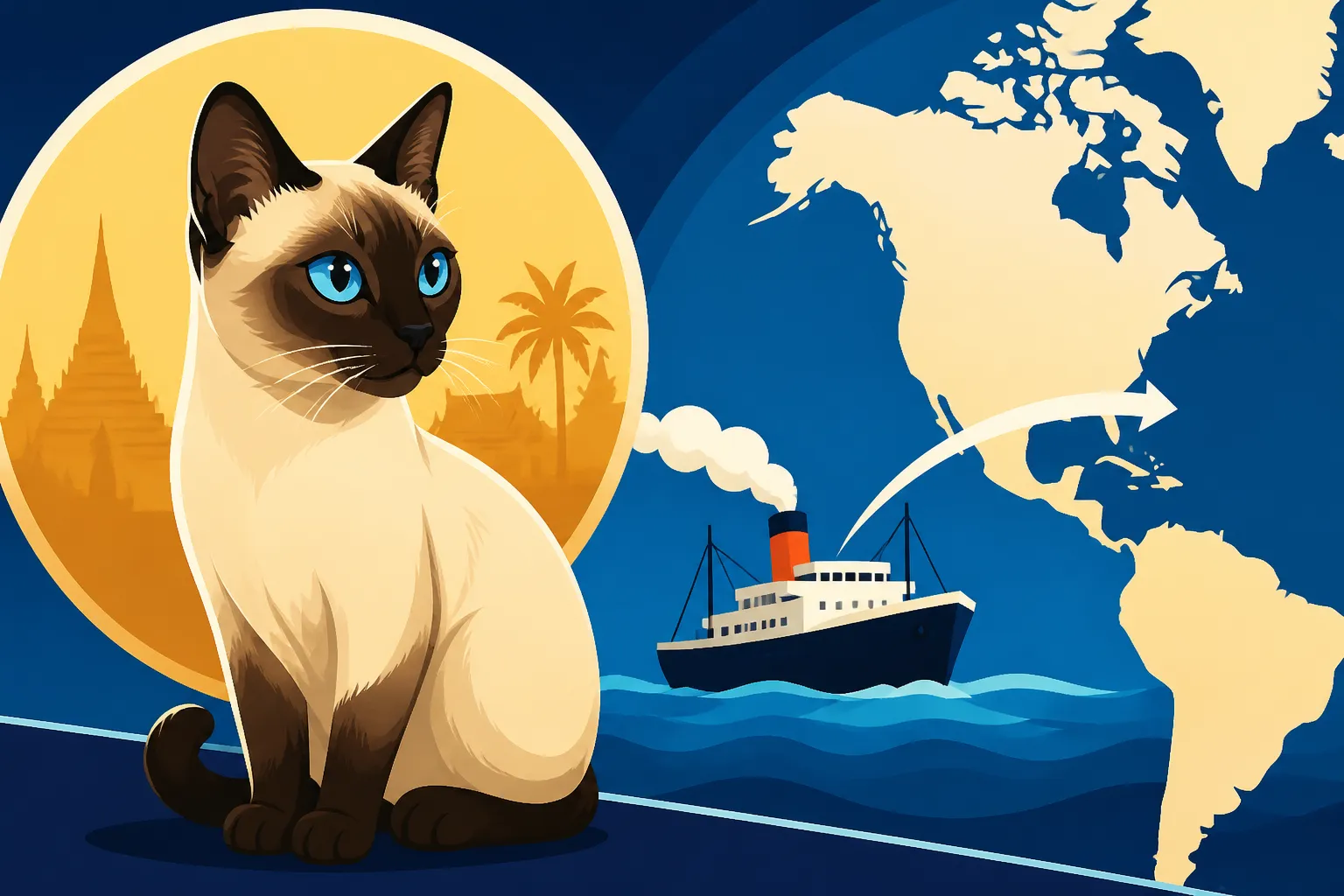
The year most commonly associated with the first Siamese cat in America is 1878. The cat was called Siam and was sent to Lucy Hayes, wife of President Rutherford B. Hayes, by David B. Sickels, the American consul in Bangkok. This is why Siam is often described as the first Siamese cat to reach the United States.
The wording matters, though. “Sent in 1878” and “arrived in America in 1878” are not necessarily identical claims. A cat traveling from Bangkok to the United States in the nineteenth century would have faced a long journey by sea, and the dates recorded for dispatch, arrival, and presentation could differ. Some accounts place Siam’s arrival at the White House in 1879, which helps explain why the two years sometimes appear in summaries of the story.
So, if you’re asking for the year usually given as the breed’s first arrival in America, 1878 is the conventional answer. If you’re looking at the White House timeline specifically, you may encounter 1879 as the year Siam was received or recorded there. The difference is best understood as a dating detail, not as evidence that two different cats were involved.
For background on the breed’s earlier history, see Where the Siamese Cat Comes From. The American story begins much later than the breed’s history in its homeland.
Who Siam was and how the cat reached the White House
Siam was not simply an unnamed cat that happened to appear in a presidential household. The cat became part of the historical record because Sickels sent Siam as a gift to Lucy Hayes. That connection gives the story a clear point of reference: a named cat, a named recipient, and a diplomat based in Bangkok.
The gift was unusual enough to attract attention. Siamese cats were still unfamiliar to most Americans, and a cat from Siam would have seemed strikingly different from the domestic cats people were used to seeing. The breed’s color points, blue eyes, and sleek appearance helped make it memorable, though the historical significance of Siam comes mainly from the circumstances of its arrival rather than from any confirmed show or breeding career.
The person behind the gift is explored in Who Sent Siam the Siamese Cat to the Hayes White House. Lucy Hayes’s place in the story is covered in Who Lucy Hayes Was to the Siamese Cat. Together, those details help explain why Siam became so closely linked with the White House rather than remaining an obscure imported pet.
| Historical detail | Commonly reported information |
|---|---|
| Cat’s name | Siam |
| Year most often cited for reaching America | 1878 |
| Recipient | Lucy Hayes |
| Sender | David B. Sickels, American consul in Bangkok |
| Year sometimes given for the White House arrival | 1879 |
| Why the dates differ | Accounts may refer to sending, arrival, or receipt |
Why the date is sometimes given as 1879
A journey can have more than one “arrival” date
Historical timelines often compress a sequence of events into one year. In Siam’s case, “sent to America,” “arrived in the United States,” and “reached the White House” may be treated as though they happened at the same moment. They may not have.
A diplomatic gift had to be arranged, transported, and delivered. Even when a letter or record establishes that a gift was sent in one year, that does not automatically establish the day it reached its destination. A summary may use 1878 as the year the first Siamese cat was sent or first reached America, while another may focus on the later White House receipt and use 1879.
That distinction is useful whenever you see conflicting dates. Rather than assuming one account must be entirely wrong, check what event the date describes. Is it the shipment from Bangkok? The cat’s arrival in the United States? Or the point at which the Hayes household received Siam? Those are related events, but they are not interchangeable.
The same care is useful when reading other early breed histories. The first Siamese cats in Britain, for example, are associated with Pho and Mia, a separate episode that happened later. Who Brought the First Siamese Cat to Britain and Who Pho and Mia the Siamese Cats Were offer a useful comparison: the spread of the breed was a gradual series of individual journeys, not one simultaneous arrival around the world.
What can be said confidently—and what remains uncertain
The strongest simple version of the story is that Siam, a Siamese cat sent by David B. Sickels to Lucy Hayes, is recognized as the first Siamese cat in America. The year 1878 is the one most often attached to that milestone. The occasional 1879 date appears in accounts that emphasize Siam’s arrival at or presentation to the White House.
What the story does not establish is that Siam was the first Siamese cat ever brought to the Americas under every possible definition. Records from the nineteenth century are not a complete passenger list of every animal traveling privately. “First” in breed histories usually means the first well-known or documented example, rather than proof that no earlier cat could have arrived without leaving a surviving record.
It is also worth separating Siam’s historical status from later breed development. One imported cat did not by itself create the modern American Siamese population. The cat’s story marks an early, memorable introduction; the breed’s recognition, popularity, and breeding history unfolded over time. For the immediate story of Siam after reaching the Hayes household, see What Happened to Siam the Siamese Cat and Whether Siam Was the Only Siamese Cat at the White House.
What Siam’s arrival meant for the breed
A famous first was not the same as widespread ownership
Siam’s arrival is a landmark because it placed a Siamese cat in a prominent American household. That does not mean Siamese cats instantly became common pets across the country. In the late nineteenth century, importing and caring for an animal from overseas was far less routine than it is today. The journey itself was demanding, and the number of people who had seen a Siamese cat in person would have been small.
A famous first can also make a breed’s history seem tidier than it was. People may picture a single cat arriving and immediately sparking nationwide interest. In reality, awareness would have spread gradually through personal accounts, exhibitions, travel, and later imports. Siam’s connection to the White House made the story easy to remember, but it was one early chapter rather than the whole history of Siamese cats in America.
The breed’s path from an unfamiliar import to a recognized and widely known cat involved changing tastes and organized breeding. The broader story is covered in Where the Siamese Cat Ranks Among Cat Breeds. That later popularity should not be projected backward onto Siam’s era, when the breed would have been a rare sight for most Americans.
How to answer the question accurately
For a short answer, say that the first Siamese cat in America is generally dated to 1878, when Siam was sent from Bangkok to First Lady Lucy Hayes. If someone mentions 1879, clarify that some accounts use that year for Siam’s White House arrival or receipt.
That phrasing is more accurate than insisting that every historical account uses the same date for the same event. It also avoids overstating what the surviving story proves. Siam is the first well-known, documented Siamese cat associated with America, but the surviving record is not a guarantee that no other Siamese cat had ever crossed into the country earlier.
The most helpful way to remember the details is:
- 1878 is the date most often cited for Siam’s arrival in America.
- Siam was the cat’s name.
- David B. Sickels, the American consul in Bangkok, sent the cat.
- Lucy Hayes, the First Lady, was the recipient.
- 1879 may appear in accounts focused on the White House arrival or receipt.
That gives you a clear answer without treating every difference in dating as a contradiction. The key point is that Siam’s journey made the cat an early, well-documented Siamese in America—and the White House connection helped preserve the story.
Disclaimer
This article is for general informational purposes only and does not constitute professional advice. Laws, prices and regulations vary by location and change over time. Consult a qualified professional for guidance on your specific situation.