Why Applehead Siamese Cat Breeders Charge Less
It's a common moment of sticker shock when you start looking for a Siamese cat: prices can swing wildly, and often you'll see a significant difference between what breeders ask for an "Applehead" or "Traditional" Siamese versus a "Wedge" or "Modern" Siamese. This price disparity isn't just about aesthetics; it reflects different breeding philosophies, market demands, and the costs associated with achieving particular breed standards. This guide will help you understand the core reasons why Applehead Siamese cat breeders generally charge less.
The Defining Differences: Applehead vs. Modern Siamese
When you first dive into the world of Siamese cats, you might be surprised to learn there isn't just one look. Over the decades, selective breeding has led to a distinct divergence in appearance, creating what are commonly referred to as "Applehead" (or Traditional) and "Wedge" (or Modern) Siamese. These physical differences are the most immediate reason for the cost variation you'll encounter.
Understanding the Visual Distinctions
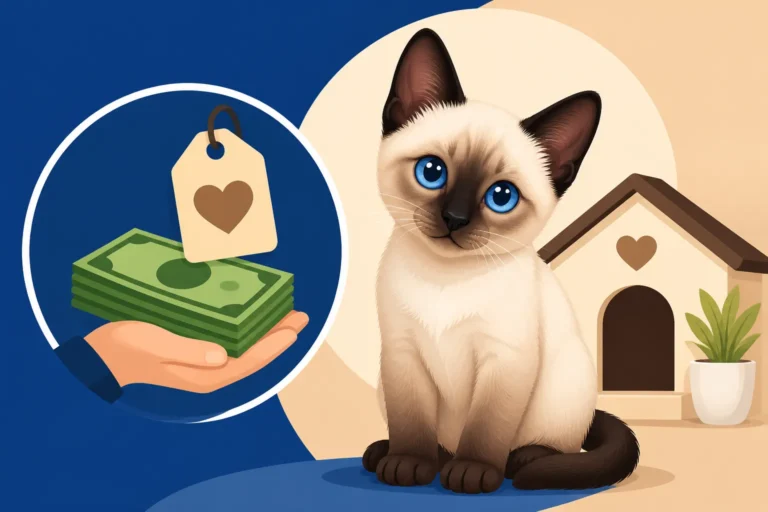
The "Applehead" Siamese, sometimes called "Old Style" or "Traditional," harks back to the cats that were originally imported from Siam. They have a rounder head shape, reminiscent of an apple, with a more robust, muscular body. Their ears are typically proportionate to their head and set slightly lower, and their muzzle is softer, less pointed. If you've ever seen a picture of a Siamese cat from the early 20th century, you're likely looking at an Applehead. They tend to have a generally less extreme appearance across the board, presenting a classic, sturdy feline silhouette. Many owners appreciate this look for its perceived health and historical accuracy, feeling it embodies the true spirit of the breed before extensive show breeding. To get a good visual, you might want to read What an Applehead Siamese Cat Looks Like.
In stark contrast, the "Wedge" or "Modern" Siamese has been selectively bred to conform to contemporary show ring standards. Their heads are a distinct, elongated wedge shape, tapering from the ears to a fine muzzle. Their ears are large and wide-set, often continuing the lines of the wedge head. They possess a long, tubular body, slender legs, and a very whip-like tail. This elegant, almost ethereal appearance is what many people associate with the modern Siamese. Breeders aiming for this look dedicate significant effort and resources to producing cats that meet these specific, often extreme, aesthetic criteria set by cat registries. For a deeper dive into this type, check out What a Modern Wedge Siamese Cat Looks Like.
Historical Context and Breeding Divergence
The evolution of the Siamese cat's appearance isn't a recent phenomenon; it's a story that spans decades. When the first Siamese cats arrived in the Western world from Siam (now Thailand), they were uniformly of the sturdier, rounder-headed type we now call Appleheads. These cats were admired for their striking point coloration, vocal personalities, and affectionate nature. They quickly captured hearts and became a popular breed.
However, as cat fancy grew and show circuits became more established, specific ideals for the breed began to emerge and evolve. Judges and breeders started to favor certain traits, gradually selecting for a more refined, angular head shape, longer bodies, and larger ears. This selective breeding intensified, leading to the pronounced "wedge" look we see in modern show Siamese today. The change wasn't overnight but a gradual shift that created two distinct styles within the same breed, largely driven by the desire to achieve success in the competitive show ring. The history of this change is fascinating, and you can learn more by exploring How the Siamese Cat's Head Changed Shape in Fifty Years.
The divergence essentially created two paths for breeders. Those who continued to breed for the original, more traditional look found themselves outside the mainstream show circuit, while others embraced the evolving standard. This split in breeding goals and the pursuit of different ideals directly impacts the costs associated with purchasing a kitten from either line. The traditionalists often operate on a smaller scale, focusing on temperament and a classic look rather than the intensive competition of the show world.
Breeding Goals and Associated Costs
The fundamental difference in pricing between Applehead and Modern Siamese often boils down to the overarching goals of their respective breeders. One path typically involves significant investment in conformation to breed standards, while the other prioritizes different aspects of the cat's lineage and well-being.
The "Traditional" Breeder's Approach
Breeders focusing on the Applehead or Traditional Siamese often do so out of a love for the original look and a commitment to preserving the more robust, moderate build of the early Siamese cats. Their primary goal is often to produce healthy, well-socialized companions with the beloved Siamese personality. While they care deeply about health and temperament, they are generally not aiming to produce show champions that conform to the highly specific, often extreme, modern breed standards. This means their breeding program doesn't incur the same types of expenses as those geared towards the show ring.
For instance, an Applehead breeder might not spend substantial amounts on travel to national cat shows, entry fees, professional grooming for competition, or hiring handlers. Their marketing efforts might be more local or rely on word-of-mouth rather than glossy magazine ads or high-end websites catering to a niche show market. Their stud fees might be lower, and they may be less concerned with "champion lines" in the competitive sense. This often translates to a lower overhead for their breeding operation. Many also focus on family integration, raising kittens underfoot to ensure they are well-adjusted pets.
Furthermore, these breeders may not be seeking registration with cat associations that strictly adhere to the modern wedge standard. While many Applehead Siamese cats can be registered, especially with associations that recognize the "Thai" or "Traditional Siamese" as a distinct breed or an acceptable variation, their breeders aren't necessarily investing in the higher-tier registrations or pursuing grand champion titles. This reduces administrative costs and the inherent value placed on a kitten's "show potential." You might be interested in Whether an Applehead Siamese Cat Is Registrable if you're considering this type.
The "Show-Quality" Breeder's Investment
On the flip side, breeders of modern Wedge Siamese cats often have a significant investment in producing animals that excel in the show ring. Their breeding goals are meticulously aligned with the detailed written standards of major cat registries. This pursuit of the "perfect" wedge head, tubular body, and large, wide-set ears comes with a hefty price tag that is ultimately reflected in the kitten's sale price.
Consider the expenses involved: these breeders invest in top-quality breeding stock, often importing cats from other countries to introduce desired bloodlines. They pay higher stud fees for champion males. They regularly attend cat shows, which means travel, lodging, entry fees (which can be substantial per cat per show), and sometimes professional handling. Winning titles adds prestige to their cattery and justifies higher prices for their kittens, but achieving those titles is a costly endeavor. They also typically invest in extensive marketing to attract buyers who understand and value the modern show type. This is why Why Show Demand Drives the Wedge Siamese Cat Price is such a critical factor.
Beyond the show circuit, these breeders are often deeply involved in genetic health screening, ensuring their lines are free from known inherited conditions. While reputable Applehead breeders also prioritize health, the level of scrutiny and the sheer volume of specific genetic tests, combined with veterinary consultations and certifications required for show quality cats, can add significantly to the overall cost. This comprehensive approach, aimed at maintaining the health and integrity of their carefully curated lines, represents a substantial financial commitment that needs to be recouped through kitten sales.
Market Dynamics and Perceived Value
Beyond the direct costs associated with breeding, the market itself plays a huge role in setting the price for any purebred animal. For Siamese cats, historical trends, perceived breed purity, and consumer demand create a distinct value proposition for each "type."
Registration and Pedigree Perceptions
The world of purebred cats places a high value on registration and pedigree. For many buyers, a cat's "papers" from a recognized registry like the Cat Fanciers' Association (CFA) or The International Cat Association (TICA) signify legitimacy, purity of breed, and often, adherence to certain breeding standards. Modern Siamese breeders almost invariably register their cats and emphasize long lines of champion ancestors in their pedigrees, as this is crucial for show success and for commanding higher prices. This rigorous tracking and documentation add to the perceived value of their kittens.
Applehead Siamese breeders, while often working with purebred cats with documented ancestry, might not place the same emphasis on extensive show-line pedigrees or specific champion titles. Their focus might be on a broader health history or temperament lineage, rather than competitive wins. Some registries might recognize the "Traditional Siamese" or "Thai" cat as a separate breed, which can also influence the market's perception of its value compared to the "Siamese" category that typically refers to the modern wedge type. This distinction can sometimes lead to a perception (right or wrong) that Applehead cats are "less pure" or "less valuable" by those unfamiliar with the breed's history, even if they are perfectly legitimate and healthy purebreds.
It's important for prospective owners to understand what various registrations signify. Not all registries are equal, and some might be more aligned with traditional types, while others strictly adhere to modern show standards. Understanding What the Siamese Cat Standard Asks For will help clarify why some breeders charge more to meet it. When you buy a kitten, always ask to see the parents' pedigrees and registration details, regardless of the "type" you're interested in, to ensure you're getting what you expect.
Health Screening Practices and Their Impact on Price
Both Applehead and Modern Siamese breeders should prioritize the health of their breeding stock and kittens. However, the depth and cost of health screening can vary, contributing to price differences. Modern Siamese breeders, especially those involved in top-tier showing, often invest in a comprehensive panel of genetic tests and veterinary screenings to ensure their lines are free from known hereditary conditions. This can include specific DNA tests, cardiac screenings (like echocardiograms for hypertrophic cardiomyopathy), and regular veterinary check-ups for all breeding cats. These tests, while vital for the breed's long-term health, are expensive, and those costs are factored into the kitten price.
For example, a breeder might invest in tests for conditions like PRA (Progressive Retinal Atrophy), though it's important to remember that for some conditions, like amyloidosis, a definitive test doesn't exist yet, as highlighted in Why Siamese Cat Amyloidosis Is Inherited. Still, a conscientious breeder will track health in their lines and make responsible decisions. The rigorous health protocols often adopted by high-end show breeders not only safeguard their cattery but also reassure buyers, thus supporting higher prices. If you're wondering Which Tests a Siamese Cat Breeder Actually Runs, it's always a good question to ask.
While many Applehead breeders are equally committed to health, their approach might be less focused on a vast array of formal, expensive genetic screenings unless a specific issue is prevalent in their lines. They might rely more on general veterinary health checks and a deep knowledge of their cats' lineage and any past health issues. This doesn't mean their cats are less healthy, but simply that the cost associated with extensive, formalized health certification might be lower, which can then be passed on to the buyer. However, it's always crucial to verify what health guarantees and veterinary records a breeder provides, regardless of the price point. Pet insurance, such as through Healthy Paws, can be a wise investment for any cat owner, helping to mitigate unexpected vet bills down the line, regardless of initial health screenings.
Supply, Demand, and the Breeder's Business Model
Like any market, the principles of supply and demand heavily influence the pricing of Siamese kittens. The demand for the sleek, refined look of the modern Wedge Siamese, particularly for cats with show potential, often outstrips supply from top breeders. These breeders might have long waiting lists and can, therefore, command premium prices. Their "brand" as a cattery known for producing champions or show-quality pets also adds to their market power.
| Feature | Applehead Siamese (Traditional) | Modern Wedge Siamese (Show-Type) |
|---|---|---|
| Head Shape | Rounder, broader, "apple" shaped | Distinct wedge, tapering from ears to muzzle |
| Body Type | Sturdier, more muscular, heavier boned | Long, tubular, slender, fine-boned |
| Ears | Proportionate to head, set slightly lower | Large, wide-set, continue lines of wedge |
| Eye Shape | Oval, often less intensely crossed | Almond, typically deeper blue, may or may not cross |
| Breeding Focus | Temperament, health, classic look, pet companions | Conformation to show standards, champion lines, extreme features |
| Show Involvement | Less common, or in alternative/traditional breed categories | High, central to breeding goals |
| Genetic Testing | Comprehensive but possibly less extensive formal panel | Very extensive, often including specialized and costly screenings |
| Market Demand | Steady for those seeking classic look & pet quality | High, especially for show potential, often long waiting lists |
| General Price Point | Generally lower | Generally higher |
Conversely, while there's certainly a strong and steady demand for Applehead Siamese cats, the market might be less competitive for the absolute highest prices. Applehead breeders are often smaller operations, and while they are passionate and dedicated, they may not have the same level of overhead or market leverage as a renowned show cattery. They might also be more focused on placing their kittens in loving pet homes rather than chasing top dollar or show placements.
The choice of where to buy food and supplies can also affect ongoing costs. For example, buying high-quality cat food from retailers like Chewy can be a significant part of the annual budget, and breeders of both types will encourage owners to invest in good nutrition. The initial purchase price is just one part of the overall What the First Year With a Siamese Cat Costs, and Applehead breeders might emphasize the long-term health and companionship more than the initial competitive purchase price.
Ultimately, the lower price charged by Applehead Siamese cat breeders isn't a reflection of lesser quality or health, but rather a combination of factors related to breeding goals, the costs associated with achieving different breed standards, and the dynamics of the cat fancy market. It offers an opportunity for those who adore the original, sturdy Siamese look and personality to welcome one into their home without the premium associated with the show ring.
Disclaimer
This article is for general informational purposes only and does not constitute professional advice. Laws, prices and regulations vary by location and change over time. Consult a qualified professional for guidance on your specific situation.