How Short a Siamese Cat’s Coat Is
When you think of a Siamese cat, that distinctive sleek, almost painted-on coat probably comes to mind. It's truly a hallmark of the breed, but "short" doesn't quite capture the full story of its unique characteristics. Many new or prospective Siamese owners wonder if their cat will shed much, if they'll need special grooming, or even if the short fur means less dander. This guide is going to strip away the assumptions and get down to the fine details of what a Siamese cat's coat is really like, beyond just its length, and how that influences everything from their comfort to their care.
The Distinctive Shortness and Texture of the Siamese Coat
It’s easy to say a Siamese cat has a short coat, but that simple description misses so much of what makes it truly special. This isn't just any short fur; it's a finely tuned, genetically unique marvel that defines much of the Siamese's physical and even behavioral traits. Understanding the specifics of its length and texture is the first step to truly appreciating these stunning felines.
What "Short" Actually Means for a Siamese
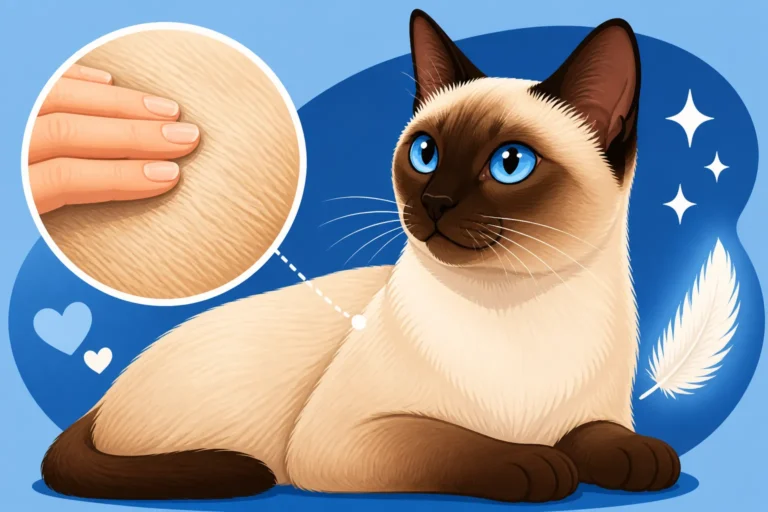
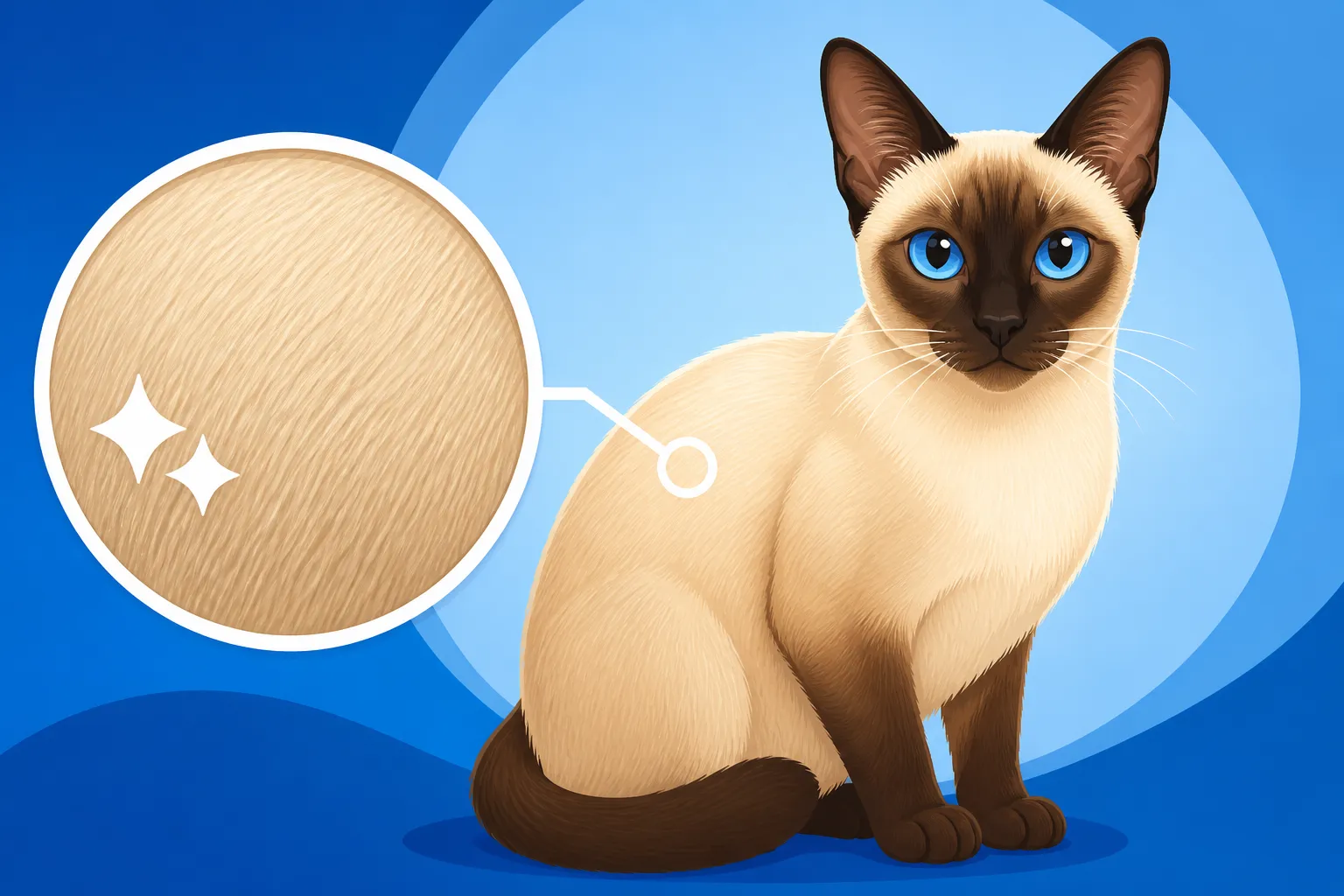
When we talk about a Siamese cat's coat being "short," we're not just comparing it to a fluffy Persian or a Maine Coon. We're talking about a coat that is remarkably close-lying, almost like a second skin. It's often described as a single coat, meaning there isn't a dense, woolly undercoat beneath the guard hairs, unlike many other cat breeds. This contributes to its incredibly sleek, lithe appearance.
Imagine running your hand over pure silk or a finely spun satin – that's often the sensation you get from a healthy Siamese coat. The individual hairs are fine, not coarse, and they lie flat against the body, showcasing every elegant curve and muscle ripple. This lack of bulk is part of why Siamese cats often appear so slender, almost impossibly lean. It's a coat designed for elegance and minimal obstruction, allowing for the free, fluid movement these active cats are known for. It truly feels different from the plush, thick short hair of a British Shorthair, or even the slightly more voluminous coat of a typical domestic shorthair. There's a particular crispness to it, a smooth, cool touch that is instantly recognizable once you've felt it. For more on this, you might enjoy reading What a Siamese Cat's Coat Feels Like.
The Absence of an Undercoat: A Key Differentiator
This is where the Siamese coat really sets itself apart. The most significant aspect of its "shortness" is the virtually absent undercoat. Most mammals, including many cat breeds, have two layers of fur: the longer, protective outer guard hairs and a softer, denser undercoat that provides insulation. The Siamese, by genetic design, largely skips that second insulating layer.
Think about what an undercoat does: it traps air close to the body, creating a thermal barrier against both cold and heat. Without this natural padding, a Siamese cat is much more directly exposed to ambient temperatures. This is why you'll often find a Siamese draped across a sunny windowsill, burrowed under a blanket, or curled up right on your lap – they're seeking warmth! They don't have that built-in duvet. This isn't just a quirky preference; it's a biological necessity stemming directly from their unique coat structure. This lack of an undercoat also influences their grooming needs, making them generally lower maintenance in terms of tangles, but it also has profound implications for their comfort, particularly in cooler climates or drafty homes. Learning more about Why a Siamese Cat Has No Undercoat can really illuminate this aspect of their care.
Shedding, Grooming, and Hypoallergenic Qualities
So, a short coat with no undercoat… surely that means no shedding and no allergies, right? Well, not exactly. While the Siamese cat's coat is definitely low-maintenance compared to some breeds, it's essential to understand the realities of shedding and the common misconceptions about hypoallergenic cats.
How Much a Short-Coated Siamese Actually Sheds
Here’s the honest truth: every cat sheds. Even those hairless breeds shed skin cells (dander), which is often the real culprit for allergies. A Siamese cat, despite its short, sleek coat, absolutely sheds. It's just a different kind of shedding. You won't typically find massive tumbleweeds of fur rolling across your floor like you might with a long-haired cat during a seasonal shed. Instead, Siamese shedding tends to be more subtle and consistent.
You might notice fine, short hairs on your dark clothes, on furniture, or in the sunbeams when light hits just right. Because the hairs are so fine and short, they often blend in more readily and are less conspicuous than longer, thicker fur. My own Siamese, Luna, leaves a scattering of fine, pale hairs on my black sweater, but it's never overwhelming. This constant, low-level shedding means regular vacuuming and lint-rolling are still part of life with a Siamese. The good news is, these hairs are generally easier to clean up than the clumpy, clinging fur of other breeds. While the amount of shedding can vary slightly between individual cats and with seasonal changes, it's usually manageable. If you're curious about the specifics, check out How Much a Siamese Cat Sheds. For managing those fine hairs, a good lint roller or even a handheld vacuum can be invaluable, and you can find a wide range of options on sites like Amazon.
The Minimalist Grooming Needs of a Siamese
One of the undeniable benefits of a Siamese cat's short, undercoat-free fur is its incredibly low grooming requirement. Forget daily battles with mats, tangles, or complicated brushing routines. A Siamese is largely self-grooming, and their coat rarely, if ever, mats.
For us humans, a quick weekly brush is usually more than enough. This isn't just about removing loose hair; it's a wonderful opportunity for bonding. Many Siamese cats absolutely adore being brushed. The sensation of a soft rubber curry brush or a fine-toothed comb gliding over their sleek bodies can be incredibly soothing for them. This weekly ritual helps to distribute natural oils, keeping their coat shiny and healthy, and it also stimulates circulation. It's a preventive measure that removes those fine shedding hairs before they end up on your sofa. Plus, it gives you a chance to check their skin for any unusual bumps, dry patches, or fleas. Seriously, Grooming a Siamese Cat Takes Five Minutes a Week is often all you need.
Here's a quick comparison of popular grooming tools for short-haired cats:
| Tool Type | Description | Best Use | Benefits |
|---|---|---|---|
| Rubber Curry Brush | Soft rubber bristles, often with a handle. | Daily or weekly shedding removal, massage, distributing oils. | Gentle, cats usually love the feel, stimulates circulation, easy to clean. |
| Fine-Toothed Comb | Metal or plastic comb with closely spaced teeth. | Removing loose hairs, checking for fleas/ticks, detangling (rarely needed). | Gets deeper than a brush, good for detail work. |
| Bristle Brush | Soft bristles, similar to a human hairbrush. | Polishing the coat, general tidying, very gentle for sensitive cats. | Leaves the coat shiny and smooth, good for bonding. |
| Grooming Glove | Glove with rubber nubs on the palm. | Petting and brushing simultaneously, good for nervous cats. | Mimics petting, easy to use, collects loose fur effectively. |
You can often find all these types of brushes, and even starter grooming kits, on pet supply websites like Chewy, making it easy to pick the perfect tool for your feline friend.
Temperature Sensitivity and Health Implications
The short, single coat of a Siamese cat isn't just an aesthetic choice; it’s a fundamental part of their physiology that dictates how they interact with their environment, particularly when it comes to temperature. Understanding this is key to keeping your Siamese comfortable and healthy.
Why Their Short Coat Makes Siamese Cats Sensitive to Cold
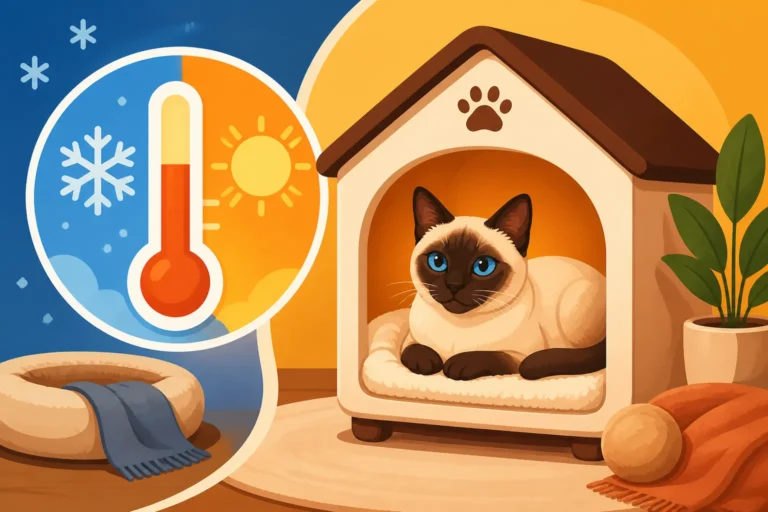
Remember how we talked about the lack of an undercoat? This is where it becomes really apparent in their day-to-day life. Without that dense layer of insulation, Siamese cats are inherently less equipped to handle cold temperatures than many other breeds. They simply don't have the natural "winter coat" to keep them warm.
This means a Siamese cat will actively seek out warmth. You'll find them gravitating towards sunny spots, curling up in heated beds, burrowing under blankets, or, most commonly, snuggling right up against you. My Siamese, Pip, has perfected the art of nestling under the duvet every night, creating her own little warm cave. This isn't just a preference; it's a necessity for them to regulate their body temperature comfortably. A drafty house, or even just a cool room, can make a Siamese shiver or become visibly uncomfortable. They rely on their environment and their human companions to provide that warmth. So, if you're bringing a Siamese into your home, consider the ambient temperature. Heated cat beds, soft blankets, and ensuring they have access to warm, cozy spots are not luxuries, but necessities. You might want to consider Keeping a Siamese Cat Warm or thinking about How Warm a Room a Siamese Cat Needs for optimal comfort.
Coat Color Changes and Shaved Patches
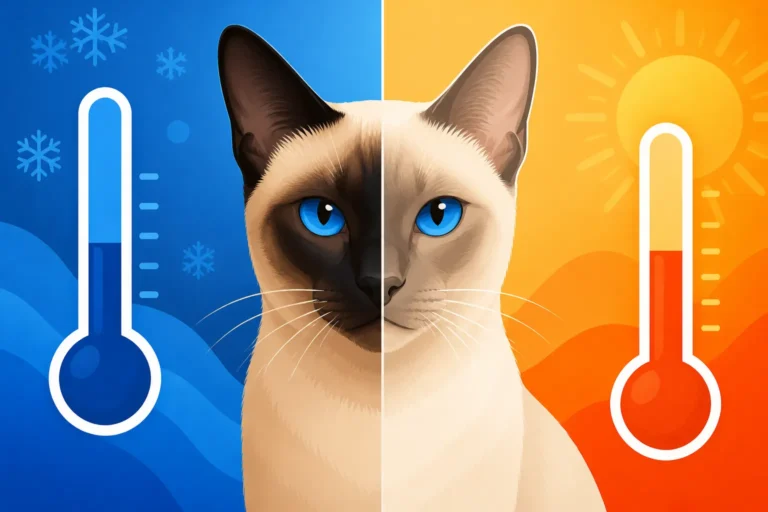
This is one of the most fascinating and visually striking aspects of the Siamese cat's unique coat. Their distinctive point coloration—darker extremities like ears, paws, tail, and face—is directly linked to their temperature-sensitive fur. The gene responsible for their coloring (the Himalayan gene) only allows pigment to develop in cooler parts of the body. Warmer areas, like their main torso, remain lighter.
This phenomenon has a curious side effect: if a Siamese cat is shaved for surgery or a medical procedure, the fur that grows back on that shaved spot will often come in darker than the surrounding body coat. This happens because the skin in that area, now exposed and possibly cooler, triggers the pigment-producing cells to activate, just as they do on the cooler points of the cat's body. I've seen it countless times – a patch on the belly after an ultrasound, or a leg after an IV, will grow back as a temporary dark spot. It can look a bit startling at first if you're not expecting it, but it's completely normal and a direct testament to their unique genetics. Over time, as the fur grows out and the area warms up again, it will usually lighten to match the rest of their body. It's a wonderful, living example of how temperature literally paints their beautiful coats. Dive deeper into this curious effect with The Shaved Patch That Grows Back Dark on a Siamese Cat or Why a Shaved Siamese Cat Grows Back Dark.
Debunking Myths and Understanding "Hypoallergenic" Claims
The sleek, short coat of a Siamese often leads to a couple of persistent myths: that they don't cause allergies, and that they require absolutely no maintenance. While their coat is certainly low-fuss, it's crucial to understand the scientific reality and practical benefits accurately.
Are Siamese Cats Truly Hypoallergenic Due to Their Short Coat?
This is perhaps the most common misconception surrounding the Siamese cat and their coat. Many people believe that because their fur is short and they shed less visibly, Siamese cats are hypoallergenic. I'm here to tell you, with all the empathy in the world, that unfortunately, no cat is truly 100% hypoallergenic.
The primary allergen responsible for cat allergies isn't the fur itself, but a protein called Fel d 1, which is found in a cat's saliva, urine, and dander (dead skin flakes). When a cat grooms itself, this protein-laden saliva dries on their fur and skin. As they shed fur and dander, these microscopic allergen particles become airborne and settle on surfaces throughout your home. While a Siamese cat's short, single coat might mean that less fur is dispersed into the environment compared to a long-haired, heavy-shedding breed, they still produce Fel d 1 protein. Some studies suggest that certain individual Siamese cats, or even the breed as a whole, might produce less of this protein than others, but it's not a guarantee. If you or someone in your household has severe cat allergies, spending time with a Siamese before committing is always recommended. Don't rely solely on the "hypoallergenic" label. For more details on this topic, you can learn about How Much Dander a Siamese Cat Produces and Whether a Siamese Cat Is Hypoallergenic.
The Benefits of a Short, Low-Maintenance Coat
Despite the debunked hypoallergenic myth, there are still plenty of genuine advantages to the Siamese cat's short, sleek, and elegant coat. These benefits translate directly into an easier, cleaner, and more enjoyable experience for their human companions.
First and foremost, the low-maintenance aspect is a huge win. As discussed, you're not dealing with daily grooming marathons, expensive professional grooming appointments, or constant battles against mats and tangles. This saves time, money, and reduces stress for both you and your cat. Weekly brushing is a joy, not a chore, fostering a stronger bond between you.
Secondly, the cleanliness factor is a practical advantage. While they do shed, the fine, short hairs are generally less noticeable and easier to clean than the long, sometimes clumpy fur of other breeds. You'll likely find less cat hair clinging to your clothes, embedded in your carpets, or floating into your food. This contributes to a generally tidier home environment.
Finally, there's the aesthetic appeal. The short, close-lying coat highlights the Siamese cat's elegant, athletic physique. It gives them a sophisticated, almost sculpted appearance that many admirers cherish. Every muscle definition, every graceful curve, is visible, making them truly living works of art. This sleekness, combined with their intelligent, vocal personalities, makes the Siamese a truly captivating companion. While not “hypoallergenic,” the overall ease of care for their coat makes them a fantastic choice for many busy households who still want a deeply interactive feline friend. Maintaining this coat also comes from excellent nutrition, as fresh, high-quality ingredients can contribute to a healthy, shiny coat from the inside out.
Disclaimer
This article is for general informational purposes only and does not constitute professional advice. Laws, prices and regulations vary by location and change over time. Consult a qualified professional for guidance on your specific situation.