Which Show the First Siamese Cats Appeared At
For many of us who adore the elegant, vocal Siamese cat, there's a natural curiosity about their origins and how these captivating felines first made their grand entrance onto the world stage beyond their native lands. It's easy to imagine them instantly enchanting everyone, but their journey to becoming a beloved breed in the West was a fascinating historical process, including their very first public debuts at cat shows. This guide will delve into the earliest recorded appearances of Siamese cats at these exhibitions, exploring where they were first shown and what the public's initial reaction was to these truly exotic newcomers.
The Arrival of Siamese Cats in the Western World
Before a Siamese cat could ever grace a show bench in Europe or America, these magnificent creatures first had to make the long and arduous journey from their homeland. For centuries, the Siamese cat was a closely guarded treasure in Siam, now modern-day Thailand, associated with royalty and temples. The idea of them becoming common pets, let alone show cats, would have been unimaginable to their original custodians.
Early Diplomatic Gifts and Private Imports
The initial trickle of Siamese cats into the Western world wasn't through commercial channels, but rather as esteemed diplomatic gifts or through the endeavors of adventurous individuals who appreciated their unique beauty. Picture the late 19th century: an era of expanding global trade and diplomatic relations. It was during this time that Western diplomats, merchants, and even missionaries began to encounter these striking cats in Siam. Many were instantly captivated by their distinctive coloring, piercing blue eyes, and slender, elegant build. These cats weren't merely pets; they were living souvenirs of an exotic culture, often bringing a touch of mystique to their new homes.
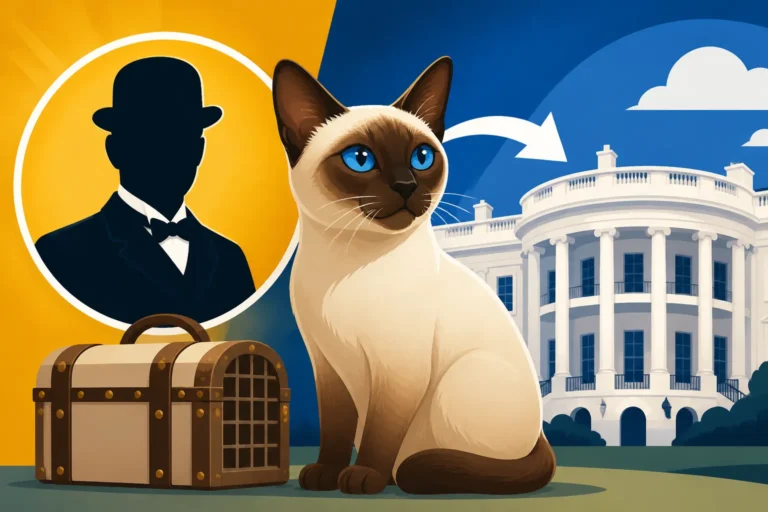
One of the most notable early imports was a Siamese cat named Siam, sent by the American Consul in Bangkok, David B. Sickels, to President Rutherford B. Hayes and his wife Lucy in 1878. This was a truly high-profile arrival, signifying the cat's status as a precious gift. While Siam lived in the White House, she wasn't exhibited in a formal show, but her presence certainly sparked interest and conversation in elite American circles. These early, individual introductions, often to wealthy or influential families, were crucial in laying the groundwork for wider recognition, paving the way for a more public debut. Imagine the hushed wonder of guests seeing such a creature for the first time in a Victorian parlor!
The Journey from Siam to Europe
The journey itself was no small feat in the 1800s. Shipping a cat from Southeast Asia to Europe or North America involved weeks, if not months, at sea. These were not the climate-controlled, stress-minimized voyages we might imagine today. Cats traveled in crates, enduring unpredictable weather, unfamiliar sounds, and often meager provisions. It's a testament to the hardiness of these early Siamese cats, and the dedication of their new owners, that they survived such journeys at all.
For those who managed to bring a Siamese cat back, the animals were often considered a rare curiosity, a living testament to distant lands. Their unique appearance, so different from the common European domestic shorthairs, made them objects of immense fascination. This growing interest, spurred by anecdotal tales and private viewings, naturally led to a desire for a more formal introduction to the public. As more individuals successfully imported these cats, the idea of showcasing them alongside other breeds at emerging cat shows began to take root. People wanted to see these "royal cats of Siam" for themselves, and perhaps even acquire one, leading to the demand that would eventually place them on the show bench.
The Crystal Palace Cat Show of 1871: A Precursor?
When researching the history of cat shows and the Siamese cat's debut, you might stumble upon mentions of the Crystal Palace Cat Show of 1871. It's a common misconception that this was the very first public appearance of the Siamese cat in the West. While the 1871 show was indeed groundbreaking for the world of cat fancy, our distinctive Meezers weren't quite ready for their close-up yet.
Distinguishing Early Cat Exhibitions
The Crystal Palace Cat Show of 1871, organized by Harrison Weir, is widely recognized as the world's first modern cat show. It was a monumental event that aimed to elevate the status of the domestic cat, bringing together various breeds and types to be judged on their merits. Before this, cat "exhibitions" were often more informal affairs, perhaps alongside other livestock at agricultural fairs, or simply informal gatherings of cat enthusiasts. Weir's show, however, established a structured judging system, categories, and a formal viewing experience for the public.
It's important to understand the context of what was being shown at this time. The cat fancy was in its infancy. Many of the breeds we recognize today were either undeveloped or had not yet made their way to Europe in significant numbers. The emphasis was often on showcasing the beauty and variety of domestic cats, many of which were still largely defined by local types rather than formalized breeds with specific standards. While a wide array of cats was present, from Persians to British Shorthairs, the truly exotic, newly imported breeds were still rare sights.
Why 1871 Was Not "The" Siamese Debut
Despite the historical significance of the 1871 show, historical records and contemporary accounts confirm that Siamese cats were not among the star attractions. The number of Siamese cats in Britain at this point was still extremely small, likely limited to a handful of private collections. It takes time for an exotic animal to travel, establish a small breeding population, and then be deemed suitable for public exhibition. The sheer novelty and rarity of the Siamese cat meant that they hadn't yet reached a critical mass where they could be easily presented in a structured competition.
The journey to full acceptance and exhibition involved not just their physical presence, but also the development of an appreciation for their unique characteristics within the nascent cat fancy. It was also crucial for breeders and enthusiasts to begin articulating what a "true" Siamese cat should look like, starting to move towards a breed standard. This process, naturally, would take a few more years after the initial trailblazing show of 1871. Think of it as the prelude, setting the stage for the dramatic entrance that would follow a little over a decade later.
The First Official Appearance: London's Crystal Palace, 1884
While 1871 was indeed a landmark year for cat shows, the actual moment the Siamese cat made its indelible mark on the public and the cat fancy in the West was at the same iconic venue, London's Crystal Palace, but in 1884. This was not just an appearance; it was a revelation, marking the true introduction of these mysterious felines to a captivated audience.
The Crucial Role of Owen Gould
The true pioneer behind the Siamese cat's debut at a British cat show was Owen Gould, the British Consul-General in Bangkok. Gould was an avid enthusiast of the breed, having acquired several specimens during his time in Siam. He clearly recognized their unique appeal and their potential to fascinate Western audiences. It was his foresight and dedication that brought these exotic creatures from the palaces of Siam directly to the exhibition halls of London.
Gould didn't just import cats; he carefully selected them, understanding their distinct characteristics. He arranged for their safe passage across the globe, overcoming the significant logistical challenges of the era. Without his direct intervention and passion, it's highly probable that the Siamese cat's introduction to the Western public would have been delayed, or perhaps even less impactful. His efforts were a critical bridge between the cat's ancient history in Siam and its future as a beloved international breed. You can imagine the meticulous care he would have taken, knowing he was bringing something truly special back home.
Pho and Mia: The Pioneering Pair
Among the cats brought over by Owen Gould were a pair of seal point Siamese cats named Pho and Mia. These two felines hold a legendary place in the history of the breed in the West, as they were the very cats exhibited at the 1884 Crystal Palace show. They were young, distinctive, and undoubtedly drew immense attention.
Pho and Mia were not just beautiful; they represented a living connection to a distant, exotic land. Their presence on the show bench was more than just a display of pedigree; it was a cultural event. They embodied the mystery and allure of the East, and their striking appearance set them apart from every other cat present. These two, along with their three kittens, were the visual proof of what the fuss was all about, leaving a lasting impression on everyone who saw them. Their distinct Why a Siamese Cat Has Dark Points was a wonder to behold for people who had never seen anything like it.
The Scene and Setting of the Grand Event
The 1884 Crystal Palace Cat Show was a grand affair, much like its predecessors. Held in the magnificent glass-and-iron structure that was a symbol of Victorian innovation and progress, the show attracted large crowds. Imagine the bustling atmosphere, the excited chatter, and the array of felines on display. But when visitors arrived at the cages holding Pho and Mia, there would have been a palpable shift in the air.
The Siamese cats would have been a stark contrast to the more familiar domestic breeds. Their sleek bodies, elegant posture, and those captivating blue eyes would have made them an instant focal point. Show organizers likely positioned them prominently, understanding the novelty factor. This wasn't just a cat show; it was an introduction to a new species, an ambassador from a faraway kingdom, making history right there in London. The excitement was undoubtedly tremendous, and it's easy to see how these cats became an immediate sensation.
The Public's Reaction and Early Perceptions
The appearance of Pho and Mia at the Crystal Palace in 1884 was nothing short of a spectacle. The British public and the burgeoning cat fancy community had never seen anything quite like these "royal cats of Siam," and their reactions were a fascinating mix of awe, bewilderment, and even a touch of skepticism.
A Mix of Awe and Skepticism
For many attendees, the Siamese cat was a living enigma. Their unusual appearance – the dark points contrasting with a pale body, the slender physique, the large ears, and the piercing blue eyes – was unlike any domestic cat they had ever encountered. There was an undeniable sense of awe at their exotic beauty and aristocratic bearing. People were drawn to their unique markings, which looked almost as if they had been carefully painted on. Why a Siamese Cat Has Blue Eyes at All would have been a common question, as blue eyes were rare in most cat breeds outside of white cats.
However, this awe was often mixed with a degree of skepticism and even unease. Some found their voices to be unusually loud and insistent, a trait that remains characteristic of the breed today. What the Siamese Cat's Meezer Yowl Sounds Like was probably quite a shock! Others were taken aback by their lean, almost angular build, which was very different from the rounder, more robust body types popular in other breeds. Some found their crossed eyes and kinked tails (common traits in early Siamese cats, now largely bred out) to be somewhat unsettling or even a defect, rather than charming quirks. This initial mixed reception highlights just how radical a departure the Siamese cat was from established European feline aesthetics.
Descriptions from Victorian Publications
Contemporary newspaper reports and articles from the nascent cat fancy publications provide a vivid snapshot of these early reactions. Journalists and writers struggled to describe these new arrivals, often resorting to vivid, if sometimes slightly sensationalized, language. They were frequently referred to as "the Royal Cats of Siam," emphasizing their exotic origins and perceived regal status.
One famous, though rather harsh, description from a newspaper report on the 1884 show described the Siamese cats as "unnatural looking creatures," going on to comment on their "queer-shaped heads and extraordinary voices." While this might sound offensive to us today, it truly captures the bewilderment they caused. These were not the fluffy, docile cats people were accustomed to; they were something entirely new, challenging conventional notions of feline beauty. Despite, or perhaps because of, these dramatic descriptions, the Siamese cats became the undeniable talk of the show, generating immense buzz and sparking widespread curiosity. This initial wave of publicity, both positive and negative, solidified their place in the public imagination and ensured their enduring popularity.
Establishing the Breed in the West
The 1884 Crystal Palace show was far more than just a fleeting appearance for Pho and Mia; it was the genesis of the Siamese cat fancy in the Western world. The profound impact these cats had on visitors quickly translated into a dedicated effort to preserve, promote, and develop the breed.
Founding of the Siamese Cat Club
The undeniable success and public fascination with the Siamese cats at the Crystal Palace quickly led to the formation of the Siamese Cat Club in Britain. Established shortly after their public debut, this club was instrumental in formally recognizing the breed and guiding its development. Enthusiasts and early breeders, captivated by the breed's unique characteristics, banded together to ensure its future.
The club's primary goals were to create a unified breed standard, promote ethical breeding practices, and educate the public about these distinctive felines. This was a critical step in transitioning the Siamese cat from a mere exotic curiosity to a respected and recognized breed within the burgeoning world of pedigree cats. Without the focused efforts of these early club members, the breed's presence in the West might have remained sporadic and disorganized. It was this collective passion that truly cemented their place.
Initial Breed Standards and Challenges
One of the immediate challenges faced by the newly formed Siamese Cat Club was the establishment of a formal breed standard. What constituted a "perfect" Siamese cat? Early imports often exhibited traits like crossed eyes and kinked tails, which were considered charming in their homeland but were viewed as defects by Western show judges. The initial standards were a blend of recognizing the breed's unique features while also attempting to refine them according to contemporary Western ideals of feline beauty.
This often meant decisions about which characteristics to encourage and which to discourage in breeding programs. For instance, the original standard for What a Siamese Cat Looks Like by the Standard would have been much less extreme than the modern wedge-headed Siamese we see in some show rings today. The club navigated these decisions, balancing the preservation of the breed's essence with the evolving tastes of the cat fancy. This period was crucial for the Siamese cat, as it laid the groundwork for its genetic future and the diverse lines that would follow. It wasn't always a smooth path, but it was a vital one for the breed's survival and growth.
Beyond Crystal Palace: Early American Shows
While the Crystal Palace in London holds the distinction of the Siamese cat's official show debut, their journey to popularity didn't stop there. Across the Atlantic, American fanciers were also beginning to take notice, leading to their introduction and eventual embrace in cat shows throughout the United States.
The White House Connection
As mentioned earlier, the first known Siamese cat in the United States, named Siam, arrived as a diplomatic gift to President Rutherford B. Hayes and his wife in 1878. While Siam herself wasn't a show cat, her presence in the White House undoubtedly generated significant interest among the American elite and contributed to the mystique surrounding the breed. This high-profile introduction meant that many prominent Americans were already aware of these "royal cats" even before they started appearing in formal shows. Which Siamese Cat Reached America First details this fascinating piece of history.
This early exposure was invaluable. It meant that when the first Siamese cats did appear at American cat shows, they weren't entirely unknown. There was already a foundation of curiosity and an understanding of their exotic origins. This contrasted slightly with the initial British experience, where the cats were truly novel to almost everyone. The White House connection gave the Siamese cat a certain prestige right from the start in America, setting a favorable stage for their introduction into the show circuit.
Growing Popularity Across the Atlantic
It wasn't long after their British debut that Siamese cats started appearing at American cat shows. One of the earliest documented appearances was around the late 1890s, with publications like Our Cats mentioning their presence at various exhibitions. By the early 20th century, their popularity was firmly on the rise. Breeders and fanciers in the U.S. began importing their own stock, often from the lines established by the British Siamese Cat Club.
The American cat fancy, much like its British counterpart, was rapidly developing, with new clubs and organizations forming to promote different breeds. The Siamese cat, with its striking looks and engaging personality, quickly found a dedicated following. Exhibitors proudly presented their Siamese at major events, and the breed began to accumulate accolades and champions. This growth was vital for the breed's global presence. Today, resources like Chewy offer a wide range of products tailored for Siamese cats, from specialized foods to stimulating toys, reflecting their enduring popularity and unique needs, a testament to how far they've come since those early show days.
Here's a quick look at some key milestones in the early show history of the Siamese cat:
| Event | Year | Location | Significance |
|---|---|---|---|
| First Modern Cat Show | 1871 | Crystal Palace, London | General cat exhibition, but no Siamese. |
| Diplomatic Gift to US President | 1878 | Washington D.C., USA | First known Siamese in the US (not a show cat). |
| First Public Show Appearance | 1884 | Crystal Palace, London | Pho and Mia introduced to the British public. |
| Founding of Siamese Cat Club | 1901 | Britain | Formal establishment of breed standards and promotion. |
| First Siamese Cat on US Show Bench | ~1890s | Various US cities | Early exhibition in America, growing interest. |
These early show appearances were pivotal. They not only introduced the Siamese cat to a wider audience but also spurred the creation of dedicated breed clubs and the development of breed standards, setting the stage for the beloved breed we know today. It's a rich history, filled with passionate individuals who recognized the extraordinary charm of these captivating felines.
The Enduring Legacy of Early Siamese Show Cats
The initial foray of Siamese cats onto the show stage was more than just a momentary triumph; it was the foundation upon which their entire Western legacy was built. From those first bewildered and fascinated onlookers at Crystal Palace to today's legions of devoted owners, the impact of those pioneering show cats continues to resonate deeply within the cat world.
Shaping Breed Standards and Public Perception
The discussions and debates sparked by the appearance of cats like Pho and Mia at early shows directly influenced the creation of the first formal breed standards. These standards, though they evolved considerably over time, dictated which physical traits were considered desirable and which were not. For example, the early standards grappled with characteristics like Whether Crossed Eyes Hurt a Siamese Cat or if a kinked tail was acceptable, eventually leading to these traits being largely bred out in show lines, although they can still occasionally appear in pet-quality cats. This deliberate shaping of the breed ensured that future generations of Siamese cats conformed to a consistent, recognizable type that appealed to Western aesthetic sensibilities.
Beyond the show ring, these early appearances undeniably shaped public perception. The Siamese cat became synonymous with elegance, intelligence, and a certain exotic allure. Their "differentness" was no longer just a curiosity but a hallmark of their unique appeal. People began seeking them out, driven by the captivating images and stories from these shows. This led to an increasing demand for the breed, prompting more imports and the establishment of dedicated breeding programs.
Inspiring Future Generations of Fanciers
The individuals who witnessed those first Siamese cats at the Crystal Palace, or read about them in newspapers, were often profoundly inspired. Many went on to become the very first dedicated Siamese breeders and fanciers in the West. They committed themselves to understanding, caring for, and promoting the breed, forming clubs, writing articles, and championing the Siamese cat in every possible way. This passion was infectious, drawing more and more people into the world of Siamese cats.
This early enthusiasm laid the groundwork for the breed's eventual widespread popularity. Imagine someone, perhaps a young enthusiast, visiting a show and seeing these incredible cats for the first time. That spark of wonder often ignited a lifelong dedication. Today, if you visit a reputable breeder, or even browse the selection on Chewy, you're seeing the direct lineage of that initial fascination and dedication. The legacy of those early show cats is not just in their physical descendants, but in the enduring love and commitment they inspired in generations of cat lovers, transforming them from royal pets of Siam into cherished members of families worldwide.
Disclaimer
This article is for general informational purposes only and does not constitute professional advice. Laws, prices and regulations vary by location and change over time. Consult a qualified professional for guidance on your specific situation.