Why a Siamese Cat Has Dark Points
It's quite a curious thing, isn't it? You look at a Siamese kitten, and it's a fluffy, creamy little cloud, completely pale. Then, seemingly out of nowhere, those distinctive dark points start to emerge, deepening with time, sometimes becoming almost chocolatey with age or a cold winter snap. Many first-time Siamese owners wonder if their cat is changing breeds or if something is amiss when their perfectly pale kitten starts to "toast" around the edges. This guide is here to unravel that delightful mystery, exploring the fascinating genetic and environmental factors that give your Siamese cat its iconic coloration.
The Genetic Blueprint Behind Siamese Coloration
The striking color pattern of a Siamese cat isn't just a random act of nature; it's a beautifully precise genetic marvel. Understanding this genetic blueprint is key to appreciating why these cats look the way they do, with their dark extremities contrasting so sharply with their lighter bodies. It’s all about a specific gene that acts like a tiny, temperature-sensitive artist.
The Tyrosinase Enzyme and Temperature Sensitivity
At the heart of the Siamese cat's unique coloration is a modified gene that affects the tyrosinase enzyme. Now, don't let the scientific jargon scare you off; think of tyrosinase as the painter in your cat's body, responsible for producing melanin, which is the pigment that gives fur its color. In most cats, this painter works diligently everywhere, producing color evenly across the body. But in Siamese cats, this painter is a bit… temperature-sensitive.
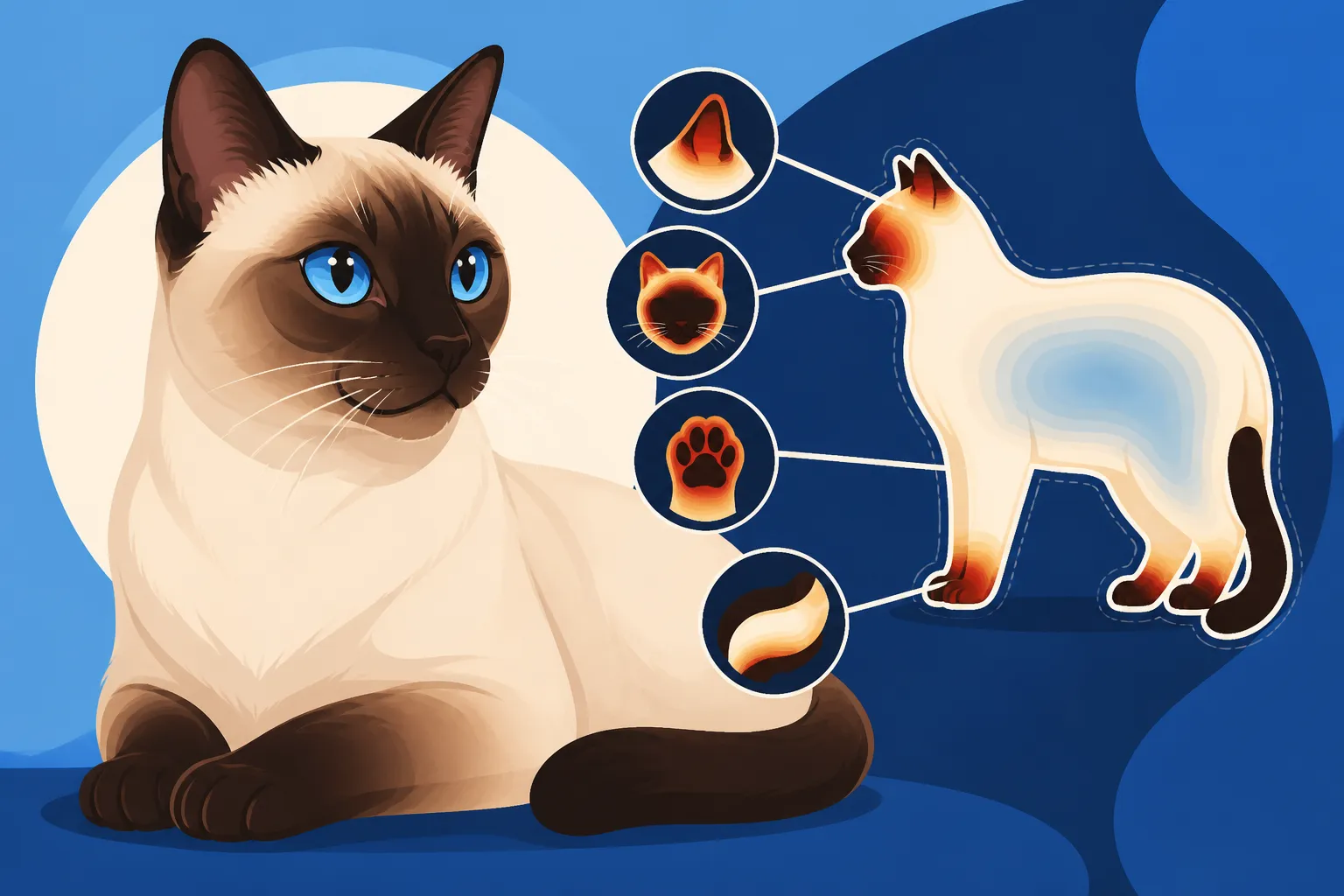
This particular genetic mutation means the tyrosinase enzyme can only produce pigment efficiently when the body temperature is cooler. It's like a tiny factory that thrives in chilly conditions but slows down or stops altogether when things get warm. So, the parts of your Siamese cat that are naturally cooler—like the tips of their ears, their paws, tail, and nose—are where this pigment-producing factory kicks into high gear, resulting in those deep, rich "points." The warmer core of their body, however, acts like a heated studio where the painter can't get much done, leading to the paler cream or white fur. This is precisely Why a Siamese Cat's Pigment Only Works When Cool.
How the Colorpoint Gene Works
The specific gene responsible for this marvelous color restriction is known as the himalayan gene or the colorpoint gene. It's a recessive gene, meaning a Siamese cat needs two copies of it (one from each parent) to display the characteristic pointed pattern. If they only have one copy, they might be a carrier but won't show the points themselves. This gene creates what's technically called "temperature-sensitive albinism," but it's not true albinism because pigment is produced, just in a restricted manner.
This gene dictates not just where the color appears, but also the base color that forms the points. For instance, a cat with a black base color will develop seal points, while a chocolate base will lead to chocolate points. Lilac points come from a dilute chocolate, and blue points from a dilute black. It's a spectrum of stunning hues, all governed by this one clever gene. Which Gene Makes a Siamese Cat's Points explains this in more detail, delving into the fascinating genetics that create these beautiful variations. It's truly a marvel how such a small genetic tweak can result in such an iconic and instantly recognizable appearance.
The Phenomenon of White Kittens and Developing Points
One of the most surprising, and frankly adorable, aspects of Siamese cat development is observing their color transformation. When they first enter the world, they don't look like the distinctive adults we know and love. Instead, they're little blank canvases, waiting for their unique colors to emerge.
Why Siamese Kittens Are Born All White
Imagine the astonishment of a breeder or a new owner seeing a litter of pure white kittens, perhaps wondering if they've accidentally got a different breed! But rest assured, this is completely normal for Siamese cats. The reason their kittens are born entirely white or a very pale cream is directly linked to the temperature-sensitive nature of their pigment gene.
Inside their mother's womb, the environment is uniformly warm and cozy, maintaining a consistent temperature that's too high for the tyrosinase enzyme to activate and produce melanin. There are no "cool points" to develop yet because the entire body is kept at an even, warm temperature. So, as tiny newborns, they haven't had the opportunity for their extremities to cool down and start producing pigment. This is why when they first arrive, they are indistinguishable in color from many other white kittens. It’s a temporary camouflage, a testament to the warmth of their early environment. This incredible fact is explored further in Why a Siamese Cat Kitten Comes Out White.
The Gradual Appearance of Points
The magic truly begins after birth. Once exposed to the cooler ambient air of the outside world, the kitten's extremities—the ears, nose, paws, and tail—naturally begin to drop in temperature compared to their core body. This slight temperature difference is all it takes for that clever tyrosinase enzyme to finally spring into action.
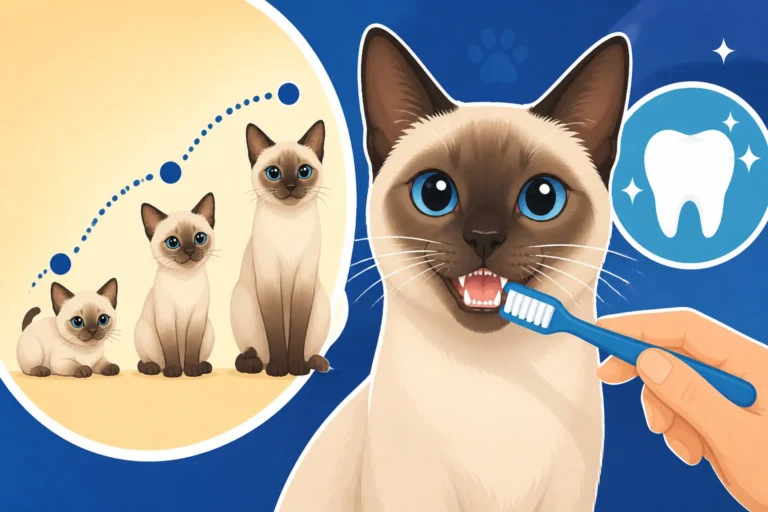
You won't see dramatic changes overnight, of course. The points typically start to appear within the first week or two, often as a faint blush of color on the ears or the tip of the nose. Over the next few weeks and months, these colors will gradually deepen and spread. The speed and intensity of this development can vary, influenced by individual genetics and, as we'll discuss, the ambient temperature of their surroundings. By the time they are a few months old, their distinct point coloration is usually quite evident, solidifying their identity as a beautiful Siamese. You can read more about this fascinating timeline in The Age a Siamese Cat Kitten Gets Its Points.
Predicting a Kitten's Final Color
While all Siamese kittens are born white, their genetic makeup already determines what their final point color will be. However, it can be tricky to predict the exact shade when they are still tiny, as the color develops gradually. A very light-colored point, like a lilac or blue, might take longer to become clearly defined than a darker seal or chocolate point.
Experienced breeders often have a good idea based on the parents' genetics and what they've seen in previous litters. Sometimes, you can get a hint by looking at the paw pads, which might show a faint hue that corresponds to their future point color even before the fur darkens significantly. It’s a bit like watching a Polaroid picture develop; slowly but surely, the masterpiece reveals itself. The subtle shifts and deepening of color are part of the joy of watching a Siamese kitten grow, knowing that each one is developing its own unique expression of this incredible genetic trait.
Environmental Factors Influencing Point Color
It's easy to think that once a cat's fur color is set, it's set forever. But with Siamese cats, their coat is a living canvas, subtly (or sometimes not so subtly) shifting and responding to the world around them. Temperature, in particular, plays a starring role in the ongoing drama of their coloration.
The Impact of Climate and Indoor Temperatures
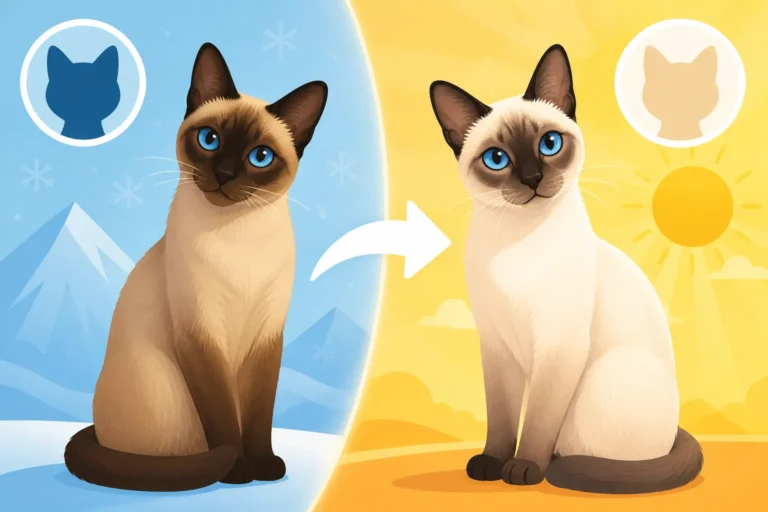
Given the temperature-sensitive nature of the tyrosinase enzyme, it stands to reason that the environment your Siamese cat lives in can directly affect the depth and spread of their point coloration. Simply put: the colder the environment, the darker the points (and sometimes the body) will become.
If you live in a perpetually chilly home, or if your Siamese enjoys spending time in cooler rooms, you might notice their points become quite intense, almost appearing black in the case of a seal point, and sometimes even the main body fur can take on a deeper, toastier hue. Conversely, a Siamese cat living in a consistently warm climate or a toasty home might have paler, less defined points and a lighter body. It's a fascinating phenomenon, almost like they have their own built-in thermometer, constantly adjusting their coat to reflect the ambient temperature. This is a common observation, and many owners are curious about How Much a Siamese Cat Darkens in a Cold House. Providing a consistently warm environment, perhaps with a cozy heated bed or plenty of warm spots from brands like Amazon Basics or K&H Pet Products, can help them feel comfortable and potentially maintain a lighter body color if that's what you prefer. You want to make sure your Meezer is always comfy, no matter the season.
Darkening Due to Shaving or Injury
This is where things get really interesting, and sometimes, a little surprising for owners. If a Siamese cat undergoes surgery, gets a patch of fur shaved for an IV, or even suffers a localized injury that causes hair loss, the fur that grows back in that spot will almost invariably be darker than the surrounding body fur. This isn't a sign of poor healing or a strange skin condition; it's another dramatic demonstration of the temperature-sensitive gene at work.
When a patch of fur is removed, the skin underneath is exposed to the cooler ambient air more directly. This localized cooling stimulates the tyrosinase enzyme in that specific area to produce pigment, even on the warmer core of the body where it usually wouldn't. As the new fur grows in, it appears as a dark patch, often startlingly so against the cat's typically pale body. Over time, as the fur grows out and the area is re-insulated by the surrounding coat, this dark patch may gradually lighten, but it can take many months. It's a temporary tattoo created by their own unique biology, and it’s why owners often notice Why a Shaved Siamese Cat Grows Back Dark. It's a powerful reminder of how finely tuned their coloration is to temperature fluctuations.
The Aging Process and Point Darkening
Just like us, Siamese cats change as they age. Their playful kitten energy might mellow, their voices might deepen, and their once-sharp points might become less distinct from their bodies. The aging process has its own profound impact on their unique coloration, often leading to a general deepening of their overall hue.
Natural Darkening Over a Siamese Cat's Lifespan
It's a common observation among Siamese enthusiasts: as these cats mature and enter their senior years, their point coloration tends to become richer, deeper, and more widespread. A seal point that was a lovely medium brown as a youngster might become almost black, and a delicate lilac point could transform into a much darker, smoky grey. This isn't just about environmental exposure; it's a natural progression tied to their physiology.
Over a cat's lifetime, their core body temperature can subtly shift, and the efficiency of various metabolic processes, including pigment production, can change. More significantly, prolonged exposure to cooler temperatures over years, even if subtle, allows for a more consistent activation of that temperature-sensitive tyrosinase enzyme. Think of it like a cumulative effect; the enzyme has had more opportunities to do its work over a longer period, resulting in a gradual accumulation of pigment. This process often means that a senior Siamese cat will appear considerably darker than they did as a frisky youngster. This fascinating transformation is exactly How Dark a Siamese Cat Gets With Age.
When a Siamese Cat's Body Turns Brown
While the points are the stars of the show when it comes to darkening, it's not uncommon for the main body fur of an older Siamese cat to also take on a "toasted" or brownish hue. This can be quite noticeable, especially in seal and chocolate points, where the creamy body might transition to a light tan or even a caramel brown. Owners might wonder if their cat is getting dirty or if their diet is affecting their coat.
Again, this is largely due to the cumulative effect of temperature on their unique genetic makeup. The body's "warm core" isn't perfectly insulated from all temperature fluctuations. Over decades, even slight, repeated drops in skin temperature across the body can trigger some pigment production. Additionally, as cats age, their metabolism can slow slightly, and their circulation might not be quite as robust, which could lead to slightly cooler skin temperatures across more of their body. This subtle but widespread cooling allows the pigment-producing enzyme to work just enough to give the entire coat a warmer, darker tint. It’s simply part of their natural aging process, adding another layer of depth and character to their already stunning appearance. Why an Older Siamese Cat's Body Goes Brown delves deeper into this common phenomenon.
Grooming and Care Considerations for Pointed Coats
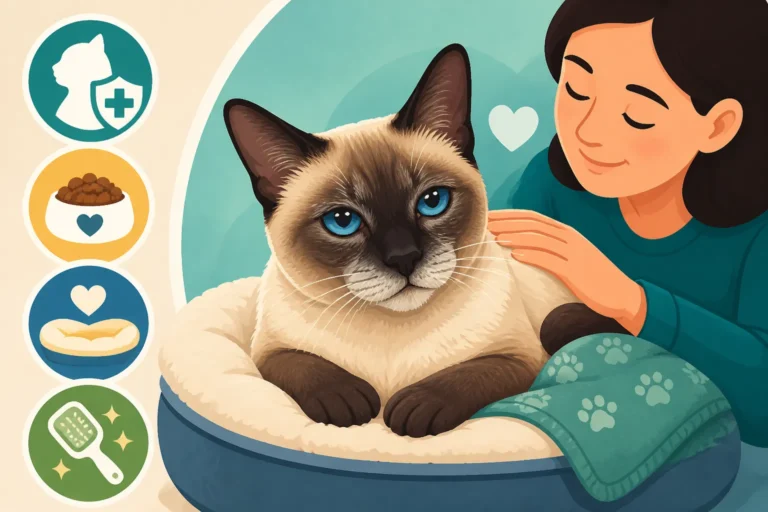
While a Siamese cat's coloring is largely dictated by genetics and temperature, proper care and nutrition can play a supporting role in maintaining their coat health and appearance. Good grooming practices are essential, not just for aesthetics, but for their overall well-being.
Maintaining Coat Health and Color
The Siamese cat is renowned for its short, fine, and close-lying coat. It's truly a low-maintenance marvel, but "low maintenance" doesn't mean "no maintenance." Regular grooming, even just a few minutes a week, can do wonders for keeping their coat sleek and shiny, allowing their beautiful point coloration to truly stand out.
-
Brushing: While Siamese cats don't have a thick undercoat, they still shed, albeit minimally compared to some other breeds. A quick brush a couple of times a week with a rubber curry brush or a fine-toothed comb will help remove loose hairs, distribute natural oils, and stimulate circulation. This isn't just about preventing hairballs; it keeps their skin healthy, which in turn supports a vibrant coat. Products found on sites like Chewy or Amazon can make this routine a breeze, from soft bristle brushes to grooming gloves. A healthy coat tends to display its colors more vividly. You can learn more about their shedding habits in How Much a Siamese Cat Sheds and how to manage them in How Often a Siamese Cat Needs Brushing.
-
Nutrition: What your Siamese cat eats profoundly impacts their coat quality. A high-quality diet rich in essential fatty acids (like Omega-3 and Omega-6) will contribute to a healthy, glossy coat and supple skin. Look for premium cat foods that list meat as the first ingredient. While diet won't change the underlying genetic mechanism of their point color, a well-nourished cat will always have a better-looking coat, enhancing the visual appeal of those distinctive points.
Practical Tips for Owners
Living with a Siamese cat means embracing their unique characteristics, including their ever-so-slightly changing coat color. Here are a few practical tips to help you care for your pointed beauty:
-
Temperature Awareness: If you prefer your Siamese to maintain a lighter body color, providing a consistently warm indoor environment can help. This doesn't mean overheating your home, but ensuring they have access to cozy, warm spots, especially during cooler months. Heated cat beds or strategically placed blankets near a gentle heat source (safely, of course) can make a big difference. Remember, Keeping a Siamese Cat Warm is also important for their overall comfort, as their short coat can make them feel the cold more keenly than some other breeds.
-
Shaving for Medical Reasons: If your Siamese needs a medical procedure that requires shaving a patch of fur, don't be alarmed when it grows back dark. It's a completely normal (and temporary) reaction. Your vet should ideally warn you about this, but if not, now you know! It will fade eventually, though patience is key.
-
Enjoy the Evolution: The changing colors of a Siamese cat throughout their life are part of their charm. From the pristine white kitten to the gradually deepening points and the "toasted" senior, each stage offers a different aesthetic. Embrace this natural evolution and appreciate the science behind their living artwork.
The unique point coloration of the Siamese cat is a constant source of wonder and a testament to the intricate workings of genetics and environmental interaction. Understanding why their points are dark, why they are born white, and how their color evolves through life deepens our appreciation for this magnificent breed. It's a beautiful, living reminder of their ancestral origins and the delightful quirks that make each Siamese cat so special.
Disclaimer
This article is for general informational purposes only and does not constitute professional advice. Laws, prices and regulations vary by location and change over time. Consult a qualified professional for guidance on your specific situation.