Whether Siamese Cats Were Once Sacred
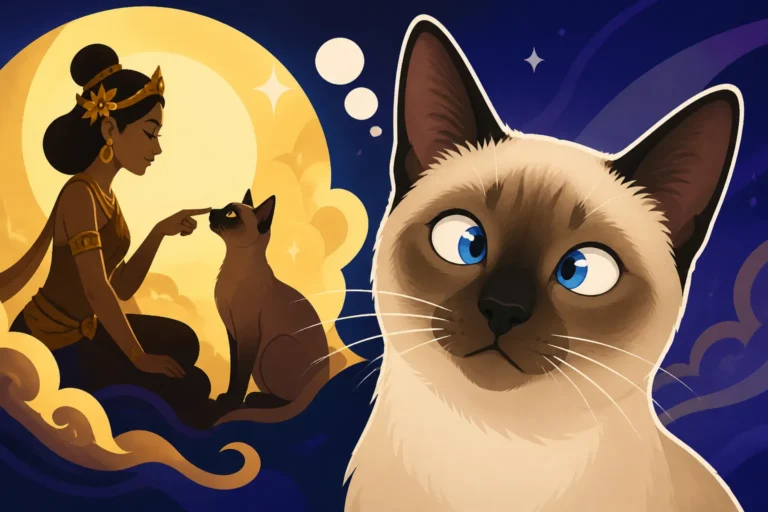
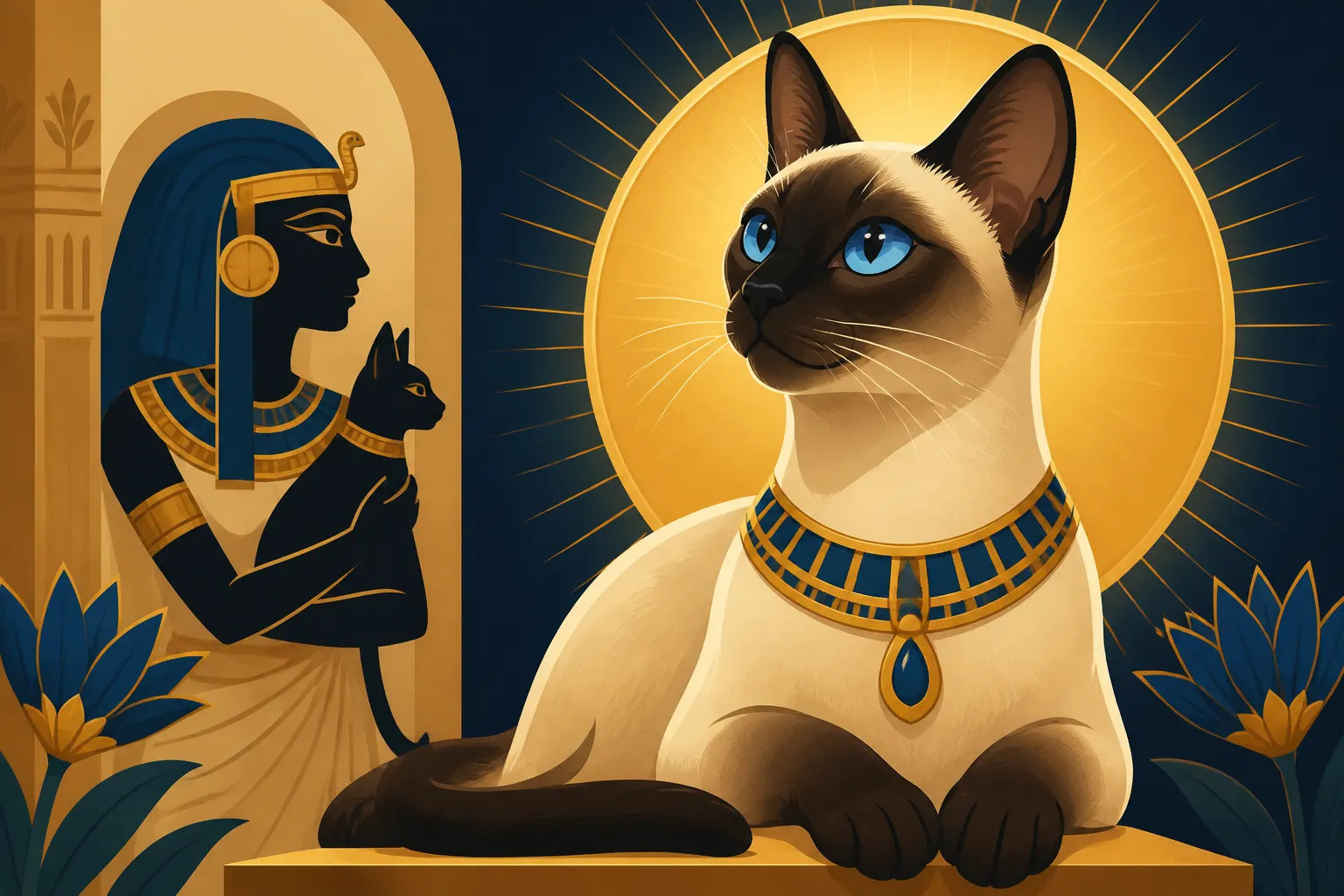
The idea that Siamese cats were sacred in ancient Siam is appealing, but it blends cultural history, old cat poems, royal associations, and later legends into one tidy story. The evidence supports a more careful answer: cats were admired and sometimes linked with good fortune, but that does not prove every Siamese cat was a holy temple animal or reserved for royalty.
Were Siamese cats considered sacred in ancient Siam
There is no simple historical record declaring that Siamese cats, as a breed in the modern sense, were universally sacred. The word “Siamese” now refers to a defined pedigree breed, while cats living in Siam centuries ago belonged to local populations rather than today’s registry-defined breed. That difference matters when we try to connect present-day cats to old religious or royal stories.
Historical and cultural material does suggest that certain cats were admired and regarded as auspicious. But respect, symbolism, and sacred status are not interchangeable. A cat might appear in a poem as beautiful or fortunate without being worshipped, kept exclusively in temples, or protected by a formal religious rule.
What the historical record can and cannot tell us
One important source for understanding traditional Thai cats is the Tamra Maew, often translated as the Cat-Book Poems. These illustrated manuscripts describe cats and their qualities, sometimes associating particular appearances with good or bad fortune. The Wichianmat, a pointed cat associated with the Siamese’s history, is among the types discussed in this tradition. You can explore the background in What the Tamra Maew Manuscripts Show About the Siamese Cat and What Wichianmat Means in the Siamese Cat's Homeland.
The manuscripts are valuable cultural records, but they are not a modern breed registry or a scientific account of cat behavior. They do not establish that every cat with a pointed coat was treated as sacred. Nor does a description of an auspicious animal prove that people worshipped it. It is more accurate to say that old Thai traditions included ideas about cats’ appearance and fortune, while the claim of universal sacredness goes beyond what those ideas alone demonstrate.
There is also a gap between the historical cats described in Thai sources and the modern Siamese breed. Cats and their descendants moved across regions and generations; later breeding practices shaped the appearance and lineage of today’s registered Siamese. For that distinction, see Which Thai Cats Are Related to the Siamese Cat and How the Thai Split From the Siamese Cat. The names overlap in popular conversation, but they do not automatically mean the same thing in every historical or registry context.
Sacred, auspicious, and admired are different claims
People often use “sacred” to mean “highly respected,” but the word can imply a specific religious role. A cat described as lucky or auspicious may have held special cultural meaning without being considered a deity or a formal object of worship. Those distinctions can disappear when an interesting cultural tradition is retold in a short online post.
A useful way to assess the claim is to ask what is actually being asserted. Was the cat valued? Was it connected with good fortune? Was it kept in a temple? Was it restricted to royalty? Was it worshipped? Each question needs its own evidence. A source that supports one claim does not automatically support the others.
This is why careful accounts tend to use language such as “associated with good fortune” or “held in high regard” rather than saying that Siamese cats were simply sacred. Those more precise phrases leave room for cultural respect without turning a complex history into a dramatic but unsupported certainty.
Why people associate Siamese cats with temples and royalty
The sacred-cat story often combines two ideas: that Siamese cats guarded Buddhist temples and that only kings or nobles could own them. Both ideas are memorable, and both may draw on the broader prestige attached to certain animals and royal settings. But a compelling legend is not the same as evidence that a practice was universal.
Thailand’s history includes strong connections between monarchy, religious institutions, and social status. It is easy to see how a striking, prized cat could become attached to stories about palace life or temple duties. Still, that setting does not prove that all cats of a particular type lived only in those places.
The temple guardian story
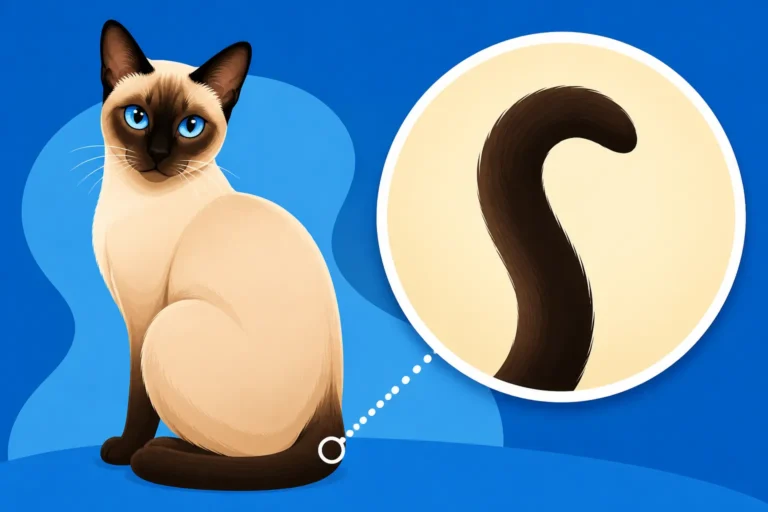
A popular story says Siamese cats guarded sacred temples or watched over religious treasures. Versions sometimes describe cats protecting a temple vessel, with their crossed eyes and kinked tails supposedly caused by the intensity of their watch. These tales are part of the breed’s folklore, but they should not be presented as established history without supporting records.
The story may have endured because it gives a memorable explanation for physical traits once more commonly associated with some Siamese cats. Yet the traits themselves do not confirm the tale. A kinked tail or crossed eyes can be discussed as features found in some cats and as subjects of cultural storytelling; neither is proof that a particular cat served as a temple guardian. Related background appears in Why the Siamese Cat's Tail Kinks in the Legend and Why the Siamese Cat's Eyes Cross in the Legend.
Temple life is also not a single, uniform category. Cats may have lived near religious buildings or been cared for by people connected with them, as animals have in many societies. That possibility is much narrower than the claim that Siamese cats were a recognized class of sacred guardians. When a story gives a specific job to an entire type of cat, it is worth asking whether it is documented history, local tradition, or a later explanation.
The royal-cat story
Another common claim is that Siamese cats belonged only to the royal family. A prized animal might certainly have been associated with wealthy households or rulers, and accounts of royal ownership can help explain why a cat became famous. But “some were kept by people of high status” and “only royalty could own them” are very different statements.
The stronger version is difficult to accept without clear evidence of an ownership rule. Cats are domestic animals, and their presence in a region would not ordinarily have been limited to a palace unless a reliable source documented such a restriction. The question is explored further in Whether Siamese Cats Were Only Owned by Kings. It is safer to treat exclusive royal ownership as a popular claim rather than a settled fact.
Royal associations can also grow over time. An animal’s rarity, unusual appearance, or later international reputation can encourage stories that make its past sound more exclusive than the evidence warrants. That does not mean there was no royal interest in cats. It means the leap from royal interest to royal monopoly needs proof.
What the old cat traditions suggest about status
Traditional Thai cat lore helps explain why Siamese cats became associated with distinction, fortune, and special treatment. It does not, by itself, settle every question about how cats were kept in everyday life. The distinction is important because written descriptions and illustrations often capture ideals and symbolism more clearly than ordinary household routines.
The role of the Tamra Maew
The Tamra Maew is best understood as a collection of traditional descriptions and beliefs about cats, not a census of where cats lived or who owned them. Its poems and illustrations reflect a way of seeing cats through appearance, character, and fortune. That makes the manuscripts culturally fascinating, but readers should avoid treating every poetic description as proof of a legal or religious practice.
The works also belong to a long manuscript tradition, rather than a single modern publication with one unambiguous date and author. Copies and interpretations may vary, and the language of traditional texts can be difficult to map directly onto modern categories. A description of a valued cat type gives us insight into how cats could be imagined and praised, but it cannot independently establish that those animals were considered sacred by everyone.
This is one reason that the question “Were Siamese cats sacred?” cannot be answered simply by pointing to a historic cat poem. The poem may support the idea that certain cats were culturally significant or viewed as auspicious. It does not necessarily support worship, temple exclusivity, or ownership by royalty alone.
How stories become simplified
Over time, layered histories are often compressed into catchy claims: “Siamese cats were sacred,” “they belonged to kings,” or “they guarded temples.” Such statements are easy to remember and share. They can also flatten distinctions between a historical local cat, an auspicious symbol, an animal in a legend, and a modern pedigree breed.
A more responsible retelling separates the evidence from the folklore. The evidence points to traditional Thai descriptions of cats, including pointed cats associated with the Siamese’s heritage, and to a culture in which certain animals could carry special meaning. The folklore supplies dramatic stories about temples, royalty, and unusual physical traits. Those stories can be culturally interesting even when they are not verified as literal history.
The same caution applies to claims about burial and royal privilege. A story that an animal was buried with a ruler, for example, should be checked as a distinct claim rather than assumed from the idea that the animal was admired. See Whether a Siamese Cat Was Buried With Royalty for that specific question, and Whether Siamese Cats Really Guarded Temple Vases for the temple-guardian tradition.
| Claim | What can be said carefully | What the claim does not prove |
|---|---|---|
| Siamese cats were valued in Siam | Traditional cat lore includes admired and auspicious cat types | That every pointed cat had sacred status |
| Siamese cats were connected with good fortune | Some traditional descriptions associate cat types with fortune | That people worshipped those cats |
| Siamese cats guarded temples | Temple-guardian stories are part of popular folklore | That cats had an established, universal temple role |
| Siamese cats belonged only to kings | Royal associations appear in popular accounts | That ordinary people were forbidden to own them |
| Historical Thai cats were modern Siamese | The modern breed has roots connected with Thai cats | That historical and modern breed categories are identical |
How to describe the Siamese cat’s sacred history accurately
If you are writing about the breed, talking with a breeder, or simply answering a child’s question, a little precision makes the history more interesting rather than less. You do not have to dismiss the legends. You can explain that they are legends and then describe what the historical material supports.
A balanced answer to the question
A concise, balanced answer is: Siamese cats were not demonstrably sacred in the sense that all were worshipped or formally reserved for temples, but cats associated with the Siamese’s Thai heritage appeared in traditions that could regard particular types as auspicious and worthy of admiration. Royal and temple stories add cultural color, but they should be identified as stories unless their specific details are documented.
That wording avoids two extremes. It does not reduce the cat’s history to “just a myth,” because Thai cat traditions and the cultural esteem attached to cats are meaningful. It also does not turn every legend into proven fact. This middle ground is often the most honest answer.
For a broader look at the breed’s historical development and changing identity, The Siamese Cat Came From Siam, Not Thailand and What People Get Wrong About the Siamese Cat offer useful context. They help separate the name and image of the modern breed from the longer history of cats in the region.
Questions to ask when you encounter a dramatic claim
When a page, video, or conversation says Siamese cats were sacred, look for the details behind the statement. Does it name a particular manuscript, period, community, or practice? Does it distinguish an auspicious animal from a worshipped one? Does it describe a legend as folklore, or state it as fact? If the claim jumps from “a type of cat was admired” to “only kings could own it,” that jump deserves scrutiny.
It can also help to notice whether several different stories have been blended together. Temple guardians, royal ownership, crossed eyes, kinked tails, and lucky-cat traditions are separate topics. One story’s popularity does not validate all the others. What the Tamra Maew Says About the Siamese Cat is a useful related topic for readers who want to focus on the traditional texts rather than later retellings.
The most respectful approach is to preserve the cultural story while being clear about its limits. You can say that Siamese cats are linked in popular imagination with temples and royalty, and that traditional Thai cat lore gives certain cats special significance, while also acknowledging that universal sacred status is not established. That answer keeps the history vivid without presenting folklore as settled fact.
Disclaimer
This article is for general informational purposes only and does not constitute professional advice. Laws, prices and regulations vary by location and change over time. Consult a qualified professional for guidance on your specific situation.