Why the Siamese Cat Standard Rewards an Extreme Head
A Siamese cat’s long, angular head can look dramatically different from the rounder face many people associate with older photos of the breed. That change is not accidental: show standards describe a particular wedge-shaped outline, and judges assess how closely a cat matches it. This guide explains what that wording means, how it shaped the modern Siamese, and where breed ideals meet real-world health and welfare.
What the Siamese cat standard means by an extreme head
The wedge is a specific outline
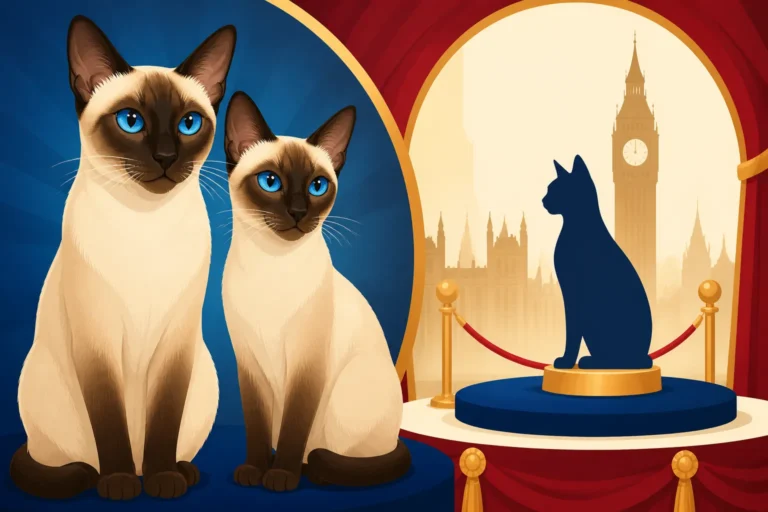
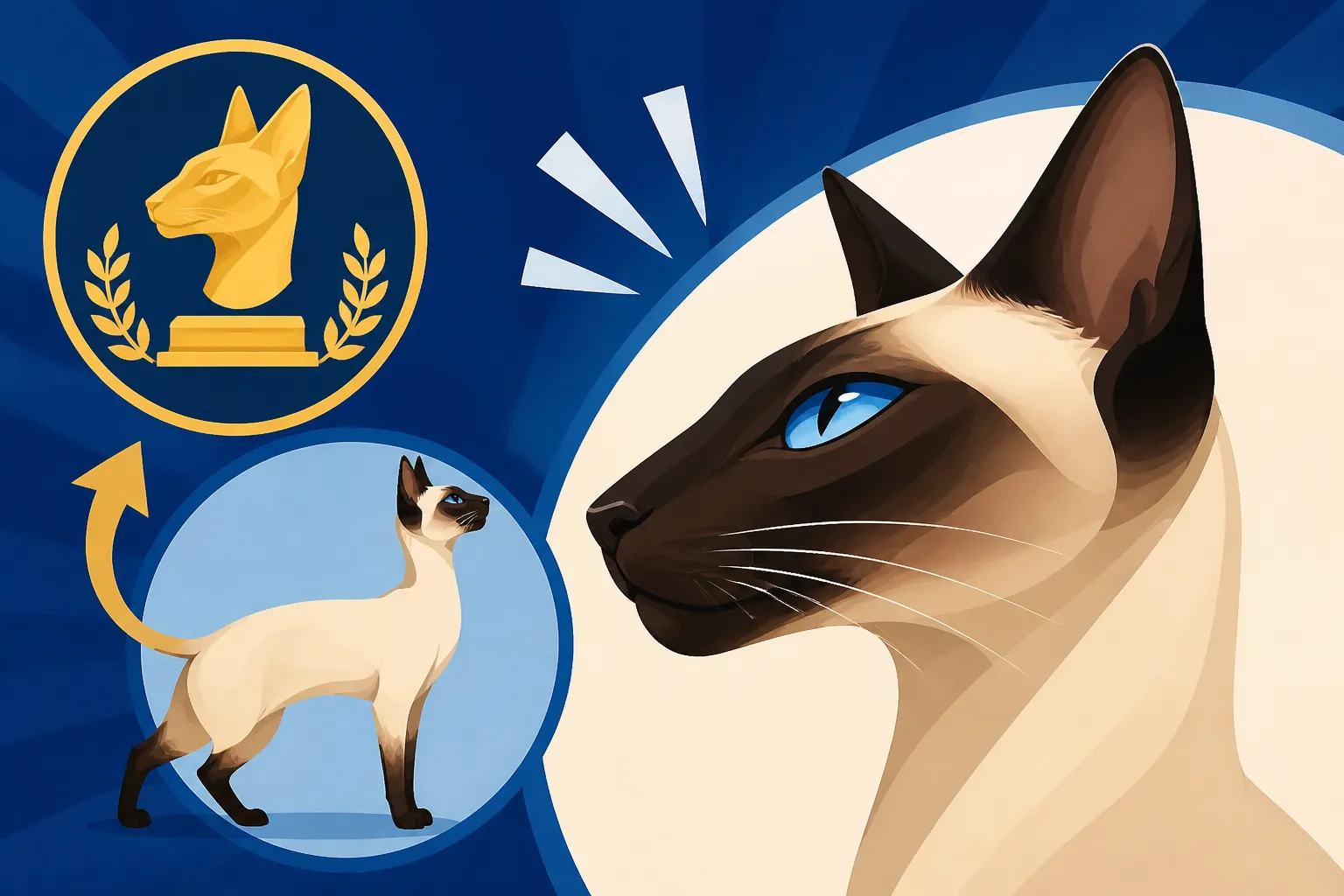
When a Siamese standard describes a wedge, it means more than a narrow face. The head is expected to form a long, tapering shape from the face toward the tips of the ears. The profile, muzzle, chin, and ears are considered together, so the desired impression is one of continuous lines rather than a round head with separately attached features.
That makes the word “extreme” easy to misunderstand. It can sound as if the standard asks for an unhealthy or exaggerated skull in every individual cat. More often, people use it to describe the striking contrast between the modern show silhouette and the rounder, broader-headed cats they may remember from family photos, older films, or traditional Siamese communities.
The written ideal is important because it gives breeders and judges a shared target. A show cat is compared with the breed standard, not simply with whichever Siamese happens to be standing beside it. For a closer look at the full outline, see What a Siamese Cat Looks Like by the Standard and What the Siamese Cat Standard Asks For.
The ears and muzzle complete the shape
The ears are a major part of the wedge. In the modern show type, they are generally expected to be large and set so they continue the lines of the head. The muzzle should also contribute to the taper, while the chin and profile help keep the face balanced. If one feature is very prominent but the rest of the head does not follow the same shape, the overall wedge may look less continuous.
This is why a photo taken straight on can be misleading. The angle, a cat’s posture, facial expression, and even the way the ears are held can make a head look wider or narrower than it does in person. Judges assess the cat as a whole, including proportion and balance, rather than treating “big ears” or “long face” as standalone goals.
The standard also describes a breed type, not a template that every pet must match perfectly. A Siamese who has a softer profile or less dramatic wedge can still be a healthy, affectionate companion. The show ideal helps explain why certain features are rewarded in the ring; it does not determine an individual cat’s worth or quality of life.
How the modern Siamese head developed
Selection for show type changed the silhouette
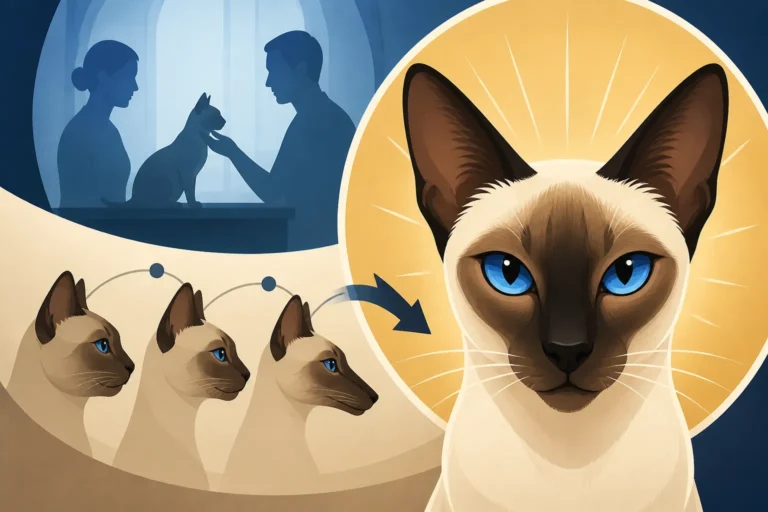
The Siamese breed’s appearance has changed over time, as happens in many pedigreed cats. Breeders chose cats they felt best expressed the traits they wanted to preserve, and show standards helped define those preferences. Across generations, selection for a longer, narrower head and a more pronounced wedge made the modern show silhouette more recognizable.
That shift did not happen because one breeder changed every Siamese at once. Breed appearance develops through many individual choices: which cats are shown, which are praised by judges, and which cats are selected for future litters. When a feature is consistently favored, it can become more visible in the population over time.
For context on how the breed’s outline evolved, read How the Siamese Cat's Head Changed Shape in Fifty Years and How the Applehead Siamese Cat Became the Wedge. Those changes also explain why people may use “traditional,” “old-style,” and “modern” Siamese to describe cats with noticeably different head shapes, even though the terms are not always used consistently.
A show standard rewards resemblance to its written ideal
A show judge’s job is to compare a cat with the standard used by that registry or show organization. If the standard calls for a long wedge and large, well-set ears, a cat that expresses those traits may place more favorably than a cat with a rounder head. In that sense, the standard rewards the desired head shape by making it part of the criteria used to evaluate breed type.
The process is not usually a simple contest to find the longest face or largest ears. Judges consider the overall cat, including body, coat, color, condition, and how well the features work together. A head can look dramatic but still be poorly balanced; conversely, a less exaggerated cat may have a harmonious outline without matching every show preference as closely.
Different registries can describe and prioritize breed traits in their own ways. That matters for anyone comparing photos online: two cats labeled “Siamese” may be presented under different standards or traditions. For a wider historical discussion, see Why Show Breeders Changed the Siamese Cat's Head and How a Siamese Cat Differs From an Oriental Shorthair.
Modern and traditional types are not the same thing as healthy and unhealthy
Head shape alone does not diagnose a health problem
A long, wedge-shaped head is not the same as a shortened, flattened face. Siamese cats are not bred for the compressed muzzle associated with some brachycephalic breeds. A cat’s head shape by itself does not establish whether the animal has a health problem, and it would be unfair to label every modern Siamese unhealthy simply because its features are more pronounced.
At the same time, no breed standard should replace attention to an individual cat’s welfare. If a cat has trouble eating, breathing, grooming, or closing its mouth comfortably, those concerns deserve veterinary attention regardless of whether its appearance is fashionable or traditional. A pet’s comfort and function matter more than how closely its face resembles a show photograph.
People who worry about the direction of breed selection can find a more balanced discussion in Whether the Modern Siamese Cat Is Too Extreme. The useful question is not only “Does this cat look modern?” but also “Can this cat move, breathe, eat, see, and live comfortably?”
Traditional and modern labels can be imprecise
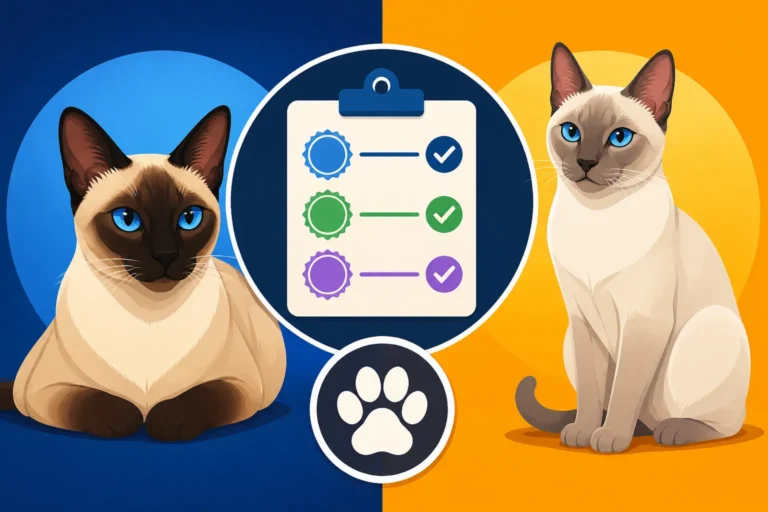
“Traditional Siamese” is often used for cats with a rounder head, a sturdier body, or a less pronounced wedge. “Modern Siamese” usually refers to the more elongated show type. But these labels do not always mean the same thing to every breeder, registry, rescue group, or owner. A seller’s wording alone may not tell you how a cat is registered or what standard its ancestors were bred to.
If you are choosing a kitten, ask for clear information rather than relying on a label. Find out which registry the breeder uses, whether the parents are registered, and what the breeder means by “traditional” or “modern.” You can also ask to see adult relatives, since kitten faces and proportions change as they grow.
A rounder head does not automatically make a cat healthier, just as a wedge-shaped head does not automatically make one unhealthy. For more on the terminology and the cats people mean by it, see What a Wedge Headed Siamese Cat Is and Whether the Traditional Siamese Cat Still Exists.
How to assess the standard without losing sight of the cat
Compare written descriptions, not just striking photos
Online photos tend to emphasize the most dramatic examples. Lighting, camera angle, grooming, and a cat’s expression can all make a face look more angular. Before deciding that a particular cat represents the whole breed, compare several adult cats and read the relevant registry’s standard. Look at the full body and profile as well as a close-up of the face.
A simple comparison can help keep the terms straight:
| Feature | Modern show emphasis | What to remember |
|---|---|---|
| Head outline | Long, tapering wedge | The entire head is judged as a connected shape |
| Ears | Large and set to continue the wedge | Size alone does not determine balance |
| Muzzle and chin | Contribute to a smooth, tapered profile | A photo may distort their apparent proportions |
| Traditional type | Often rounder or broader in outline | The label is used differently by different people |
| Health and comfort | Not established by appearance alone | Watch how the individual cat functions |
If you visit a breeder or show, notice whether people can explain the standard in plain language. A responsible conversation should include both the desired appearance and the cat’s health, temperament, and daily care. You should not feel pressured to accept “that’s just the breed” as an answer to a genuine concern about breathing, eating, or comfort.
Ask what the standard means for the cat in front of you
A breed standard is useful for understanding why a show cat looks a certain way, but it is not a medical record or a guarantee about temperament. Ask about the individual cat’s veterinary care, family history, and behavior. If you are looking at a kitten, ask how the breeder evaluates the parents and what support is available if you have questions after bringing the cat home.
It can also help to separate three questions that often get tangled together: What appearance does the standard reward? What type of Siamese do I personally prefer? And is this particular cat healthy and comfortable? Those questions overlap, but they are not interchangeable. A person may prefer the softer look of a traditional-type cat while still appreciating the modern show standard, or vice versa.
Most importantly, do not treat the standard as a checklist for judging a pet at home. A Siamese with a less dramatic wedge can still be unmistakably Siamese in personality, coloring, and companionship. The standard explains the show ideal; the cat’s needs come first.