When Siamese Cat Breeders Started Selecting for the Wedge
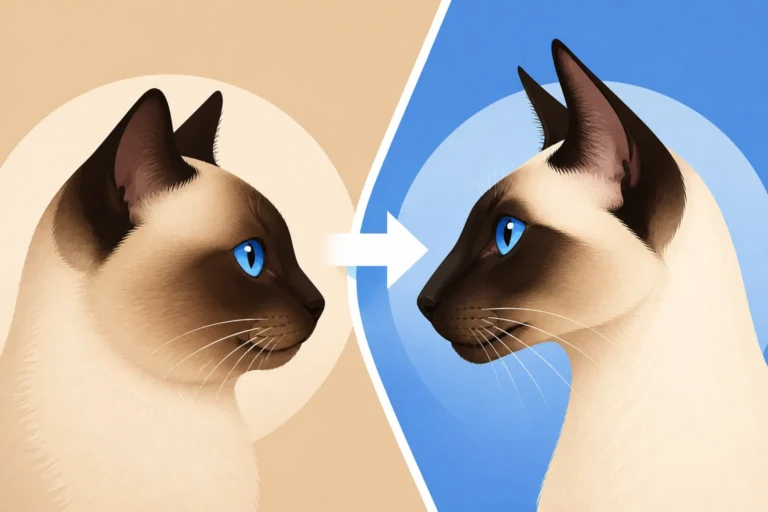
If you’ve seen one Siamese cat with a rounded head and another with a long, sharply tapered face, you may wonder whether one is more authentic. The difference reflects changing breeding preferences, not a simple switch from “real” to “fake.” This guide explains when breeders began selecting for the wedge, what shaped that trend, and how it changed the Siamese cat’s appearance.
When the wedge-shaped Siamese began to emerge
From a varied early type to a recognizable show cat
The cats that helped establish the Siamese breed in Europe and North America did not all have one identical head shape. Early descriptions and photographs show variation, and cats’ appearance depended on many factors: family lines, age, condition, and individual features. The breed was being defined through shows and written standards at the same time that breeders were choosing which cats to mate.
That process matters because a breed standard is not a snapshot of every cat in a population. It describes the features considered desirable for competition and breeding. As Siamese breeders and judges increasingly valued a refined, slender look, the cats that best matched that ideal were more likely to win shows and contribute to later generations.
Over time, this preference helped produce a more pronounced wedge: a head that narrows in a fairly continuous line from the ears toward the muzzle. It wasn’t a sudden change caused by a single breeder or one official decision. It was a gradual shift in taste, reinforced as breeders selected cats with similar features.
For broader context, How the Siamese Cat's Head Changed Shape in Fifty Years explores the long-term development of the breed’s look, while What a Siamese Cat Looks Like by the Standard explains how appearance is described in breed standards.
Why breeders started favoring a longer, narrower head
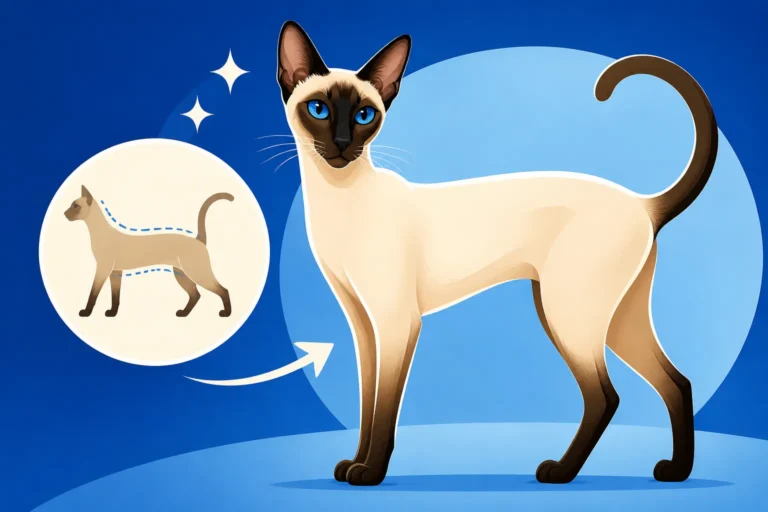
A wedge-shaped head fit the elegant, elongated outline that increasingly became associated with the show Siamese. The head, large ears, long neck, fine legs, and slim body were judged as parts of one overall silhouette. Selecting for a more tapered face was therefore connected to a wider preference for a refined, streamlined cat.
Breeders did not need to set out with the goal of changing the breed dramatically. If a particular look performed well in the show ring, breeders could choose cats with those traits as parents. Their kittens might inherit some of the same features, and continued selection could make those features more common in particular lines.
That does not mean every breeder made the same choices at the same time. Some favored a moderate head shape, while others pursued a more extreme wedge. Preferences varied across countries, registries, show communities, and individual breeding programs. The result was a spectrum of Siamese appearances rather than a neat dividing line between two types.
The mid-century shift toward the modern wedge
The modern, strongly tapered Siamese became increasingly prominent during the middle decades of the twentieth century. The shift is usually best understood as a period of accumulating selection rather than a precise date when breeders collectively changed direction. A standard may describe a desired shape, but the cats available for breeding—and the choices breeders make from one generation to the next—determine how quickly the population’s appearance changes.
The show ring helped make certain features visible and influential. Winning cats attracted attention, and their descendants could carry the same general type into future generations. As the wedge became a more established show preference, breeders who wanted to compete had an incentive to select for it.
This history is part of why the wedge is associated with the modern show Siamese, while many people use terms such as “traditional,” “old-style,” or “applehead” for cats with rounder heads and sturdier outlines. Those labels can be useful in everyday conversation, but their meaning depends on context. What an Applehead Siamese Cat Is and What a Wedge Headed Siamese Cat Is discuss the terms and the appearances people usually mean by them.
How breeding selection changed the Siamese’s appearance
A head shape is inherited as part of a whole body type
The wedge is not an isolated feature. Breeders select cats based on their overall structure, and traits often appear together within family lines. A longer, more tapered head may be seen alongside a longer body, finer bone, larger ears, and a more slender profile. These features contribute to the impression of a modern, elegant Siamese.
Still, cats do not come in perfectly uniform packages. A Siamese may have a narrow face but a less extreme body type, or a rounded head and strikingly large ears. Individual variation is normal, and the appearance of a cat cannot always be reduced to one label. A photograph may also exaggerate or soften a wedge depending on the angle, lighting, grooming, and the cat’s age.
When you’re comparing cats, look at the full profile rather than judging only the face from the front. The line from the ears toward the muzzle, the shape of the cheeks, the length of the body, and the overall balance all affect how a cat reads visually. That’s also why a single image may not tell you whether a cat comes from a particular breeding tradition.
Standards, registries, and the meaning of “Siamese”
Different cat registries can use different standards, and those standards may emphasize particular points of type. As a result, one person’s idea of the “correct” Siamese may not match another person’s. A cat shown under one registry’s expectations may be assessed differently under another’s, and not every cat marketed as a Siamese has the same pedigree or breed history.
The terms people use also overlap. “Applehead” commonly describes a rounder, fuller head, while “wedge” refers to a more tapered outline. “Traditional” and “old-style” are less precise in casual use; they may refer to appearance, lineage, or a breeder’s preferred description. If pedigree matters to you, ask which registry the cat is registered with and what its papers establish rather than relying on a head-shape label alone.
For the history of the distinction, How the Thai Split From the Siamese Cat and Whether the Traditional Siamese Cat Still Exists offer related background. These subjects can be confusing because appearance, registration, and historical ancestry are connected but not interchangeable.
| Feature | Commonly associated with a wedge type | Commonly associated with an applehead type |
|---|---|---|
| Head outline | Long and tapered from ears toward muzzle | Rounder or fuller overall |
| Face profile | Often appears more elongated | Often appears shorter or softer |
| Overall impression | Refined and angular | Sturdier and more rounded |
| How the label is used | Often linked to modern show type | Often used informally for traditional-looking cats |
| What the label proves | Appearance, not pedigree by itself | Appearance, not pedigree by itself |
These are broad descriptions, not a test for breed identity. There is variation within both groups, and labels used in advertisements may not correspond to a formal registry category.
Why neither appearance tells you everything about health
A wedge-shaped face does not, by itself, establish that a cat is healthier or less healthy than a rounder-headed Siamese. Nor does a round head guarantee that a cat has a particular temperament or will live longer. Health depends on many factors, including inherited risks, veterinary care, nutrition, environment, and the cat’s individual history.
It’s reasonable to ask how a breeder approaches health, but appearance is not a substitute for relevant records and transparent answers. Ask about the parents’ health, veterinary care, known issues in the family, and the breeder’s approach to matching cats. What the Siamese Cat Standard Asks For can help separate show-related appearance descriptions from broader questions about the breed.
For day-to-day care, choose food and supplies based on the individual cat’s needs, not on whether its head looks more wedge-shaped or rounded. A retailer such as Chewy may be one place owners compare routine supplies, but a product listing or breed label does not establish a cat’s pedigree or medical needs. If a cat has a health concern, a veterinarian is the right person to help assess it.
How to tell what kind of Siamese you are looking at
Look beyond a single photograph
A head-on photo can make a face look wider or narrower than it is. A side view often gives a clearer sense of the forehead, muzzle, and overall profile, while a relaxed standing photo may show body proportions. Even then, the image is only one piece of information. Cats change as they grow, and kittens may not yet show the proportions they’ll have as adults.
If you are comparing cats, try to see several images or meet the cat in person when possible. Notice whether the head tapers smoothly, whether the muzzle looks short or elongated, and how the head sits in relation to the ears and body. Avoid treating any one feature as a definitive answer, particularly when the cat is young or the image has been edited or taken at an unusual angle.
Descriptions such as “classic,” “traditional,” or “old-style” can be useful starting points for a conversation, but ask what the seller means by them. One breeder may use a label to describe the cat’s appearance; another may be referring to a specific pedigree or breeding program. Clear questions are more reliable than assuming everyone uses the terminology in the same way.
Ask breeders about history and documentation
A responsible breeder should be able to explain the cats’ backgrounds and provide appropriate registration information when applicable. Ask which registry the cats are registered with, what the paperwork covers, and how the breeder describes the parents’ type. A thoughtful answer should make it easier to understand whether the breeder is selecting for a modern wedge, a more moderate look, or another stated preference.
You can also ask how the breeder makes decisions beyond appearance. For example: How are breeding cats chosen? What health concerns are tracked in the family? What support is available if questions come up after a kitten goes home? A breeder who can discuss both the look they’re aiming for and the care of the cats gives you a more useful picture than someone who relies only on phrases like “pure Siamese” or “rare type.”
If you are adopting an adult cat, records may be incomplete, especially if the cat has moved through rescue or several homes. That does not make the cat less valuable or less lovable. It simply means you may need to focus on the cat’s current health, temperament, and needs rather than trying to reconstruct a precise breeding history.
Choose based on the cat you want to live with
It’s easy to get caught up in deciding which type looks most authentic, especially when different people make confident claims online. But the wedge-versus-applehead distinction is primarily about appearance and breeding preference. It cannot tell you whether a particular cat will be affectionate, vocal, relaxed, energetic, or a good fit for your home.
Spend time learning about the Siamese breed as a whole, including its social needs and care. Where the Siamese Cat Comes From provides historical context, while How a Siamese Cat Differs From an Oriental Shorthair helps clarify a related breed distinction. If you are buying or adopting, consider your household, schedule, and readiness to care for an active, people-oriented cat—not just the profile of its face.
For practical planning, Chewy and other pet-supply retailers can help you compare everyday items such as litter, carriers, and feeding supplies. Those choices are separate from the question of head type. When you bring a cat home, follow the veterinarian’s guidance on diet and health care, and allow time for the cat to settle in. The best match is the individual cat whose needs and personality fit your life, whether its head is sharply tapered, gently rounded, or somewhere in between.
Why the wedge remains part of Siamese breed conversations
The wedge remains a point of discussion because it represents a visible change in how breeders shaped the Siamese over generations. Some people admire the long, angular show type; others prefer a rounder, more moderate appearance. Many simply want to understand why cats carrying the Siamese name can look so different from one another.
That variation reflects more than a disagreement over aesthetics. It involves the history of show standards, breeder choices, registry definitions, and the way people use informal labels. A cat’s face can suggest a type, but it cannot tell you its full ancestry, health, or personality. Those questions require different evidence.
So, when did Siamese breeders start selecting for the wedge? The trend developed gradually and became increasingly influential through the middle of the twentieth century, as breeders and show communities favored a more elongated, refined outline. There was no single moment when every breeder made the same choice. The modern wedge is the result of sustained selection, while rounder Siamese-looking cats continued to exist in other lines and breeding traditions.
Chewy can be useful as one option for comparing routine supplies once you’ve chosen a cat, but neither a retailer’s description nor a particular head shape replaces pedigree documentation or veterinary advice. Keep those questions separate, and you’ll have a clearer understanding of both the breed’s history and the cat in front of you.
Disclaimer
This article is for general informational purposes only and does not constitute professional advice. Laws, prices and regulations vary by location and change over time. Consult a qualified professional for guidance on your specific situation.