Which Registries Recognize the Thai Separately From the Siamese Cat
When a breeder advertises a “traditional Siamese” or “Thai” kitten, the name alone does not tell you how the cat will be registered. Some cat registries recognize the Thai as a separate breed from the Siamese, while others do not. This guide explains which organizations make that distinction, what it means for pedigrees, and how to check a breeder’s claims.
Why the Thai and Siamese names get confused
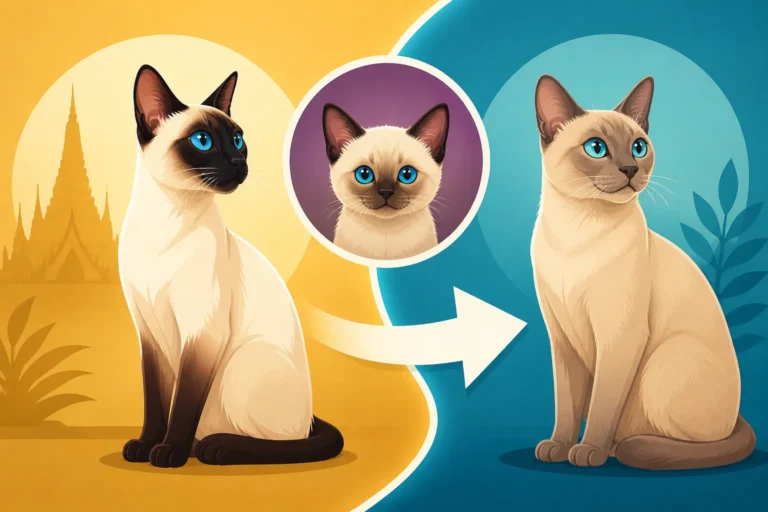
The Thai represents an older Siamese type
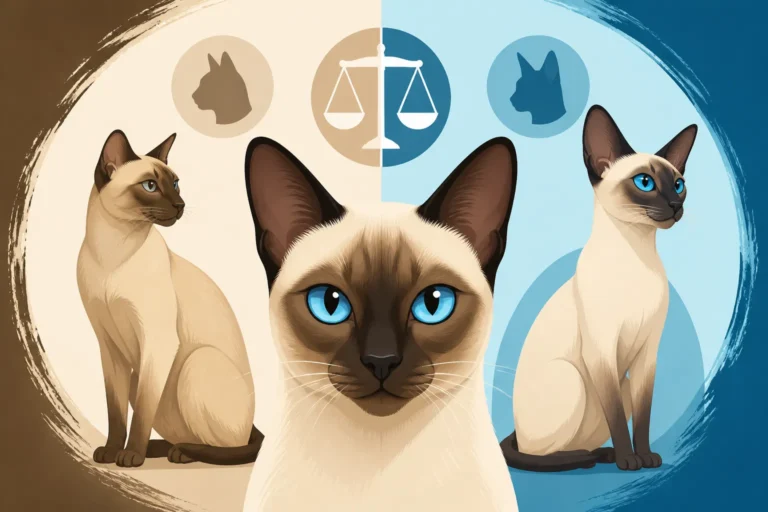
The Thai is generally described as a moderate, traditional-looking cat with the pointed coat pattern, blue eyes, and heritage associated with the Siamese. Compared with the modern show Siamese, which is bred to have a long, slender outline and a more elongated, wedge-shaped head, the Thai typically has a less extreme build and a more rounded appearance.
That difference is why people sometimes call a Thai an “old-style Siamese” or “traditional Siamese.” Those labels can describe appearance or ancestry in everyday conversation, but they do not automatically tell you the cat’s formal breed registration. The distinction is similar to describing a dog as an old-fashioned type: the phrase may help explain what someone means, but it is not necessarily the breed name on the pedigree.
The history behind the distinction is explored in How the Thai Split From the Siamese Cat. It helps explain why breeders and registries may use different names for cats that share a close background. For a quick comparison of the two types, see What the Thai Cat Is Next to a Siamese Cat.
“Traditional Siamese” is not a universal registration category
A breeder may use “traditional Siamese” to describe a cat with a rounder head and sturdier body, without registering it as a Thai. Another breeder may use “Thai” for a cat whose pedigree is recorded under that breed name by a registry that recognizes it separately. A third may use “Siamese” because their registry records both traditional-looking and modern-looking cats under its Siamese breed category.
These descriptions can all be sincere, but they are not interchangeable when you are checking formal paperwork. Ask what breed name appears on the registration certificate and which organization issued it. If a seller says the kitten is a Thai, ask whether the parents are registered as Thai, Siamese, or under another category—and request to see the relevant documents.
It also helps to understand that breed standards set the appearance a registry expects for a registered cat. They do not, by themselves, prove ancestry or determine how every other registry classifies that cat. What the Siamese Cat Standard Asks For provides useful background on why appearance standards matter, while Whether the Traditional Siamese Cat Still Exists addresses the complicated use of the “traditional” label.
Which registries recognize the Thai separately
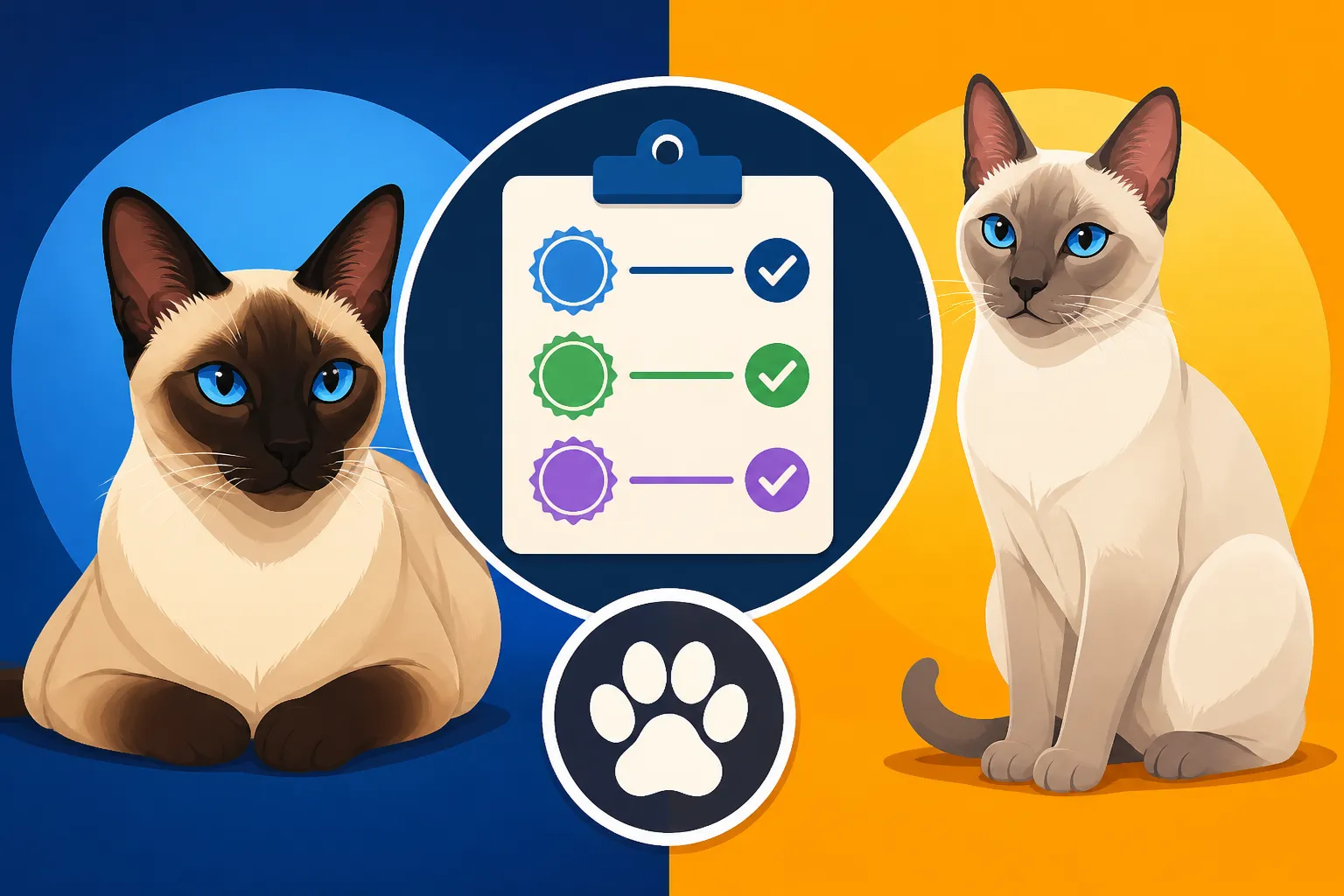
The Thai is recognized as a separate breed by several major international registries, including The International Cat Association, the World Cat Federation, and Fédération Internationale Féline. France’s LOOF also recognizes the Thai separately. Their standards and registration procedures are not identical, so “recognized” does not mean every organization applies the same rules or accepts every pedigree.
Other organizations, including the Cat Fanciers’ Association and the UK’s Governing Council of the Cat Fancy, are generally associated with registering the Siamese under their own breed rules rather than treating the Thai as a separate breed. Registry policies can change, so if a specific organization matters to you, check its current breed list and registration requirements directly.
| Registry | How the Thai is generally treated | What to check |
|---|---|---|
| The International Cat Association | Recognizes the Thai as a separate breed | The registry name and breed shown on the cat’s papers |
| World Cat Federation | Recognizes the Thai separately | The issuing member organization and pedigree details |
| Fédération Internationale Féline | Recognizes the Thai separately | The applicable national member and registration rules |
| LOOF in France | Recognizes the Thai separately | The current French registration documentation |
| Cat Fanciers’ Association | Generally registers Siamese rather than a separate Thai breed | Whether the cat is registered as Siamese under CFA rules |
| Governing Council of the Cat Fancy | Generally uses its Siamese breed category rather than a separate Thai category | The breed designation accepted by GCCF |
The table is a practical orientation, not a substitute for the registry’s own rules. A breeder may belong to a national club or association that works with one of these organizations, and the paperwork may pass through that organization. Confirm the exact issuing body rather than relying on a logo, club membership, or a verbal description.
TICA, WCF, FIFe, and LOOF
TICA, WCF, FIFe, and LOOF are among the organizations a prospective owner is most likely to encounter when researching a separately registered Thai. Each has its own standard and administrative process. A cat registered as Thai with one organization is not automatically registered under the same name with every other organization.
That matters if you are comparing pedigrees across countries or planning to show a cat. Ask the breeder which registry issued the parents’ papers, whether the kitten will be registered with the same organization, and what breed designation will appear. If a breeder says a cat is “recognized everywhere,” ask them to clarify what they mean and show the specific documentation.
The word “recognized” can also refer to different levels of participation, such as being listed as a breed, being eligible for particular shows, or having a specific championship status. If showing is important to you, check the organization’s rules for the exact class and breed name. A general claim of recognition may not answer the practical question of whether that individual cat can compete in the category you have in mind.
CFA and GCCF approach the distinction differently
CFA and GCCF are useful examples of why a cat’s appearance and registration name may not line up neatly. A cat that looks like what a breeder calls a traditional Siamese may still be recorded as Siamese—or may not qualify for registration under the breeder’s preferred description—depending on the organization and pedigree.
This does not mean one registry’s terminology is inherently more correct. Registries define breeds through their own standards and rules. A cat’s formal designation is therefore tied to the organization issuing its papers, rather than to a universal naming system shared by every cat association.
If you see a listing that says “CFA Thai” or “GCCF Thai,” do not assume the phrase means the organization has a separate Thai breed category. Ask for the certificate or contact the registry to confirm how it classifies the cat. A careful seller should be able to explain the paperwork without treating reasonable questions as an insult.
How to verify a Thai cat’s registration
Read the pedigree, not just the advertisement
A pedigree or registration certificate should identify the registry and the cat’s recorded breed. Check that the kitten’s name, date of birth, breeder information, and parent details match what the seller has told you. If the kitten has not yet been registered, ask what paperwork will be provided, who will file it, and whether registration is conditional on anything in the sales contract.
A seller may use “Thai,” “old-style Siamese,” and “traditional Siamese” in the same advertisement to help people understand the kitten’s appearance. That can be useful descriptive language, but it is not proof that the kitten is registered as Thai. The distinction matters particularly if you are buying with future breeding or showing in mind.
If you want more help assessing breeder documentation, Which Health Tests a Siamese Cat Breeder Runs is a useful related read, and What a Siamese Cat Standard Asks For can help you separate a written standard from a seller’s informal description. For appearance terminology, What an Applehead Siamese Cat Is explains one label that is often used alongside “traditional.”
Ask focused questions before placing a deposit
You do not need to sound like a registry expert to get clear answers. Ask the breeder:
- Which registry issued the parents’ registration papers?
- What breed name appears on each parent’s certificate?
- Which registry will register the kitten?
- Will the kitten’s papers say Thai or Siamese?
- Can you see a sample certificate or redacted pedigree?
- Are there limitations on transferring or using the registration?
A trustworthy breeder should answer directly and explain any differences between their everyday terminology and the official paperwork. If the response stays vague—“they’re Thai in every way that matters”—ask what that means in the registry’s records. A beautiful, healthy kitten can still be a wonderful companion without a particular breed designation, but you deserve to know what you are buying.
Be cautious about paying a deposit based on an implied promise of registration that is not written down. If registration is important, have the promised breed name and issuing registry included in the sales agreement. Keep copies of the advertisement, messages, contract, and any documents you receive.
What registry recognition means for owners
Registration does not define personality or care needs
A separate Thai designation is primarily a matter of breed classification, pedigree, and the standards used by the relevant organization. It does not guarantee a particular personality, health outcome, or level of sociability. Individual cats vary, and the way a breeder raises and socializes kittens can shape their behavior just as much as breed expectations.
When you are researching care, distinguish between formal registration information and general pet-care material. For example, Chewy’s breed information may help you explore broad topics such as grooming or household fit, but a retailer profile is not proof that a particular cat is registered as Thai. The breeder’s documents and the registry’s records are the appropriate places to verify that claim.
The same caution applies to search results, social media posts, and rescue listings. A rescue may describe a cat as Siamese or Thai based on appearance, with no pedigree available. That can still be a useful description for finding interested adopters, but it should not be mistaken for documented registration.
Use the name that matches your purpose
If you are choosing a companion, you may care most about temperament, health history, and whether the cat suits your home. In that situation, “Thai” versus “traditional Siamese” may be less important than clear information about the cat’s background and needs. A broad care guide from Chewy can offer starting points for everyday ownership questions, but confirm health and behavior concerns with your veterinarian or the rescue that knows the cat.
If you are buying a show or breeding prospect, the registry designation becomes more consequential. Confirm eligibility with the organization where you intend to show or register the cat, and check the complete pedigree rather than relying on photographs or descriptions. Ask whether the registry accepts transfers from the organization that issued the parents’ papers.
For an adult cat with no paperwork, it is usually more accurate to describe the animal by appearance—such as “Siamese-type” or “traditional-looking”—than to claim formal Thai registration. Chewy and other general pet retailers may use familiar breed terms for easy browsing, but those labels serve a different purpose from a registry’s official classification. The simplest rule is to use “Thai” as a formal breed claim only when the cat’s documents support it.
Disclaimer
This article is for general informational purposes only and does not constitute professional advice. Laws, prices and regulations vary by location and change over time. Consult a qualified professional for guidance on your specific situation.