Whether a Blind Siamese Cat Should Go Outside
It’s a heart-wrenching dilemma many Siamese cat parents face: your beloved feline, once so graceful and adventurous, has lost its sight. Suddenly, the world outside, which used to be a playground, now seems like a minefield. The thought of them navigating the dangers of the outdoors without their vision is terrifying, yet keeping them cooped up inside can feel equally cruel. This guide will meticulously explore the profound risks associated with letting a blind Siamese cat outdoors and offer practical, empathetic solutions to ensure they live a happy, secure, and enriched life.
Understanding the Risks of Outdoor Life for Blind Siamese Cats
When a Siamese cat loses its vision, their world shrinks dramatically, and their ability to safely navigate even familiar outdoor spaces is severely compromised. It’s not just about bumping into things; it's about a complete loss of their primary defense mechanism against a world full of unpredictable threats.
Increased Vulnerability to Predators and Traffic
The outdoor environment is a complex tapestry of sounds, smells, and movements that sighted cats can process and react to with incredible speed. For a blind Siamese, however, these cues are often too late, or they lack the visual confirmation to act effectively.
Imagine your Siamese, with its innate curiosity and intelligence, trying to cross a quiet suburban street. A sighted cat might hear a car approaching, see its direction, and pause or bolt to safety. A blind cat, however, might only perceive the sound when it's already dangerously close, unable to judge its speed, distance, or even the direction it's coming from. Their heightened sense of hearing can become a cacophony of confusing signals rather than a reliable guide. This isn't just about busy roads either; even a slow-moving bicycle or a child on a scooter can pose an unseen and unavoidable danger. The statistics on outdoor cat injuries and fatalities from vehicles are stark enough for sighted cats; for blind cats, these risks multiply exponentially, turning every street corner or driveway into a potential tragedy.
Beyond traffic, the threat of predators is another terrifying reality. While a Siamese cat is a formidable hunter, they are also prey animals in certain contexts. Coyotes, foxes, large birds of prey, and even aggressive dogs are all potential threats. A sighted cat relies on its vision to spot a lurking danger from a distance, giving them precious seconds to escape or hide. A blind Siamese cat is robbed of this early warning system. They might not realize a predator is near until it's too late, perhaps only sensing it by smell or sound when it's already within striking distance. Their cries for help might go unheard, or they may be unable to find refuge in time. This isn't just a hypothetical fear; it's a very real concern, especially in rural or semi-rural areas, where wildlife encounters are more common.
Disorientation and Getting Lost
Even if your blind Siamese somehow avoids immediate danger, the sheer psychological terror of being lost and disoriented is a profound risk of outdoor access. Cats are creatures of habit and territory, and a sighted cat builds a detailed mental map of its surroundings. They use visual landmarks, sun position, and subtle environmental cues to navigate.
When blindness strikes, that mental map is shattered. A blind Siamese might venture out and, after just a few steps, find itself completely adrift. What was once a familiar path to a favorite sunbathing spot or a hidden bush becomes an endless, confusing maze. They might turn one way, then another, unable to retrace their steps or locate their home by sight. Their other senses, while enhanced, are not a perfect substitute for vision in complex, open environments. A shifting breeze can carry scents in different directions, masking the smell of their home. Unfamiliar sounds can be overwhelming and terrifying, causing them to freeze or bolt in the wrong direction. The panic of being utterly lost is immense, leading to extreme stress, exhaustion, and vulnerability. A cat in this state is not only suffering emotionally but also physically susceptible to dehydration, starvation, or succumbing to the elements if they cannot find shelter. It is a slow, agonizing descent that no loving owner would wish upon their cherished companion.
This disorientation extends to finding basic necessities like food and water. While they might be excellent at finding a food bowl inside, an outdoor blind Siamese cat would struggle immensely to locate natural water sources or hunt for food, relying solely on chance encounters, which are highly unreliable and dangerous.
Danger from Other Animals
The feline world, especially outdoors, can be surprisingly aggressive and territorial. Sighted cats often engage in elaborate rituals of posturing, staring, and vocalizations to assert dominance or avoid conflict. These visual cues are completely lost on a blind Siamese cat, putting them at an immense disadvantage.
A territorial cat might see your blind Siamese wandering into its perceived domain and immediately launch an attack, perceiving the blind cat's lack of response as either weakness or aggression. The blind Siamese would be unable to see the other cat's warning signals, its puffed-up fur, or its direct stare, and thus couldn't de-escalate or retreat effectively. This often results in brutal fights, leading to serious bite wounds, scratches, and infections. These injuries can be incredibly painful, costly to treat, and can lead to long-term health complications. Furthermore, such encounters aren't limited to other cats. Unsupervised dogs off-leash, even if friendly, can easily startle or accidentally harm a blind cat that cannot see them approaching. A dog's playful pounce could become a devastating accident for a visually impaired feline.
Beyond physical altercations, there's the unseen danger of disease transmission. Outdoor cats are routinely exposed to a host of infectious diseases like Feline Immunodeficiency Virus (FIV) and Feline Leukemia Virus (FeLV), as well as parasites like fleas, ticks, and worms. A blind cat, already under stress, may have a compromised immune system, making them even more susceptible to these illnesses. Regular outdoor exposure, especially through interactions with other unknown animals, dramatically increases the chances of contracting something harmful. This additional health burden can significantly reduce their quality of life and lifespan, requiring extensive and costly veterinary treatments. Owners often overlook this hidden cost until it's too late, but a quick conversation with any vet will underscore the risks. For more insights on overall feline health, consider reading about How Healthy the Siamese Cat Actually Is.
The Emotional and Physical Toll of Outdoor Stress
The constant state of heightened alert, the inability to escape perceived threats, and the sheer unpredictability of the outdoor environment can have a devastating impact on a blind Siamese cat's mental and physical well-being. It's a cruel irony that attempting to give them "freedom" can instead lead to a life defined by fear.
Psychological Impact of Fear and Anxiety
For a sighted cat, the world is a source of information and exploration. For a blind cat, an uncontrolled outdoor environment can quickly become a source of overwhelming anxiety and constant fear. Imagine living in perpetual darkness, bombarded by unfamiliar sounds and smells, never knowing what might be around the next corner or above you.
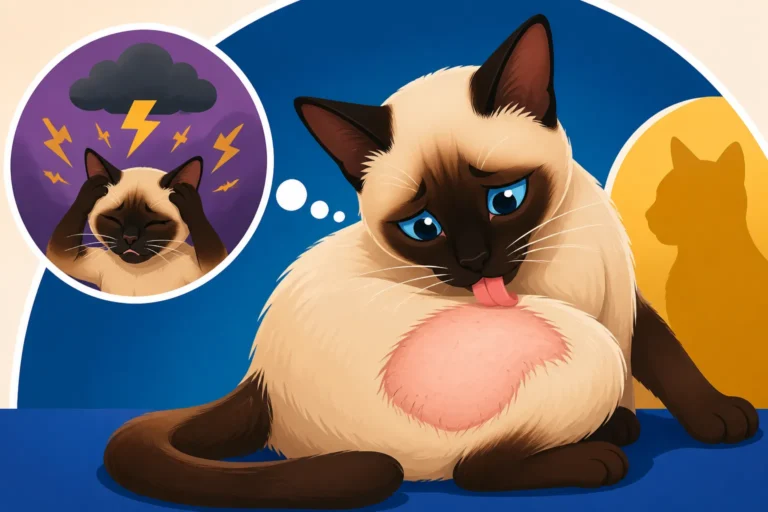
This constant state of hyper-vigilance is exhausting and deeply distressing. A blind Siamese cat outdoors is always on edge, their other senses straining to compensate for the lost vision. This persistent stress can manifest in various ways, from destructive behaviors indoors, like excessive scratching or urination outside the litter box, to increased vocalization or withdrawal. Some might develop psychogenic alopecia, licking themselves bald due to stress, a condition explored further in topics like What Psychogenic Alopecia Does to a Siamese Cat. They might also become more clingy and demanding, or conversely, unusually aggressive as a defense mechanism born of fear. The joy of exploration is replaced by the terror of the unknown, stripping them of their natural cat-like confidence and playfulness. This isn't just a temporary state; prolonged exposure to such intense fear can lead to chronic stress, which has been shown to weaken the immune system, making them more susceptible to illness. The psychological trauma can be profound, shaping their personality and ultimately diminishing their overall happiness and lifespan.
Physical Injuries and Illnesses
Beyond the emotional toll, the outdoor environment presents a myriad of physical dangers that a blind Siamese cat is ill-equipped to handle. Every step can be a gamble, every obstacle a potential hazard.
Simple things like uneven terrain, hidden roots, or sudden drops become treacherous. A blind cat can easily misjudge a step, leading to falls, sprains, broken bones, or deep cuts from sharp objects. They can wander into thorny bushes, encounter toxic plants, or even fall into uncovered drains or pools. Unlike sighted cats who can assess a jump or avoid a dangerous area, a blind cat has no visual reference, relying purely on touch and memory, which are often insufficient for the unpredictable outdoor world. Furthermore, exposure to the elements without adequate shelter is a severe risk. In extreme weather, a blind cat might not find protection from rain, snow, or excessive heat, leading to hypothermia, heatstroke, or frostbite. Their thin Siamese coats, in particular, mean they feel the cold acutely, a topic often discussed in articles like Keeping a Siamese Cat Warm. These physical injuries and illnesses often require immediate veterinary attention, which can be incredibly costly.
A blind cat is also more likely to contract infectious diseases through contact with other animals or contaminated environments. They might stumble upon contaminated food or water sources, or sustain wounds from fights that become infected if not promptly treated. Parasites like fleas and ticks are a constant threat for outdoor cats, and a blind cat might not be able to groom them away effectively, leading to infestations, skin infections, and even anemia in severe cases. These health issues compound the challenges of blindness, requiring dedicated care and often expensive treatments that could strain any budget.
Challenges in Emergency Situations
One of the most terrifying aspects of allowing a blind Siamese cat outdoors is their extreme vulnerability in sudden emergency situations. When seconds count, their inability to see can be a fatal handicap.
Consider a house fire nearby, or even one originating within your own property. A sighted cat might see the smoke, hear the alarm, and instinctively flee in a known direction. A blind cat, however, would be utterly disoriented and trapped by the unseen flames and smoke, unable to find an escape route. The panic alone could be paralyzing. Similarly, in natural disasters like floods, or even just a sudden severe thunderstorm, a blind cat outside would struggle immensely to find safety. They couldn't see rising water, fallen debris, or the approaching storm, and their heightened hearing would only amplify the terror of the booming thunder and driving rain. They might hide in a place that offers no real protection or simply wander into greater danger.
Beyond natural disasters, think about a simple medical emergency. If your blind Siamese were to suddenly fall ill or be injured while outside, finding them would be incredibly difficult. They couldn't come home when called, and their distress signals might be misinterpreted or unheard. The time it takes to locate them could be critical, delaying life-saving veterinary intervention. This reliance on their owners for navigation and protection in every aspect of their lives makes outdoor unsupervised access a profound risk. Owners need to be prepared for all eventualities, and having pet insurance from providers like Healthy Paws can certainly help manage the financial shock of unexpected emergencies.
Creating a Safe and Enriched Indoor or Controlled Outdoor Environment
The good news is that living a full and vibrant life for a blind Siamese cat does not require unsupervised outdoor adventures. With a little creativity and commitment, you can provide an environment that is both safe and incredibly enriching, catering to their enhanced senses and playful nature.
Designing a Stimulating Indoor Sanctuary
Your home is the ultimate safe space for a blind Siamese cat, and with a few thoughtful adjustments, it can become their personal playground and sanctuary. The key is consistency and engaging their remaining senses.
First and foremost, maintain a consistent layout for furniture and important items like food bowls, water dishes, and litter boxes. Cats thrive on routine, and a blind cat relies on memory and spatial awareness to navigate their familiar environment. Avoid moving furniture unless absolutely necessary, and if you do, introduce changes gradually, guiding your cat around the new arrangement. Consider using different textures for floor mats leading to key areas, or even scent markers (like a drop of essential oil on a piece of fabric near their litter box) to create a subtle "map" they can follow. Providing a variety of scratching posts and surfaces is also crucial, not only for their claws but also to help them orient themselves through touch. You can even strategically place scented toys in different areas to encourage exploration. For more specific advice on navigating the home, refer to How to Rearrange a Home for a Blind Siamese Cat.
Enrichment is vital to prevent boredom and stimulate their keen minds. Blind Siamese cats are highly intelligent and playful, and they still need mental and physical exercise. Introduce toys that engage their hearing and smell. Crinkle balls, toys with bells or internal chimes, and puzzle feeders filled with treats are excellent choices. You can also play interactive games using sound-emitting toys or by dragging a soft toy across the floor, letting them "hunt" by sound. Remember, their sense of smell is incredibly powerful; consider hiding treats around the house for them to "forage" for, making sure the hiding spots are safe and easily accessible. Vertical space is also important; ensure they have access to sturdy cat trees or shelves they can safely climb, perhaps with ramps or textured surfaces to aid their ascent. Always ensure the routes are clear and predictable. A happy blind Siamese cat is one whose mind is engaged, whose body is active, and whose environment feels secure and stimulating.
Exploring Safe, Supervised Outdoor Options
While unsupervised outdoor access is generally not recommended, that doesn't mean your blind Siamese has to be confined to the indoors 24/7. There are wonderful, controlled ways to let them safely experience the sights, sounds, and smells of nature.
One of the best options is a "catio" or a secure outdoor enclosure. These can range from small window boxes to elaborate, fully enclosed patios, providing a safe space where your cat can feel the sun on their fur, listen to birds, and smell the fresh air without any risk of getting lost or encountering dangers. A catio should be escape-proof, offer shade and shelter, and include perches, scratching posts, and even some safe plants for sniffing. This allows them to engage with the natural world on their own terms, at their own pace, and with the complete peace of mind that comes from knowing they are utterly secure. Building or buying a catio is an investment, but it's one that pays dividends in your cat's happiness and your own serenity.
Another increasingly popular option, especially for adventurous Siamese cats who enjoy close human interaction, is leash training and supervised walks. While this requires patience and consistency, many blind cats take well to a harness and leash, learning to follow their human companion's cues. Start slowly indoors, getting them comfortable with the harness, then gradually introduce short stints in a quiet, contained outdoor space like a backyard. Always use a comfortable, secure harness (never just a collar) and keep the leash short, guiding them gently and talking to them constantly. This provides a truly interactive outdoor experience, allowing them to explore new smells and textures under your watchful eye. However, it's crucial to pick very quiet, safe environments, far from traffic, aggressive animals, or loud noises. For some insights into how a blind cat adapts, consider reading about How a Blind Siamese Cat Manages.
Here's a quick comparison of safe outdoor options:
| Feature | Catio / Enclosed Run | Leash Walking (Supervised) | Pros | Cons |
|---|---|---|---|---|
| Safety Level | High (fully contained) | Medium-High (requires constant vigilance) | Provides continuous access, zero escape risk, protection from predators | Requires owner's active presence, limited exploration, potential for sudden fright |
| Cost | Moderate to High (installation/materials) | Low (harness/leash) | Long-term investment, no ongoing cost (besides maintenance) | Initial investment for catio can be significant |
| Effort Required | Initial setup, minimal ongoing | High (active supervision, training) | Self-sufficient once set up, cat can come and go | Time-consuming, not all cats tolerate harness/leash, owner must be alert |
| Stimulation Provided | Natural sounds, smells, temperature, safe climbing | New smells, textures, direct interaction with owner | Varied sensory input, safe sunbathing, bird watching | Limited to areas deemed safe, may not appeal to all cats |
| Ideal For | Most blind cats, cats seeking independent outdoor access | Social, confident blind cats, owners with ample time | Flexibility, peace of mind | Less independent for the cat, weather-dependent |
The Role of Routine and Sensory Cues
Cats, and Siamese cats in particular, are creatures of habit. For a blind feline, a predictable routine isn't just comforting; it's essential for their sense of security and ability to thrive. Establishing and maintaining a consistent daily schedule for feeding, playtime, and even cuddle sessions helps them anticipate events and reduces anxiety.
Use sensory cues to enhance their understanding of their environment and upcoming events. For instance, always use the same verbal phrase or sound before feeding time, like shaking a treat jar or calling their name in a specific tone. This helps them associate the sound with the impending meal, guiding them to their bowl. During play, use toys that make noise, allowing them to track and "hunt" by sound. Speak to them frequently, gently, and in a reassuring tone, especially when you approach them or when they are exploring. Your voice becomes a guiding beacon in their dark world. You might consider placing a small bell on your own shoe or wrist so they can always locate you, making them feel less alone.
Scent can also be a powerful tool. Avoid harsh chemical cleaners that can overwhelm their sensitive noses. Instead, use natural, consistent scents for their bedding or safe zones. Consider using a familiar blanket or toy in different areas of the house to create scent trails. When introducing new objects or people, allow them to sniff thoroughly, guiding their nose to the new item. Remember, their world is now experienced through sound, smell, and touch. By thoughtfully integrating these sensory cues into their daily routine, you empower your blind Siamese cat to navigate their environment with confidence, reducing their fear and maximizing their enjoyment of life, both indoors and in controlled outdoor spaces.
Practical Considerations and Owner Responsibilities
Caring for a blind Siamese cat, whether they've been blind from birth or lost their sight later in life, comes with specific responsibilities that extend beyond daily feeding and cuddles. It requires a proactive approach to their health, safety, and well-being.
Veterinary Care and Regular Check-ups
Maintaining optimal health for a blind Siamese cat is paramount, and regular veterinary care becomes an even more critical component of their routine. Because they cannot visually communicate discomfort or pain, owners must be extra vigilant in observing subtle changes in behavior or physical condition.
Routine check-ups, ideally twice a year, allow your veterinarian to monitor their overall health, including blood work, dental health, and any changes in weight or gait. These visits are also crucial for managing any underlying conditions that might have led to their blindness, or other age-related issues. For instance, if your Siamese is older, discussions around Caring for a Siamese Cat Past Twelve might include monitoring for conditions like kidney disease or hyperthyroidism, which can impact a blind cat's energy levels and overall resilience. During these check-ups, your vet can also check for any signs of stress, such as excessive grooming or changes in appetite, which might indicate that their environment needs further adjustment. Don't be afraid to discuss their blindness openly with your vet; they can offer tailored advice on everything from nail trims (which need extra care as a blind cat relies more on their paws) to diet and enrichment strategies. Building a strong relationship with a vet who understands the unique needs of a blind cat is invaluable.
Insurance and Emergency Preparedness
While we always hope for the best, being prepared for unexpected health issues or emergencies is a crucial part of responsible pet ownership, especially for a blind cat who may face higher risks of injury or complications.
The cost of veterinary care can be substantial, particularly if your blind Siamese cat experiences an accident or develops a chronic illness. This is where pet insurance can be a real lifesaver. Companies like Healthy Paws offer various plans that can help mitigate the financial burden of emergency treatments, surgeries, or ongoing medication. Imagine if your beloved blind cat, despite your best efforts, had an accidental fall indoors and broke a leg, or developed a sudden infection. Having a good insurance policy can mean the difference between making a difficult financial decision and providing your cat with the best possible care without hesitation. When choosing a policy, make sure to understand what inherited conditions or pre-existing conditions are covered, and consider the annual limits and reimbursement percentages. While a good plan won't cover everything, it provides a vital safety net for those unexpected moments. Beyond financial preparedness, have an emergency kit ready for your cat, including their food, water, medications, and a familiar blanket, in case of evacuation. Make sure all family members know your cat's blindness and how to safely handle and transport them during an emergency.
Managing an Existing Outdoor Siamese Cat That Becomes Blind
One of the most challenging situations is when a Siamese cat accustomed to an outdoor life suddenly loses their vision. Their ingrained habits and desire to roam can make the transition to an indoor-only or controlled-outdoor existence incredibly difficult, both for the cat and for you.
Patience, consistency, and a deep well of empathy are your greatest tools here. Your cat will likely exhibit frustration, confusion, and possibly depression as they grapple with their new reality. The first step is to gently, but firmly, transition them to a completely indoor environment. This may involve keeping them in a safe, contained room initially, slowly expanding their access to other parts of the house as they learn the layout. Use positive reinforcement, treats, and plenty of praise to make the indoor experience rewarding. It's crucial to help them adapt to basic needs indoors, such as finding their litter box, which can be disorienting for a newly blind cat. Resources like How a Blind Siamese Cat Finds the Litter Box can offer specific techniques for this adjustment.
You'll need to "cat-proof" your home with their blindness in mind, much like you would for a kitten, but with an emphasis on consistency. Block off stairs initially, secure sharp corners, and clear pathways. Over time, as their other senses become finely tuned and their memory of the home's layout solidifies, they will gain confidence. The goal is to make their indoor world so secure and enriching that they no longer feel the strong pull of the potentially dangerous outdoors. This can take months, and there will be setbacks, but with unwavering dedication, your once-outdoor explorer can learn to thrive as a contented indoor companion. Remember to consult your vet for any signs of extreme distress or anxiety during this transition, as behavioral medication might be considered in certain cases to ease their adjustment.
Disclaimer
This article provides general information and recommendations. Always consult with a qualified veterinarian for personalized advice regarding your Siamese cat's specific health needs and circumstances.