How to Teach a Siamese Cat to High Five
We all love to see our feline friends perform a clever trick, don't we? And if you share your home with a brilliant Siamese cat, you know they're not just pets; they're intelligent, interactive companions who thrive on engagement. Teaching your Siamese to high-five isn't just about showing off; it's a fantastic way to bond, provide mental stimulation, and tap into their remarkable ability to learn. This guide will walk you through the precise steps to get your clever Meezer lifting their paw for a proud high-five, validating the unique joy and occasional challenges of training such a smart cat.
Understanding Your Siamese Cat's Motivation for Learning
Before we even get to the "how-to," it's crucial to understand the "why" behind training a Siamese cat. These aren't your average, aloof felines. Siamese cats are known for their big personalities, their undeniable intelligence, and their deep need for connection with their human family. If you approach training from their perspective, you'll find far greater success and enjoyment.
Why Siamese Cats Love Interaction and Mental Stimulation
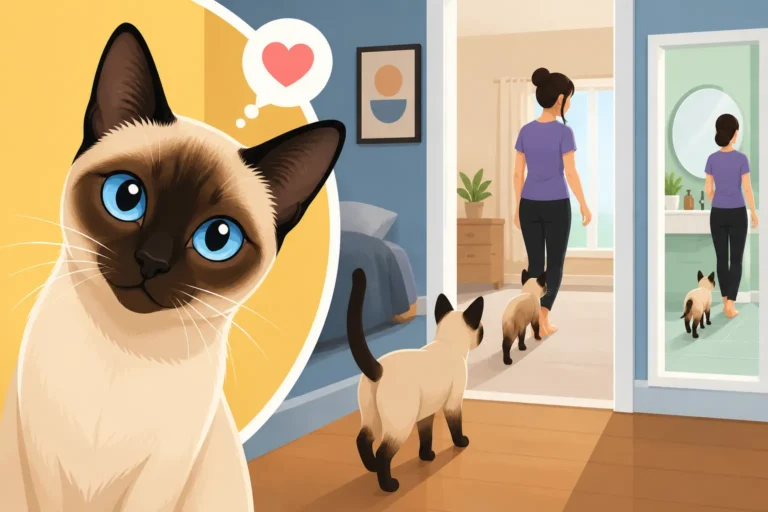
Siamese cats are far from content to simply nap in a sunbeam all day – though they certainly excel at that, too! They are incredibly active, curious, and, dare I say, sometimes a little needy when it comes to interaction. This breed thrives on being involved in whatever you're doing, often "helping" with household tasks or loudly commenting on your activities. Their natural curiosity and high energy levels mean they need outlets for their brains as much as their bodies.
For a Siamese, a training session isn't just a chore; it's a shared activity that builds upon the special bond you already have. It's a game, a conversation, a way to further engage with their favorite human. When they learn a trick, they're not just performing an action; they're mastering a new skill alongside you, soaking up your attention and praise. You'll notice their eyes sparkling with interest, their tails twitching with anticipation – they genuinely enjoy the challenge and the connection. Plus, let's be honest, their vocal nature means they're usually up for any form of communication, and learning a trick adds another layer to that dialogue. The Siamese Cat Talks and Expects an Answer and expects you to pay attention!
The Power of Positive Reinforcement for Siamese Cats
Anyone who's ever tried to force a cat to do anything knows it's a losing battle. Cats, especially smart, independent Siamese cats, simply don't respond to negative reinforcement or coercion. They'll either shut down, become fearful, or just walk away with a look that clearly says, "I don't think so." This is why positive reinforcement is the only way to effectively train a Siamese.
Positive reinforcement means rewarding your cat immediately after they perform the desired action. The reward needs to be something your cat truly values – what we call a "high-value treat." For some Siamese cats, this might be a tiny piece of freeze-dried chicken or salmon. For others, it could be a lick of Churu paste, a small bit of cooked tuna, or even just a favorite toy. The key is to find what motivates your individual cat and keep those rewards small and irresistible. Using a clicker can also be incredibly effective, as it provides a precise marker for the exact moment they do something right. The click is always followed by a treat, helping your cat make a clear association between the action and the reward. Consistency and patience are your best friends here; short, frequent sessions (think 2-5 minutes, a few times a day) are much more effective than one long, frustrating one.
Step-by-Step Guide to Teaching the High Five
Alright, now that we understand the mindset, let's get down to the nitty-gritty of teaching your clever Siamese to high five. This isn't a race; it's a journey of discovery for both of you, so let's enjoy every step.
Getting Started: The Setup for Success
Before you even begin, make sure you've set the stage for success. This isn't just about having the right treats; it's about creating the right environment and having the right tools.
First, choose a quiet time and place in your home where you and your cat won't be interrupted. A sudden loud noise or another pet wandering through can break your cat's focus and derail the session. Make sure all distractions are minimized. Have your chosen high-value treats prepared and easily accessible. They should be small enough to be eaten quickly without a lot of chewing, so your cat doesn't get distracted from the training. For example, if you're using a softer treat, you might cut it into pea-sized bits.
Next, ensure your cat is in a comfortable, relaxed position. Sitting or lying down beside you on a couch or floor is ideal. Avoid trying to train them when they're overly energetic or agitated, as they won't be receptive. A good time might be just before a meal when they're a little hungry, making the treats even more appealing.
Finally, consider using a clicker. While not strictly necessary, a clicker can significantly speed up the learning process for intelligent cats like the Siamese. It provides an immediate, unambiguous sound that tells your cat, "That's it! That's what I wanted!" followed quickly by the treat. If you're new to clicker training, spend a day or two "charging" the clicker by simply clicking, then immediately giving a treat, so your cat associates the sound with something positive. You can learn more about this process in How to Clicker Train a Siamese Cat.
The Lure and Reward Method
This is where the magic happens! We'll use a technique called "luring" to guide your cat into the desired action, then reward them instantly.
Step 1: Luring the Paw Lift
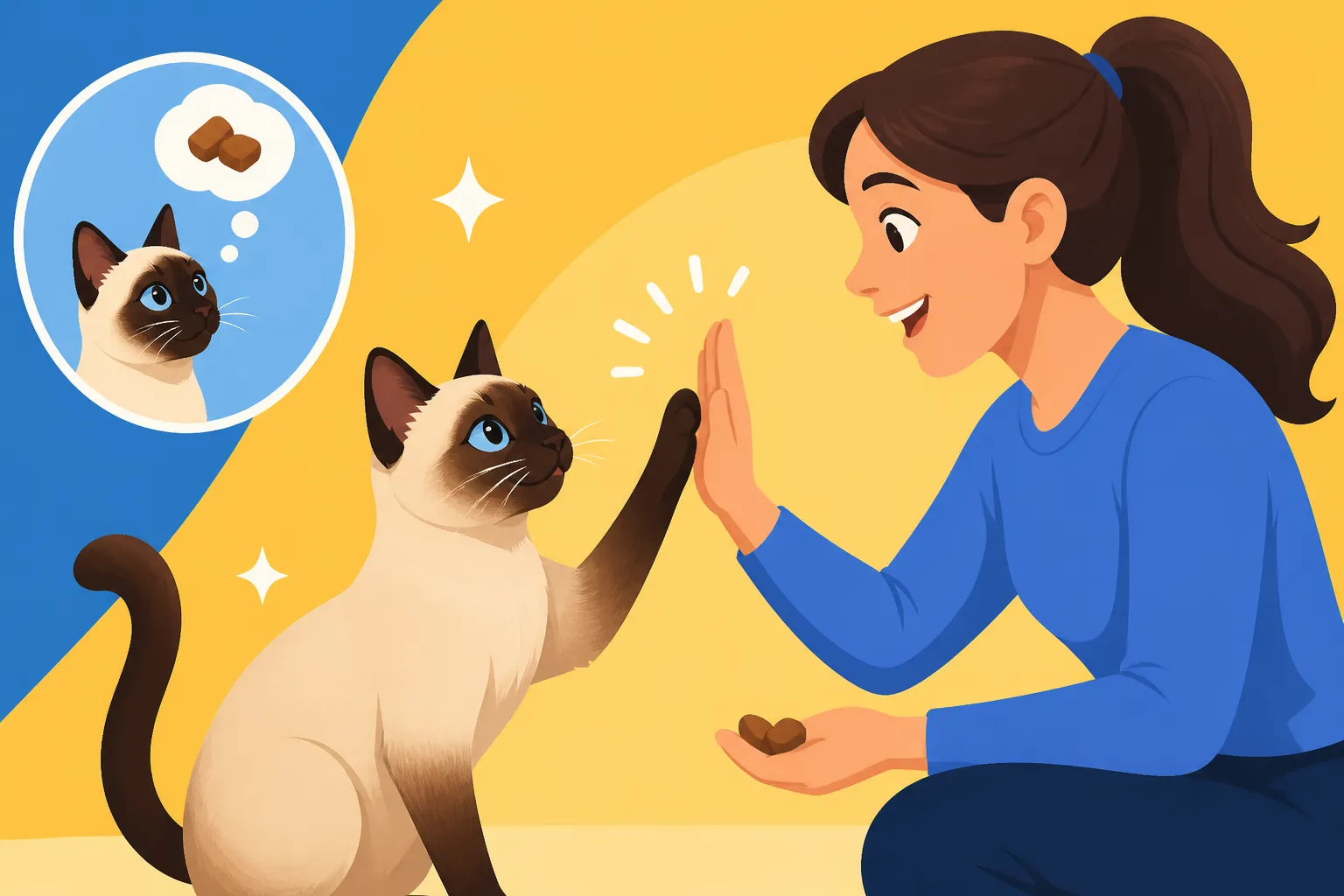
Begin by holding a high-value treat in your closed fist. Present your fist to your cat, just above their head, slightly to the side where one of their paws would naturally lift. The goal is to encourage them to lift a paw to try and get the treat. The moment their paw lifts, even slightly, click (if you're using a clicker) and immediately open your fist to give them the treat. Don't wait for them to make full contact with your hand, just the lift is enough in the beginning. Repeat this many times over short sessions. The idea is to build a strong association: paw lift = treat.
You might find that your cat initially tries to sniff or nudge your hand. Be patient. If they don't lift a paw, try moving your fist very slightly, wiggling it gently, to pique their interest and encourage that paw movement. Remember, precision is key here – only reward the paw lift.
Step 2: Introducing Your Hand as the Target
Once your Siamese is consistently lifting their paw when your treat-holding fist is presented, it's time to introduce your open hand. Now, instead of holding the treat in your fist, hold it in your other hand, or set it aside where you can grab it quickly. Present your open palm (fingers slightly spread) to your cat in the same position where they would lift their paw. They'll likely tap your hand by accident as they go to lift their paw in anticipation of a treat. The moment their paw touches your open palm, click and immediately give them the treat from your other hand.
This step teaches them that your open hand is the target, not just the lure. You're transferring the association from the treat in your hand to the physical touch of their paw on your palm. Keep sessions light and fun; if they get frustrated, simply go back to the previous step for a few repetitions to rebuild their confidence.
Step 3: Adding the Verbal Cue
When your cat is reliably touching your open palm with their paw, it's time to introduce the verbal cue. Just as their paw is about to make contact with your hand, say "High Five!" (or whatever cue you prefer), then click and reward the touch. The timing of the cue is important: say it before or as the action happens, not after.
By consistently pairing the verbal cue with the action and reward, your Siamese will start to understand what the words mean. Eventually, they'll perform the high five just at the sound of your voice.
Step 4: Fading the Lure and Generalization
Now that your cat understands the verbal cue and is touching your hand, you can gradually reduce the prominence of the treat as a lure. Instead of holding the treat right above their head, perhaps just gesture with your open hand and say the cue. Keep the treat readily available to reward after the high five.
Once they've got the trick down reliably in one spot, start practicing in different areas of your home. Try it on the floor, on the couch, or in a different room. This helps them generalize the command, understanding that "High Five!" means the same thing no matter where they are. You can also have other family members try the trick, ensuring they use the same cue and reward method. How Clever a Siamese Cat Is means they'll pick up on these nuances quickly.
Troubleshooting Common Challenges
Even the smartest Siamese might hit a snag during training. Don't get discouraged – it's all part of the process! Here are some common challenges and how to overcome them:
| Challenge | What it Looks Like | Solution |
|---|---|---|
| Cat just stares at the treat | Your cat fixates on the treat, not the paw lift. | Make the treat even more appealing or use a novel high-value reward. Try holding the treat in a closed fist or slightly above and away from your cat's head to encourage them to reach with a paw, rather than just try to eat it. Sometimes, moving your hand a little faster initially can trigger a reflexive paw lift. If they just nose at your hand, gently move it back slightly until they try to use a paw. |
| Cat tries to grab/bite treat | Your cat attempts to mouth your hand or snatch the treat. | Ensure you're holding the treat in a closed fist when luring, only revealing it after the click and desired paw action. Only present tiny, easily consumed pieces to avoid a struggle. If they're too grabby, consider putting the treat on the floor or a small plate after the click, so they learn to associate the click with the impending reward, not just grabbing. |
| Cat uses wrong paw/no lift | They might use their other paw, or not lift it high. | Be very precise with your click and reward. Only click and reward for the exact desired action (the correct paw, lifted to the right height). If they're using the wrong paw, try luring from the opposite side slightly, or gently guiding the correct paw up the first few times. Some cats are left-pawed or right-pawed, just like people! Work with their natural inclination first. |
| Cat loses interest | They walk away, groom themselves, or look bored. | Sessions are too long! Keep training sessions very short – 2 to 5 minutes at most. End on a high note, even if it's just one successful high-five. Make it fun and engaging. If your cat is truly bored, maybe they need a quick play session with a feather wand or laser pointer before returning to training. You might find great interactive toys on Amazon to reignite their play drive. |
| Cat gets frustrated | Swatting, growling, or signs of agitation. | Stop immediately. You might be pushing too fast or asking for too much. Go back to an easier step where they consistently succeed. Reassure them with gentle petting and end the session positively. Training should always be a positive experience. |
Remember, every cat is an individual, even within the intelligent Siamese breed. What works instantly for one might take a bit more time and creativity for another. The key is never to get frustrated yourself; your cat will pick up on your mood.
Making the High Five a Lasting and Enjoyable Part of Your Routine
Congratulations, your Siamese cat has mastered the high-five! But the journey doesn't end there. Making this trick, and potentially others, a regular part of your interaction will not only reinforce the learning but also continue to deepen your bond.
Consistency and Positive Reinforcement Beyond Training
To keep the high-five fresh and fun, don't relegate it only to dedicated "training sessions." Incorporate it spontaneously into your daily interactions. Ask for a high-five when your cat greets you at the door, before you give them their dinner, or when you're simply relaxing on the couch together. These unexpected requests keep their minds sharp and reinforce the trick as a natural part of their day.
Vary your rewards as well. While high-value treats are excellent for initial learning, once the trick is solid, you can mix it up. Sometimes a treat, sometimes a deep, satisfying scratch behind the ears, a vigorous belly rub (if your cat enjoys them!), or a quick game with a favorite toy from Amazon. The reward should always be something genuinely desirable to your cat, proving that performing the trick leads to good things. By consistently using positive reinforcement, you're not just teaching a trick; you're building a deeper understanding and trust. Your Siamese will appreciate being acknowledged and having a special "move" they share with you. How Attached a Siamese Cat Gets to One Person often shows itself in these shared rituals.
Expanding Your Siamese Cat's Repertoire
Once your Siamese has aced the high-five, you'll probably find yourselves both eager for more! Their clever minds thrive on challenges, and learning new tricks is fantastic mental exercise. Think of the high-five as a stepping stone to a whole world of cat tricks.
You can apply the same lure-and-reward, clicker training methods to teach other commands like "sit" or "come." For instance, for "sit," hold a treat above their head and slowly move it backward, encouraging their rear end to drop. The moment it touches the ground, click and reward. You'd be amazed at Which Tricks a Siamese Cat Can Learn. My own Siamese, Luna, learned to How to Teach a Siamese Cat to Sit and even How to Teach a Siamese Cat to Come with just a few minutes of daily practice. This kind of consistent mental engagement is incredibly beneficial for a breed known for its intelligence, helping to prevent boredom and potential behavioral issues. After all, Enrichment for a Siamese Cat That Gets Bored in an Hour is vital for their happiness.
Beyond formal tricks, consider incorporating other forms of mental enrichment. Puzzle feeders, available widely on Amazon, challenge your cat to "work" for their food, engaging their problem-solving skills. Interactive toys that mimic prey can keep them entertained and stimulated, further satisfying their natural instincts. Keep observing your cat's preferences and tailor their enrichment and training to what they enjoy most. The sky's the limit when you have such a smart, enthusiastic learner by your side!
Teaching your Siamese cat to high-five is a truly rewarding experience, proving that these intelligent and affectionate felines are capable of so much more than just looking beautiful and purring. It's an investment in your relationship, providing mental stimulation for your clever companion and endless moments of joy for you both. With patience, consistency, and a pockets full of their favorite treats, you'll be celebrating high-fives and a deeper bond with your Meezer in no time.
Disclaimer
This article is for general informational purposes only and does not constitute professional advice. Laws, prices and regulations vary by location and change over time. Consult a qualified professional for guidance on your specific situation.