How Two Carrier Siamese Cats Produce a Blind Kitten
Discovering that your beloved Siamese cat, or worse, an entire litter of adorable, playful kittens, might face blindness is a heartbreaking thought that no owner or breeder ever wants to confront. It’s a reality born from complex genetics, and understanding how it happens – specifically how two seemingly healthy carrier Siamese cats can produce a blind kitten – is crucial for both prevention and care. This guide will unpack the intricacies of Progressive Retinal Atrophy (PRA), explain the genetic pathways, and offer insights into how we can safeguard the future of this wonderful breed.
Understanding Progressive Retinal Atrophy in Siamese Cats
Progressive Retinal Atrophy, often shortened to PRA, is a term that strikes fear into the hearts of many cat owners, especially those devoted to breeds known to be susceptible, like our cherished Siamese cats. It's not a single disease but rather a group of genetic disorders that affect the retina, the light-sensitive tissue at the back of the eye. For a Siamese cat, the specific form of PRA commonly seen is the autosomal recessive rod-cone degeneration (rdAc), though you might simply hear it referred to as "Siamese PRA."
What Progressive Retinal Atrophy Is
Imagine the retina as the film in a camera. It captures the images we see and sends them to the brain. In a cat with PRA, the specialized cells in the retina – the rods (which detect dim light and movement) and cones (which detect bright light and color) – gradually deteriorate. This isn't a sudden event; it's a progressive, slow decline, which can make it particularly insidious because the early signs might be easy to miss. Owners might initially notice their cat having trouble navigating in low light, bumping into furniture in the evenings, or becoming more hesitant in unfamiliar surroundings. As the disease progresses, it impacts daylight vision too, eventually leading to complete blindness. It's a cruel condition because it steals away one of a cat's primary senses, forcing them to rely almost entirely on their other senses to navigate their world. The emotional toll on both the cat and their human companions is significant, as we watch their independence slowly diminish.
The Genetic Basis of PRA
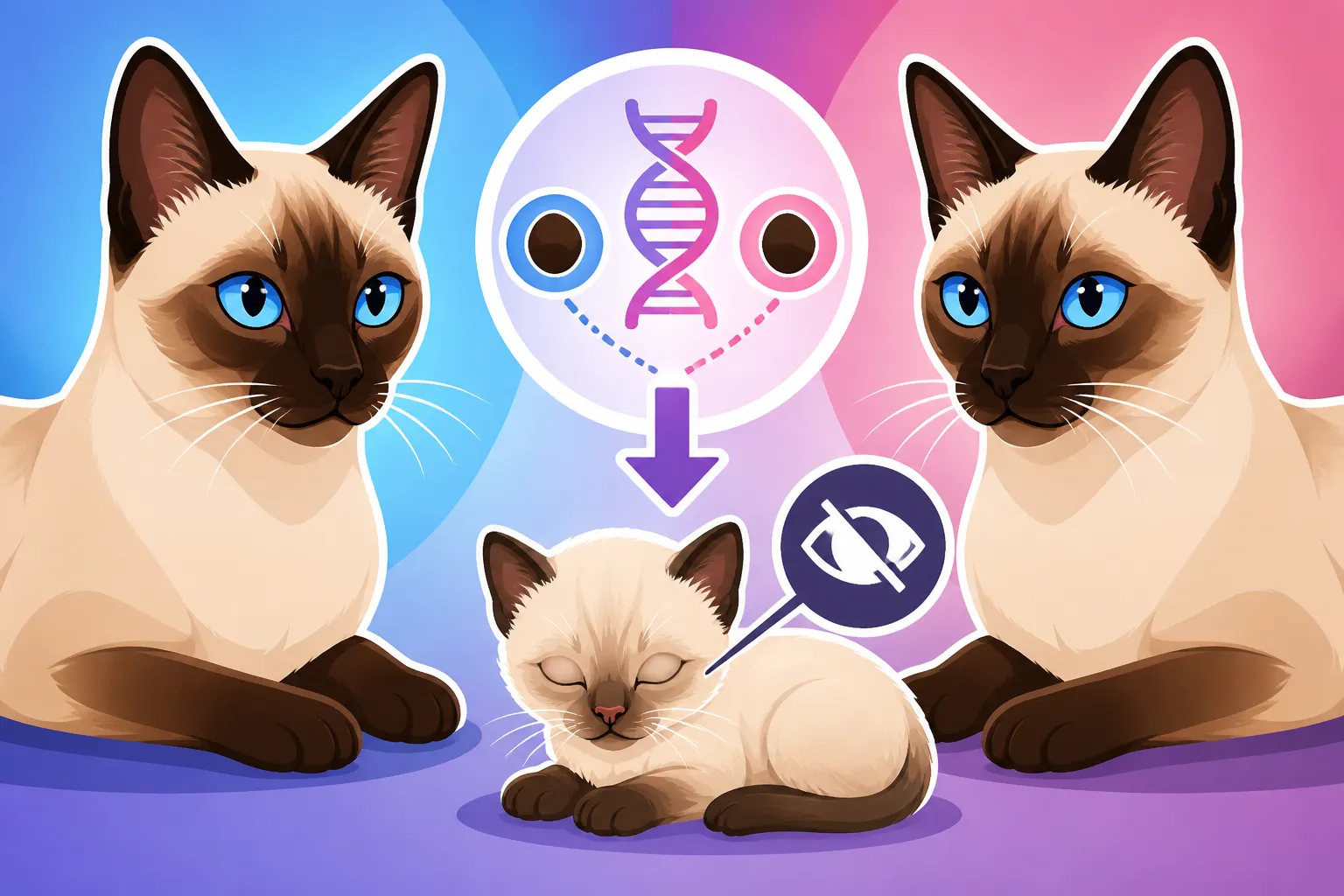
The underlying cause of PRA in Siamese cats is genetic, specifically through an autosomal recessive inheritance pattern. This means that a cat must inherit two copies of the defective gene – one from each parent – to actually develop the disease and become blind. If they only inherit one copy of the defective gene and one normal copy, they become what we call a "carrier." A carrier cat doesn't show any symptoms of PRA themselves; their vision is perfectly normal. They live full, healthy lives, often without anyone, including their owners, ever realizing they carry this hidden genetic secret.
This is where the real challenge lies for breeders and why genetic testing is so incredibly important. A carrier cat is essentially a silent transmitter. They carry the blueprint for PRA within their DNA, ready to pass it on to their offspring. They may look vibrant and healthy, perform beautifully in shows, and be wonderful companions, but beneath the surface, they hold the potential to create a legacy of blindness if bred irresponsibly. Understanding this distinction between a cat that is 'affected' (blind) and a cat that is a 'carrier' (healthy, but capable of passing on the gene) is fundamental to grasping how PRA propagates within the breed and how we, as responsible guardians of these animals, can work to prevent its spread.
The Mechanics of Carrier to Carrier Breeding
Now, let's get into the nitty-gritty of how two seemingly healthy Siamese cats, both of whom are carriers of the PRA gene, can end up producing kittens that are destined for blindness. This isn't about blaming anyone; it's about understanding the undeniable laws of genetics. When breeders don't know the genetic status of their breeding animals, or choose to ignore it, they inadvertently play a genetic lottery with the lives of the kittens they produce.
The Punnett Square Explained
To really understand this, we can use a simplified concept similar to a Punnett Square. Imagine each parent has two "slots" for the PRA gene. One slot carries the normal gene (let's represent it with 'N'), and the other carries the defective PRA gene (let's represent it with 'p'). Since both parents are carriers, their genetic makeup for this trait is Np.
When these two carrier parents (Np x Np) are bred, here are the possible combinations for each kitten, with each parent contributing one gene:
| N (from Parent 1) | p (from Parent 1) | |
|---|---|---|
| N (from Parent 2) | NN (Clear) | Np (Carrier) |
| p (from Parent 2) | pN (Carrier) | pp (Affected) |
As you can see from this little table, for every single kitten conceived from two carrier parents, there's a specific probability of inheriting certain gene combinations. This isn't a guarantee for a specific number of kittens in a litter, but rather the odds for each individual kitten. It's like flipping a coin multiple times; you might not get exactly 50% heads and 50% tails in a small sample, but over many flips, it evens out.
What it Means for the Kittens
The outcomes for the kittens in such a pairing are stark, despite both parents being perfectly sighted. Each kitten has:
- A 25% chance of being "Clear" (NN): These kittens inherit two normal copies of the gene, one from each parent. They will never develop PRA and cannot pass the defective gene to their own offspring. They are genetically healthy for this specific trait.
- A 50% chance of being a "Carrier" (Np or pN): These kittens inherit one normal gene and one defective PRA gene. Just like their parents, they will have normal vision throughout their lives. However, they carry the potential to pass the defective gene on to their own kittens if they are ever bred, perpetuating the cycle.
- A 25% chance of being "Affected" (pp): These are the kittens that inherit two copies of the defective PRA gene, one from each carrier parent. These are the unfortunate individuals who will, in time, develop Progressive Retinal Atrophy and ultimately go blind.
The heartbreaking truth is that a breeder could have a litter of four kittens from two carrier parents, and by chance, all four could be affected, or none could be. However, over many litters, the probabilities tend to hold true, meaning a significant number of blind kittens will be born if carrier-to-carrier breedings continue. The age at which a Siamese cat with PRA goes blind can vary, but it often becomes noticeable between one and five years of age, sometimes later, making it a condition that gradually robs them of their sight over time. Imagine the shock and devastation for a loving owner when their vibrant young cat slowly starts losing its way.
Preventing PRA in Future Generations
The good news is that unlike some other complex genetic diseases, preventing Progressive Retinal Atrophy in Siamese cats is entirely within our control, thanks to advancements in genetic testing. Responsible breeding practices are the cornerstone of safeguarding the health and longevity of the Siamese breed, ensuring that future generations enjoy lives with full, unimpaired vision.
The Importance of Genetic Testing
The absolute best way to prevent the heartache of PRA is through proactive genetic testing of all breeding cats. This isn't an optional extra; it's a fundamental responsibility for anyone committed to the health of the Siamese cat. A simple, non-invasive DNA test, often done with a cheek swab, can definitively tell a breeder whether their cat is clear, a carrier, or affected by PRA. There is no DNA test for Siamese Cat Amyloidosis, but thankfully, for PRA, the technology exists and is readily available.
By knowing each cat's genetic status, breeders can make informed decisions about pairings. If a cat tests positive as a carrier, it doesn't mean they can never be bred, but it does mean careful consideration is needed. A carrier cat should only be bred with a cat that has tested "clear" for the PRA gene. This ensures that while some kittens might still be carriers, none will ever be affected and destined for blindness. Reputable laboratories, such as those that handle feline genetic testing for many breeds, can process these samples efficiently, providing results that empower breeders. Pet insurance providers like Healthy Paws, while not covering pre-existing genetic conditions, highlight the importance of knowing your cat's health background.
Ethical Breeding Practices
Ethical breeding goes far beyond just producing pretty kittens. It's about a deep commitment to the health, temperament, and genetic integrity of the breed. For Siamese cats, this means a rigorous approach to PRA.
- Test All Breeding Stock: Every single cat intended for breeding must be genetically tested for PRA before any mating takes place. This is non-negotiable.
- Avoid Carrier-to-Carrier Pairings: Once a cat is identified as a carrier, they should never, under any circumstances, be bred with another carrier. This is the pairing that inevitably leads to affected, blind kittens, causing immense suffering.
- Strategic Breeding with Carriers: If a breeder has a valuable carrier cat (perhaps one with exceptional conformation or temperament), they can still be part of a breeding program. However, they must be bred only with a cat that is genetically clear (NN). In such a pairing, approximately 50% of the kittens will be clear, and 50% will be carriers, but crucially, none will be affected by PRA. Any carrier kittens produced should then be tested themselves, and their future breeding decisions handled with the same care.
- Educate Prospective Owners: Responsible breeders are transparent about the genetic health of their lines and educate potential buyers about PRA, even if their kittens are clear. This open communication builds trust and empowers owners to understand the breed's health landscape.
By adhering to these principles, breeders can systematically reduce the prevalence of PRA within the Siamese cat population, working towards a future where this devastating condition is a rarity, not a risk. It's a testament to responsible breeding when you can proudly state that your kittens come from lines thoroughly screened for such genetic conditions.
Living with a Blind Siamese Cat
Despite the best efforts of responsible breeders, or in cases where a cat's genetic history wasn't fully known, sometimes a Siamese cat does develop PRA and goes blind. This can be a devastating diagnosis for owners, but it's important to remember that blindness doesn't mean the end of a happy, fulfilling life for your feline friend. Siamese cats are incredibly adaptable, and with a few adjustments and a lot of love, a blind cat can thrive.
Recognizing the Signs of Blindness
Because PRA is progressive, the signs of vision loss might initially be subtle. Your cat might start losing their night vision first, leading to increased caution or clumsiness in dimly lit rooms. You might notice them hesitating before jumping, or bumping into familiar objects in the evening. They might start relying more on their whiskers and hearing, becoming more vocal or appearing startled by sudden movements or noises. As their vision deteriorates further, these behaviors become more pronounced during the day. You might observe dilated pupils that don't react normally to light, or a general cloudiness in their eyes, although the latter is not directly related to PRA itself but could indicate other issues. A vet can confirm PRA through an ophthalmic examination, sometimes including an electroretinogram (ERG) to assess retinal function. It's important to consult your vet if you suspect any vision issues, as early diagnosis can help you prepare and make necessary adjustments.
Adapting the Home Environment
Caring for a blind Siamese cat requires thoughtful consideration and a proactive approach to their environment. The good news is, these intelligent and affectionate cats often adjust remarkably well, especially if the vision loss is gradual.
- Consistency is Key: The most important rule for a blind cat's home is consistency. Once you've established a layout, avoid rearranging furniture. Your cat creates a mental map of their home, and changing it can cause significant stress and confusion. If you must move something, do it slowly and introduce them to the new setup carefully.
- Safety First: Identify and eliminate potential hazards. Block off stairs, cover sharp edges, and ensure toxic plants or chemicals are out of reach. Consider using baby gates to restrict access to unsafe areas, especially in the initial adjustment period.
- Sensory Cues: Enhance their other senses. Use different textures on the floor to mark paths, or place small bells on other pets to help your blind cat locate them. Your voice becomes even more important, so talk to them frequently, especially when approaching.
- Food, Water, and Litter: Keep their food, water bowls, and litter boxes in the same, easily accessible locations. Consider using a dedicated feeding station with raised bowls to make it easier for them to eat and drink comfortably. Providing multiple litter boxes, as recommended for all cats, becomes even more crucial, always in their predictable spots.
- Enrichment: Don't assume a blind cat can't play. They still need mental and physical stimulation. Toys that make noise, like crinkle balls or those with bells inside, are perfect. Scent-based toys or puzzle feeders can also engage their keen sense of smell. Interactive playtime with you, using a wand toy that you can rustle on the floor, will keep them active and engaged.
- Comfort and Security: A heated bed or a cozy, enclosed space can provide a sense of security. Because Siamese cats feel the cold, a warm, soft bed is always appreciated, and this can be a safe haven for them. They will still seek out warm spots like sunny windowsills, using their whiskers to navigate the edges.
Living with a blind Siamese cat is a journey of patience, love, and adaptation. They may need a little extra guidance and reassurance, but their capacity for affection and joy remains undiminished. With your help, they can continue to live a full and happy life.
Genetic Outcomes of Siamese Cat Breeding Pairs for PRA
Understanding the probabilities of genetic inheritance is crucial for responsible breeding. This table outlines the expected outcomes for kittens based on the PRA genetic status of their parents. Remember, these are probabilities per kitten, not guarantees for an entire litter.
| Parent 1 Status | Parent 2 Status | Clear Kittens (NN) | Carrier Kittens (Np) | Affected Kittens (pp) |
|---|---|---|---|---|
| Clear (NN) | Clear (NN) | 100% | 0% | 0% |
| Clear (NN) | Carrier (Np) | 50% | 50% | 0% |
| Clear (NN) | Affected (pp) | 0% | 100% | 0% |
| Carrier (Np) | Carrier (Np) | 25% | 50% | 25% |
| Carrier (Np) | Affected (pp) | 0% | 50% | 50% |
| Affected (pp) | Affected (pp) | 0% | 0% | 100% |
As you can see, the only scenario that produces affected kittens (pp) is when at least one parent carries the defective gene, and the risk escalates significantly when two carriers are bred together. This table clearly illustrates why eliminating carrier-to-carrier pairings is the most effective way to prevent PRA.
Disclaimer
The information provided in this article is for educational purposes only and is not intended to be a substitute for professional veterinary advice, diagnosis, or treatment. Always seek the advice of your veterinarian or other qualified animal health provider with any questions you may have regarding a medical condition.