Whether a Ragdoll Carries Siamese Cat Genes
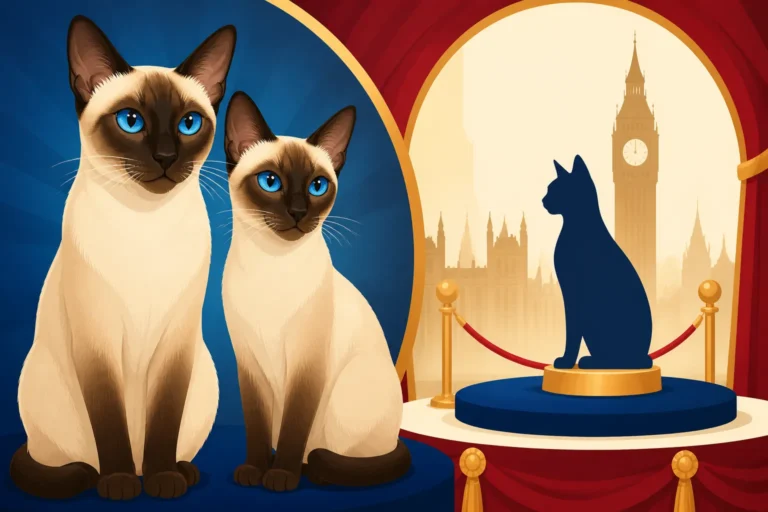
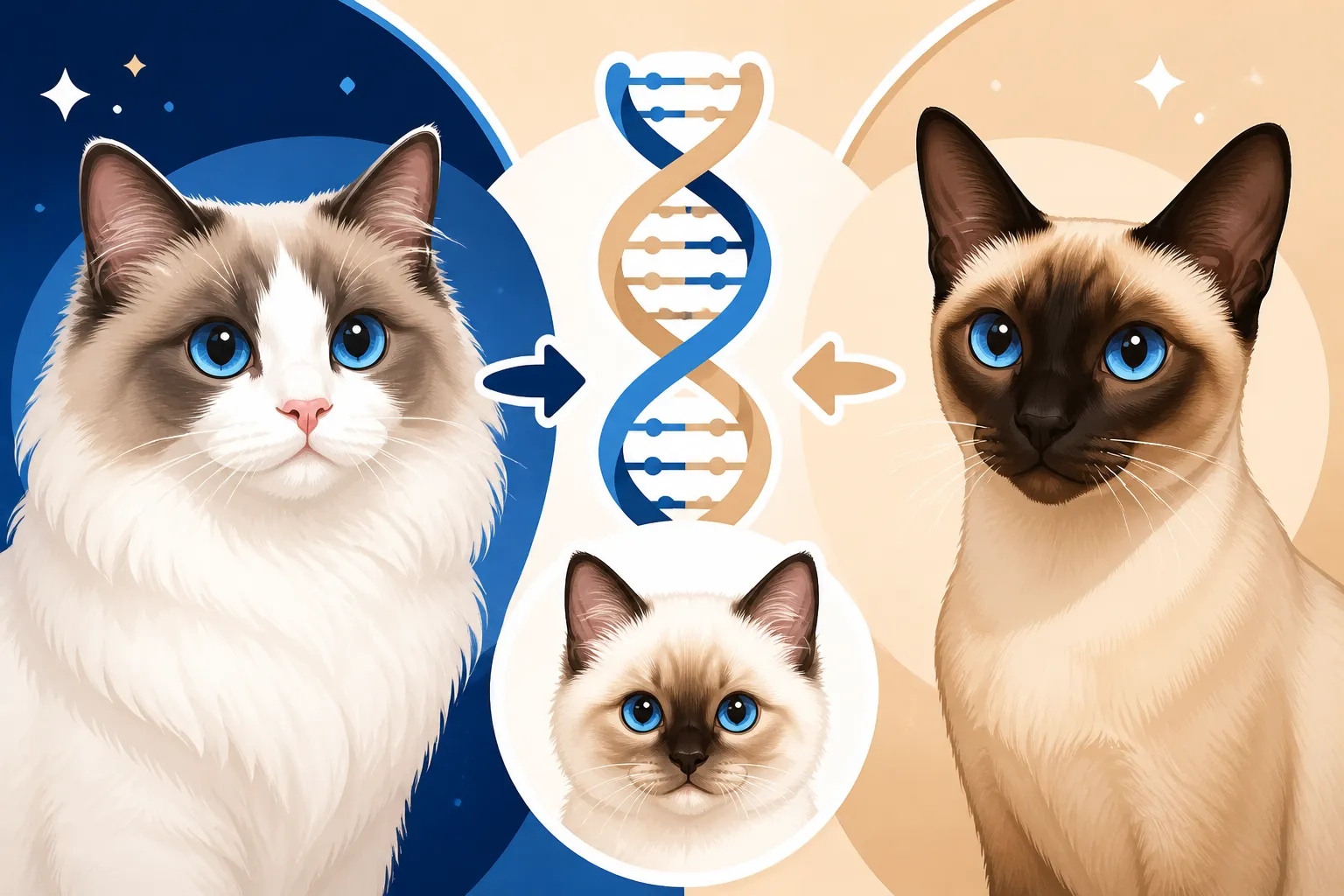
A Ragdoll’s blue eyes and pointed coat can make the breed look closely related to a Siamese, but appearance alone cannot establish ancestry. Ragdolls do carry the genetic machinery for colorpoint coloring, which is also found in Siamese cats. That shared trait does not, by itself, prove that Siamese cats were part of the Ragdoll’s documented foundation.
Do Ragdolls carry the Siamese colorpoint gene
The short answer is about coat color, not a family tree
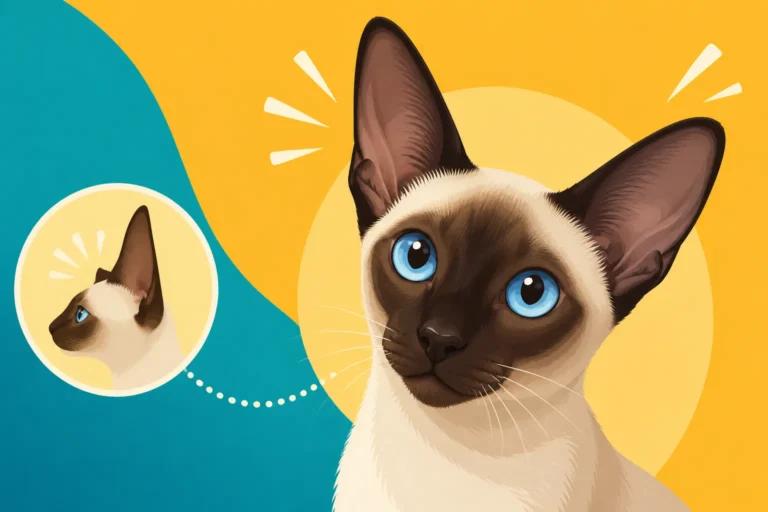
Ragdolls can carry the colorpoint variant that creates darker coloring on cooler parts of the body, such as the ears, face, legs, and tail. The same general colorpoint mechanism is associated with the familiar pointed pattern in Siamese cats. In both breeds, the temperature-sensitive pigment process helps explain why extremities tend to be darker than the torso.
That is a real genetic connection in the sense that the breeds can share a color-producing variant. It is not the same as saying a Ragdoll is descended from a Siamese, or that every Ragdoll has a recent Siamese ancestor. A gene can be present in multiple breeds without those breeds being direct relatives in the way a pedigree would show.
People often use “the Siamese gene” as shorthand for colorpoint coloring. That phrase can be misleading: the variant is not exclusive to Siamese cats. To understand the distinction, it helps to read about Which Gene Makes a Siamese Cat's Points and What Point Coloration in a Siamese Cat Is. The coat pattern is a shared biological feature, not a breed label.
Why coat appearance is not proof of Siamese ancestry
A pointed Ragdoll may look Siamese at a glance, especially if the cat has a pale body, dark facial mask, and blue eyes. But breeds can share visible traits for different reasons: a variant may have been present in more than one founding population, introduced through older crosses, or retained as breeders selected for a particular look. The appearance alone cannot tell you which explanation applies to an individual cat.
Ragdolls also have coat patterns that distinguish them from the classic Siamese pattern. Many Ragdolls are colorpointed, but others are mitted or bicolor, with white markings caused by additional coat-pattern genetics. Siamese cats are generally recognized for their pointed pattern without the Ragdoll’s characteristic white mittens or broad white facial and body markings. Even so, coat markings are not a reliable substitute for pedigree records.
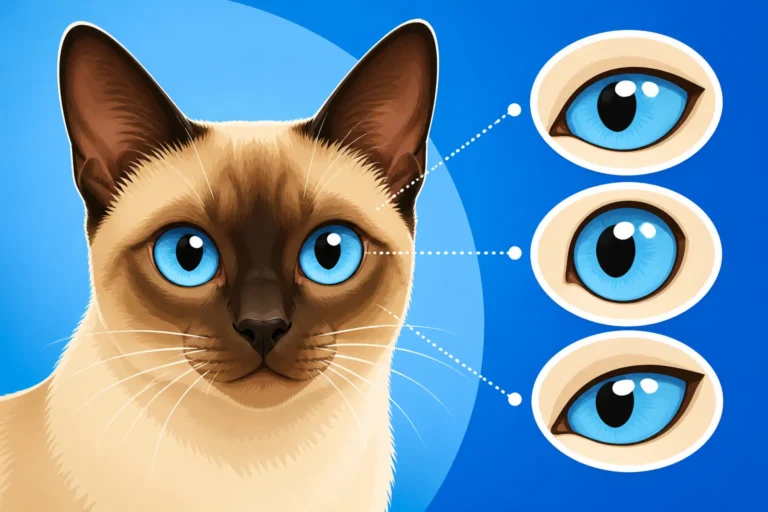
Blue eyes can add to the resemblance, but they do not settle the ancestry question either. Colorpoint cats commonly have blue eyes because of how the relevant pigment changes affect the eyes. That shared feature is covered in Why a Siamese Cat Has Blue Eyes. It explains a visual similarity, not a documented cross between breeds.
What Ragdoll history can and cannot tell us
The breed developed in California
The Ragdoll breed was developed in Riverside, California, beginning in the 1960s. The breed’s foundation story is associated with Ann Baker and a group of longhaired cats. Historical accounts describe the Ragdoll as being developed through selective breeding from domestic cats, with traits such as size, temperament, coat, and pattern shaped over generations.
The details of early breeding histories are not always as complete as a modern, carefully recorded pedigree. That can leave room for speculation, especially when a breed has a coat pattern also seen in a more familiar breed. But resemblance is not documentation. A Siamese-like mask on a Ragdoll does not demonstrate that a Siamese cat was one of its foundation animals.
It is also worth separating breed history from genetic mechanism. A pointed pattern may be inherited across generations, while the exact historical route by which a variant entered a particular breeding population is less certain. The fact that Ragdolls and Siamese cats share colorpoint coloring is clearer than any claim that one breed directly founded the other.
Pedigrees are stronger evidence than visual clues
If you are considering a Ragdoll kitten and want to know about its ancestry, ask the breeder for the pedigree and registration information for the kitten’s parents. A documented pedigree can show recorded generations and breed lines. It is more useful for tracing known ancestry than a photograph, coat-color description, or casual comparison with a Siamese cat.
Ask what the breeder can provide, and make sure names and registration details match across the documents. You can also ask how the breeder describes the cat’s pattern and which parent passed on relevant traits. A responsible breeder should be able to discuss the records they have without presenting a shared coat color as proof of a particular ancestor.
If the cat is adopted without a pedigree, the available history may be limited. That does not make the cat any less of a wonderful companion; it simply means its precise ancestry may not be knowable. When preparing for a new cat, practical needs such as food, litter, and a secure carrier matter far more day to day than whether a colorpoint variant came from a particular historical line. Some owners use retailers such as Chewy to compare routine supplies, but a shopping list cannot replace pedigree evidence.
How colorpoint genetics work across cat breeds
Temperature-sensitive pigment creates the pointed look
Colorpoint coloring is linked to a temperature-sensitive form of the pigment-producing enzyme tyrosinase. The enzyme works less effectively in warmer areas of the body and more effectively in cooler areas. As a result, pigment tends to be stronger on the ears, face, paws, and tail, while the warmer torso remains lighter.
Kittens are usually born very pale because they have spent the period before birth in a consistently warm environment. As they grow and their body is exposed to cooler temperatures, darker pigment develops in the cooler areas. The precise shade and contrast can vary with age, environment, and the cat’s individual genetics. This process is not unique to Siamese cats; it is one reason pointed coloration appears in several cat breeds.
The temperature effect can also make a pointed cat’s coat change over time. Cooler conditions may contribute to a darker-looking coat, while warmer areas remain lighter. These changes are part of how the pigment variant expresses itself, not evidence that a cat’s breed has changed. For more on the biological process, see How Temperature Controls a Siamese Cat's Color.
Other pointed breeds show why the trait is not breed-exclusive
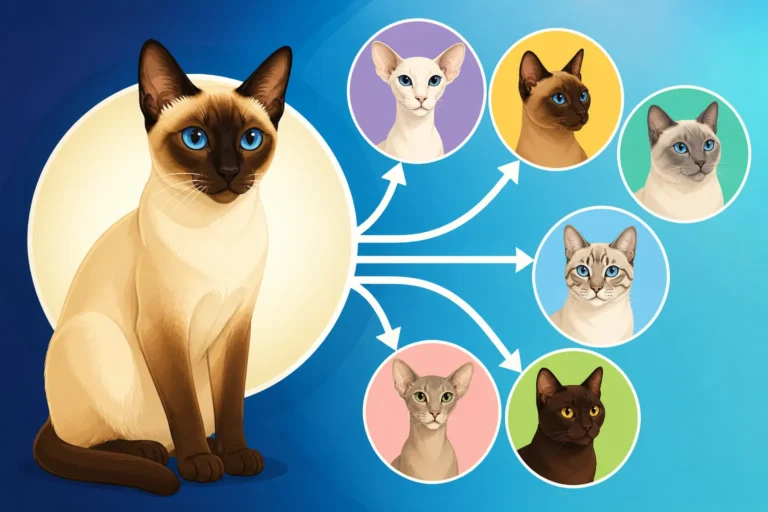
Colorpoint patterns appear in multiple breeds, and the names of similar-looking patterns can make the genetics seem more breed-specific than they are. Siamese, Ragdoll, Birman, Himalayan, and other cats may show pointed coloring, but each breed has its own history, standards, and characteristic combinations of traits. A shared pattern does not make those breeds interchangeable.
The Siamese itself has a distinct breed history and appearance, while the Ragdoll is known for a larger, longhaired build and its own recognized pattern variations. The wider differences between related-looking breeds are discussed in How a Siamese Cat Differs From a Balinese and How a Siamese Cat Differs From a Tonkinese. Those comparisons also help show why one shared coat trait is not enough to establish a close breed relationship.
Genetic terminology can add another layer of confusion. Different variants at the same pigment-related gene can produce related patterns, and different combinations can affect how much pigment appears. That does not mean a cat carrying a colorpoint variant has a complete Siamese genetic background. It means one piece of its genetic makeup contributes to a particular coat effect.
How to investigate a Ragdoll’s ancestry responsibly
Use a pedigree for documented breed lineage
For a pedigreed Ragdoll, start with the breeder’s records rather than trying to infer ancestry from the cat’s face, coat, or eye color. Ask for the registered names of the parents and available pedigree details. If you are buying a kitten, ask how the breeder confirms parentage and what documentation will come with the kitten.
A breeder’s answers should be specific and consistent. If someone claims a kitten has Siamese ancestry, ask whether that claim appears in the documented pedigree or is simply an impression based on color and appearance. There is a meaningful difference between “this cat has a pointed coat like a Siamese” and “this cat has a Siamese ancestor recorded in its family history.”
When the history is incomplete, it is better to say so plainly than to fill the gaps with guesses. For a rescue Ragdoll or a Ragdoll-type cat without paperwork, the cat may resemble the breed without having a verifiable purebred pedigree. A cat’s affectionate personality and care needs do not depend on having a complete family tree.
Treat DNA results as one piece of evidence
A cat DNA test may identify selected genetic variants or compare a sample with reference populations, depending on the test. A result showing a colorpoint-associated variant can help explain the coat, but it does not establish that the cat has Siamese ancestry. The same variant may occur in cats from different breed backgrounds.
Breed estimates are also not the same as a documented pedigree. Results depend on the test’s reference data and methods, and they may not answer a narrow question such as whether a specific Siamese cat appears in a Ragdoll’s family tree. If ancestry matters for breeding or registration, ask the relevant registry or a qualified veterinary genetics professional what documentation is meaningful for that purpose.
For everyday ownership, there is usually no need to test a healthy Ragdoll simply to explain its pointed coat. Focus on reliable identification, veterinary care, and the cat’s individual needs. If you are setting up at home, Chewy may be one place to compare basics such as litter and feeding supplies; choose products based on your cat’s comfort and your veterinarian’s advice rather than on assumptions about its ancestry.
| Question | What the evidence can tell you | What it cannot prove |
|---|---|---|
| Does a Ragdoll have pointed coloring? | The cat expresses a colorpoint coat pattern | That the cat has Siamese ancestors |
| Does a Ragdoll share a colorpoint variant with Siamese cats? | A shared pigment-related variant can explain similar coloring | That the breeds have the same overall genetic background |
| Does a blue-eyed, pointed appearance identify a Siamese cross? | It shows traits commonly seen in pointed cats | The cat’s documented pedigree |
| Can a pedigree show recorded Siamese ancestry? | It can show named ancestors included in the available records | Unrecorded ancestry beyond the documented generations |
| Can a DNA result answer the ancestry question? | It may identify selected variants or estimate breed similarity | A complete, definitive family tree in every case |
A Ragdoll can share the colorpoint genetic variant associated with Siamese coloring, but that is not proof of direct Siamese descent. If you are choosing a kitten, prioritize trustworthy pedigree records, clear breeder communication, and a good fit with your household. Once your cat is home, its day-to-day care—whether you pick up supplies at a local shop or order through Chewy—will matter much more than the label attached to one coat-color gene.
Disclaimer
This article is for general informational purposes only and does not constitute professional advice. Laws, prices and regulations vary by location and change over time. Consult a qualified professional for guidance on your specific situation.