Whether a Siamese Cat Chases a Bird or Hamster
It’s a tale as old as time for cat owners: you love your beautiful, vocal Siamese, but you also have a soft spot for the cheerful chirps of a pet bird or the tiny, industrious scuffles of a hamster. The big question looms – can these seemingly disparate species truly coexist peacefully under one roof? It’s a valid concern, and one that many Siamese guardians grapple with, often with a knot of anxiety in their stomach. This guide is here to shed light on the powerful instincts that drive your Siamese and offer realistic, empathetic advice on navigating the delicate balance of a multi-species home, helping you understand whether a Siamese cat chasing a bird or hamster is an unavoidable reality.
Understanding the Siamese Cat's Instinctive Prey Drive
Let's be honest, cats are hunters. It's written in their DNA, etched into their very being. While your pampered housecat might spend most of its day napping in sunbeams, don't let that serene facade fool you. Beneath that silky coat beats the heart of a predator, and with a breed as intelligent and energetic as the Siamese, that predatory drive can be particularly pronounced.
The Hunter's Heart: Why Siamese Cats Hunt
Every cat, regardless of breed, possesses an inherent prey drive. This isn't about malice or being "mean"; it's simply instinct. For thousands of years, cats survived by hunting small creatures – birds, rodents, insects. This isn't a behavior they can just switch off. Even a well-fed Siamese will often engage in hunting behaviors, not because they're hungry, but because the act itself is stimulating and deeply satisfying. They love the chase, the stalk, the pounce. It's an intricate dance of observation, patience, and explosive action, and it releases feel-good hormones that make them want to do it again and again.
Think about it: even when they’re playing with a feather wand or a laser pointer, they're reenacting a hunt. They crouch, their eyes fixate, their tail twitches, and then they spring. This is their primal programming, and for a cat as alert and responsive as a Siamese, these instincts are often amplified. Their intelligence means they quickly learn patterns and anticipate movements, making them incredibly efficient "hunters" even within the confines of a home.
How Siamese Traits Influence Hunting Behavior
The Siamese cat's unique personality traits play a significant role in how intensely their prey drive manifests. These are not your laid-back, "anything goes" kind of cats. Siamese are known for their high energy levels, their intense curiosity, and their almost dog-like devotion and engagement with their human companions. But these traits also make them incredibly focused and determined when something catches their eye.
Their intelligence and problem-solving skills mean they're not easily deterred. If they see a bird flitting in a cage, or a hamster scurrying, their minds immediately begin to strategize. They'll assess the situation, look for weaknesses, and try to figure out how to get closer. Their vocal nature, while often endearing, can also turn into persistent "complaining" if they're frustrated in their hunting attempts, creating a noisy and stressful environment for both the small pet and you. A bored Siamese is often a more problematic Siamese, and if they’re not getting enough mental and physical stimulation, they might zero in on a small pet as their primary source of entertainment. This is why understanding What a Siamese Cat's Temperament Is Really Like is so crucial.
Siamese Cats and Birds: A High-Risk Combination
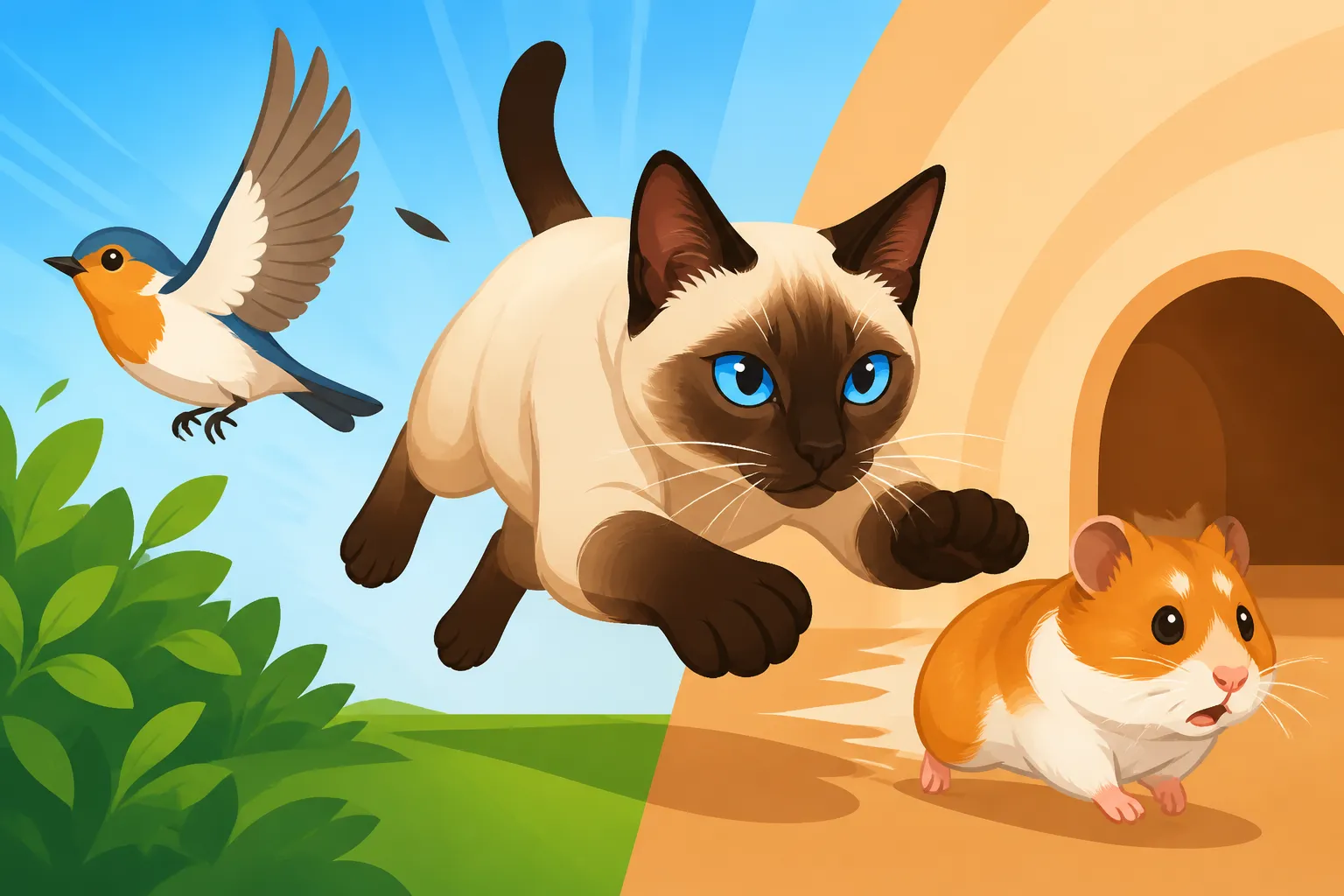
When it comes to birds, the risk level escalates significantly. Birds, with their fluttering movements, bright colors, and often high-pitched vocalizations, are essentially living cat toys in the eyes of a Siamese. It's a combination that, more often than not, ends in heartbreak if not managed with extreme caution.
The Natural Allure of Feathers and Movement
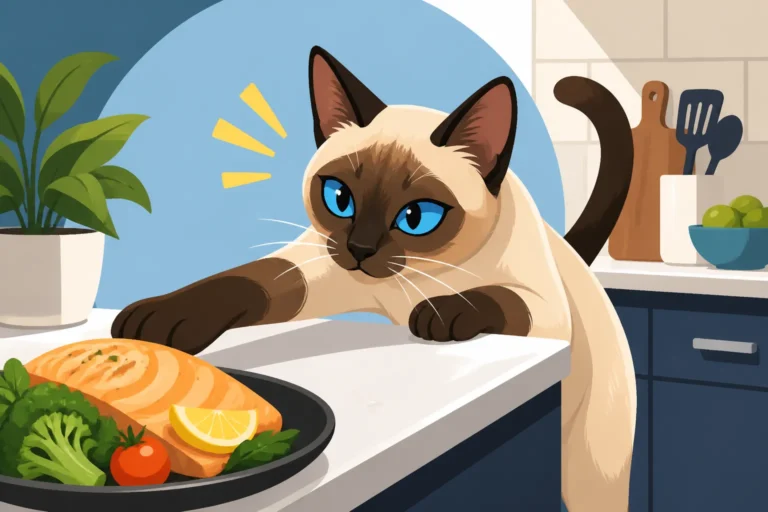
Imagine being a Siamese cat. You're a highly visual hunter, drawn to movement and patterns. A bird in a cage, constantly hopping, fluttering its wings, and singing its heart out, is like a siren song. The rapid, unpredictable movements trigger an immediate instinctual response. A bird, even a large one, is physically vulnerable to a cat's powerful jaws and sharp claws. Even if your Siamese isn't actively trying to eat the bird, a playful swat through the cage bars can result in serious injury or death.
The problem isn't just direct access. A cat's mere presence can be incredibly stressful for a bird. The constant stalking, the unwavering gaze, the occasional pawing at the cage – all of this can cause immense anxiety for a bird, leading to health issues, feather plucking, and a diminished quality of life. Birds perceive cats as apex predators, and their instinctual fear is entirely justified. They don't understand that your Siamese is "just playing" or "curious." They only know danger.
Managing the Risk: Coexistence Challenges
Can a Siamese cat and a bird live in the same house? Yes, but it requires an almost military-level commitment to separation and security. You cannot rely on your cat's "good behavior" or hope for the best. The stakes are simply too high.
The primary rule is absolute physical separation. The bird's cage must be in a room that the Siamese cat can never access. This means a securely latched door, perhaps even a lock, and no open windows or escape routes for either pet. If you're considering a bird, make sure you have a dedicated "cat-free" room from day one. You might even consider installing a baby gate at the top of the stairs to a floor where the bird lives, ensuring an extra layer of defense.
Furthermore, the bird's cage itself needs to be incredibly robust. Standard bird cages, even those advertised as "large," are often not cat-proof. Look for heavy-duty metal cages with strong, secure latches that a clever Siamese cannot manipulate. Consider placing the cage on a stand that's too high for the cat to jump onto easily, or in a hutch that offers additional physical barriers. Many pet owners find good options for extra secure caging and robust stands through retailers like Amazon.
Even with all these precautions, you must be vigilant. A moment's lapse in judgment – a door left ajar, an unsupervised visitor – could have tragic consequences. It's a constant, never-ending commitment to ensuring the safety of your feathered friend.
Siamese Cats and Hamsters (and Other Small Rodents): A Different Kind of Challenge
While birds often trigger an aerial pursuit instinct, hamsters and other small rodents ignite a different, but equally powerful, predatory drive: the ground chase. The tiny, scurrying movements and distinct scent of a rodent are incredibly captivating to a cat like the Siamese.
The Scent and Scuttle: Why Rodents Attract
Cats are not just visual hunters; their sense of smell is also incredibly keen. The unique scent profile of a hamster or gerbil, even when contained in a cage, can be a powerful attractant for a Siamese. This, combined with their quick, darting movements, makes them irresistible targets for stalking and pouncing. Imagine a tiny creature constantly tunneling, rustling bedding, and zipping from one spot to another – it’s a living, breathing puzzle for a curious and intelligent Siamese.
The vulnerability of typical rodent cages is also a major concern. Many hamster or gerbil cages are made of plastic or thin wire that a determined Siamese can easily damage or even break through. Given their intelligence, a Siamese might quickly figure out how to open flimsy latches or even chew through plastic components to gain access. This isn't a reflection of a "bad" cat, but simply a cat driven by instinct and equipped with sharp teeth and claws.
Safety Measures for Rodent Roommates
Just like with birds, the key to potential coexistence with hamsters or other small rodents is uncompromising security and separation. This means going far beyond a standard pet store cage.
First, secure containment is paramount. Invest in the most robust cage you can find. Glass aquariums with heavy mesh tops are often more secure than wire cages, as they prevent a cat from reaching in with paws and are more difficult to knock over. If you opt for a wire cage, ensure the bars are too close together for paws to fit through and that all latches are heavy-duty and cat-proof. You might even consider adding secondary locks or zip ties to reinforce any potential weak points. You can find a wide variety of reinforced cages and security accessories on Amazon that might offer the extra peace of mind you need.
Second, elevated placement is crucial. Place the hamster's cage on a high, sturdy surface that your Siamese cannot jump onto. Consider a dedicated shelf securely mounted to the wall, or inside a cabinet with a locked door. Never place a small pet cage on the floor, a low table, or anything easily accessible to a jumping, climbing Siamese. Even a cat tree or tall furniture might not be enough; a Siamese is incredibly agile and can reach surprising heights.
Third, supervision is non-negotiable. Even with the most secure setup, never leave your Siamese unsupervised in the same room as a small rodent. This isn't just about direct attacks; the stress of constant feline presence can be detrimental to the rodent's health and well-being. Consider creating a schedule where the small pet gets dedicated time out of its cage in a cat-free room, and your Siamese gets its own focused play time elsewhere.
Preventing Predatory Incidents and Ensuring Peace
Successfully housing a Siamese cat with smaller prey animals isn't about stopping their instinct; it's about managing it. You're essentially building a fortress of safety and providing alternative outlets for their natural behaviors.
Environmental Enrichment as a Diversion
A bored Siamese is a mischievous Siamese, and often, a problematic Siamese. If your highly intelligent and energetic cat isn't given enough mental and physical stimulation, they will find their own entertainment – and that entertainment might involve persistently harassing your smaller pets. Providing ample enrichment is one of your best defenses.
This means daily, focused play sessions that mimic hunting. Use wand toys, feather teasers, and laser pointers (just be sure to end laser sessions with a physical toy they can "catch" to prevent frustration). Rotate their toys regularly to keep things fresh and exciting. Puzzle feeders are also fantastic for mental stimulation, making them "work" for their food and engaging their problem-solving skills. You can find a great selection of interactive toys and challenging puzzle feeders on Amazon that will keep your Siamese engaged for longer periods. Climbing opportunities like tall cat trees and shelves are also essential, giving them vantage points and outlets for their athletic abilities. If you’re ever wondering how much play your Siamese needs, you might find some answers in How Much Play a Siamese Cat Needs.
Training and Supervision: Realistic Expectations
While Siamese cats are incredibly intelligent and often described as "trainable" – they can learn tricks, walk on leashes, and respond to their names – it's vital to have realistic expectations when it comes to their prey drive. You can train a Siamese to sit, but you cannot train away a fundamental, instinctual urge to hunt. The best you can hope for is to teach them to ignore the small pet, and even then, this takes immense dedication and consistent management.
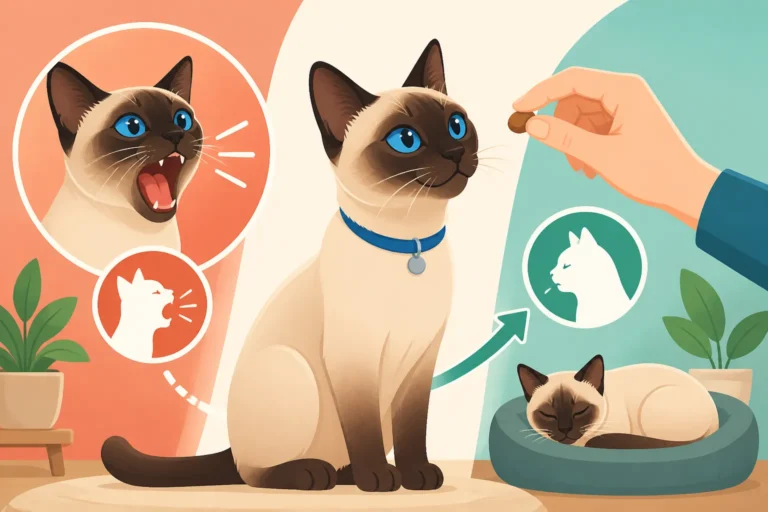
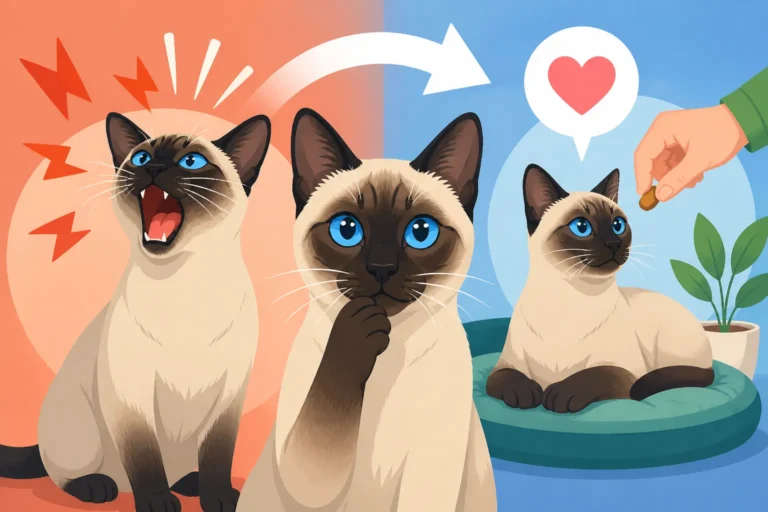
Positive reinforcement training can be used to redirect their attention away from the cage. For example, if your Siamese approaches the bird cage, immediately redirect them with a favorite toy or a high-value treat in a different area of the room. Reward them heavily for engaging with you and ignoring the small pet. However, this is a management strategy, not a cure. Never assume they are "cured" of their instincts. Strict, constant supervision is the only true way to prevent incidents when a small pet is present in the house. This kind of careful training and understanding of their boundaries is crucial, as explored in How Trainable a Siamese Cat Really Is.
The Importance of Separate Spaces
Ultimately, the most effective and least stressful solution for all parties involved is to maintain strictly separate living spaces for your Siamese and any small prey animals. This isn't just about physical barriers; it's about creating entirely distinct territories where each pet feels safe and secure.
Consider dedicating specific rooms to your bird or hamster, ensuring those rooms have solid doors that can be kept closed and locked when you're not actively supervising. Schedule specific "out-of-cage" time for your small pet in their safe room, ensuring your Siamese is completely separate – perhaps in another part of the house, enjoying an enriching play session with you.
This approach minimizes stress for both animals. Your Siamese won't be constantly frustrated by unattainable prey, and your small pet won't live in a perpetual state of fear. For owners who truly want to keep both, this might involve creative solutions like cat-proof catios for the Siamese that are completely separate from where the bird might live, or highly secure pet habitats for the smaller animals. If you have multiple pets, you might want to look into A Siamese Cat With Children, Dogs and Other Cats for more general advice on multi-pet households.
When Coexistence Isn't Possible: Making Tough Decisions
Sometimes, despite all best efforts and intentions, a truly peaceful coexistence isn't achievable. This can be a heartbreaking realization, but it's a reality that some owners face.
Prioritizing Pet Safety
The bottom line is the safety and well-being of all your pets. If the presence of a bird or hamster is causing extreme stress to your Siamese, leading to destructive behaviors, excessive vocalization, or even self-grooming issues like Psychogenic Alopecia in a Siamese Cat, or if the small pet is constantly terrified, then it’s time to re-evaluate. It’s an incredibly tough decision, but prioritizing the lives and happiness of your animals is paramount.
This might mean finding a new, loving home for the bird or hamster where they won't be under constant threat, or, in very rare cases, considering if your home is truly the right environment for a high-prey-drive cat like a Siamese. It's not about blaming anyone; it's about acknowledging inherent instincts that simply cannot be changed.
Understanding Your Siamese Cat's Nature
Remember, your Siamese isn't being malicious; they are simply acting on ancient, powerful instincts. Their intense focus and energy are part of what makes them such captivating companions, but these very traits also contribute to their strong prey drive. It's a fundamental part of Why a Siamese Cat Will Not Be Ignored – they are active, engaged, and always looking for something to do. Understanding and respecting this aspect of their nature is key to responsible pet ownership. Rather than fighting against who they are, you learn to channel their instincts safely and appropriately, ensuring a happy and secure environment for everyone in your home.
Disclaimer
This article is for general informational purposes only and does not constitute professional advice. Laws, prices and regulations vary by location and change over time. Consult a qualified professional for guidance on your specific situation.