Whether the rdAc DNA Test Works on a Siamese Cat
It’s truly disheartening when you’re trying to do everything right for your beloved Siamese, investing in health tests, only to discover that some of the widely available screenings might not even be relevant to their specific genetic predispositions. Many dedicated owners feel this frustration when they delve into Progressive Retinal Atrophy (PRA) testing, specifically regarding the rdAc DNA test. This guide will clarify why the rdAc DNA test might not be the silver bullet you hope it is for your Siamese, and what truly reliable methods exist for checking their eye health.
Understanding Progressive Retinal Atrophy PRA in Siamese Cats
Progressive Retinal Atrophy, or PRA, is one of those conditions that strikes fear into the heart of any cat parent. It's a group of degenerative diseases affecting the retina, the light-sensitive tissue at the back of the eye. While the exact genetic mutations vary across breeds, the outcome is heartbreakingly similar: a gradual, irreversible loss of vision that can eventually lead to complete blindness. For a Siamese cat, known for their intelligence and agility, losing their sight can be a particularly challenging adjustment, both for them and for their human companions.
What PRA Does to a Siamese Cat's Sight
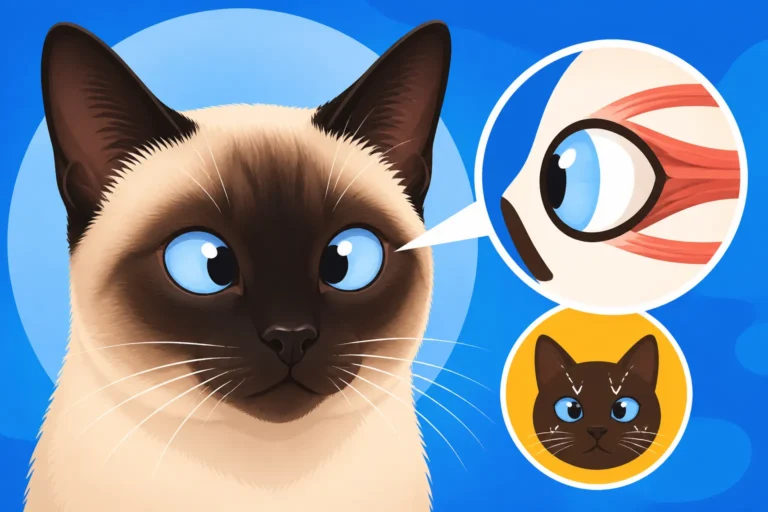
Imagine navigating your home, a space you know intimately, and slowly, imperceptibly, the lights begin to dim. First, you struggle in low-light conditions, bumping into furniture in the evening. Then, even in broad daylight, familiar objects become blurry, indistinct shapes. This is often the reality for a Siamese cat suffering from PRA. The condition typically begins with the degeneration of rod cells, which are responsible for night vision. Owners might first notice their cat becoming more hesitant in dimly lit rooms, reluctant to jump onto familiar surfaces in the dark, or exhibiting dilated pupils in an attempt to gather more light.
As the disease progresses, cone cells, which handle daytime vision and color perception, also start to break down. This leads to a complete loss of sight. The heartbreaking part is that cats are incredibly adept at compensating for vision loss, especially in a familiar environment. They rely heavily on their other senses – their acute hearing, sensitive whiskers, and powerful sense of smell – making it difficult for owners to spot the early signs. You might not realize the full extent of their vision loss until they are placed in an unfamiliar setting or a piece of furniture is moved, and they suddenly seem disoriented. It's a quiet, insidious progression that can catch even the most vigilant owner by surprise. If you’ve ever wondered, "What PRA Does to a Siamese Cat's Sight", the reality is a slow fade into darkness, and it's something every Siamese owner should be aware of.
The Genetic Basis of PRA in Cats
PRA isn't a single disease; it's an umbrella term for various genetic conditions, each caused by a specific mutation affecting different genes involved in retinal development or function. In most cases, PRA is an inherited autosomal recessive condition. This means a cat must inherit two copies of the faulty gene (one from each parent) to develop the disease. A cat with only one copy of the faulty gene is called a "carrier." Carriers typically have normal vision themselves but can pass the gene on to their offspring. If two carriers are bred, there's a 25% chance their kittens will be affected, a 50% chance they'll be carriers, and a 25% chance they'll be completely clear.
The challenge lies in the fact that different breeds, and even different lines within a breed, can have unique genetic mutations causing PRA. For instance, the CEP290 mutation is well-documented as a cause of PRA in Abyssinian cats. Identifying these specific mutations is crucial for developing accurate DNA tests. Without knowing the exact genetic culprit in a particular breed, creating a reliable DNA test is impossible. This genetic variability is a key reason why a test developed for one breed might not work for another, leading to a lot of confusion and misdirected efforts among conscientious breeders and owners.
The rdAc Mutation and Its Origins
The rdAc mutation is one of the more commonly discussed genetic defects linked to Progressive Retinal Atrophy. It represents a significant discovery in feline genetics, offering hope that genetic testing could provide a definitive answer for breeders looking to eradicate PRA from their lines. However, understanding its specific origins is critical to understanding its relevance, or lack thereof, to the Siamese breed.
What Is the rdAc Mutation?
The rdAc (which stands for "rod-cone dysplasia, autosomal recessive") mutation specifically affects a gene called CEP290. This gene is vital for the proper development and function of photoreceptor cells—the rods and cones in the retina that detect light. When the CEP290 gene carries the rdAc mutation, these photoreceptor cells degenerate, leading to PRA. The initial discovery and subsequent genetic test for rdAc were groundbreaking, primarily because it offered a clear, actionable tool for breeders in certain cat breeds.
This particular mutation was first identified and extensively studied in breeds such as the Abyssinian and Somali, as well as the Ocicat. It causes a rapid degeneration of the retina, often leading to blindness early in a cat's life. The development of a DNA test for rdAc meant that breeders of these affected breeds could screen their cats, identify carriers, and make informed decisions to avoid producing affected kittens. It was, and remains, a powerful tool for genetic health management within those specific populations, giving breeders the power to ensure healthier eyes for future generations.
Why the rdAc Test Became Popular
When the rdAc DNA test became commercially available, it was met with widespread enthusiasm across the cat breeding community. For years, PRA was a devastating mystery, often only diagnosable once a cat started losing its sight. A DNA test promised a way to identify carriers and affected cats before they developed symptoms or were even bred, allowing for proactive genetic health management. It was seen as a universal solution, a "one test fits all" for PRA, and many breeders outside the initially identified breeds, including some Siamese breeders, began incorporating it into their screening protocols.
The simplicity of a cheek swab and the promise of a clear "affected," "carrier," or "clear" result made it incredibly appealing. Reputable laboratories, striving to provide comprehensive genetic health panels, often included rdAc as a standard PRA test. For many, it felt like doing due diligence – a responsible step to take to ensure the health of their breeding stock and the kittens they produced. The intention behind its popularity was undoubtedly good, rooted in the desire to prevent suffering and improve breed health. However, as we'll delve into, the scientific reality for the Siamese breed turned out to be more complex than this initial widespread adoption suggested.
The Confusion Surrounding rdAc in Siamese Cats
This is where the frustration really sets in for many Siamese cat owners and dedicated breeders. You've heard about PRA, you know it's a serious condition, and you've likely seen resources suggesting DNA testing. So, you dutifully order an rdAc test, expecting definitive answers, only to be met with conflicting information or a sense that the results don't quite fit the narrative. This confusion is entirely valid, and it stems from a critical misunderstanding about the genetic specifics of PRA in the Siamese breed.
Why an rdAc Result Is Unreliable in a Siamese Cat
Here's the crucial, often overlooked, piece of information: while Progressive Retinal Atrophy absolutely affects Siamese cats, the specific rdAc mutation found in breeds like Abyssinians, Somalis, and Ocicats is not the common, or even identified, cause of PRA in the Siamese breed. Let that sink in for a moment. You might have sent off your Siamese's DNA, eagerly awaited results, and received a "clear" verdict for rdAc, only to find out it doesn't guarantee your cat won't develop PRA. It's like testing for a specific type of cold virus when your cat actually has allergies – good intentions, but targeting the wrong problem.
This means that a Siamese cat can be completely "clear" for the rdAc mutation and still carry a different, as-yet-unidentified genetic mutation that will cause them to develop PRA. Conversely, if a Siamese cat did happen to test positive as a carrier or affected for rdAc, it would be an anomaly, not the typical genetic pathway for PRA in their breed. The science simply doesn't link the rdAc mutation to the forms of PRA commonly observed in Siamese cats. This disconnect creates immense frustration, as diligent owners want to ensure the health of their feline family members, but the available tools sometimes lead them down an unproductive path. It highlights the challenge in genetic research: each breed's genetic blueprint is unique, and solutions aren't always universally applicable.
The Current State of Genetic Testing for Siamese PRA
Given that the rdAc test isn't the answer, where does that leave us regarding genetic screening for PRA in Siamese cats? Unfortunately, the honest answer is that as of now, there is no universally accepted, specific DNA test available to identify the genetic mutations responsible for PRA in all Siamese cats. While research continues in various veterinary genetics laboratories, the precise genes and mutations causing the different forms of PRA within the Siamese population have not yet been definitively identified and validated for commercial testing.
This doesn't mean breeders and owners are entirely without options, but it shifts the focus away from simple DNA cheek swabs for rdAc and towards other, more direct diagnostic methods. The absence of a specific gene test means we're still in a phase where clinical observation and specialized examinations are paramount. While some labs may offer broader "Siamese health panels," it's vital to inquire precisely what specific genetic mutations those panels are testing for. If rdAc is listed as the PRA test, then it's essential to understand its limitations for your Siamese. This lack of a definitive genetic test underscores why other screening methods, which we'll discuss next, are so incredibly important for the breed's health.
Alternative and Essential Screening Methods
Since a DNA test like rdAc isn't the definitive answer for PRA in Siamese cats, it's natural to wonder what options do exist to monitor and diagnose this concerning condition. Thankfully, veterinary medicine offers established and reliable methods that can assess your Siamese's retinal health and diagnose PRA, even without a specific genetic marker. These methods require the expertise of a veterinary professional, particularly a specialist in ophthalmology, but they provide the most accurate picture of your cat's vision status.
How a Vet Confirms PRA in a Siamese Cat
When a veterinarian suspects PRA in a Siamese cat, they don't rely on a generic DNA test like rdAc. Instead, they turn to specialized ocular examinations. The first step is often a thorough ophthalmoscopic examination, where a veterinary ophthalmologist uses a special instrument to look directly at the retina at the back of the eye. In the early stages of PRA, they might observe subtle changes like increased reflectivity of the tapetum lucidum (the reflective layer behind the retina), or thinning of the retinal blood vessels. As the disease progresses, the retina itself may appear mottled or degenerated.
For a more definitive diagnosis, particularly in early or ambiguous cases, an electroretinography (ERG) test is the gold standard. This non-invasive procedure measures the electrical responses of the retina's photoreceptor cells to flashes of light. The cat is typically sedated, and a small electrode is placed on the cornea, with another on the skin around the eye. By observing the patterns and amplitudes of the electrical signals, the ophthalmologist can determine the function of the rod and cone cells. A cat with PRA will exhibit reduced or absent electrical responses, confirming the diagnosis. This direct assessment of retinal function is crucial because it doesn't depend on knowing a specific genetic mutation; it simply measures if the retina is working properly. If you're concerned about your cat's vision, seeking out an ophthalmologist for these tests is the most reliable path. This kind of specialized care is where having pet insurance, like a comprehensive plan from Healthy Paws, can really make a difference, covering a significant portion of these diagnostic costs.
Whether an Eye Exam Beats a DNA Test for a Siamese Cat
In the context of diagnosing PRA in a Siamese cat, the answer is a resounding yes: a comprehensive eye exam performed by a veterinary ophthalmologist absolutely beats a DNA test for the rdAc mutation. Why? Because the eye exam, particularly an ERG, directly assesses the function and structure of the retina. It doesn't matter what specific genetic mutation might be causing the PRA (if one is even identified for the Siamese breed); if the retina isn't working correctly, the ERG will show it. The rdAc DNA test, on the other hand, only tells you if your Siamese carries one specific mutation that is known to cause PRA in other breeds, but not typically in Siamese.
This doesn't mean DNA tests are useless for cats in general, but it highlights the importance of using the right test for the right breed and condition. For Siamese cats, regular eye check-ups, especially for breeding animals, are paramount. These clinical examinations can detect early signs of retinal degeneration, allowing for early diagnosis and better management. If a cat has a family history of PRA, these examinations become even more critical, sometimes starting at a younger age. For owners and breeders alike, understanding that "Whether an Eye Exam Beats a DNA Test for a Siamese Cat" when it comes to PRA is vital for responsible pet care and breeding decisions.
Here's a quick comparison to clarify:
| Feature | rdAc DNA Test (for Siamese) | Ocular Examination (e.g., ERG) for Siamese |
|---|---|---|
| Purpose | Detect specific rdAc gene mutation | Assess retinal structure and function |
| Relevance to Siamese | Very low; rdAc not primary cause | Highly relevant; directly detects PRA |
| Method | Cheek swab; laboratory analysis | Clinical exam by ophthalmologist; ERG |
| Detects | Presence of rdAc gene | Signs of retinal degeneration, functional loss |
| Result | Clear/Carrier/Affected for rdAc | Diagnosis of PRA (or ruling it out) |
| Cost Implications | Often part of a panel; may be misleadingly "cheap" if ineffective | Specialist fees, sedation; potentially higher but accurate |
Responsible Breeding and Owner Vigilance
Navigating the complexities of genetic health conditions like PRA can feel overwhelming for both dedicated breeders and loving cat owners. Since there isn't a simple, definitive DNA test for PRA in Siamese cats, a strong emphasis falls on responsible breeding practices and vigilant owner observation. This proactive approach helps safeguard the health of the breed and ensures that affected cats receive the best possible care.
What a Siamese Cat Breeder Should Have Screened
For Siamese breeders, the focus must shift from relying on irrelevant DNA tests to embracing comprehensive health screening and meticulous record-keeping. While a specific PRA gene test isn't available, ethical breeders prioritize the following:
Firstly, regular veterinary ophthalmic examinations by a board-certified veterinary ophthalmologist for all breeding cats. These exams should ideally be conducted annually, or as recommended by the specialist. The ophthalmologist can detect subtle changes in the retina that might indicate early-stage PRA, long before clinical blindness becomes apparent. This allows breeders to make informed decisions about their breeding program and prevent passing on the condition.
Secondly, diligent tracking of family health history. This is arguably one of the most powerful tools in the absence of a direct gene test. Responsible breeders keep detailed records of any known cases of PRA, or even suspected vision problems, in their cats' pedigrees. They should be transparent about these histories with potential buyers. If a cat produces offspring that develop PRA, that cat should be removed from the breeding program, along with its parents and siblings, unless a clear environmental cause can be ruled out. This is a difficult but necessary step to protect the breed's future. Healthy Paws pet insurance, for example, often promotes responsible pet ownership, which implicitly includes supporting breeders who invest in such comprehensive screenings. Understanding "What a Siamese Cat Breeder Should Have Screened" goes beyond simple genetic tests and requires a holistic view of health.
Finally, breeders should be transparent and communicative with prospective kitten buyers, clearly explaining the limitations of current genetic tests for PRA in Siamese cats and outlining the proactive steps they take instead. This builds trust and educates new owners on the importance of ongoing veterinary care for their Siamese companions.
Supporting a Siamese Cat with Vision Impairment
If, despite all precautions, your beloved Siamese is diagnosed with PRA or begins to show signs of vision loss, it's a difficult moment. However, Siamese cats are incredibly resilient and adaptable, and with your help, they can continue to live full, happy lives. The key is to provide a consistent, safe, and enriching environment tailored to their needs.
One of the most crucial steps is to maintain a consistent home environment. Avoid rearranging furniture, food and water bowls, or litter boxes. Cats with vision loss create detailed mental maps of their surroundings, and sudden changes can cause immense disorientation and stress. Use audible cues to help them navigate, such as gentle talking or snapping your fingers as you move around. Many owners find that soft bells on their own shoes can help their cat track their location.
Enrichment is still vital, even for a blind cat. Toys that make noise, like crinkle balls or those with bells inside, are excellent. Puzzle feeders can engage their sense of smell and touch, making mealtime an interactive experience. Consider creating vertical spaces that are easy to access with ramps or low steps, ensuring they can still enjoy climbing safely. Keeping your Siamese indoors is highly recommended to protect them from external dangers. While it’s always heartbreaking to see a pet struggle, learning "How a Blind Siamese Cat Manages" will empower you to provide them with an excellent quality of life. Regular veterinary check-ups remain important, and a good pet insurance plan like Healthy Paws can help manage any ongoing health needs or specialist visits for monitoring eye health or addressing secondary issues that might arise.
Disclaimer
Please remember that the information provided in this article is for educational purposes only and should not be considered a substitute for professional veterinary advice. Always consult with a qualified veterinarian or veterinary ophthalmologist regarding any health concerns or before making any decisions about your Siamese cat's care or breeding program.