Why a Siamese Cat Breeder Cannot Test for Amyloidosis
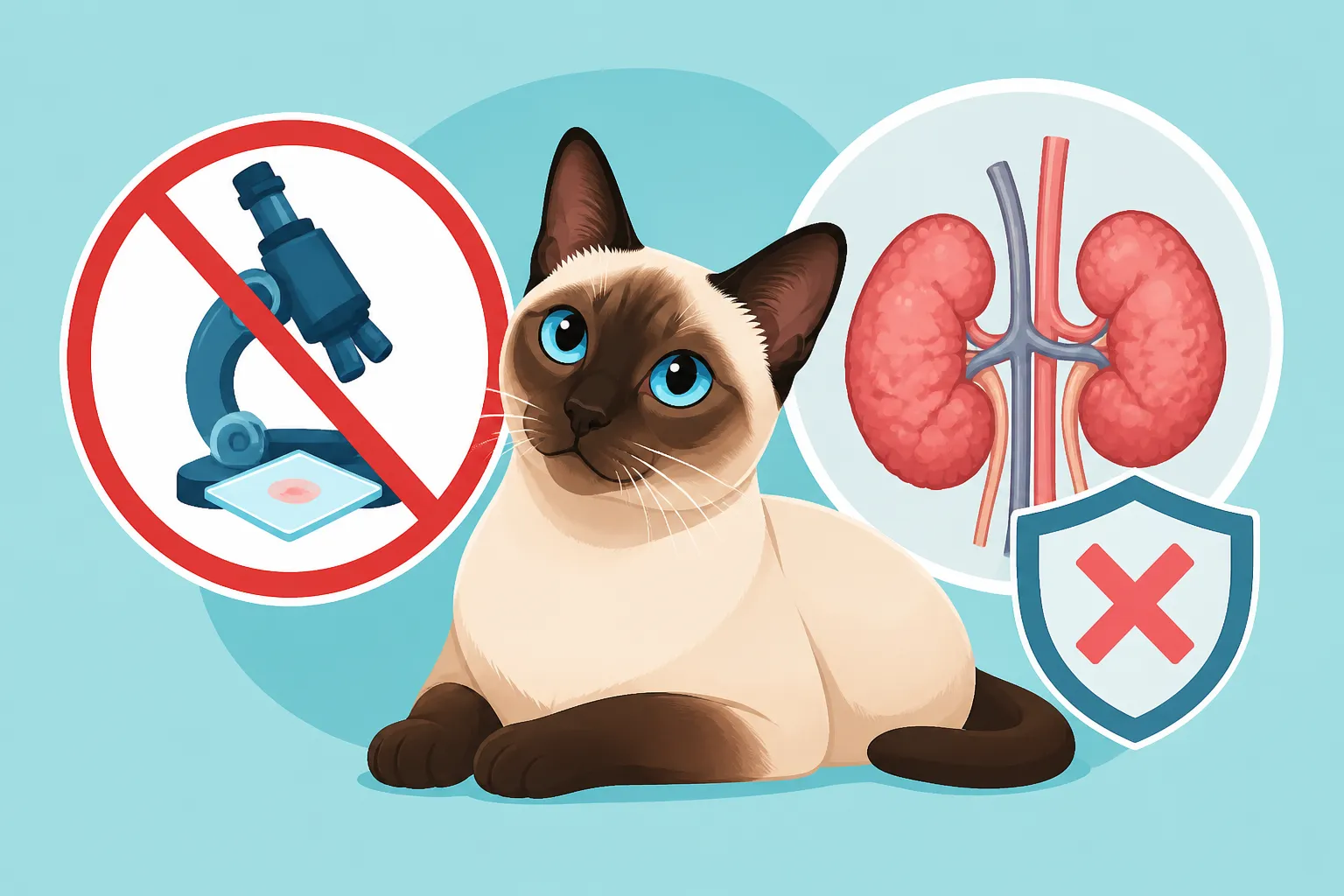
It's incredibly frustrating when you know a beloved breed, like our talkative Siamese cats, is predisposed to a devastating illness like amyloidosis, and yet, there's no clear-cut genetic test available for breeders to use. You want to do everything right, to ensure the healthiest possible kitten, but this particular challenge feels like hitting a brick wall. This guide is here to explain exactly why Siamese cat breeders currently cannot test for amyloidosis, what the scientific hurdles are, and what responsible breeders are doing in the face of this complex genetic puzzle.
The Frustrating Reality: What is Amyloidosis in Siamese Cats Anyway?
Before we dive into the "why no test" part, it's crucial to understand what we're up against. Amyloidosis isn't just a vague health concern; it's a silent, insidious threat that casts a long shadow over the Siamese breed, leaving many owners feeling helpless and heartbroken.
A Deep Dive into Amyloidosis: It's Not Just a Human Problem
Imagine tiny, misfolded proteins starting to accumulate in the organs of an otherwise healthy cat. That's essentially what amyloidosis is. These abnormal protein deposits, called amyloid fibrils, build up over time, eventually interfering with the normal function of the affected organs. While amyloidosis can affect various species, including humans, it manifests with particular ferocity in Siamese cats.
For our Siamese friends, this is often a systemic disease, meaning it can impact multiple organs throughout their body. However, the most commonly and devastatingly affected organs are the liver and, sometimes, the kidneys. When amyloid infiltrates the liver, it makes the tissue fragile and brittle. This can lead to a sudden and catastrophic rupture of the liver, causing massive internal bleeding that is often fatal. This horrifying scenario is a fear many Siamese owners live with, especially knowing that it can strike seemingly out of nowhere in young to middle-aged cats. You can read more about its impact in What Amyloidosis Does to a Siamese Cat.
The Inherited Component: Why We Know it Runs in Families
One of the most agonizing aspects of amyloidosis for Siamese cat enthusiasts is that we know it has a strong inherited component. Breeders and owners have observed for generations that the disease tends to appear in certain family lines, skipping some while decimating others. This pattern strongly suggests a genetic predisposition, making it a frustrating paradox that we don't have a direct genetic test.
The desire for a test isn't just about curiosity; it's about responsible breeding. If a breeder knew which cats carried the gene, they could make informed decisions to prevent passing it on, thereby slowly eradicating this terrible disease from the breed. The absence of such a tool leaves breeders in a difficult position, often relying on the tragic outcomes in past generations to guide future decisions. It's an imperfect and emotionally taxing method, highlighting the urgent need for scientific breakthroughs. This strong familial link is explored further in Why Amyloidosis Runs in Siamese Cat Families.
The Scientific Roadblock: Why a Genetic Test is So Elusive
So, if we know it's inherited, why can't scientists just whip up a test? If only it were that simple! The truth is, identifying the specific genetic mechanisms behind amyloidosis in Siamese cats is a monumental task, fraught with complex challenges that have stumped researchers for years.
Pinpointing the Gene: A Needle in a Haystack
The fundamental challenge lies in pinpointing the exact gene, or genes, responsible for amyloid deposition in Siamese cats. Genetics is rarely a simple case of "one gene, one disease." Many inherited conditions are polygenic, meaning multiple genes interact to produce the outcome, or they involve complex regulatory regions rather than a straightforward mutation in a coding sequence. Trying to find that specific error, or combination of errors, in the vast expanse of a cat's genome is truly like searching for a needle in a haystack.
Researchers need to study numerous affected cats and their unaffected relatives, looking for common genetic markers that are consistently present in diseased animals but absent in healthy ones. This requires extensive data collection, sophisticated genetic mapping techniques, and often, an element of luck. Without a clear, identifiable genetic "signature," there's no target for a DNA test to detect. This is a far cry from other genetic conditions where a single, well-defined mutation allows for a straightforward swab-and-send test.
The Phenotype vs. Genotype Challenge
Another significant hurdle is the distinction between phenotype and genotype, and how amyloidosis presents itself. The "genotype" is a cat's actual genetic makeup – the genes they carry. The "phenotype" is the observable characteristics or traits of the cat, including the diseases they develop. For amyloidosis, the genotype (the genetic predisposition) is present from birth, but the phenotype (the actual disease symptoms and organ damage) often doesn't appear until later in life, sometimes not until the cat is several years old. This makes correlation incredibly difficult.
Consider a hypothetical scenario: a breeder has two cats from the same litter. Both carry the "amyloidosis gene." One cat develops a fatal liver rupture at age three; the other lives a full, healthy life and dies of old age at fifteen without any signs of the disease. This variability in expression – what scientists call "incomplete penetrance" or "variable expressivity" – makes it incredibly difficult to identify a genetic marker. If the gene doesn't always lead to the disease, or if it leads to it at wildly different ages and severities, it's much harder to say, "Aha! This gene means that disease." This lack of a clear, early-life biomarker that correlates perfectly with the genetic predisposition further complicates research and the development of a reliable test. This latency also makes it difficult to catch the disease early, as discussed in Whether Siamese Cat Amyloidosis Can Be Caught Early.
What Breeders Can Do: Managing the Risk Without a Test
The absence of a direct genetic test doesn't mean responsible breeders are throwing their hands up in despair. On the contrary, dedicated Siamese breeders are employing every tool available to them, albeit imperfect ones, to minimize the risk of amyloidosis in their lines.
Pedigree Research and Family History: The Best Available Tool
In the absence of a DNA test, meticulous pedigree research and an honest assessment of family history become paramount. Responsible breeders spend countless hours studying pedigrees, not just for show-quality traits, but specifically for health information. They want to know if any relatives – parents, grandparents, aunts, uncles, siblings – have succumbed to amyloidosis, and at what age.
This means asking direct, sometimes uncomfortable, questions to other breeders and keeping incredibly detailed records within their own cattery. A breeder might, for example, choose not to breed a beautiful queen, even if she herself is healthy, if several of her siblings or her sire died prematurely from amyloidosis. It's a difficult choice that prioritizes the health of the breed over individual gain or sentimentality. This emphasis on family history is a critical, albeit reactive, way to guide breeding decisions, and is the current best practice for understanding Why Amyloidosis Runs in Siamese Cat Families. When researching a breeder, asking them specific questions about their lines' history with liver disease is crucial, as noted in Which Questions to Ask a Siamese Cat Breeder About Liver Disease.
Here's a comparison of what can and cannot be reliably screened for:
| Disease/Condition | Is a Direct Genetic Test Available for Siamese Cats? | Breeder's Current Best Practice (Without a Test) |
|---|---|---|
| Amyloidosis | No | Meticulous pedigree research, tracking family health history, transparent communication within the breeding community. |
| Progressive Retinal Atrophy | Yes (for rdAc type, but interpret with caution) | DNA testing for rdAc, regular ophthalmic exams by a board-certified veterinary ophthalmologist. |
| Hypertrophic Cardiomyopathy | Sometimes (for specific mutations in other breeds) | Regular cardiac ultrasounds (echocardiograms) by a veterinary cardiologist. |
| Polycystic Kidney Disease | Yes (for PKD1, though less common in Siamese) | DNA testing for PKD1, ultrasound screening of kidneys. |
(Note: While a DNA test for a specific form of Progressive Retinal Atrophy (PRA, specifically rdAc) exists, its reliability in all Siamese lines is debated, highlighting the complexities even when a test does exist. PRA and the Siamese Cat Eye Test That Does Not Settle It goes into more detail.)
Supporting Health & Longevity: General Care, Not a Cure
While no diet or supplement can prevent a genetically predisposed Siamese from developing amyloidosis, providing optimal general health and nutrition can certainly support their overall well-being. A strong, healthy body is always better equipped to handle any challenge, genetic or otherwise.
This means feeding a high-quality, protein-rich diet that meets all their nutritional needs. Regular veterinary check-ups are also essential, not just for vaccinations, but for monitoring any subtle changes that might indicate an underlying issue. Your vet can advise on appropriate wellness screenings for a Siamese cat, including what a Siamese Cat's Yearly Bloodwork Should Cover, though these tests often detect amyloidosis late in its progression rather than preventing it.
Pet insurance is another crucial consideration. While it won't prevent amyloidosis, a good policy from providers like Healthy Paws can certainly ease the financial burden if your cat does unfortunately become ill. Treating conditions that arise from amyloidosis, such as kidney failure or a ruptured liver, can involve significant veterinary costs, and having that safety net can allow you to focus on your cat's care rather than the bill.
The Ethical Dilemma of Breeding Decisions
For breeders, the lack of a genetic test for amyloidosis presents a profound ethical dilemma. They are caught between the desire to produce beautiful, healthy kittens and the reality that a devastating, untestable genetic disease lurks within the breed. Do they avoid breeding any cat with even a hint of amyloidosis in its distant ancestry, potentially shrinking the gene pool too much and leading to other problems? Or do they breed cautiously, hoping to dilute the risk, knowing that they might inadvertently produce affected kittens?
Most responsible breeders lean towards extreme caution. They will often remove lines with a known history of early-onset amyloidosis from their breeding programs. They might also choose to only breed cats that are themselves older and have shown no signs of the disease, hoping that longevity indicates a lower risk. It's a constant tightrope walk, and the decision-making process is never easy, often leading to heartbreaking choices to protect the future of the breed. The question of Whether an Affected Siamese Cat's Relatives Should Be Bred is one that weighs heavily on ethical breeders.
Hope for the Future: Research and Advancements
It's easy to feel disheartened by the current situation, but it's important to remember that scientific understanding and technology are always advancing. The lack of a test today doesn't mean there won't be one tomorrow.
Ongoing Scientific Efforts
Across the globe, veterinary geneticists and researchers are tirelessly working to unravel the mysteries of inherited diseases in all breeds, including the Siamese cat. The field of genomics is rapidly evolving, with new tools and techniques emerging that make it possible to analyze DNA with unprecedented detail. What seemed impossible a decade ago might be within reach today or in the near future.
While finding the specific gene for Siamese amyloidosis has proven exceptionally difficult, the dedication of research institutions and passionate scientists continues. They are looking for subtle genetic markers, complex gene interactions, and environmental triggers that might contribute to the disease. It's not for lack of trying; it's a testament to the incredibly intricate nature of genetics. Every small breakthrough in feline genetics, even for other breeds or conditions, brings us a step closer to understanding and potentially testing for amyloidosis in the Siamese.
The Role of Owner and Breeder Data
Owners and breeders play an invaluable role in these ongoing research efforts. By participating in studies, submitting samples (when requested), and, sadly, allowing for necropsy and tissue sampling from affected cats, they provide researchers with the critical data needed to make progress. Transparent communication within the breeding community about affected lines, even if difficult, is also vital for understanding the prevalence and patterns of the disease.
The more comprehensive data scientists have about affected and unaffected animals, the better their chances of identifying the underlying genetic components. While it offers little comfort to those currently navigating this issue, contributing to research can pave the way for a healthier future for generations of Siamese cats to come. Understanding Why Siamese Cat Amyloidosis Is Usually Found After Death highlights the importance of post-mortem analysis for research.
Disclaimer
This article is for general informational purposes only and does not constitute professional advice. Laws, prices and regulations vary by location and change over time. Consult a qualified professional for guidance on your specific situation.