Why the Siamese Cat’s Tail Kinks in the Legend
Have you ever looked at a photograph of an old-style Siamese cat, or perhaps a vintage illustration, and noticed something peculiar about its tail? It might have a little bend, a curl, or even a noticeable knot right at the tip. This isn't just a random genetic quirk; for centuries, this distinctive "kink" in the Siamese cat's tail was not only common but also deeply woven into the rich tapestry of folklore and legend surrounding these majestic felines from ancient Siam. This guide dives deep into the enchanting stories that explain why the Siamese cat's tail supposedly became kinked, giving you a glimpse into their fascinating history and the cultural beliefs that shaped our understanding of this beloved breed.
The Historical Reality of the Kinked Tail
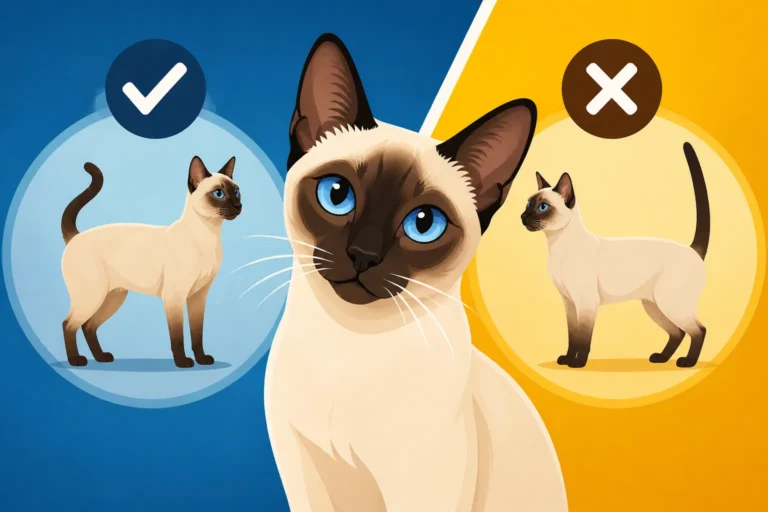
Before we immerse ourselves in the captivating legends, it's important to understand that the kinked tail wasn't just a figment of ancient storytellers' imaginations. It was, for a very long time, a genuinely prevalent physical characteristic among Siamese cats, particularly those found in their homeland. Many of the early Siamese cats brought to the Western world in the late 19th and early 20th centuries also exhibited this charming trait, leading to its widespread recognition as an inherent feature of the breed.
Tracing the Ancestral Siamese Traits
The original Siamese cats, known in Thailand as Wichianmat, were not always the sleek, wedge-headed beauties we often see in show rings today. They were generally more robust, with rounder heads, and often sported physical traits that are now considered "faults" in the Western breed standard, such as crossed eyes and, yes, kinked tails. These were natural variations within the native population, not defects, and were simply part of what made a Wichianmat cat unique. The emphasis in Siam was often on their temperament, intelligence, and striking coloration, rather than a rigid physical conformity.
These cats were cherished companions, often found in temples and royal palaces, where their unique appearance and vocal personalities endeared them to monks and nobility alike. The fact that the kinked tail was so common suggests it was either a harmless genetic mutation that wasn't selected against, or perhaps even a trait that held some subtle cultural significance, lending itself readily to the creation of explanatory myths. It wasn't until Western breeders began to refine the look of the Siamese cat that traits like the kinked tail started to be seen as something to be bred out of the lines.
The Genetic Basis of a Kinked Tail
From a purely scientific perspective, a kinked or knotted tail is typically caused by a congenital vertebral deformity, where one or more vertebrae in the tail fuse or are malformed. It's usually a benign condition, meaning it doesn't cause the cat any pain or discomfort, although in very rare, extreme cases it could be associated with more serious spinal issues. For the most part, it's just a cosmetic quirk, much like a specific pattern of freckles on a human.
In the early days of the Siamese breed's introduction to the West, before genetics were fully understood in cat breeding, this trait was quite common. While specific studies on the genetics of the Siamese tail kink are not abundant, it's widely believed to be a simple recessive or polygenic trait that was present in the foundational stock of the breed. It was simply part of the natural genetic lottery of the cats from Siam, appearing often enough to become a recognizable feature that inspired fanciful tales rather than concern.
The Early Western Perception of Kinks
When the first Siamese cats arrived in Europe and America, their exotic appearance was a sensation. Photos and illustrations from the late 1800s and early 1900s often clearly depict cats with kinked tails. For many early admirers, this feature was simply part of their unique charm, adding to their mysterious aura. It wasn't immediately viewed as a flaw but rather as another distinguishing characteristic of these "royal cats of Siam."
The perception began to shift as cat fancy clubs established breed standards, often influenced by European ideals of feline beauty, which typically favored straight, elegant lines. Suddenly, what was once a common and accepted trait started to be listed as a "fault" or "disqualification." This marked the beginning of a deliberate effort to breed out the kinked tail, a trend that would eventually lead to its rarity in most modern show-bred Siamese cats. It's a testament to how human preferences can reshape the very physical characteristics of a breed over time.
Unraveling the Ancient Legends
The enduring appeal of the kinked tail lies not just in its historical presence, but in the captivating stories that people in ancient Siam devised to explain it. These legends are more than just tales; they offer a window into the cultural imagination and the deep reverence held for these animals. While there might be several variations, two primary legends stand out, often intertwined with the story of their equally famous crossed eyes. The Temple Legends Behind a Siamese Cat's Kinked Tail delves deeper into these specific narratives.
The Guardian of the Royal Rings Legend
Perhaps the most famous legend explaining the kinked tail involves Siamese cats being appointed as guardians of precious royal rings or sacred goblets. The story goes that these noble cats were tasked with protecting the king's most valuable treasures, often kept on a special pole or pedestal. To ensure they never misplaced or dropped their precious cargo, the cats would carefully wrap their tails around the rings to hold them securely. Over generations, this diligent act of guarding led to their tails becoming permanently kinked or knotted at the tip, a lasting mark of their unwavering loyalty and duty.
Imagine a beautiful Siamese cat, its piercing blue eyes scanning the temple grounds, its tail meticulously wrapped around a jewel-encrusted ring. This imagery speaks to the profound respect and importance accorded to these cats in Siamese culture. It wasn't just a practical explanation for a physical trait; it was a glorification of their character – their intelligence, their devotion, and their steadfast nature. This tale transforms a simple genetic variation into a badge of honor, a symbol of their royal service and intrinsic worth.
The Princess and the Baby Legend
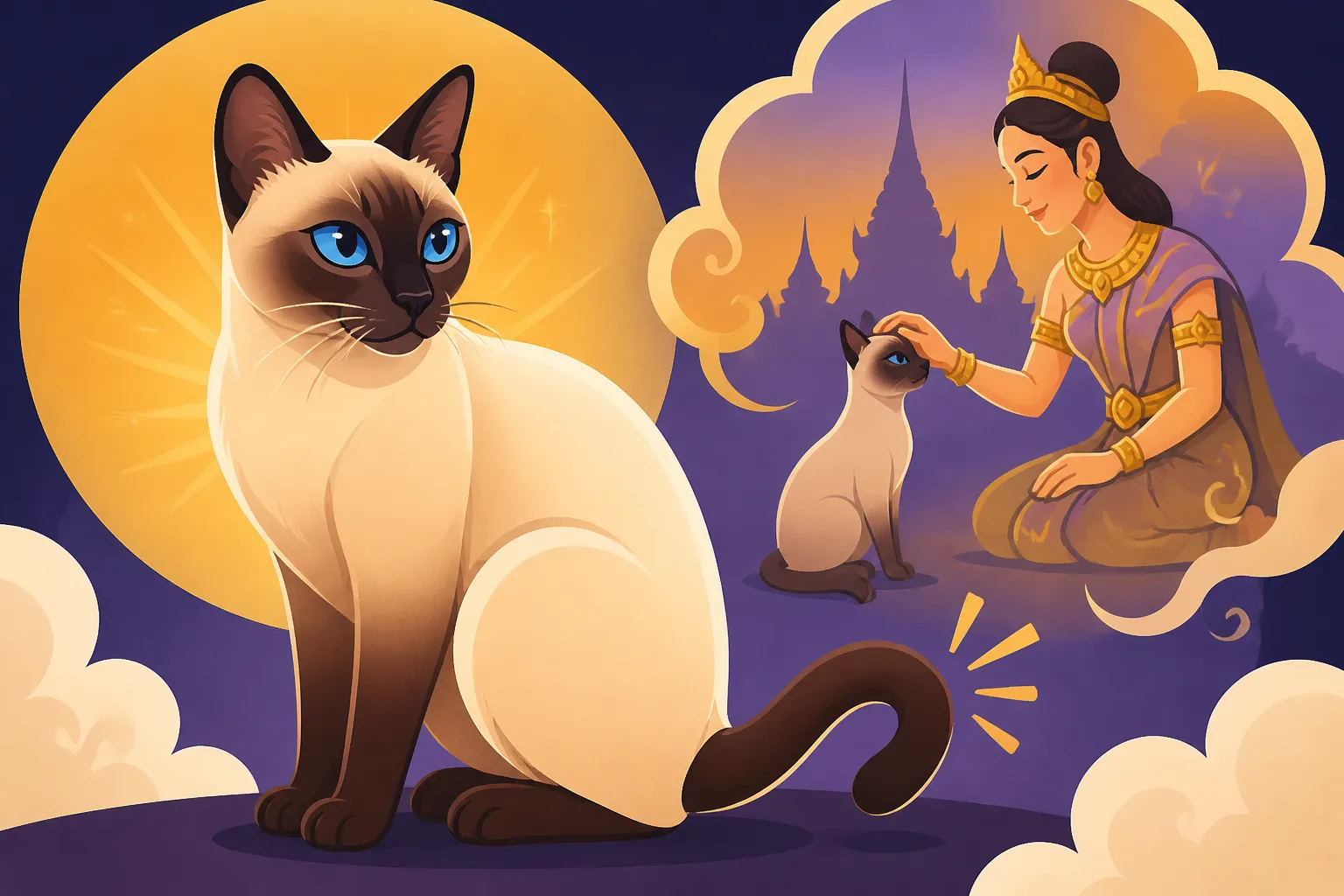
Another heartwarming legend speaks of a Siamese princess, sometimes referred to as Princess Na, who would go swimming in the river or bathing in a secluded pool. Before entering the water, she would carefully remove her precious rings and entrust them to her loyal Siamese cat, placing them on its tail for safekeeping. Much like the previous legend, the cat would dutifully curl its tail to prevent the rings from slipping off. The story often includes the cat also being responsible for guarding the princess's baby while she bathed, leading to its eyes crossing from intense focus and its tail kinking from holding the rings.
This legend adds a layer of tenderness and personal connection. It paints a picture of a cat not just serving a distant king, but a beloved companion to a princess and a vigilant protector of her child. The kinked tail, in this context, becomes a symbol of nurturing care and intimate trust. It elevates the Siamese cat beyond a mere animal to a cherished member of the royal household, whose unique physical traits are a testament to its boundless affection and sense of responsibility. Why a Siamese Cat's Eyes Cross in the Legend explores the complementary tale for their ocular peculiarity.
The Common Threads in Siamese Lore
What's fascinating about these legends is how they consistently highlight the Siamese cat's intelligence, loyalty, and protective instincts. Whether guarding royal treasures or a beloved princess and her child, the cat is always depicted as a vigilant, dedicated creature. The kinked tail, therefore, isn't a physical flaw but rather a direct consequence of their noble actions and unwavering commitment.
These stories also reflect a cultural appreciation for unique physical characteristics, rather than a desire for absolute uniformity. In a society where these cats were revered, even a perceived "quirk" like a kinked tail was integrated into a narrative that celebrated their special status. It’s a stark contrast to the Western breeding approach that later sought to eliminate such traits. These legends remind us that true beauty and value often lie beyond superficial perfection, residing instead in character, loyalty, and a compelling backstory.
The Cultural Significance in Siam
The legends surrounding the Siamese cat's kinked tail are not isolated stories; they are deeply rooted in the cultural fabric of ancient Siam. These felines were not just pets; they held a revered status, intertwining with the spiritual, royal, and everyday lives of the people. Understanding this context helps us appreciate why these particular traits, like the kinked tail and crossed eyes, became subjects of such elaborate and endearing folklore.
Valued Traits in the Original Wichianmat
In Siam, the native cats, the Wichianmat, were valued for a host of reasons that went far beyond mere aesthetics. Their distinctive appearance, with the beautiful point coloration and striking blue eyes, certainly made them stand out. But it was their intelligence, their highly vocal and communicative nature, and their strong bond with humans that truly cemented their place in society. These were cats that demanded interaction, engaged with their environment, and formed deep connections with their caretakers.
The kinked tail, like the crossed eyes, was simply part of this overall package. It wasn't a defect to be hidden or eliminated, but a distinguishing mark that added to their unique charm and mystique. The fact that the royal rings and princess legends centered on these specific physical traits demonstrates that these characteristics were not only accepted but integrated into their identity as special, revered animals. The people of Siam saw beauty and significance in these natural variations, a mindset that allowed such whimsical legends to flourish. What the Wichianmat Behind the Siamese Cat Is gives more insight into their original form.
The Mystique of Siamese Cats in Royalty and Temples
Siamese cats held a truly privileged position in ancient Siam, being closely associated with royalty and sacred temples. They were often considered guardians of sacred spaces and companions to the highest echelons of society. This elevated status naturally led to a rich body of myths and legends that explained their unique physical characteristics and behaviors. The temple priests and royal family members, who spent the most time with these cats, would have been the primary originators and custodians of these stories.
The tales of guarding royal rings or protecting princesses weren't just cute stories; they served to reinforce the idea that these cats were special, chosen, and perhaps even possessed a touch of the divine. This mystique was part of their allure, making them symbols of good fortune and spiritual connection. It's easy to see how a common physical trait like a kinked tail could be transformed into a divine mark or a badge of honor when applied to animals held in such high esteem. Whether Siamese Cats Really Guarded Temple Vases further explores their role in sacred spaces.
Oral Traditions and Their Enduring Power
Before widespread literacy, oral tradition was the primary way stories, history, and cultural values were passed down through generations. These legends of the kinked tail would have been told and retold, perhaps around evening fires, during temple gatherings, or as bedtime stories for children. Each retelling would have reinforced the Siamese cat's special place in the hearts and minds of the people.
The power of these oral traditions ensured that the legends persisted, even as Western influences began to change the physical characteristics of the breed. They offered a narrative continuity, connecting modern Siamese cats to their ancient, royal, and mystical past. Even today, when most Siamese cats no longer have kinked tails, these stories endure, reminding us of a time when every bend and curve had a magical explanation, enriching the already captivating persona of the Siamese cat.
How Breeding Practices Shaped the Siamese Tail
While the legends offer a romantic explanation for the kinked tail, the reality of its disappearance from most modern Siamese cats is a story of human intervention and selective breeding. As the Siamese cat gained popularity in the Western world, particularly in cat shows, there was a concerted effort to "perfect" the breed according to newly established standards, which unfortunately often overlooked or actively discouraged some of the traditional traits. How the Siamese Cat's Head Changed Shape in Fifty Years illustrates a similar shift in physical appearance due to breeding preferences.
The Push for "Perfection" in Western Breeding
When Siamese cats were first introduced to Europe and America, they arrived with all their natural variations, including kinked tails and crossed eyes. However, as cat registries and breed clubs formed, they began to establish detailed standards describing the "ideal" Siamese cat. These standards often reflected European aesthetic preferences, which tended to favor sleek, straight lines and flawless symmetry over the rustic charm of the original Thai cats.
The kinked tail, which was simply a common genetic trait in Siam, was quickly deemed an "undesirable" characteristic or even a "fault" in these new Western standards. Breeders, eager to win show ribbons and produce cats that conformed to the established ideals, began to actively select against it. This meant that cats with kinked tails were often excluded from breeding programs, or at least not given preference, in favor of those with perfectly straight tails. This push for a specific type of "perfection" inadvertently (or perhaps intentionally) began to strip the breed of some of its ancient, legendary features.
The Decline of the Kinked Tail in Show Lines
Over several decades of selective breeding, the prevalence of the kinked tail in Siamese cats bred for show began to drastically diminish. Breeders focused on producing cats with long, tapering, perfectly straight tails, as this was what the judges were looking for and what the written standards demanded. This meant that the genetic predisposition for the kinked tail, while not entirely eradicated, became much rarer in the dominant show lines.
For many years, finding a Siamese cat with a kinked tail was almost impossible if you were looking at pedigreed animals from reputable breeders focused on the show ring. It was a clear example of how human-driven selection can rapidly alter the physical characteristics of an animal breed, effectively overriding centuries of natural variation and cultural appreciation. The desire for a standardized, "flawless" appearance took precedence over the historical and legendary aspects of the breed's physical form. Many breeders today still adhere strictly to these standards, often purchasing their supplies from trusted vendors like Chewy for their prized show cats.
The Revival of Traditional Traits
Interestingly, in recent years, there has been a growing movement among some breeders and enthusiasts to appreciate and even revive some of the "old style" or "traditional" Siamese cat traits, including the kinked tail and crossed eyes. This movement often emphasizes preserving the appearance of the original Wichianmat cats, rather than strictly adhering to the modern show standards that emerged in the West. Some registries now recognize these older types, sometimes under different breed names like the Thai cat.
This resurgence reflects a desire to reconnect with the historical roots of the breed and to celebrate the charming irregularities that were once part of its natural appeal. While the kinked tail is still rare in most contemporary Siamese lines, this renewed interest ensures that the legends, and perhaps even the trait itself, will continue to be discussed and appreciated. It reminds us that what is considered "perfect" can shift over time, and that there's immense beauty in the heritage and natural diversity of a breed. You might even find some ethical breeders who value these traditional traits, and they’ll still stock up on essentials like quality food and toys for their unique kittens from Chewy. Whether a Siamese Cat's Kink Is Still Bred For explores this modern context in more detail.
More Than Just a Tail: Other Legendary Siamese Traits
The kinked tail isn't the only distinctive physical feature of the Siamese cat that has spawned fascinating folklore. Their striking blue eyes and highly vocal nature have also been woven into the tapestry of legends, further cementing their status as extraordinary creatures in their homeland. These tales not only explain their appearance but also offer insights into their perceived personalities and their deep connection with people. Why a Siamese Cat's Eyes Cross and Its Tail Kinks highlights the combined aspects of these unique traits.
The Enduring Myth of Crossed Eyes
Just like the kinked tail, many early Siamese cats famously had crossed eyes. The legends often connect this trait with the same stories of loyalty and vigilance. For instance, in the tale of the princess and the baby, the cat's eyes are said to have crossed from the sheer intensity of its focus, constantly watching over the baby or the rings entrusted to its care. Another version suggests that when guarding temple treasures, the cats stared so intently at the objects that their eyes became permanently fixed inwards.
This charming explanation transforms a genetic trait into a symbol of unwavering devotion. Instead of being a visual impediment, the crossed eyes become a badge of honor, a testament to their hyper-vigilance and dedication. While modern breeding has largely selected against crossed eyes in show-quality Siamese cats, much like the kinked tail, the legend ensures that this distinctive feature remains an iconic part of the breed's historical and cultural identity, adding to their mysterious allure.
The Regal Bearing and Vocal Nature
Beyond physical quirks, the Siamese cat's regal bearing and famously vocal nature also find their place in folklore. Their elegant, aristocratic posture, often described as graceful and poised, lent itself naturally to their association with royalty and temples. They moved with an air of confidence and self-importance, befitting creatures entrusted with sacred duties. This regal demeanor was likely a key factor in their elevated status and the development of legends that cast them as noble guardians.
Their distinctive, loud "Meezer yowl" – a sound unlike any other domestic cat – could easily have been interpreted as communication with deities, warnings of danger, or even expressions of their deep wisdom. While not a physical kink, their vocalizations are certainly a signature trait that has always commanded attention. These characteristics, combined with their striking looks, made them compelling subjects for storytelling, giving rise to a rich tradition that celebrated every aspect of their unique being. When a Siamese cat yowls for attention or a top-up of their favorite food from Chewy, it’s not hard to imagine them speaking their ancient minds!
Why Legends Endure for the Siamese Cat
The enduring power of these Siamese cat legends, including those about the kinked tail, lies in their ability to add depth, mystery, and a touch of magic to a beloved breed. In a world increasingly driven by scientific explanations, these stories allow us to connect with a more whimsical past, where every unusual trait had a beautiful, imaginative reason behind it. They transform a simple genetic variation into a narrative of loyalty, devotion, and ancient heritage.
Moreover, these legends foster a deeper appreciation for the Siamese cat, not just as a pretty face, but as a creature steeped in history and cultural significance. They remind us that the physical form of an animal can carry centuries of stories, and that sometimes, the most "imperfect" traits are the ones with the most charming tales to tell. Even without a visible kink in their tail today, every Siamese cat carries the echoes of these ancient legends, making them truly special companions.
Tail Kink Traits: Then and Now
To provide a clearer picture of how the kinked tail has been perceived and handled over time, here's a quick comparison of its status in historical Siam versus modern Western breeding standards.
| Feature | Historical Siam (Wichianmat) | Modern Western Siamese Standard |
|---|---|---|
| Kinked Tail | Common, often seen as a mark of loyalty/distinction | Considered a fault or disqualification |
| Crossed Eyes | Common, seen as intense focus/devotion | Considered a fault or disqualification |
| Head Shape | Generally rounded or "applehead" | Strongly wedge-shaped, long, narrow |
| Body Build | More robust, muscular, less extreme | Long, svelte, tubular, fine-boned |
| Cultural Status | Revered, associated with royalty and temples | Valued show cat and companion |
| Breeding Goal | Preserve natural characteristics, temperament | Achieve specific aesthetic ideal (show standard) |
This table clearly illustrates the divergence in what was considered desirable and characteristic of the Siamese cat over time and across cultures.
Disclaimer
This article is for general informational purposes only and does not constitute professional advice. Laws, prices and regulations vary by location and change over time. Consult a qualified professional for guidance on your specific situation.