Where the Siamese Cat Comes From
Have you ever looked at your sleek, vocal Siamese cat and found yourself wondering about their origins? It’s easy to get lost in the mystique of these captivating felines, whose distinctive looks and even more distinctive personalities set them apart. Understanding where the Siamese cat comes from isn't just a fun historical tidbit; it offers a deeper appreciation for their unique traits, from their striking blue eyes to their famously chatty nature, helping us to understand why they are the way they are today.
The Ancient Roots in the Kingdom of Siam
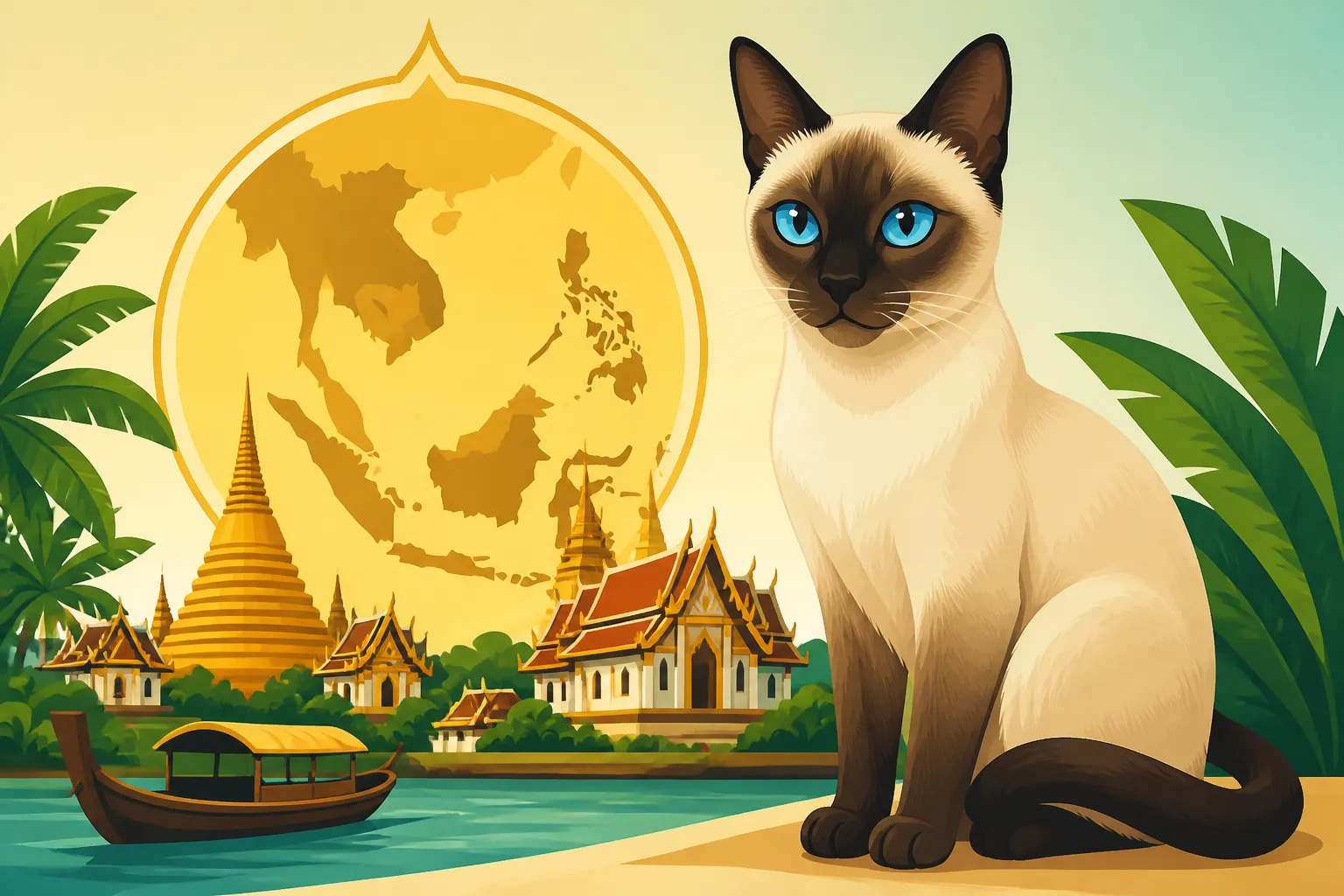
The story of the Siamese cat begins, as its name suggests, in the ancient Kingdom of Siam, which we know today as Thailand. This isn't just a romantic notion; historical records and cultural artifacts genuinely trace their lineage back centuries to this vibrant Southeast Asian nation. Unlike many cat breeds whose exact origins are hazy, the Siamese has a surprisingly well-documented history within its native land, suggesting a revered status from the very beginning.
Imagine a time when these elegant cats were not just pets, but symbols of grace and perhaps even spiritual significance. They weren't roaming the streets like common strays; their unique appearance and intelligent demeanor quickly set them apart in a world where cats often served a more utilitarian role as rodent control. This elevated status is a key part of their origin story, differentiating them from many other breeds that were later developed through selective breeding in other parts of the world. Their initial presence was deeply intertwined with the cultural fabric of Siam itself.
The Siamese cat, known as Wichianmat in Thai, which translates to "Moon Diamond" or "Diamond Gold," was clearly cherished. This beautiful name alone hints at the high esteem in which they were held. This wasn't a casual moniker; it reflects the preciousness and unique beauty attributed to these cats by the people of Siam. They were seen as something special, almost otherworldly, rather than simply another animal.
This historical context helps us understand why the Siamese cat possesses such a distinctive "attitude" today. They come from a lineage of being highly regarded, and perhaps they still carry that sense of importance within them. Their demanding nature and desire for human interaction might just be a residual trait from centuries of being the center of attention in royal courts and noble households.
The Tamra Maew and Early Siamese Cat Descriptions
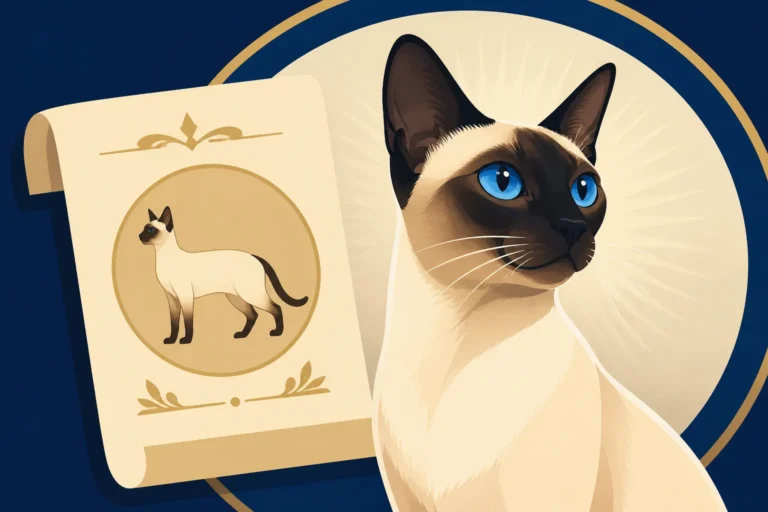
One of the most compelling pieces of evidence for the Siamese cat's ancient origins lies in a collection of ancient Thai manuscripts known as the Tamra Maew, or "The Cat-Book Poems." These invaluable texts, some dating back as far as the 14th century, describe and illustrate various types of cats native to Siam, providing a fascinating glimpse into the feline companions of bygone eras.
These manuscripts are far more than just simple drawings; they offer detailed descriptions of specific cat breeds, noting their physical characteristics, personality traits, and even their perceived auspicious qualities. It's truly remarkable to think that people hundreds of years ago were documenting their cats with such care and precision, much like we might consult a breed standard today. This commitment to recording their feline companions speaks volumes about the importance placed on cats in Siamese culture.
Among the various cats depicted and described in the Tamra Maew, the Wichianmat stands out, bearing a striking resemblance to the Siamese cat we know today. The descriptions highlight their pale bodies with contrasting dark points on their ears, face, paws, and tail, along with their piercing blue eyes. Even the mention of Why a Siamese Cat's Eyes Cross and a kinked tail, traits that were once common and even admired, appear in these ancient texts, demonstrating a clear continuity of characteristics over many centuries.
The existence of the Tamra Maew confirms that the Siamese cat is not a recent creation of Western breeders, but rather a naturally occurring breed with a long and distinguished history in its homeland. These poetic descriptions elevate the Siamese beyond mere household pets, casting them as creatures of beauty and good fortune. They were celebrated in art and literature long before they ever set paw on a Western shore, cementing their status as a truly ancient and culturally significant breed.
Royal Cats and Temple Legends
The Siamese cat's origins are deeply intertwined with the royal courts and Buddhist temples of Siam, giving rise to many enchanting legends that have endured through the centuries. These stories portray the Siamese not just as companions, but as guardians, spiritual beings, and cherished members of royal households.
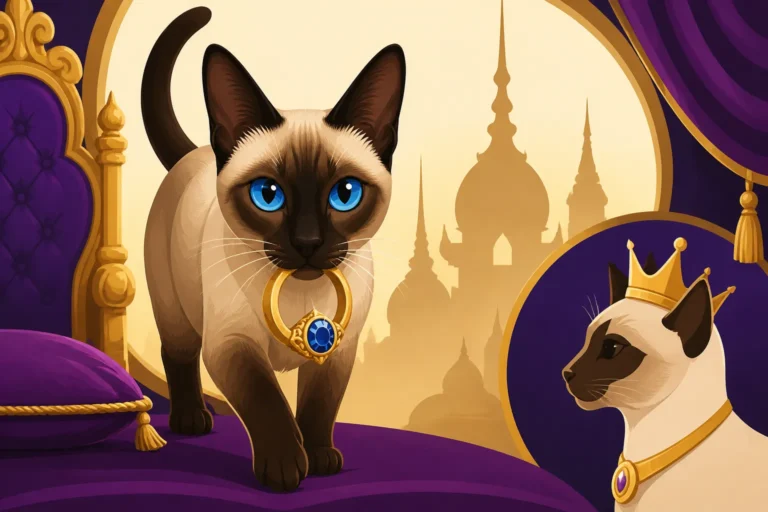
One of the most persistent legends suggests that Siamese cats were exclusively owned by royalty and resided within the opulent palaces and sacred temples of Siam. They were said to be so precious that they were forbidden to commoners, reserved only for the elite. While it's difficult to prove complete exclusivity, historical accounts certainly indicate that these distinct cats were highly valued and associated with wealth and status. Imagine these elegant creatures gracefully patrolling ancient halls, their unique vocalizations echoing through grand chambers.
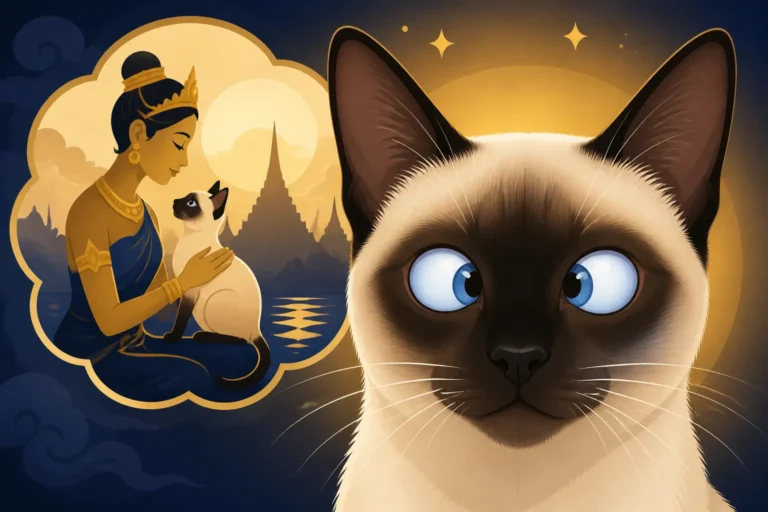
Many tales weave the Siamese cat into the spiritual fabric of the land. It was believed that when a member of the royal family died, a Siamese cat would be chosen to receive their soul, watching over the departed as they transitioned to the afterlife. The cat would then spend the rest of its life in the temple, living a life of luxury and reverence. This legend underscores the profound respect and almost mystical regard for these cats, suggesting a deeper connection between them and the human spirit.
Other famous legends explain some of the Siamese cat's physical traits. For instance, the story goes that Siamese cats were tasked with guarding precious royal goblets. To ensure the valuables weren't dropped, the cats would wrap their tails around the stems of the goblets, leading to the development of the breed's characteristic Why a Siamese Cat's Tail Kinks. Similarly, their intense focus on the goblets supposedly led to their eyes crossing. While charmingly imaginative, these legends speak to the breed's antiquity and the close observation of their unique features by the people who first admired them. The Temple Legends Behind a Siamese Cat's Kinked Tail further explores these fascinating stories.
Introduction to the Western World
The isolation of Siam meant that the Siamese cat remained largely unknown to the Western world until the late 19th century. Their introduction to Europe and America marked a significant turning point, transitioning them from a revered symbol in their homeland to a globally admired and recognizable breed. This cultural exchange opened a new chapter in the Siamese cat's history.
The first documented appearance of Siamese cats in the West was in England. In 1884, the British Consul-General in Bangkok, Edward Blencowe Gould, brought a breeding pair named Pho and Mia back to the UK as a gift for his sister, Lillian Veley. These two cats, along with their three kittens, made their public debut at the Crystal Palace Cat Show in London in 1885. Their exotic appearance caused quite a sensation, captivating the British public with their striking points and blue eyes. People had simply never seen cats quite like them before.
From England, the breed soon made its way across the Atlantic to America. The first Siamese cat in the United States, named Siam, was sent as a gift to President Rutherford B. Hayes and his wife Lucy by the American Consul in Bangkok in 1878. Siam lived at the White House, further cementing the breed's aristocratic image and sparking curiosity among American cat enthusiasts. This presidential endorsement certainly helped to elevate the Siamese cat's profile, making them a breed of interest for a burgeoning pet culture. Siam, the Siamese Cat Given to the White House in 1878 tells more of this fascinating story.
Early Western breeders, particularly in Britain, quickly took to the Siamese, establishing the first breed clubs and developing formal standards for showing. However, the initial perceptions weren't universally positive; some found their unique appearance, particularly their slender bodies and loud voices, to be somewhat unsettling or even "ugly" compared to the more familiar plump, domestic shorthairs. Despite this initial mixed reaction, their distinctiveness eventually won over many, paving the way for their enduring popularity. This period was crucial in shaping the breed's future, as enthusiasts began the process of selective breeding that would eventually lead to the various Siamese types we see today.
The Evolution of the Siamese Look
When the Siamese cat first arrived in the West, their appearance was somewhat different from the extreme "wedge-head" look favored in some show lines today. The original cats from Siam, often referred to as "traditional" or "applehead" Siamese, had rounder heads, sturdier bodies, and a less extreme profile. Understanding this evolution helps clarify why there are sometimes debates and differing opinions about what a "true" Siamese should look like.
As Western breeders began to selectively breed Siamese cats, a preference emerged for a more elongated, angular look. Over several decades, breeders aimed for cats with longer, more tubular bodies, very slender legs, larger ears set lower, and most notably, a distinctly wedge-shaped head with a long, straight profile. This emphasis on refinement and elegance was driven by show standards, which rewarded increasingly extreme versions of these traits. The goal was to create a cat that was undeniably striking and instantly recognizable in the show ring. How the Siamese Cat's Head Changed Shape in Fifty Years delves into this transformation in detail.
This divergence in appearance led to the emergence of two main "types" or styles of Siamese: the traditional or applehead Siamese, which closely resembles the original cats imported from Siam, and the modern or wedge-head Siamese, which is the result of intensive selective breeding for the exaggerated show features. It's important to understand that these are not separate breeds, but rather different interpretations within the same breed, largely influenced by the preferences of different breeding communities and cat registries. Some registries might favor the modern look, while others might still appreciate the more traditional aesthetic.
Today, while the modern wedge-head Siamese often dominates the show circuit, there is a growing appreciation for the traditional Siamese, sometimes referred to as the "Thai" cat in some circles. The Thai cat is recognized by some organizations as a distinct breed that preserves the original, moderate Siamese characteristics. This distinction allows enthusiasts to choose the style that resonates most with them, whether it’s the historical look or the contemporary show aesthetic. It's a reminder that beauty standards, even for cats, can evolve significantly over time.
The Modern Siamese and its Enduring Legacy
The journey of the Siamese cat from the ancient courts of Siam to a beloved global breed is a testament to its enduring appeal. Today, the Siamese cat continues to captivate cat lovers worldwide with its unique combination of striking looks, engaging personality, and famous vocalizations. They are celebrated not just for their beauty, but for the profound bond they form with their human companions.
In contemporary homes, the Siamese cat thrives as an intelligent, affectionate, and highly interactive pet. Their demand for attention and conversation means they are best suited for owners who are prepared to engage with them daily. Whether they are following you from room to room, "helping" you work on your computer, or simply having a long chat about your day, a Siamese cat makes its presence known. Providing them with ample mental and physical stimulation is crucial, and owners often find a wide array of engaging toys and puzzle feeders readily available from online retailers like Chewy to keep these clever cats entertained.
Beyond their roles as cherished family members, Siamese cats have played a pivotal role in the development of many other popular cat breeds. Their distinctive point coloration gene and elegant body type have been deliberately incorporated into breeds such as the Oriental Shorthair, Balinese, Himalayan, and Tonkinese. This makes the Siamese a foundational breed, often referred to as the "grandparent" of many other beloved felines, showcasing its genetic influence across the cat world. The Breeds a Siamese Cat Founded offers a closer look at this fascinating genetic heritage.
Despite centuries of change and adaptation, the essence of the Siamese cat remains true to its ancient origins. The intelligence, vocal nature, and deep affection that charmed Siamese royalty centuries ago continue to win hearts today. From the ancient texts of the Tamra Maew to their appearance in modern homes, the Siamese cat's journey is a rich tapestry of history, legend, and undeniable charm. They truly are more than just a cat; they are a living piece of history, continually enriching the lives of those fortunate enough to share their homes with these magnificent creatures.
| Aspect of Origin | Traditional View (Siam) | Western Introduction & Evolution (Post-1880s) |
|---|---|---|
| Geographic Origin | Kingdom of Siam (modern-day Thailand) | Primarily England and America |
| Historical Evidence | Tamra Maew (Cat-Book Poems), Royal/Temple legends | Diplomatic gifts, cat show records, breed club formation |
| Status | Revered, associated with royalty and temples, sacred | Exotic, initially seen as unusual, later highly prized |
| Original Appearance | "Applehead" / "Traditional" – rounder head, sturdier body | Shifted to "Wedge-head" / "Modern" – elongated head, slender body |
| Key Traits (Ancient) | Blue eyes, dark points, often kinked tail, crossed eyes | Same core traits, but intensified in show lines |
| Cultural Impact | Symbol of beauty, good fortune, guardian of souls | Catalyst for new breeds, global recognition, popular pet |
| Naming | Wichianmat ("Moon Diamond") | Siamese (after its country of origin) |
Disclaimer
This article is for general informational purposes only and does not constitute professional advice. Laws, prices and regulations vary by location and change over time. Consult a qualified professional for guidance on your specific situation.