Why a Siamese Cat’s Tail Kinks
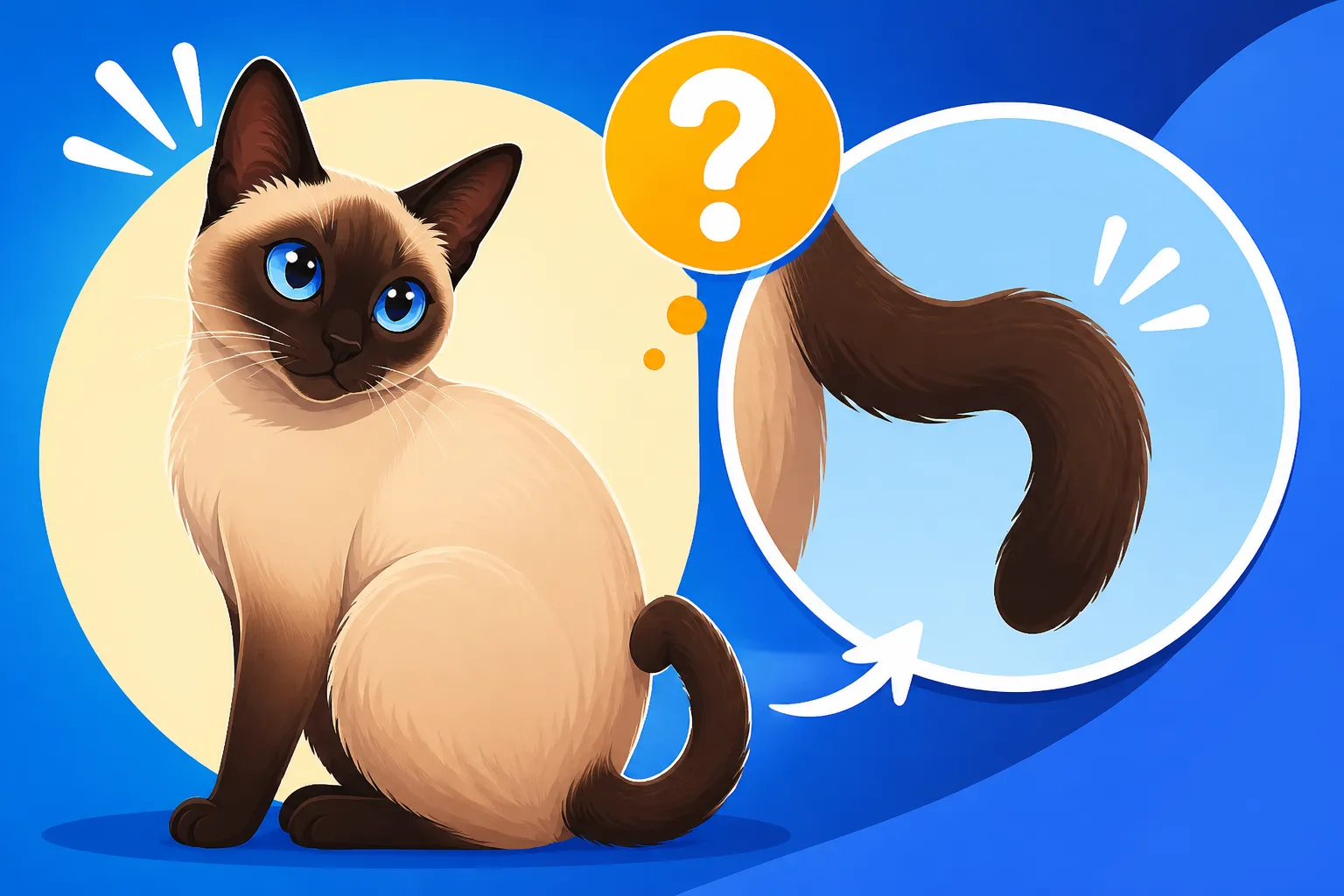
It’s a sight that often sparks curiosity, a little quirky detail that many associate with the classic image of the Siamese cat: a tail that isn't perfectly straight, but instead features a noticeable bend or kink. For prospective owners and long-time aficionados alike, this unique characteristic can be both charming and a source of questions. You might wonder if it's a sign of a past injury, a genetic oddity, or perhaps even a deliberate trait from ancient times. This comprehensive guide will unravel the fascinating story behind why a Siamese cat's tail might kink, exploring the historical myths, the scientific realities, and what it means for your beloved feline companion today.
The Ancient Tales Behind the Kinked Siamese Cat Tail
For centuries, before genetics and modern veterinary science shed light on feline characteristics, the unique physical traits of the Siamese cat were often explained through captivating legends and myths. These stories, passed down through generations, speak volumes about the reverence and mystery surrounding these regal animals in their homeland of Siam (modern-day Thailand). The kinked tail is no exception, woven into folklore that highlights the Siamese cat's esteemed role in royal courts and sacred temples.
Legends of Royal Guard Cats
One of the most enduring and beloved myths surrounding the Siamese cat's kinked tail positions these felines as loyal guardians of ancient Siamese royalty. The tale goes that these beautiful cats were entrusted with protecting priceless treasures and sacred artifacts, particularly precious vases and goblets, within the king’s palace or temple grounds. To ensure these valuables were never misplaced or stolen, the royal Siamese cats would wrap their tails tightly around the stems of the vases, securing them with a firm grip. Over generations, this diligent act of guardianship, it is said, led to their tails developing permanent kinks and bends, a lasting testament to their unwavering loyalty and duty. This myth not only explains the physical kink but also emphasizes the intelligent, watchful nature often attributed to the breed. It paints a picture of a cat not just as a pet, but as an active, crucial member of the royal household, a true custodian of heritage.
The Princess and the Rings
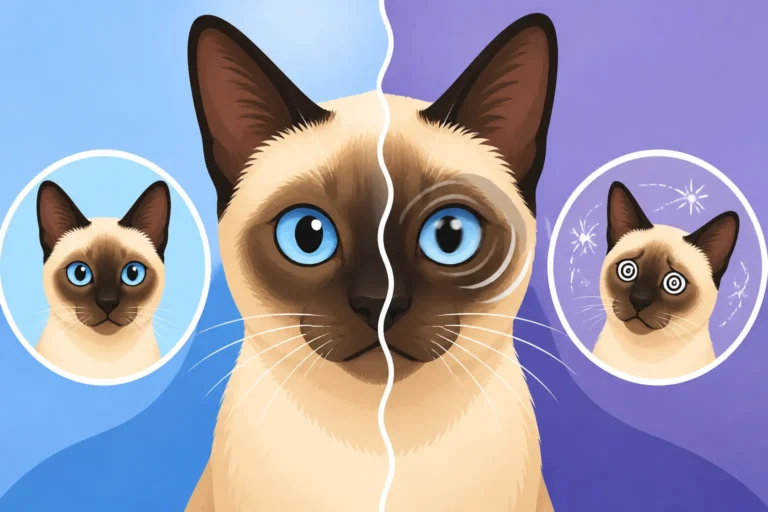
Another popular legend, often intertwined with the tale of the kinked tail, focuses on the Siamese cat's equally distinctive crossed eyes. In this delightful story, a Siamese princess would often go to bathe in a sacred river. Before entering the water, she would carefully remove her precious rings and place them on her cat's tail for safekeeping. The devoted cat, ever vigilant, would curl its tail tightly to ensure the rings wouldn't slip off and be lost in the river's currents. This constant, muscular exertion, day after day, year after year, eventually led to the development of a permanent kink in its tail. Simultaneously, the legend explains that the cat would stare intently at the rings on its tail, so as not to lose them, causing its eyes to cross over time. While scientifically unsound, this charming narrative highlights the Siamese cat's deep bond with its human companions and its reputation for intelligence and attentiveness. It suggests a time when the unique physical traits of these cats were seen as badges of honor, symbols of their indispensable roles. You can learn more about why a Siamese cat's eyes cross and its tail kinks in our detailed post.
Monk Tales and Sacred Duties
Beyond royalty, Siamese cats were also revered in the temples of Siam, often living alongside monks and participating in spiritual life. Some legends suggest that the kinked tail was a mark of a cat destined for sacred duties. Perhaps the cats used their kinked tails to hold onto sacred objects during temple rituals, or the kink was seen as a divine imperfection that made them unique and special, chosen by the gods. These tales underscore the mystique surrounding the breed and its elevated status within Siamese culture. They were not mere barn cats but creatures imbued with spiritual significance, their physical characteristics interpreted as signs of their sacred purpose. These stories remind us that the Siamese cat was, and in many ways still is, more than just a pet; it's a living piece of history, carrying the echoes of ancient myths in its very form. The rich history of the breed is fascinating, extending far beyond physical traits, as explored in our article, The Siamese Cat Came From Siam, Not Thailand.
The Reality of Kinked Tails: A Genetic Explanation
While the legends are captivating, modern science offers a more straightforward explanation for the kinked tail in Siamese cats. It's not a result of guarding royal rings or sacred vases, but rather a genetic anomaly, a structural variation in the vertebral column that makes the tail distinctly bent or twisted. Understanding this genetic basis helps us appreciate the breed's natural development and the journey of its characteristics through selective breeding.
Vertebral Abnormalities and Their Formation
At its core, a kinked tail is a skeletal abnormality. The tail of a cat is an extension of its spine, composed of a series of small bones called caudal vertebrae. In a Siamese cat with a kinked tail, one or more of these vertebrae might be malformed, fused, or improperly aligned. This can result in a sharp angle, a corkscrew twist, or a noticeable bend in the tail. This isn't usually due to an injury after birth, but rather something that develops during the cat's fetal development. The bones simply don't grow in a perfectly straight line, leading to the characteristic appearance. These abnormalities can range from a subtle, barely perceptible curve to a very pronounced, almost right-angle bend. It's a structural difference, much like how some people might have a slightly curved spine; most of the time, it doesn't cause any functional issues.
The Role of Genetics in Tail Kinks
For a long time, the kinked tail was a very common trait in Siamese cats, so common that it was practically considered part of their standard look. This prevalence points directly to a genetic origin. It's believed that the kinked tail is a polygenic trait, meaning it's influenced by multiple genes, or potentially a single recessive gene that was widespread in the early Siamese population. When these early cats were first brought to the Western world from Siam, breeders weren't selecting against the kinked tail; in fact, it was often seen as an authentic mark of the breed's origin. Therefore, cats carrying the genetic predisposition for kinks continued to be bred, passing the trait down through generations.
However, as breeding standards evolved and became more refined, the kinked tail began to be considered a fault. Despite efforts to breed it out, the genes responsible can still pop up from time to time, even in pedigrees where neither parent visibly displays a kink. This is the classic conundrum of recessive genes, lurking silently until the right genetic combination brings them to light. It's a reminder that even with careful breeding, some genetic traits are incredibly persistent.
Distinguishing a True Kink from an Injury
It’s important to differentiate between a naturally occurring genetic kink and a tail that has been injured. A genetic kink is usually present from birth or develops early in kittenhood and feels like a fused or irregularly shaped segment of bone within the tail. The fur and skin over a genetic kink typically appear normal and healthy, and the cat shows no signs of pain or discomfort when the tail is handled. You can feel the distinct bend or knot of bone.
An injured tail, on the other hand, might have signs of trauma such as swelling, tenderness, a broken bone (which can cause a kink-like appearance), or even nerve damage. The cat might react with pain when the tail is touched, or hold it in an unusual way. If you suspect an injury, especially if the kink appeared suddenly or your cat shows discomfort, a vet visit is absolutely necessary. They can perform an examination and potentially X-rays to determine the cause. Early intervention for an injury can prevent long-term problems. When in doubt, a quick call to your vet or a consultation through a service like Healthy Paws can provide peace of mind and guide you on the best course of action. Knowing What a Siamese Cat's Emergency Ultrasound Costs can also help prepare for unexpected situations.
Kinked Tails in Modern Siamese Cat Breeding
The journey of the Siamese cat from ancient Siam to the modern show ring has been one of fascinating transformation, not least in the perception and acceptance of its physical characteristics. The kinked tail, once an iconic marker of authenticity, has seen its status evolve dramatically within the world of feline fancy.
Shifting Breed Standards Over Time
When Siamese cats were first introduced to the Western world in the late 19th and early 20th centuries, the kinked tail was almost universally present. Early photographs and illustrations of these "royal cats of Siam" often depict prominent tail kinks. In fact, for many years, a kinked tail was considered a distinguishing characteristic, an exotic touch that set them apart. The early breed standards, if they mentioned the tail at all, often considered a kink a minor point or even an acceptable feature. It was part of the charm and the perceived "authenticity" of a cat from a faraway land. This was a time when the emphasis was more on preserving the original, somewhat rustic look of the cats imported from Thailand.
However, as the breeding community in Europe and North America grew, and as the science of genetics advanced, there began a push for a more "perfected" feline form. The idea of structural integrity became paramount, and physical "flaws" were increasingly seen as something to be bred out. Over several decades, the kinked tail gradually transitioned from an accepted peculiarity to an undesirable trait. This shift reflected a broader movement in dog and cat breeding towards uniformity and a more idealized aesthetic, often distancing breeds from their ancestral, sometimes less "polished," appearances.
The Show Ring Perspective: A Disqualifying Fault
Today, if you were to take a Siamese cat to a Cat Fanciers' Association (CFA) or The International Cat Association (TICA) show, a kinked tail would almost certainly lead to disqualification. Modern breed standards are quite clear: the tail should be long, tapering, and perfectly straight from base to tip. Any visible kink, knot, or abnormality is considered a serious fault. This stringent requirement is a testament to how far the breed's aesthetic has moved from its historical roots. Breeders aiming for show quality animals meticulously select breeding pairs to avoid passing on any genetic predisposition for tail kinks. The goal is a sleek, elegant, and perfectly formed specimen, where every curve and line is flawless.
This can be disheartening for some who appreciate the "traditional" look of the Siamese, complete with its charming quirks. However, it's a reflection of the competitive nature of cat shows and the desire to present what is considered the epitome of the breed's evolution. While a show-quality cat demands a perfectly straight tail, many pet owners still cherish the unique character a kinked tail brings to their feline companion, highlighting the difference between aesthetic ideals and affectionate reality. Our article What a Show Quality Siamese Cat Costs delves deeper into these breeding considerations.
Old Style vs. Modern Siamese and Tail Kinks
The discussion of kinked tails often brings up the distinction between "Old Style" (or "Traditional" or "Applehead") Siamese and "Modern" (or "Wedge") Siamese. The Old Style Siamese, which more closely resembles the original cats imported from Siam, often retains many of the characteristics that have been bred out of the Modern Siamese. This includes a rounder head, a more robust body, and, yes, a higher likelihood of possessing a kinked tail. Breeders who focus on preserving the Old Style Siamese often embrace these traditional traits, seeing them as part of the breed's authentic heritage rather than faults. They prioritize the historical accuracy and genetic diversity of these lines.
The Modern Siamese, on the other hand, is the result of decades of selective breeding aimed at achieving the extreme, angular "wedge" head, slender body, and whip-like, perfectly straight tail seen in today's show rings. For these breeders, a kinked tail is unequivocally undesirable and actively selected against. This divergence has led to two distinct aesthetics within the breed, each with its dedicated followers. While the Modern Siamese adheres strictly to current show standards, the Old Style Siamese keeps alive the look that captivated early enthusiasts, kinks and all. You can explore this further in What an Applehead Siamese Cat Looks Like versus What a Modern Wedge Siamese Cat Looks Like.
Is a Kinked Tail a Health Concern for Your Siamese?
When you notice a peculiar bend or twist in your Siamese cat's tail, it's natural to wonder if this unique physical trait carries any health implications. While the legends painted it as a mark of loyalty, and modern show standards deem it a fault, the most important question for any owner is whether it will impact their beloved cat's well-being. The good news is, for the vast majority of Siamese cats, a kinked tail is purely cosmetic.
Usually Benign: When Kinks are Harmless
In the vast majority of cases, a kinked tail is simply an aesthetic variation and poses absolutely no health risk or discomfort to the cat. If the kink is a genetic trait, the cat was born with it, and its nervous system and bone structure have adapted to this form since before birth. The bones in the tail are fused or malformed in a way that is stable and does not cause pain. Your Siamese will use its tail just like any other cat – for balance, communication, and expression of mood. They’ll wag it, twitch it, wrap it around your leg, and generally be completely unaware that their tail is anything but perfectly normal. There’s no nerve compression, no ongoing pain, and no limitation to their movement or agility.
Think of it like a birthmark or a naturally occurring mole in humans – it’s just a part of their unique physical makeup. These harmless kinks don't require any medical intervention or special care. They are, in essence, a charming, harmless relic of the breed's history, a little nod to their ancient origins that some might even find adds to their individual personality. For many owners, it becomes a beloved characteristic that makes their Siamese cat even more distinctive. You can generally be confident that a kinked tail, especially one present since kittenhood, is a non-issue.
Rare Complications and When to Be Concerned
While most kinked tails are benign, there are incredibly rare instances where a severe vertebral malformation could potentially be associated with other, more serious spinal issues. However, these cases are exceedingly uncommon, and typically, if a cat has such severe underlying problems, other neurological or mobility symptoms would be evident much earlier in life. For example, if the vertebral malformations extended higher up the spine, beyond the tail, it could theoretically lead to nerve impingement or pain. But this is not what typically happens with the common Siamese tail kink.
The primary time to be concerned about a "kink" is if it appears suddenly, is accompanied by pain, swelling, lameness, or if your cat is reluctant to move its tail or is experiencing other symptoms like incontinence. In these scenarios, the "kink" is likely not a genetic trait but rather the result of an injury – perhaps a door slamming on the tail, a fall, or another traumatic event. If you notice any of these signs, it's crucial to consult your veterinarian immediately. They can perform a thorough physical examination, and potentially imaging like X-rays, to diagnose the issue and provide appropriate treatment. Regular wellness exams, which include a full physical, are a great way to monitor your cat's overall health, including their tail. Veterinary services, especially in emergencies, can be costly, so having a good pet insurance plan from providers like Healthy Paws can be incredibly helpful for unexpected situations.
Living Comfortably with a Kinked Tail
If your Siamese cat has a genetic kinked tail that causes no discomfort, then living with it is just like living with any other cat – no special accommodations are required. The tail will function perfectly for balance and communication. They'll run, jump, play, and express themselves just as a cat with a perfectly straight tail would. In fact, many people find a kinked tail to be a distinctive and endearing trait that adds to the unique charm of their Siamese. It’s a talking point, a subtle nod to their heritage, and a part of what makes them, them.
The most important thing is to treat your cat's tail gently, as you would any cat's tail, regardless of whether it's kinked or straight. Tails are delicate appendages, and rough handling can cause pain or injury. Focus on providing your Siamese with a loving environment, good nutrition, plenty of enrichment, and regular veterinary check-ups. The kinked tail will simply be one more delightful characteristic of your intelligent, vocal, and affectionate companion. Embracing these natural variations is part of the joy of sharing your life with a creature as wonderfully unique as a Siamese cat. The overall health of your Siamese is paramount, and understanding The Fifteen to Twenty Years a Siamese Cat Gets highlights the importance of comprehensive care beyond just tail appearance.
What to Do If Your Siamese Has a Kinked Tail
Discovering that your Siamese cat has a kinked tail, whether you just adopted them or noticed it on a growing kitten, might spark a few questions. While we've established that it's largely a harmless genetic quirk, there are still some proactive steps you can take, especially if you're a breeder or if you're simply curious about its implications.
Consulting Your Veterinarian
The very first and most important step if you've noticed a kink in your Siamese cat's tail, especially if it's new, accompanied by pain, or you're just unsure, is to consult your veterinarian. A vet can quickly assess whether the kink is a benign, congenital defect or potentially the result of an injury or a more complex underlying spinal issue. They'll gently palpate the tail, checking for tenderness, swelling, or any signs of nerve damage. In most cases, they'll confirm that it's simply a genetic kink and reassure you that your cat is perfectly fine.
If there's any doubt, or if the cat shows signs of discomfort, your vet might recommend X-rays of the tail and perhaps the lower spine. This imaging can clearly show the structure of the vertebrae, confirming whether there are fused bones, fractures, or other abnormalities. This diagnostic step is crucial for ruling out pain or potential future complications. Having this professional confirmation can alleviate any worries you might have and give you peace of mind that your furry friend isn't suffering. Plus, regular vet check-ups are vital for every cat's long-term health, and they are especially important for a breed like the Siamese, which can have certain predispositions. Staying up-to-date on What a Siamese Cat's Yearly Bloodwork Should Cover is also a good practice for general health monitoring.
Genetic Counseling for Breeders
For individuals involved in breeding Siamese cats, a kinked tail in any of their breeding stock or offspring carries more significant implications. Given that the kinked tail is a disqualifying fault in most breed standards and is genetically inherited, breeders have a responsibility to understand and manage this trait. If one of your breeding cats produces kittens with kinked tails, or if a potential breeding cat has a kink itself, it’s wise to engage in genetic counseling with experienced mentors or feline geneticists.
The goal in responsible breeding is to produce healthy, conformationally sound cats. This means making informed decisions about which cats to breed to minimize the occurrence of undesirable traits like tail kinks. While it's largely cosmetic, it still indicates the presence of a gene that goes against the established breed standard. Breeders might choose to remove affected cats from their breeding programs or to carefully select mates that have no history of producing kinks. This helps maintain the integrity of the breed lines according to current standards. For those interested in the ethical side of breeding, learning Which Health Tests a Siamese Cat Breeder Runs can be very enlightening, as well as considering that The Screening a Siamese Cat Breeder Cannot Do for certain conditions. Ensuring good health coverage for all cats, perhaps through a provider like Healthy Paws, is also a responsible decision for any serious breeder.
Embracing the Unique Charm of a Kinked Tail
For the vast majority of Siamese cat owners whose companions have a benign, genetic tail kink, the best "action" is simply to embrace it! This little quirk is a tangible link to the breed's ancient origins, a charming echo of the mythical cats that guarded princesses' rings and temple treasures. It makes your cat distinct, often sparking conversations and giving them a memorable feature. Many people who love the "Old Style" or "Traditional" Siamese cats specifically appreciate these throwbacks to their heritage.
Instead of seeing it as a flaw, view it as a unique identifier. Your cat is healthy, happy, and expresses themselves fully with their tail, regardless of its shape. The kink doesn't diminish their intelligence, their vocal personality, or their affectionate nature. It simply adds another layer to their already fascinating persona. So, celebrate your Siamese cat's individuality, including their perfectly imperfect tail, and enjoy the wonderful companionship they bring into your life. The tales and quirks of the Siamese cat truly make them one-of-a-kind.
Disclaimer
The information provided in this article is for general informational purposes only and does not constitute veterinary advice. Always consult with a qualified veterinarian for any health concerns or before making any decisions about your pet's health or treatment.