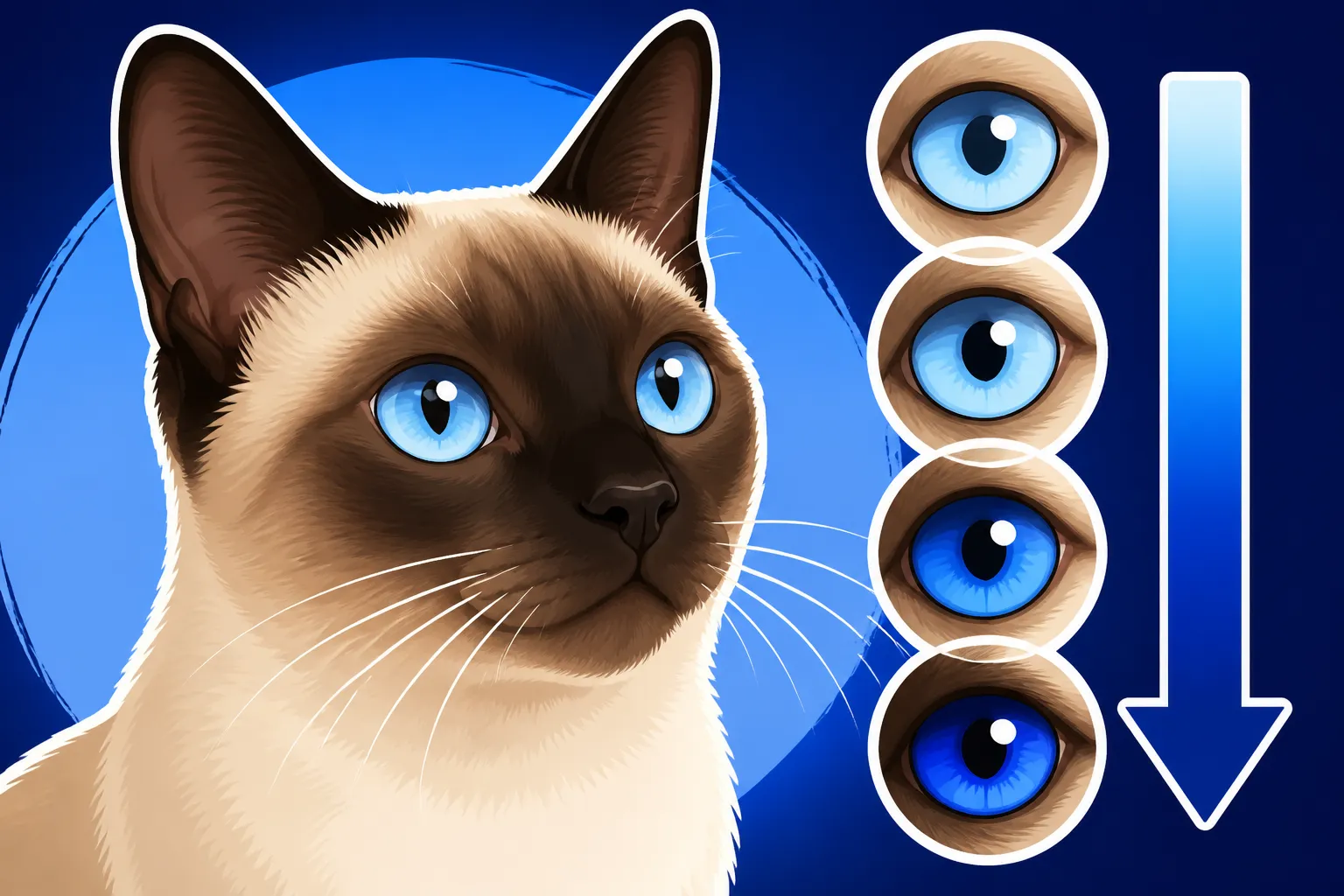
How Deep a Show Siamese Cat’s Blue Should Be
A show Siamese cat’s eyes should read as a clear, vivid blue, but there is no single shade card or numerical depth that every registry uses. That can make judging photos—or comparing your cat with a breed standard—confusing. This guide explains what “deep blue” means in practice, what affects how blue the eyes look, and when a change deserves a veterinary check.
What deep blue means in a Siamese cat
The standard describes an impression, not a paint-chip match
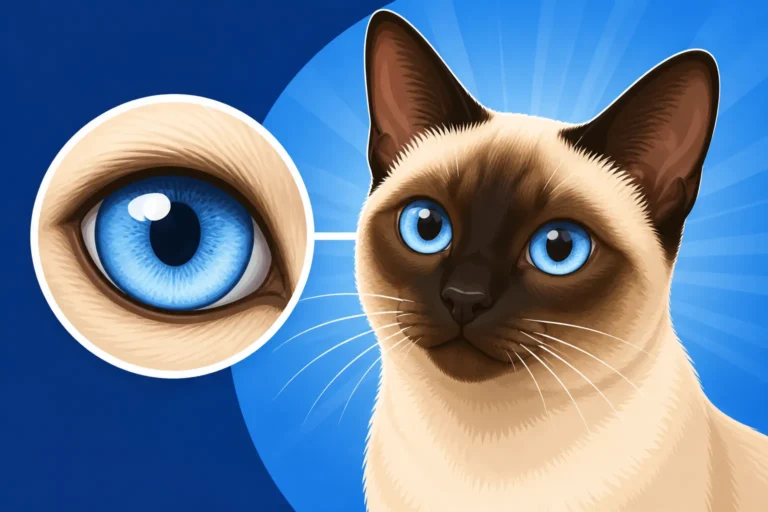
In Siamese cat showing, judges generally look for eyes that appear bright, clear, and distinctly blue. Standards may use terms such as vivid, brilliant, or deep blue, but those words describe the overall impression of the eye rather than a precise shade that can be measured with a color chart. A particular tone is not usually judged in isolation from the cat’s overall expression and type.
“Deep” does not simply mean the darkest blue possible. Eyes that look dull, cloudy, or unusually dark in a poorly lit photograph may not be showing their true color. A good show eye looks saturated and clean, with a noticeable blue tone rather than a washed-out gray-blue appearance. Clarity and brightness matter alongside depth.
The exact wording and judging emphasis can differ among registries. If you are preparing a cat for a particular show, check the standard used by that registry rather than relying on a general description or a photo online. What a Siamese Cat Standard Asks For offers more context on how breed standards describe the Siamese.
Eye color is considered with shape and expression
A show judge does not assess the blue eyes as if they were separate from the rest of the face. Eye shape, placement, and expression contribute to how the color is seen. Siamese eyes are generally described as almond-shaped, and their slant helps create the breed’s distinctive look. A strong eye color can be part of that impression, but color alone does not make a cat a show-quality Siamese.
This is one reason two cats with similar blue eyes may not receive the same overall assessment. Their head type, profile, ears, body, coat pattern, and condition also matter. The appearance expected by one standard may differ in detail from what another registry emphasizes. For a closer look at eye shape, see What Shape a Siamese Cat's Eyes Should Be.
A pet owner may also notice that a cat’s eyes look more striking in one setting than another. That does not automatically indicate a change in the eye itself. The surrounding face, the angle of the light, and the camera can all affect the contrast between the blue iris and the coat.
Why a Siamese cat’s blue eyes look different from one setting to another
Light, camera settings, and surroundings can change the apparent shade
Natural daylight often shows eye color more faithfully than warm indoor bulbs or a phone flash. Under yellow-toned lighting, a blue iris may seem less vivid. In a dim room, the pupil may widen and take up more of the visible eye, leaving less iris to judge. A direct flash can create glare or reflections that make the eye look pale, white, or oddly bright in a photograph.
Phone cameras also make automatic adjustments to exposure and white balance. A cat photographed beside a bright window may look as though it has lighter eyes than the same cat photographed against a shaded wall. A close-up can exaggerate differences between the two eyes, particularly if the light is not reaching them evenly.
For a fair comparison, look at the cat in soft, even daylight and observe both eyes from a few angles. Avoid judging from one heavily edited image, a flash photo, or a picture taken in a dark room. Show photos are useful for a first impression, but they cannot reliably confirm the precise eye color a judge would see in person.
Age and individual variation matter
Kittens’ eyes and coat colors develop over time, so a very young Siamese may not yet show the same settled appearance as an adult. The timing and degree of development vary. A kitten’s eye color in an early photograph is not necessarily a dependable prediction of how vivid it will look later.
Adult cats also vary naturally. Some have a more intense blue than others, even when both are healthy Siamese cats. That variation does not, by itself, mean that one cat is sick or that the less saturated-eyed cat is a different breed. Eye color should be interpreted alongside the cat’s age, overall health, and the standard relevant to the show.
Siamese coat color can also change with temperature, making comparisons of eye and coat appearance in photos especially tricky. The coat’s pointed pattern has its own biology, separate from the question of whether the eyes meet a show standard. Why a Siamese Cat's Eye Color Is Always Blue explains the breed’s blue eyes, while How Temperature Controls a Siamese Cat's Color focuses on the coat.
| What you notice | Common explanation | What to do |
|---|---|---|
| Eyes look paler in a phone photo | Lighting, flash, exposure, or white balance | Compare in soft, even daylight |
| Eyes look darker in a dim room | Wider pupils leave less iris visible | Recheck in brighter, comfortable light |
| One eye seems different in a single image | Uneven lighting or camera angle | Look at both eyes in person from several angles |
| A kitten’s eyes look less settled than an adult’s | Ongoing development and individual variation | Avoid making a firm judgment from one early photo |
| A previously clear eye looks cloudy or changes suddenly | A possible eye-health issue, not merely a show-color variation | Contact a veterinarian |
How show standards and coat color fit into the picture
Registry rules can differ
There is no single worldwide rulebook for every Siamese cat show. Registries can use different wording, recognize different color categories, and place different emphasis on specific features. A description such as “deep blue” is therefore best understood within the context of the registry where the cat is being shown.
If you are evaluating a cat for a show, read the standard directly and ask the show’s relevant club or an experienced Siamese exhibitor how its language is applied. Photos of winning cats can help you understand the style being rewarded, but they are not a substitute for the written standard. Lighting, image editing, and individual judging decisions all affect what you see in photographs.
The accepted point colors are another issue that can vary by organization. A Siamese’s point color refers to the darker color on areas such as the face, ears, legs, and tail; it is not a direct measure of eye-color depth. Which Four Point Colors the CFA Accepts in a Siamese Cat discusses one registry’s color categories, while Which Point Colors Other Registries Accept in a Siamese Cat covers the broader variation among registries.
Eye color is not a reliable way to judge breed identity on its own
Blue eyes are an important Siamese feature, but eye color alone cannot confirm that a cat is a purebred Siamese. Some cats of other breeds or mixed ancestry can also have blue eyes. A cat’s appearance, pedigree documentation, and the standards recognized by the relevant registry provide different kinds of information; none should be reduced to a single eye-color check.
Likewise, a Siamese with eyes that appear lighter than the most vivid show examples is not automatically unhealthy or incorrectly identified. The distinction between “less intense” and “abnormal” matters. A stable, clear blue that has always looked that way is different from an eye that has recently become cloudy, discolored, painful, or visibly different from the other eye.
Breed type has also changed over time as different breeding and show preferences developed. That broader history helps explain why online images of Siamese cats can look quite different from one another. What a Siamese Cat Looks Like by the Standard gives a wider view of the breed’s appearance, and How the Siamese Cat's Head Changed Shape in Fifty Years looks at changes in type over time.
When a change in eye color needs attention
Stable variation is different from a sudden change
If your cat has always had clear blue eyes and they look a little lighter in one room than another, lighting is a likely explanation. If the eyes appear slightly different in photos taken at different times, first consider the camera, the angle, and whether one eye was in shadow. A gradual impression of variation is not the same as a sudden physical change.
A new cloudy film, a red or irritated eye, frequent squinting, discharge, apparent pain, or a sudden difference between the two eyes is not a show-standard question. It warrants veterinary advice. Cats can hide discomfort, so changes in blinking, pawing at the face, or avoiding bright areas are worth noticing even if the cat is otherwise behaving normally.
Do not use a show photograph or a color comparison online to decide whether an eye is healthy. A veterinarian can examine the eye and determine whether the appearance reflects a medical concern. If the eye change appeared suddenly or your cat seems uncomfortable, contact a veterinary clinic promptly rather than waiting to see whether the color settles.
A practical way to assess eye color at home
If you are simply trying to understand how your Siamese’s eyes look, use a consistent viewing routine rather than comparing random pictures. Choose a calm time when the cat is relaxed, avoid flash, and look in indirect daylight. Check both eyes from the front and slightly from the side, while remembering that pupil size and reflections can alter the apparent shade.
For show preparation, keep the distinction clear between grooming and altering appearance. The goal is to present the cat cleanly and comfortably, not to change the eye color. Never put cosmetic products, human eye drops, or unprescribed solutions in a cat’s eyes to make them appear brighter. If you have questions about eye care or a suspected change, ask your veterinarian.
You can also keep a few unedited photos taken in similar lighting over time. This can help you notice whether the appearance is stable or genuinely changing. It is not a diagnostic tool, but it may give your veterinarian useful context if you later have a concern. A long-term change in appearance should be evaluated as a health question, not just compared against a show standard. For more on age-related changes, see Whether a Siamese Cat's Eye Color Fades With Age.
Disclaimer
This article is for general informational purposes only and does not constitute professional advice. Laws, prices and regulations vary by location and change over time. Consult a qualified professional for guidance on your specific situation.