What Shape a Siamese Cat’s Eyes Should Be
A Siamese cat’s eyes are typically almond-shaped, medium-sized, and set on a gentle slant toward the nose. That distinctive look can be hard to judge when your cat’s eyes seem crossed, unusually round, or different from each other. This guide explains the usual breed appearance, what varies between individual cats, and which changes deserve a veterinary check.
The typical Siamese cat eye shape
Almond-shaped and gently slanted
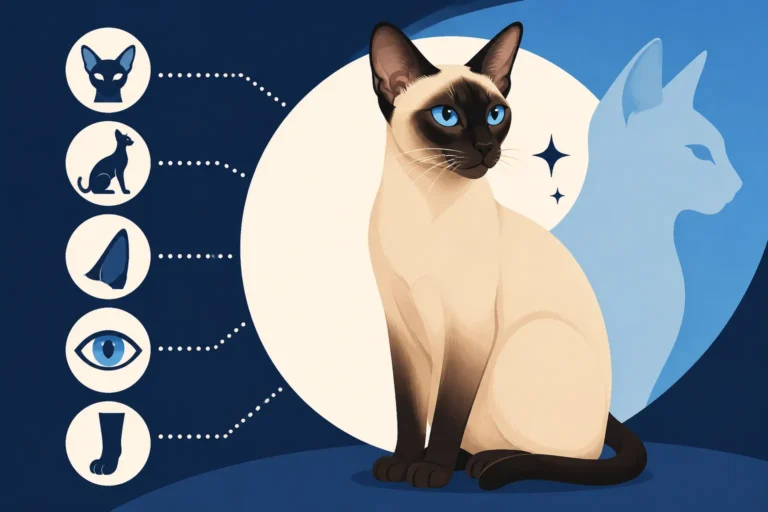
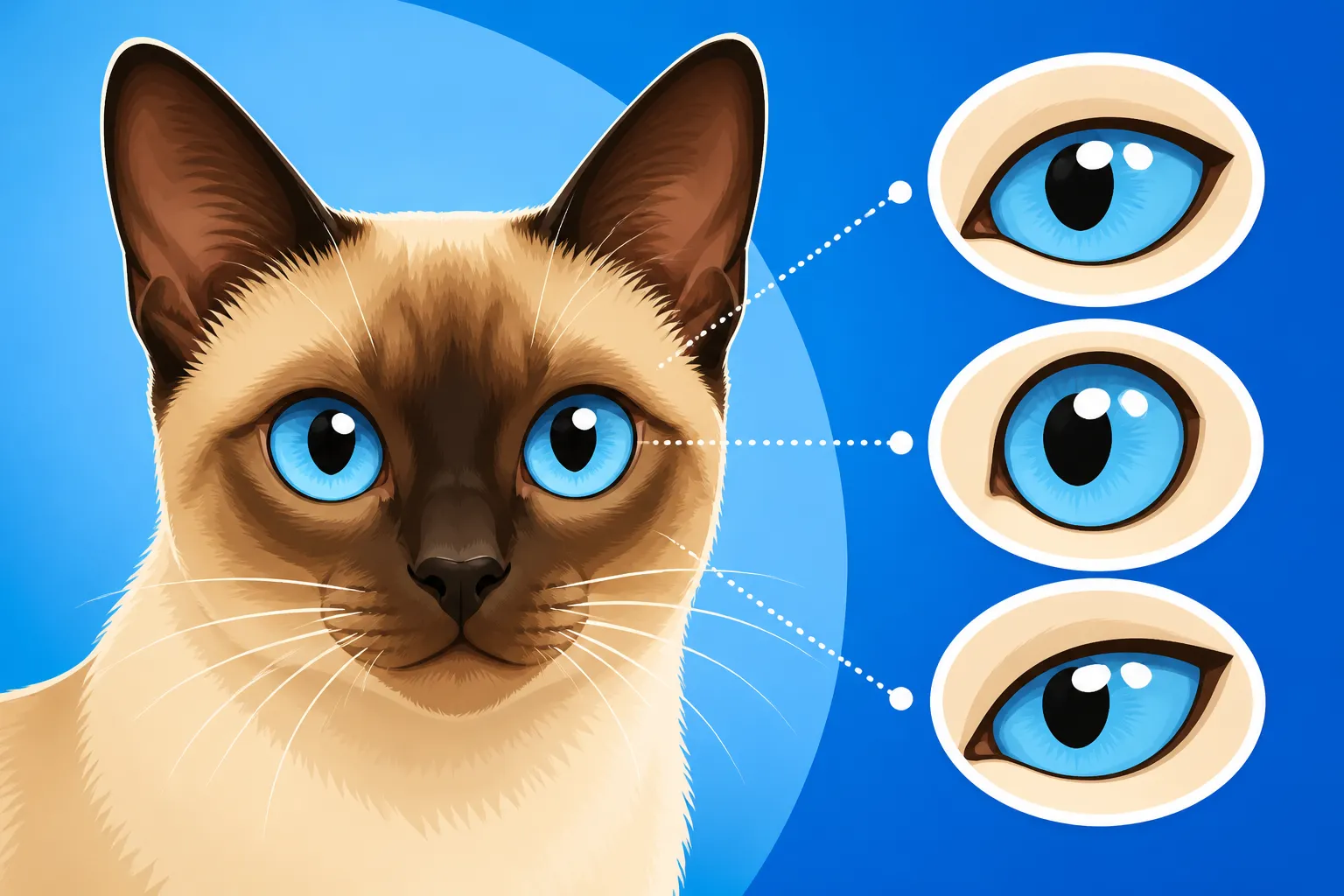
A Siamese cat’s eyes are generally described as almond-shaped rather than round. The inner and outer corners taper, giving the eye an elongated outline. The eyes usually angle slightly toward the nose, complementing the breed’s long, refined facial lines.
That slant should look like part of the cat’s overall expression, not like one eye is suddenly pointing in an entirely different direction. In a relaxed Siamese, both eyes usually appear balanced in size and placement. A photo taken straight on can make small differences more noticeable, so compare what you see with your cat’s usual appearance rather than relying on one snapshot.
Breed descriptions are about typical features, not a promise that every Siamese will look identical. A pet cat’s ancestry, age, and individual facial structure can all influence how prominent the almond shape looks. For the broader set of features used to describe the breed, see What the Siamese Cat Standard Asks For.
Medium in size and balanced on the face
Siamese eyes are typically medium-sized and sit in proportion to the head. They should not look markedly bulging or deeply sunken. Their placement works together with the ears, muzzle, and head shape: a long, narrow face can make the eyes seem more prominent than they would on a round-faced cat.
A Siamese kitten’s eyes may look larger in relation to its face than an adult’s, simply because the kitten is still growing. Facial proportions also vary among cats, including between more traditional-looking and modern, wedge-headed types. Changes in breeding preferences have affected the overall appearance of the head and face over time; How the Siamese Cat's Head Changed Shape in Fifty Years offers useful context.
The key distinction is between a naturally different-looking face and a new change. If your cat has always had slightly rounder eyes, that may be its individual look. If one eye suddenly appears more prominent, swollen, or differently positioned, that is not a breed-shape question—it is a reason to contact a veterinarian.
Blue color is separate from eye shape
Siamese cats are known for blue eyes, but color and shape are separate characteristics. A cat can have the expected blue color while its eye shape is less sharply almond-like, and blue eyes alone do not establish that a cat is a purebred Siamese. To learn why blue is so closely associated with the breed, read Why a Siamese Cat's Eyes Are Blue.
A cat’s eyes may also look different under varying light. Reflections, camera flash, and the angle of a photograph can change how the iris appears. They do not, however, change the actual shape of the eye.
Crossed eyes and other variations
A slight inward turn may be longstanding
Some Siamese cats have eyes that appear to turn inward, a feature known as strabismus. In some cats it is present from a young age and remains consistent. It may be most noticeable when the cat looks straight ahead or concentrates on something nearby.
A longstanding, stable appearance is different from a new change in eye direction. If your cat has always looked a little cross-eyed and is otherwise comfortable, that history is useful information for your veterinarian. If the eyes begin pointing differently over a short period, or the change comes with disorientation, a head tilt, or trouble walking, seek veterinary advice promptly.
The breed’s history and visual traits help explain why this feature is discussed so often. For more detail, see Why a Siamese Cat's Eyes Cross and Whether Crossed Eyes Are Still Bred Out of Siamese Cats. Neither a breed tendency nor a familiar appearance is enough to diagnose an individual cat.
Rounder eyes, uneven eyes, and photographs
Not every Siamese has sharply tapered eyes. Some have a softer or rounder outline, and a cat’s expression changes when it is sleepy, startled, or focused. A close-up lens can exaggerate the center of the face, while a side angle may make one eye seem smaller or more slanted than the other.
Look at your cat in ordinary daylight and from a comfortable distance. Ask yourself whether both eyes have looked this way for months or years, or whether something has changed. Also notice whether your cat opens both eyes fully, tracks movement normally, and behaves as usual.
A small difference in appearance is not automatically a problem. But persistent asymmetry, sudden swelling, a cloudy surface, or squinting should not be explained away as “just the breed.” When in doubt, describe the change to a veterinary clinic and ask how soon your cat should be examined.
Eye movement is not the same as eye shape
A Siamese cat’s eyes may appear to move or wobble, especially if the cat has a neurological or vestibular problem. This movement is different from the eye’s outline or a stable inward turn. Nystagmus refers to involuntary, repetitive eye movement, and it can be associated with other signs that need assessment. What Nystagmus Looks Like in a Siamese Cat explains what to watch for.
If the eyes are moving unusually and your cat also seems off balance, holds its head at an angle, or has difficulty walking, contact a veterinarian rather than waiting to see whether the appearance settles. Eye movement, eye alignment, and eye shape are different observations, and a professional can help distinguish them.
What is normal and what deserves attention
| What you notice | What it may mean | A sensible next step |
|---|---|---|
| Almond-shaped eyes with a gentle inward slant | Typical Siamese appearance | Note your cat’s normal look |
| Slightly rounder eyes that have always looked that way | Individual variation | Mention it at a routine check if you have questions |
| A mild inward turn present since kittenhood | Possible longstanding strabismus | Discuss it with your veterinarian, especially if you are unsure it is stable |
| Sudden change in alignment or eye size | A new eye or health problem may be present | Contact a veterinarian promptly |
| Squinting, rubbing, redness, cloudiness, or heavy discharge | Possible irritation, injury, or illness | Arrange veterinary advice; urgent signs should not wait |
| Unusual eye movement with a head tilt or poor balance | Possible neurological or vestibular issue | Seek prompt veterinary assessment |
Warning signs that should not be ignored
A change in eye shape or position matters most when it appears suddenly or is paired with discomfort. Watch for repeated squinting, keeping one eye closed, pawing at the face, redness, cloudiness, swelling, or discharge that is heavy or persistent. Those signs can have several causes, and appearance alone cannot identify which one is responsible.
Seek prompt veterinary guidance if your cat’s pupil sizes suddenly look unequal, the eye seems to bulge, or your cat appears unable to see normally. If there is a visible injury, significant pain, or rapid worsening, treat it as urgent. Do not wait for a routine appointment simply because Siamese cats can have distinctive eyes.
A new change in behavior can be relevant too. Hiding, reluctance to jump, unusual sensitivity to light, or seeming unsettled may accompany an eye problem. The article Signs a Siamese Cat Is Unwell can help you think through broader changes, but it is not a substitute for an examination.
What a veterinary eye check may involve
A veterinarian will usually ask when you first noticed the change and whether it has happened before. It helps to bring clear photos from different days, especially if the appearance comes and goes. Include details such as whether your cat is squinting, rubbing the eye, or acting differently.
The examination may involve looking at the eyelids, the clear surface of the eye, the pupils, and how both eyes respond to light. Depending on what the veterinarian finds, further tests may be recommended. The exact approach depends on the signs and the cat’s history.
Try not to diagnose from online photos or compare your cat too closely with a show-standard illustration. Breed standards describe appearance; they do not determine whether a particular eye is healthy. A veterinary professional can evaluate both the structure and function of your cat’s eyes.
Caring for Siamese eyes at home
Keep cleaning gentle and limited
Healthy eyes generally do not need routine cleaning. If you notice a small amount of dried material near the corner, you can gently wipe the surrounding fur with a clean, soft cloth dampened with lukewarm water. Use a fresh area of the cloth for each eye, and avoid pressing on the eyeball.
Do not use human eye drops, medicated products, or leftover treatments unless a veterinarian specifically tells you to. Products intended for the eye can be inappropriate or harmful if used for the wrong problem. If discharge is frequent, thick, discolored, or accompanied by redness, ask your veterinarian what to do instead of repeatedly cleaning it away.
For routine face care, some owners look for cat-safe eye-area wipes through retailers such as Chewy. Check the label carefully and use any wipe only as directed, keeping it away from the surface of the eye. Chewy’s product listings can help you compare options, but a retail description cannot determine whether discharge needs medical attention.
If you are shopping at Chewy, focus on products explicitly labeled for cats and avoid scented or medicated wipes unless your veterinarian recommends them. Wipes are for the surrounding fur, not a treatment for an irritated eye. If you are uncertain about a product’s ingredients or intended use, ask your veterinary clinic before using it.
Notice changes by comparing with your cat’s baseline
A simple way to spot changes is to learn what your cat’s eyes normally look like. Notice whether both eyes open equally, whether the pupils appear similar in ordinary lighting, and whether your cat tracks a toy or your hand as expected. You do not need to inspect the eyes constantly; a calm, occasional check is enough for most owners.
Photos can be useful when a change is subtle. Take them in natural light without flash and from roughly the same angle. A photo journal may help you explain whether an eye has gradually changed or whether the difference is only due to lighting and expression.
If you are uncertain whether a feature is longstanding, tell your veterinarian what you have observed rather than trying to label it. “The left eye looks more inward than it did last week” is more helpful than assuming it is a normal Siamese trait. For another perspective on eye-related concerns, see Whether Crossed Eyes Hurt a Siamese Cat.
When to call the veterinarian
Arrange an appointment for persistent or recurring signs
Book a veterinary appointment if your cat repeatedly has watery eyes, ongoing discharge, redness, or frequent blinking. These symptoms can have multiple causes, including irritation or infection, and a vet can assess them properly. If symptoms are mild but keep returning, mention how long they have been happening and whether one or both eyes are affected.
For a call to the clinic, be ready to describe when the issue started, whether it is getting worse, and whether your cat is eating and behaving normally. A clear description helps the clinic advise you on timing. If you can safely take a photo without delaying care, it may also help show the appearance between visits.
Treat sudden or painful changes as more urgent
Contact a veterinarian promptly if your cat suddenly squints, keeps an eye closed, rubs its face persistently, or develops a cloudy or swollen eye. Eye problems can worsen, and delaying care may make treatment more complicated. If the cat seems in significant pain or the eye has been injured, seek urgent veterinary help.
A Siamese cat’s characteristic almond shape is a useful reference point, not a reason to ignore a noticeable change. Stable appearance, comfort, and normal behavior are reassuring; sudden changes, pain, and impaired vision call for professional attention.
Disclaimer
This article is for general informational purposes only and does not constitute professional advice. Laws, prices and regulations vary by location and change over time. Consult a qualified professional for guidance on your specific situation.