Whether the CEP290 Test Covers Siamese Cats
It’s truly disheartening when you’re trying to be a responsible Siamese cat owner, diligently researching genetic health, only to be met with a confusing array of tests and information that doesn't quite seem to fit your beloved breed. Many caring cat parents stumble upon discussions of the CEP290 test for Progressive Retinal Atrophy (PRA) and immediately wonder if it's the right step for their Siamese. This guide aims to clear up that confusion, explaining why the CEP290 test isn't designed for Siamese cats and what effective genetic testing options are available to protect your feline friend’s precious eyesight.
Understanding PRA in Siamese Cats and the Genetic Predisposition
The thought of your vibrant, curious Siamese cat losing their sight is truly heartbreaking. Progressive Retinal Atrophy (PRA) is a cruel disease that slowly steals a cat's vision, and for Siamese owners, it's a concern that definitely deserves attention. Understanding what PRA is, how it progresses, and its genetic underpinnings specific to the Siamese breed is the first step in proactive care.
What Progressive Retinal Atrophy Means for Your Siamese
Progressive Retinal Atrophy isn't a single disease, but rather a group of inherited degenerative diseases that affect the retina, the light-sensitive tissue at the back of your cat's eye. Think of the retina as the film in a camera; it captures images and sends them to the brain. In a cat with PRA, the cells in the retina, specifically the photoreceptor cells (rods and cones), gradually deteriorate over time.
Initially, this often manifests as night blindness. You might notice your Siamese becoming more hesitant in dimly lit rooms, bumping into furniture in the dark, or their eyes appearing unusually reflective in flash photos due to dilated pupils. As the disease progresses, their daytime vision will also begin to fail. This is a slow, relentless process, and while it's not painful, it's undeniably disorienting for your cat. Many Siamese cats with PRA will eventually become completely blind. The age at which a Siamese cat with PRA goes blind can vary, but typically signs begin to appear between 1-5 years of age, progressing to full blindness by 3-7 years. It's a progressive condition, meaning it only gets worse, never better, and there is no cure once it sets in.
The Specific Genetic Mutation in Siamese Cats
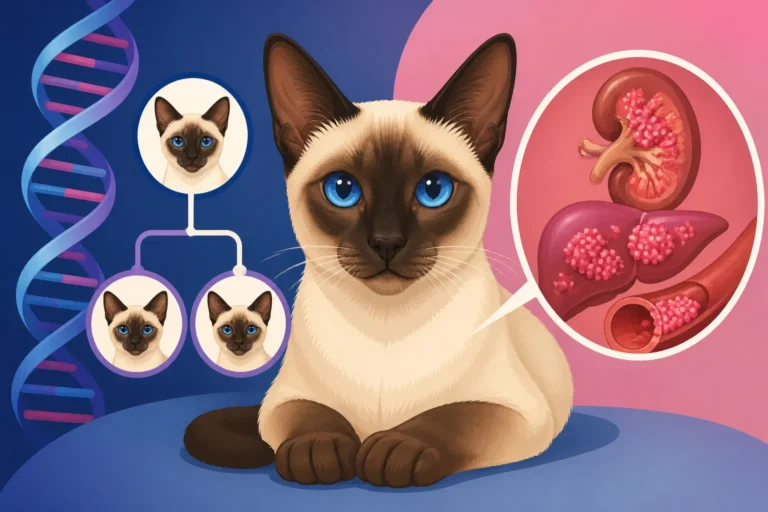
This is where the genetic conversation gets really specific and crucial for Siamese owners. While many breeds can be affected by PRA, the exact genetic mutation causing it differs from breed to breed. For Siamese cats, the form of PRA they are prone to is known as rod-cone degeneration (rdAc). This is caused by a specific mutation in the CEP290 gene, but wait – this is often confused with another CEP290 mutation found in different breeds. In Siamese cats, the mutation that causes rdAc PRA is a recessive gene, meaning a cat must inherit two copies of the faulty gene (one from each parent) to be affected by the disease.
A cat that inherits only one copy of the gene is considered a "carrier." They won't develop PRA themselves, but they can pass the gene on to their kittens. This is why responsible breeding practices are so vital. If two carriers are bred together, there’s a 25% chance with each kitten that it will inherit two copies of the faulty gene and thus develop PRA. Understanding which gene causes PRA in a Siamese cat is paramount, because testing for the wrong genetic marker is like looking for a needle in the wrong haystack.
Why the CEP290 Test Isn't for Siamese Cats
It's completely understandable why so many Siamese cat owners get confused about the CEP290 test. The name "CEP290" pops up frequently in discussions about PRA, leading to the assumption that it's a universal test for all breeds at risk. However, genetic testing is highly specific, and a test for one breed's particular mutation will not provide accurate results for another breed carrying a different mutation, even if the condition manifests similarly.
The CEP290 Gene Mutation and Its Target Breeds
The CEP290 gene is a large gene, and different mutations within it can lead to different forms of inherited retinal degeneration across various species, including humans and cats. When people talk about "the CEP290 test" in a broader feline context, they are often referring to a specific mutation known as "rdAc" or sometimes simply "CEP290-associated PRA" which affects breeds like the Abyssinian, Somali, Ocicat, and American Curl. This particular mutation in these breeds causes a form of PRA that leads to early-onset blindness.
However, the Progressive Retinal Atrophy mutation that affects the Siamese breed is also a mutation within the CEP290 gene, but it's a different specific change in the DNA sequence. This is the crucial distinction that often gets overlooked. The test that breeders use for Abyssinians, for example, looks for their specific mutation in the CEP290 gene, not the one relevant to Siamese cats. Therefore, if you send a Siamese cat's DNA to a lab for the "CEP290 test" without specifying the rdAc mutation or confirming it's for Siamese, you'll likely get misleading or uninterpretable results.
The Importance of Breed-Specific Genetic Testing
This highlights a significant frustration for owners: navigating the nuances of genetic health. It's not enough to simply know a disease is genetic; you need to know the specific gene and mutation associated with that disease in your specific breed. A test developed to detect a mutation in an Abyssinian will not detect the distinct mutation causing PRA in a Siamese cat. The DNA sequences are different at the critical point of interest for each mutation.
Trying to use the wrong genetic test is like trying to unlock your house with a neighbor's key. Both are keys, both open a door, but they won't work on your lock. This is why reputable laboratories and breeders always emphasize breed-specific testing. For Siamese cats, we're looking for the rdAc mutation within the CEP290 gene that is unique to them and closely related breeds such as the Oriental Shorthair and Balinese, rather than the mutation found in the Abyssinian lineage. Using an incorrect test won't just waste your money; it can give you a false sense of security or unnecessary worry, preventing you from taking the right preventative actions for your cat's health.
Reliable Genetic Testing for Siamese Cat PRA (rdAc)
So, if the generalized CEP290 test isn't for your Siamese, what is the correct approach? The good news is that reliable genetic tests do exist for the specific type of Progressive Retinal Atrophy affecting Siamese cats. Knowing which test to ask for and where to get it done is empowering for any responsible owner or breeder.
The Proper DNA Test for Siamese PRA
For Siamese cats, the genetic test you need to look for specifically targets the rdAc mutation. This test identifies carriers and affected cats of the autosomal recessive Progressive Retinal Atrophy that impacts Siamese and related Oriental breeds. Several reputable veterinary genetic testing laboratories offer this specific test. Prominent names include:
- Optimal Selection by Wisdom Panel: This is a comprehensive genetic health screening panel that includes the rdAc PRA test for Siamese cats. It's a popular choice because it often screens for multiple conditions relevant to the breed at once.
- UC Davis Veterinary Genetics Laboratory (VGL): Based at the University of California, Davis, this lab is a highly respected institution in animal genetics and offers specific tests for inherited diseases, including rdAc PRA in Siamese cats.
- Langford Vets (University of Bristol, UK): For those in the UK or Europe, Langford Vets provides diagnostic services, including genetic tests for various feline conditions, with the rdAc PRA test available for Siamese.
When you submit a sample (usually a cheek swab or blood sample) to one of these labs, the results will typically come back as one of three classifications:
- Clear (N/N): Your cat does not carry the gene mutation and cannot pass it on to its offspring.
- Carrier (N/PRA): Your cat carries one copy of the gene mutation but will not develop PRA themselves. They can, however, pass the mutation to approximately 50% of their offspring.
- Affected (PRA/PRA): Your cat has two copies of the gene mutation and will likely develop PRA at some point in their life.
It's vital to ensure you're explicitly asking for the rdAc test for Siamese cats when contacting a lab or reviewing a breeder's test results. This is the correct tool for the job. If you're wondering whether the rdAc DNA test works on a Siamese cat, the answer is a resounding yes – it's specifically designed for them. Knowing which lab runs the Siamese cat PRA test will ensure you get accurate and useful information.
Interpreting Test Results and Breeder Responsibilities
Once you have your cat's rdAc PRA test results, understanding what they mean, especially in the context of breeding, is critical.
For "Clear" cats, there's no concern regarding this specific type of PRA. They are genetically free of the mutation.
For "Carrier" cats, they will not develop PRA, but they carry the potential to pass the gene on. Responsible breeders will generally avoid breeding two carrier cats together to prevent producing affected kittens. Instead, a carrier might be bred with a "clear" cat. In such a pairing, statistically, 50% of the kittens would be carriers and 50% would be clear, but none would be affected. This strategy allows for the preservation of valuable bloodlines while reducing the incidence of the disease.
For "Affected" cats, the prognosis is that they will eventually lose their sight. They should absolutely not be used for breeding, as 100% of their offspring would inherit at least one copy of the faulty gene. While the diagnosis can be devastating, understanding it early allows owners to prepare and adapt their homes to help their cat navigate vision loss.
Reputable Siamese breeders are acutely aware of these genetic risks. They should be transparent about the health testing they conduct on their breeding stock, including PRA (rdAc) testing. A good breeder will be able to show you documentation of their cats being tested as "clear" or, if a carrier, will explain their careful breeding plan to ensure no affected kittens are produced. This comprehensive approach to breeding helps to safeguard the long-term health of the Siamese breed and prevent unnecessary heartache for future owners. When considering a kitten, always ask what a Siamese cat breeder should have screened, and this specific PRA test should definitely be on their list.
For owners facing a diagnosis of PRA in their Siamese, it's worth noting that pet insurance can be a lifeline. Companies like Healthy Paws offer coverage for unexpected veterinary costs, and while pre-existing conditions are typically excluded, if your cat is enrolled before a diagnosis, the costs associated with managing progressive conditions like PRA—including specialized vet visits or supportive care—could be covered. It's always wise to research pet insurance options early in your cat's life.
Beyond DNA Tests: Comprehensive Eye Health for Your Siamese
While genetic testing is an invaluable tool for breeders and can give owners peace of mind, it's not the only component of maintaining your Siamese cat's eye health. A holistic approach that includes regular veterinary check-ups and being observant of your cat’s behavior is equally important.
The Role of Ophthalmic Exams
Even if your Siamese cat has tested clear for the rdAc mutation, regular comprehensive ophthalmic exams by a qualified veterinary ophthalmologist are incredibly important, especially as your cat ages. Genetic tests provide a snapshot of a cat's predisposition to a specific inherited disease, but they don't cover every possible eye condition, nor do they detect acquired problems like injuries, infections, cataracts (which can occur in any cat, not just those with PRA), or glaucoma.
A veterinary ophthalmologist has specialized equipment and expertise to thoroughly examine your cat's eyes. They can detect subtle changes in the retina, optic nerve, lens, and cornea that a general vet might miss during a routine check-up. They can also perform electroretinography (ERG) if there are concerns about retinal function, which can confirm a diagnosis of PRA before visible signs of vision loss are obvious to the owner. This is particularly relevant if there's any uncertainty, such as in situations where an eye exam beats a DNA test for a Siamese cat by showing functional changes before genetic mutations are fully understood or available for testing. Regular exams allow for early detection of any eye problem, potentially leading to interventions that preserve vision or improve comfort.
Caring for a Siamese Cat with Vision Impairment
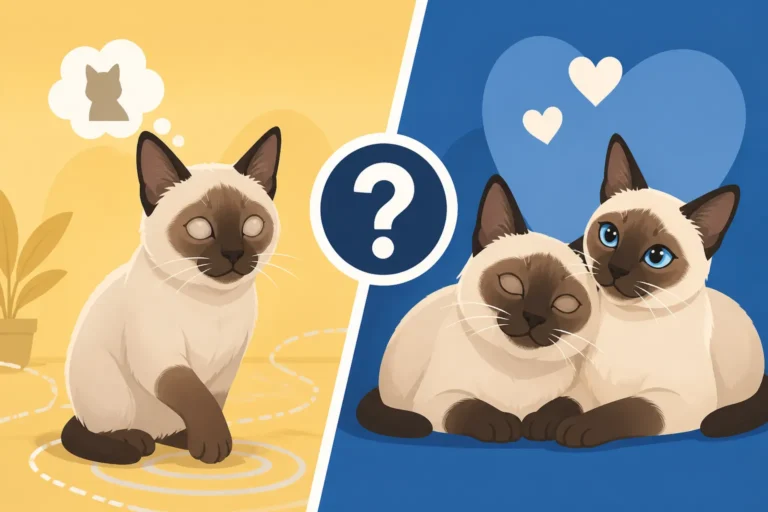
Discovering that your beloved Siamese is losing its sight due to PRA or any other condition can be incredibly distressing. However, cats are remarkably adaptable creatures, and with your help, a blind Siamese cat can lead a full and happy life. The key is to create a safe, consistent, and predictable environment.
Firstly, recognize the signs a Siamese cat is going blind. This often starts with night blindness, increased caution in new environments, bumping into things, or becoming more reliant on their other senses, like hearing and smell. The age a Siamese cat first loses night vision often precedes total blindness.
Here are some practical tips for caring for a vision-impaired Siamese:
- Maintain Consistency: Keep furniture and litter boxes in the same locations. Cats map their environment, and disturbing their layout can cause significant stress.
- Safety First: Block off stairs or dangerous areas with baby gates. Remove any sharp objects at cat-level. Consider supervising outdoor access or creating a secure catio to prevent them from wandering into danger.
- Scent Cues: Use different scents around the house to help your cat orient itself. For example, a specific scent near the litter box or feeding station.
- Vocal Cues: Talk to your cat frequently as you approach them to avoid startling them. They will rely more on your voice.
- Enrichment: Continue to engage them with toys that make noise, like crinkle balls or those with bells. Puzzle feeders that rely on scent can also be very stimulating.
- Litter Box Access: Ensure the litter box has low sides for easy entry and exit, and consider having multiple boxes in easily accessible, consistent locations. How a blind Siamese cat finds the litter box usually relies on memory and scent.
- Support and Affection: Your cat will need extra reassurance and affection. Their bond with you will become even more crucial as they navigate their world primarily through touch, sound, and smell.
It’s a challenging journey, but with patience and understanding, your Siamese can continue to thrive. Pet insurance, such as Healthy Paws, can be incredibly beneficial in these situations, helping to cover ongoing veterinary care, medications, or specialized consultations required for managing a cat with vision impairment, ensuring that financial concerns don't stand in the way of providing the best possible care for your cherished companion.
Understanding Feline PRA Tests
To make sense of the different types of Progressive Retinal Atrophy (PRA) and the genetic tests available, here's a helpful comparison focusing on what’s relevant for Siamese cats.
| Feature | Siamese Cat PRA (rdAc) | Other CEP290-related PRA (e.g., Abyssinian PRA) | Other PRA Forms (General) |
|---|---|---|---|
| Genetic Cause | Specific mutation in the CEP290 gene (rdAc) | Different specific mutation in the CEP290 gene | Various other genes/mutations depending on breed |
| Inheritance | Autosomal Recessive | Autosomal Recessive | Primarily Autosomal Recessive |
| Affected Breeds | Siamese, Oriental Shorthair, Balinese, Havana Brown | Abyssinian, Somali, Ocicat, American Curl, some other breeds | Maine Coon, Persian, Bengal, Norwegian Forest Cat, etc. |
| Age of Onset | Typically 1-5 years (night blindness first), blindness by 3-7 years | Can be early-onset, sometimes within the first year of life | Varies widely by specific mutation and breed |
| Genetic Test Name | Often labeled as "PRA (rdAc)" or "CEP290 (Siamese Type)" | Often labeled as "PRA (Abyssinian Type)" or "CEP290 (Abyssinian)" | Specific test names for relevant genes (e.g., Rdy, CRX, etc.) |
| Test Applicability | YES, for Siamese and related Oriental breeds | NO, not suitable for Siamese cats | NO, not suitable for Siamese cats |
| Key Takeaway | Must specify "rdAc" when testing for Siamese cats to ensure accuracy | CEP290 is a gene, but different mutations affect different breeds | Always use breed-specific tests for accurate results. |
Disclaimer
This article provides general information and guidance. It is not a substitute for professional veterinary advice. Always consult with a qualified veterinarian or a board-certified veterinary ophthalmologist for diagnosis, treatment, and specific recommendations regarding your Siamese cat's health and genetic testing needs.