What an Applehead Siamese Cat Looks Like
It can be incredibly confusing trying to picture an "Applehead" Siamese when you're used to seeing the sleek, angular cats often displayed in modern shows, or simply navigating all the different terms thrown around by breeders and enthusiasts. This guide aims to clear up that confusion by diving deep into the distinctive features that define the classic Applehead look, offering a clear picture of what makes these beloved felines so unique.
The Distinctive Physical Characteristics of an Applehead Siamese
When people talk about an Applehead Siamese, they're typically referring to the original, traditional appearance of the breed before selective breeding shifted towards the more extreme, slender "Wedge" type. The name itself, "Applehead," gives you a pretty good clue about their most defining feature: their head shape. It's a look that evokes a sense of sturdy, classic elegance.
Head Shape and Facial Features
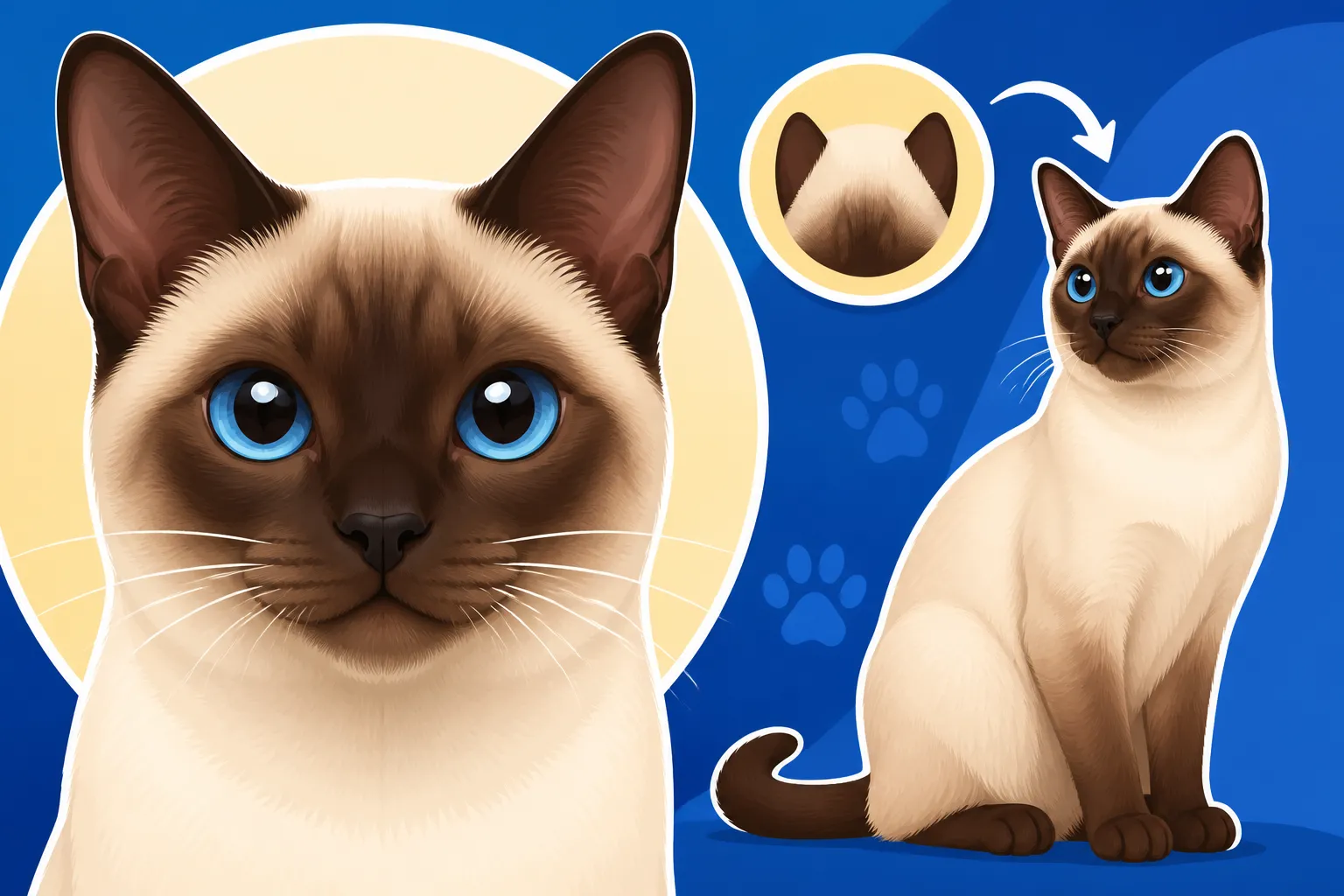
The most prominent characteristic of an Applehead Siamese is, naturally, its head. Unlike the long, narrow wedge shape of modern show Siamese, the Applehead possesses a distinctly rounder, broader skull. Imagine a gentle curve from the top of their head to their jawline, rather than sharp angles. This roundness gives them a sweet, almost cherubic expression that many find incredibly endearing. Their forehead is often slightly domed, contributing to that overall "apple" resemblance.
Their muzzle is typically shorter and wider than the modern Siamese, not coming to a fine point but maintaining a sturdy breadth. This broader muzzle often means their whisker pads are more pronounced, adding to the roundness of their face. When you look at an Applehead straight on, you'll notice their cheeks are fuller, and their facial contours are softer, less chiseled. This robust facial structure gives them a friendly, approachable appearance that differs significantly from the sometimes intense look of a more extreme modern Siamese. It’s a classic face that really defines the original charm of the breed.
Body Type and Musculature
Beyond the head, the Applehead Siamese generally boasts a more robust and substantial body compared to its modern counterparts. They aren't chunky or overweight, but they are noticeably more muscular and solid in build. Think of a well-conditioned athlete rather than a supermodel. Their bodies are typically medium in size, with a compact, well-proportioned frame.
Their legs, while still elegant, tend to be shorter and more muscular than the long, slender limbs seen on the modern Wedge Siamese. This contributes to their overall sense of strength and groundedness. Their paws are usually a bit larger and rounder too, completing the picture of a sturdy, traditional cat. When you pick up an Applehead, you'll often be surprised by their unexpected weight for their apparent size, a testament to their dense musculature. They carry themselves with an athletic grace, capable of agile leaps and playful antics, but without the fragile appearance that some might associate with the very lean, modern Siamese. This more substantial build also hints at a different historical breeding direction, one focused less on extreme refinement and more on overall health and traditional appearance. For some owners, this solid build means they might need slightly different scratching posts to support their weight, perhaps sturdier options you might find on Chewy.
Eye and Ear Placement
The eyes of an Applehead Siamese are another key distinguishing feature. While all Siamese cats are known for their striking blue eyes, the shape and setting of an Applehead's eyes tend to be more almond-shaped and less Oriental in appearance. They are usually set a little wider apart than in the modern Wedge, contributing to their softer, more open expression. They don't typically have the deep-set, intensely slanted eyes that are often a hallmark of the modern show Siamese. The gaze of an Applehead is often described as gentle and soulful, lacking the sharp, almost piercing quality sometimes seen in the extreme wedge.
Their ears are medium-sized and proportionate to their head, rather than the overly large, wide-set ears that dominate the modern Siamese look. They are typically broad at the base and taper to a rounded tip, sitting high on the head but not dominating the facial silhouette. In comparison to the striking, almost bat-like ears of some modern Siamese, the Applehead’s ears blend harmoniously with the roundness of their head. This balanced ear placement reinforces the overall classic and less extreme aesthetic of the Applehead Siamese. Why a Siamese Cat's Eyes Cross and Its Tail Kinks discusses some interesting historical aspects related to Siamese features.
Applehead Versus Modern Wedge: A Visual Comparison
The divergence between the Applehead and the modern Wedge-head Siamese represents one of the most significant shifts in cat breeding history. It's not just a subtle difference; it's almost like looking at two distinct breeds, even though they share a common ancestry. Understanding these contrasts is crucial for anyone trying to identify an Applehead or simply appreciate the spectrum within the Siamese breed.
Head Shape Differences: The Defining Feature
Let's get right to the heart of the matter: the head. As we've discussed, the Applehead features a visibly round, broad head, reminiscent of an apple or an inverted pear. The forehead is gently domed, the cheeks are full, and the muzzle is wide. There are no harsh angles or straight lines to be found; everything flows in soft curves.
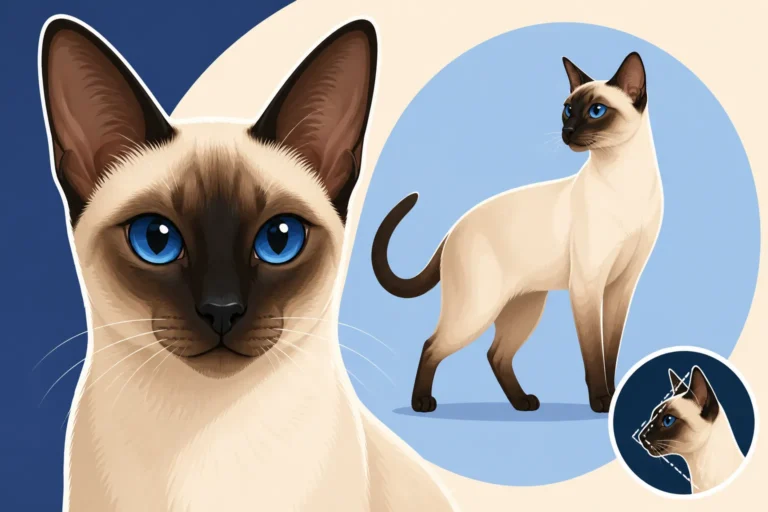
In stark contrast, the modern Wedge Siamese is characterized by an extremely elongated, triangular head that truly lives up to its "wedge" name. Starting from the nose, the lines should extend in a straight path to the tips of the ears, forming a perfect, sharp triangle. The ears themselves are large, wide at the base, and set far apart, further enhancing this angular, almost alien appearance. Their muzzle is much more refined, often coming to a delicate point, and their chin is typically fine and tapered. This extreme head type is what Why Show Breeders Changed the Siamese Cat's Head delves into, exploring the historical drive for this particular aesthetic.
| Feature | Applehead Siamese (Traditional) | Modern Wedge Siamese (Show Type) |
|---|---|---|
| Head Shape | Round, broad, gently domed skull | Extreme wedge, long, triangular, flat |
| Muzzle | Shorter, wider, less pointed | Long, fine, pointed |
| Ear Size | Medium, proportionate, rounded tips | Very large, wide-set, pointed tips |
| Eye Shape | Almond-shaped, slightly wider set | Oriental, slanted, deep blue |
| Body Type | Sturdy, muscular, compact, medium | Long, svelte, tubular, fine-boned |
| Legs | Medium length, muscular | Long, slender |
| Tail | Medium length, tapering | Long, whip-like, tapering to a fine point |
Body Structure and Overall Silhouette
The differences extend far beyond the head into the entire body structure, fundamentally altering the cat's silhouette. An Applehead Siamese has a solid, muscular body that feels substantial when held. Their chest is broad, and their torso is well-rounded, giving them a more "cat-like" appearance in the traditional sense. Their legs are proportionate to their body, strong and agile without being overly long or delicate. The tail is typically of medium length, tapering to a blunt or slightly rounded tip, often reflecting the natural tail kinks that were once common in the breed and are sometimes still seen in traditional lines.
Conversely, the modern Wedge Siamese is the epitome of svelteness and elegance. Their body is long, tubular, and incredibly slender, often described as "pipestem" in nature. They are fine-boned, with long, lithe legs that seem to stretch for miles. Their neck is long and graceful, and their tail is extremely long, thin, and whip-like, tapering to a very fine point. The overall impression is one of extreme refinement, athleticism, and a somewhat delicate grace. It’s a very striking look, but visually quite different from the robust charm of the Applehead. What a Siamese Cat Looks Like by the Standard would give you an insight into the formal requirements for the modern show cat.
Temperament and Health Perceptions
While appearance is the primary distinction, it's worth noting that many traditional Siamese enthusiasts believe there's a correlation between body type and temperament or even health. While these are generalizations and individual cats vary greatly, it's a common perception within the community. Applehead Siamese cats are often described as being extremely affectionate, vocal (as all Siamese are!), and generally robust in health. Their sturdier build is sometimes associated with fewer structural health issues, though this is not a guaranteed fact and all cats can have health problems. It's often thought that the push for extreme physical traits in any breed can sometimes introduce or exacerbate certain health concerns.
The modern Wedge Siamese, while also incredibly loving and intelligent, is sometimes perceived as having a more "nervous" energy or being prone to certain conditions associated with their extreme conformation. For instance, dental issues can sometimes be more prevalent in cats with very fine muzzles, and breathing can occasionally be impacted by extreme head shapes. However, responsible breeders of both types prioritize health. If you're looking into getting a Siamese, regardless of head shape, considering pet insurance like Healthy Paws can be a smart move to help with unexpected vet bills, ensuring you’re prepared for any health needs. This perception of health and robustness is why many people seek out the Applehead or "Old Style" Siamese. Whether an Applehead Siamese Cat Is Healthier explores this topic in more detail.
Tracing the Roots: The History of the Applehead Look
To truly understand what an Applehead Siamese cat looks like, we need to take a little trip back in time. The Applehead isn't a new variation; it's the original look of the Siamese cat, the one that first captivated Western fanciers centuries ago. The evolution of the breed's appearance is a fascinating story of shifting aesthetic preferences and selective breeding.
The Original Siamese Appearance
When Siamese cats were first introduced to the Western world from Siam (now Thailand) in the late 19th century, they all possessed the "Applehead" characteristics we've been describing. They had rounder heads, sturdier bodies, and proportionate features. Photographs and historical drawings from the early days of the breed in Europe and America clearly show this traditional look. These were the cats that inspired the legends of ancient temples and royal palaces, and their appearance was considered exotic and beautiful, without any need for extreme refinement.
These early Siamese were prized for their striking point coloration, brilliant blue eyes, and their distinctive, loud voices – not necessarily for an ultra-sleek silhouette. They were hearty, intelligent, and highly interactive companions. The very first descriptions of the breed from the Tamra Maew Manuscripts Show About the Siamese Cat describe a cat with a strong, well-proportioned body, not the elongated form seen today. These foundational cats were the benchmark, and their features, including the robust head, were considered quintessential Siamese.
The Shift Towards the Wedge Standard
The move away from the Applehead look began in the early to mid-20th century as cat fancying gained popularity and breed standards started to be formalized and refined. Breeders, driven by a desire for a distinctive show ring aesthetic, began to selectively breed for more extreme features. The preference gradually shifted towards a more elongated head, slender body, and larger ears. This trend accelerated in the latter half of the century, pushing the breed standard further and further towards what we now recognize as the modern Wedge Siamese.
This shift wasn't universally embraced, and many traditionalists felt that the original charm and robustness of the Siamese were being lost in pursuit of an overly refined and sometimes delicate appearance. They argued that the extreme wedge was a departure from the breed's historical integrity and could potentially compromise the cat's health and vigor. This period marked a significant turning point, effectively creating two distinct "looks" within the same breed, leading to terms like "traditional," "classic," and "old-style" to describe the Applehead phenotype. How the Applehead Siamese Cat Became the Wedge goes into great detail about this transformation.
Preserving the Traditional Look
Today, breeders dedicated to preserving the Applehead Siamese actively work to maintain these traditional characteristics. They consciously breed away from the extreme wedge head, the overly long body, and the oversized ears, focusing instead on the sturdy, round-headed, and well-proportioned cats of yesteryear. These breeders often register their cats with associations that recognize the traditional or "Thai" standard, which aligns more closely with the Applehead appearance.
For those who love the original Siamese look, finding a reputable breeder who specializes in Applehead or traditional Siamese is key. They understand the importance of maintaining a healthy, robust physical structure that echoes the breed's heritage, rather than pursuing extreme show-ring trends. You might find that Why Applehead Siamese Cat Breeders Charge Less or more depending on various factors, but their dedication is often to preserving the historic standard.
Finding and Identifying an Applehead Siamese
So you've fallen in love with the classic charm of the Applehead Siamese and you want to bring one into your home. Or perhaps you've seen a cat and are wondering if it fits the description. Knowing what to look for and where to look can make all the difference.
What to Look for in an Applehead Kitten or Adult
When evaluating a potential Applehead Siamese, whether a kitten or an adult, focus on the core characteristics we’ve discussed.
- Head Shape: This is your primary indicator. Look for a distinctly round, broad skull with a gently domed forehead. The muzzle should be wide and relatively short, not tapering sharply. The cheeks should appear full. You want to see soft curves, not sharp angles from the ears to the nose.
- Ears: They should be medium in size, proportionate to the head, and set neither too high nor too low. They should be broad at the base but taper to a rounded, not overly pointed, tip. They won't appear overly large or bat-like.
- Eyes: While still a brilliant sapphire blue, the eyes should be more almond-shaped than acutely Oriental. They should be set slightly wider apart, contributing to a softer, more open facial expression. Why a Siamese Cat's Eyes Turn Inward might be a topic of interest, as traditionally crossed eyes were more common and accepted in older types.
- Body: Seek out a sturdy, muscular, and compact body. The cat should feel substantial and well-built, with good bone structure. Their legs should be of medium length, strong and proportionate to their body, not overly long and slender.
- Overall Impression: The entire cat should present a balanced, robust, and harmonious appearance, without any exaggerated or extreme features. They should look like a classic domestic cat, just with the striking Siamese coloration and personality.
Remember that kittens, especially very young ones, might not have their full features developed, but you should still be able to discern the general proportions and emerging head shape. Always look at the parents if possible, as genetics play a huge role.
Where to Find Reputable Applehead Breeders
Finding a true Applehead Siamese requires a bit of research and patience, as they are less common than the modern Wedge type in mainstream show circuits. You won't typically find them in "backyard breeder" situations, as responsible traditional breeders are very passionate about preserving these lines.
- Dedicated Traditional or Old Style Siamese Breeders: Many breeders specifically identify as "traditional" or "old-style" Siamese breeders. They often have websites detailing their breeding philosophy and the specific look they aim for. They will proudly showcase the rounder heads and sturdier builds of their cats.
- Breed Clubs for Traditional Siamese: Look for cat associations or clubs that specifically cater to traditional Siamese or Thai cats. These clubs often maintain lists of reputable breeders who adhere to the older standards. The Thai breed, for example, is essentially the modern-day equivalent of the original Siamese cat.
- Rescue Organizations: While less predictable, sometimes Applehead or traditional Siamese types do end up in rescue. These cats might be older or come with less documented history, but they can make wonderful companions. Where to Find a Siamese Cat Rescue is a great resource if you're open to adoption.
- Word of Mouth and Referrals: Often, the best way to find a quality traditional breeder is through referrals from other satisfied owners or veterinarians who are familiar with the type.
When you find a potential breeder, don't hesitate to ask detailed questions about their breeding goals, health screening practices, and how they define "Applehead." A good breeder will be transparent and eager to educate you about their cats. They should be able to provide health records and demonstrate a genuine commitment to the welfare and preservation of the traditional Siamese look. Just as you'd ensure you're getting quality food like Chewy offers, you should ensure you're getting a quality, well-cared-for cat from a responsible source.
Disclaimer
This article is for general informational purposes only and does not constitute professional advice. Laws, prices and regulations vary by location and change over time. Consult a qualified professional for guidance on your specific situation.