Whether a Thai Cat Costs More Than a Siamese Cat
It’s a common question, and one that often causes a fair bit of head-scratching for prospective cat parents: when you're looking at a "Siamese" versus a "Thai" cat, are you actually comparing apples to oranges when it comes to price? The reality is, the perceived cost difference often boils down to understanding what each name truly represents in the modern cat world, and this guide is here to untangle that very confusion, helping you understand the factors that drive their respective price tags.
Unpacking the Identity: Modern Siamese vs. Thai Cat
Before we can even talk about dollars and cents, we need to clear up the distinction between these two beloved felines. Many people envision the "Siamese" cat of their childhood memories – a sturdy, round-headed cat with beautiful points. What they might not realize is that the breed has undergone significant changes in conformation over the last century.
The Modern Siamese Cat: The "Wedge" Type
Today, when you hear "Siamese cat" in the context of official breed registries and show rings in many Western countries, people are almost exclusively referring to the modern, or "wedge-head" Siamese. This cat boasts an incredibly striking and extreme appearance: a long, tubular body, very fine boning, exceptionally large ears set wide apart, and a long, narrow, wedge-shaped head that tapers from the ears to the nose. Their eyes are typically almond-shaped, slanting to match the lines of the head. This look is the result of selective breeding over decades to meet a specific, evolving breed standard.
This distinctive aesthetic, while beautiful to many, is also highly specialized. Breeders dedicate considerable time and resources to producing cats that conform perfectly to these stringent standards. This isn't just about looks; it involves careful genetic selection and meticulous care of breeding lines to ensure health and temperament within those specific physical traits. If you're wondering What a Modern Wedge Siamese Cat Looks Like, you're picturing this elegant, angular feline.
The Thai Cat: The "Traditional" or "Applehead" Siamese
On the other hand, the "Thai cat" is essentially what many people still picture when they think of the "old-style" or "traditional" Siamese. This cat more closely resembles the Siamese cats that were originally imported from Siam (modern-day Thailand) centuries ago, and even up until the mid-20th century. The Thai cat has a more moderate, robust build. They have a rounder, broader head, often called an "applehead," with full cheeks and medium-sized ears that are proportionate to their head. Their body is muscular and substantial, neither as lithe as the modern Siamese nor as heavy as some other breeds. Their eyes are typically more rounded, though still blue, and can sometimes exhibit the charming crossed-eye trait that was once common in the breed.
The Thai cat represents a divergence from the show-ring trends that reshaped the modern Siamese. In their native Thailand, these cats were simply known as Wichianmat, and they continue to thrive there with their classic appearance. Here in the West, dedicated fanciers and breeders have worked hard to preserve this original type, sometimes registering them as "Thai" or "Old-Style Siamese" to differentiate them. This cat often appeals to those who appreciate the historical appearance and a somewhat less extreme conformation. Many might wonder Whether a Traditional Siamese Cat Is the Same Breed – in essence, they share a common ancestor, but breeding choices led to their different forms.
Factors Influencing the Initial Purchase Price
When considering the cost of any purebred cat, whether modern Siamese or Thai, several key elements contribute to the initial price tag. These aren't unique to these breeds but are universally applied by reputable breeders.
Breeder Reputation and Ethics
A breeder's reputation is paramount, and it significantly impacts the price. Reputable breeders invest heavily in their cats. This means ensuring proper nutrition, excellent veterinary care, spacious and clean living conditions, and extensive socialization for their kittens. They don't just "breed cats"; they are custodians of the breed, striving to improve health, temperament, and conformation with each litter. This commitment, naturally, is reflected in the price.
An ethical breeder will provide comprehensive health records for the kitten and its parents, offer a health guarantee, and be available for support throughout the cat's life. They are usually registered with a recognized cat association, like The Cat Fanciers' Association (CFA) or The International Cat Association (TICA). This level of care and accountability costs money, from the initial investment in breeding stock to ongoing expenses for facilities and staff. On the other hand, a significantly lower price often flags a breeder who is cutting corners, potentially at the expense of the cats' welfare or health.
Pedigree and Show Quality
The lineage and potential for show quality are massive drivers of cost. Cats from champion bloodlines, where ancestors have achieved high titles in cat shows, will typically cost more. This is because these lines are proven to meet the breed standard exceptionally well, and their offspring are more likely to inherit those desirable traits. For modern Siamese cats, a kitten bred from Grand Champions with perfect wedge heads, ear set, and body conformation will command a premium.
Similarly, even if a kitten isn't destined for the show ring, its "pet quality" price is still influenced by the show achievements of its parents. Breeders spend years carefully selecting pairings to produce the best possible kittens, and this expertise and investment in their breeding program are built into the price. A kitten specifically designated as "show quality" will almost always be more expensive than one sold as a "pet," as it represents the breeder's best work and highest potential for future accolades. For many, understanding What a Show Quality Siamese Cat Costs can be quite enlightening.
Health Screenings and Guarantees
This is a non-negotiable aspect for ethical breeders and a significant cost component. Responsible breeders screen their breeding cats for genetic health issues common in the breed. For Siamese and Thai cats, this might include things like Progressive Retinal Atrophy (PRA), though Why There Is No Siamese Cat Amyloidosis Gene Test remains a frustration, making other screenings and careful record-keeping vital. While not all inherited conditions have genetic tests, breeders will keep detailed health histories of their lines, looking for patterns of illness like heart disease or certain cancers.
The cost of these health screenings (vet visits, specific genetic tests, cardiac ultrasounds, etc.) is substantial. A breeder who offers a health guarantee on their kittens stands behind their breeding practices, providing peace of mind to buyers but also factoring these potential costs into their pricing. Always ask about the health tests performed on the parent cats and any health guarantees offered for the kittens. A transparent breeder will be happy to share this information and discuss Which Health Tests a Siamese Cat Breeder Runs.
Specific Cost Considerations for Thai Cats
When you're looking specifically at Thai cats, some unique factors can influence their price, sometimes making them pricier than you might expect, despite their "traditional" appeal.
Rarity and Availability
In many Western countries, the Thai cat is simply less common than the modern Siamese. While the modern Siamese has a well-established breeding infrastructure, the Thai cat is still considered a niche breed by some and is not as widely recognized by all registries under the "Thai" name. This rarity naturally drives up the price. Fewer breeders mean fewer available kittens, and the laws of supply and demand kick in. Finding a reputable Thai breeder might require travel or joining a long waiting list, adding to the overall "cost" in terms of time and effort.
The desire to preserve and promote the traditional look also means that these breeders might operate on a smaller scale, prioritizing quality and health over sheer volume. This focused approach, coupled with limited availability, contributes to a higher price point compared to what one might assume for a "simpler" looking cat.
Importation Costs
In some cases, especially for those looking to diversify bloodlines or establish a new breeding program for Thai cats in a region where they are scarce, importation might be necessary. Bringing a cat from Thailand or another country involves a host of expenses far beyond the purchase price of the kitten itself. These can include international shipping fees, extensive veterinary checks and vaccinations required for import, quarantine periods, customs duties, and even specialized travel crates.
These costs can easily add thousands of dollars to the final price of the cat, making imported Thai cats exceptionally expensive. Even for pet buyers, a breeder who has recently imported new bloodlines will pass some of these costs on, as it's an investment in the genetic health and integrity of their breeding program. So, while you might not be importing directly, you could be paying for a breeder's past importation efforts.
Registries and Recognition
The landscape of cat registries can also affect the perceived value and price of a Thai cat. While some major registries, like TICA, do recognize the Thai cat as a distinct breed, others might list them under a different name or classify them as "traditional Siamese." This can lead to confusion and affect pricing. A fully registered Thai cat from recognized lines might command a higher price simply because it has traceable ancestry and is part of a recognized breed preservation effort.
The effort to gain and maintain official recognition for a distinct breed is considerable, involving dedicated breeders, extensive paperwork, and often, showing multiple generations of cats. This hard work by breeders to establish the "Thai" as its own recognized entity adds value and, consequently, cost. If you're looking for a registered cat, always ask which registry the breeder uses and verify the cat's lineage. Some might register as "Traditional Siamese" while others use "Thai" directly. Which Registries Recognize the Thai Separately From the Siamese Cat is a crucial question to ask when researching.
Specific Cost Considerations for Modern Siamese Cats
The modern, wedge-head Siamese also has its own set of cost drivers, often pushing its price higher due to show demand and specialized breeding goals.
Show Lineage Demand
For the modern Siamese, the intense focus on producing cats that meet the exacting show standard creates a very competitive market. Breeders meticulously select for specific traits – the exaggerated wedge head, the large, wide-set ears, the tubular body, and the intense blue eyes. Achieving this level of perfection requires extensive knowledge of genetics, careful observation of kittens' development, and often, limiting the number of litters to ensure each kitten gets optimal care.
The demand for these precisely bred cats, especially those from lines that consistently produce champions, is high. This elevated demand, coupled with the specialized nature of the breeding, means that modern Siamese kittens often start at a higher price point than many other breeds. Buyers are paying for the culmination of generations of selective breeding aimed at creating that distinctive, almost sculptural appearance. This specialization can sometimes lead to Why Show Demand Drives the Wedge Siamese Cat Price.
Head Type Preference
Within the "Siamese" umbrella, even among those interested in the modern type, there can be preferences for how extreme the wedge head is, or the exact set of the ears. Breeders who consistently produce kittens with the most sought-after head shapes – the most extreme wedges with perfectly aligned features – will naturally charge more. This is because these kittens are considered closer to the ideal breed standard and have higher potential for success in the show ring or for contributing to future breeding programs.
Conversely, "applehead" or "traditional" type Siamese (which are essentially Thai cats, but sometimes still sold under the "Siamese" moniker without a distinct "Thai" label) might be priced lower by some breeders, simply because they don't conform to the modern show standard. However, as noted above, dedicated Thai breeders will still price their cats according to their own breed standards and preservation efforts. This highlights the importance of asking Which Head Type a Siamese Cat Buyer Is Paying For to avoid confusion.
Color Point Variations
While the traditional point colors (Seal, Blue, Chocolate, Lilac) are the most recognized and often command a standard price, some other point variations might affect the cost. For instance, a Lilac Point Siamese cat, due to the specific genetics required to produce its delicate, frosty grey-pink points, might sometimes be priced slightly higher than a more common Seal Point.
However, certain "non-traditional" point colors, like Red Point or Lynx Point, are often classified under the "Colorpoint Shorthair" breed by some registries, even though they are genetically Siamese. If a breeder is selling a Lynx Point purely as a "Siamese," the price might vary depending on whether it's viewed as a rare color or simply a variant that doesn't fit the strict traditional Siamese color criteria. Always clarify the registration status and breed classification if you're interested in one of these less common point colors, and ask Whether Point Color Changes a Siamese Cat's Price.
Beyond the Initial Purchase Price: Ongoing Costs for Both
It's crucial to remember that the purchase price is just the tip of the iceberg when it comes to cat ownership. The ongoing costs for both modern Siamese and Thai cats are substantial and deserve careful consideration.
Food and Supplies
Both types of cats need high-quality food to thrive. Siamese cats, regardless of their head shape, tend to be quite active and can burn through calories quickly, leading some owners to wonder Why a Siamese Cat Stays So Thin. A good diet is essential for their energy levels, coat health, and overall well-being. The cost of premium wet or dry food, or even a specialized diet, can add up significantly over their lifespan. You might find yourself comparing options on sites like Chewy, looking for bulk deals on their favorite kibble or a diverse range of wet food.
Beyond food, there are regular expenses for litter, litter boxes, scratching posts (which are essential to redirect their natural urges and save your furniture!), and various toys. Siamese and Thai cats are highly intelligent and require mental stimulation, so investing in interactive toys, puzzle feeders, and cat trees is a must to keep them happy and prevent boredom-induced behaviors. These items, while not as costly as food, are recurring expenses that contribute to the overall budget.
Veterinary Care and Insurance
Regular veterinary check-ups, vaccinations, parasite prevention (flea, tick, and worming treatments), and routine dental care are critical for both Siamese and Thai cats. While reputable breeders do their best to produce healthy kittens, no cat is immune to illness or injury. Routine check-ups are essential, especially as cats get older. As they age, both breeds can be prone to conditions like kidney disease or hyperthyroidism, which require ongoing management and veterinary intervention. Dental Disease in a Siamese Cat is also a common concern, often requiring regular professional cleanings.
Pet insurance can be a lifesaver for unexpected veterinary bills, which can easily run into thousands of dollars for emergencies or chronic conditions. Companies like Healthy Paws offer various plans that can help mitigate these costs, covering accidents, illnesses, and sometimes even wellness care. When budgeting, it’s wise to factor in the monthly cost of a good pet insurance policy, especially given the potential for inherited conditions or accidents over a typical The Fifteen to Twenty Years a Siamese Cat Gets lifespan.
Enrichment and Lifestyle
Siamese and Thai cats are highly social, intelligent, and vocal creatures. They thrive on interaction and can develop separation anxiety if left alone too much. This means factoring in costs for enrichment: high-quality cat trees for climbing, puzzle toys, and plenty of playtime with their human companions. Some owners even consider getting a second cat, often another Siamese or Thai, to provide companionship if they are frequently out of the house. Whether a Siamese Cat Needs a Companion Cat is a question many owners grapple with.
If you travel, you'll need to consider the cost of a reliable pet sitter or boarding facility, as these social cats generally don't do well being left entirely alone for extended periods. Their vocal nature and need for attention mean that cheap boarding options might not be suitable, as they thrive on interaction and familiar routines.
Comparative Cost Factors: Thai vs. Modern Siamese
Here’s a quick overview of how some of these factors might stack up for both Thai and Modern Siamese cats:
| Factor | Thai Cat (Traditional Siamese) | Modern Siamese Cat (Wedge Head) |
|---|---|---|
| Initial Purchase | Can be higher due to rarity/importation in some regions. | Generally high due to intense show breeding and specific aesthetic. |
| Breeder Availability | Fewer breeders in Western countries, potentially longer waitlists. | More established breeding network, but high demand for top lines. |
| Conformation Focus | Preservation of robust, classic, natural "applehead" type. | Breeding for extreme, slender, wedge-head show standard. |
| Show Recognition | Recognized as "Thai" by some registries (e.g., TICA). | Widely recognized as "Siamese" by all major registries. |
| Rarity Impact | Rarity in the West can increase price. | Not rare, but demand for top show lines increases price. |
| Health Issues | Generally considered robust, but still need screening for common feline ailments. | Generally healthy, but specific conformational breeding can sometimes lead to particular concerns. |
| Temperament | Highly intelligent, vocal, affectionate, and people-oriented. | Highly intelligent, vocal, affectionate, and people-oriented. |
| Ongoing Costs | Similar to modern Siamese: food, vet, insurance, enrichment. | Similar to Thai cat: food, vet, insurance, enrichment. |
The Final Verdict on Pricing
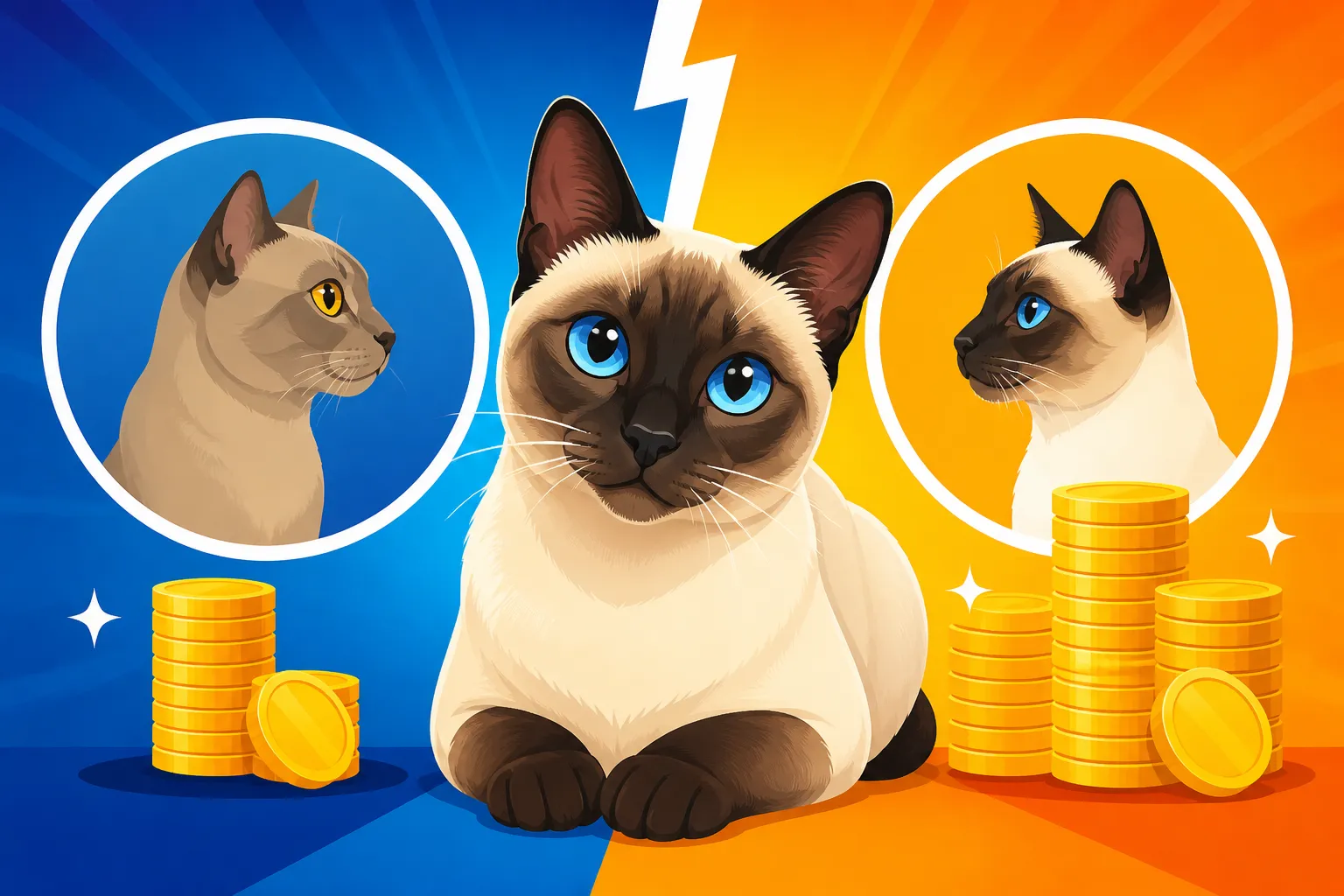
So, does a Thai cat cost more than a Siamese cat? The answer isn't a simple yes or no. It really depends on what kind of "Siamese" you're comparing it to, and where you're located.
A high-quality, fully registered Thai cat from a reputable breeder, especially one with imported lines or operating in a region where they are rare, can certainly cost as much as, or even more than, a modern Siamese. This is primarily due to their relative scarcity in many Western countries and the dedicated efforts involved in preserving their traditional type.
Conversely, a top-tier, show-quality modern Siamese from champion lines, bred to perfectly embody the extreme wedge standard, will also command a very high price due to the extensive investment in selective breeding, genetics, and show competition.
In general, you'll find both the dedicated Thai cat breeders and the modern Siamese breeders charging similar ranges for well-bred, healthy kittens from reputable programs. Prices for either breed from ethical breeders will typically fall within a range that reflects the considerable care, health screening, and expertise involved in raising them. If you come across a breeder offering either a "Siamese" or a "Thai" cat for a price that seems significantly lower than average, it's a huge red flag and warrants extreme caution and thorough investigation into their practices.
Ultimately, the best advice is to research thoroughly, speak to multiple breeders for both types, and prioritize health and temperament above all else. Whether you choose the striking modern Siamese or the charming traditional Thai cat, you're bringing a wonderful, intelligent, and vocal companion into your home, and that lifelong companionship is truly priceless.
Disclaimer
This article is for general informational purposes only and does not constitute professional advice. Laws, prices and regulations vary by location and change over time. Consult a qualified professional for guidance on your specific situation.