How to Stop a Siamese Cat Eating Fabric
It's incredibly frustrating, and often quite worrying, when you notice your beloved Siamese cat developing a penchant for munching on fabric. You might walk in to find them happily gnawing on your favorite sweater, a clean dishcloth, or even a cozy blanket, leaving behind holes and a knot in your stomach about their health. This guide is here to unravel the mystery of why Siamese cats eat fabric and give you actionable, empathetic strategies to help them — and your textiles — find peace.
Understanding Why Your Siamese Cat Eats Fabric (Pica)
Fabric eating, or pica, in cats isn't just a quirky habit; it's often a sign that something deeper is going on. For Siamese cats, this behavior can be particularly prevalent, and it stems from a mix of genetic predispositions, environmental factors, and sometimes, underlying health issues. It's not about them being "naughty," but about them communicating a need.
The Instinctual Roots of Wool Sucking
Many Siamese cat owners are familiar with the term "wool sucking," and for good reason. This isn't limited to just wool; it can extend to blankets, clothing, carpet, or any soft, often textured fabric. The prevailing theory is that this behavior is a remnant of kittenhood, specifically linked to early weaning. Imagine a tiny Siamese kitten, pulled away from its mother too soon, or perhaps one of a large litter where competition for nursing was fierce. That innate drive to suckle for comfort and nutrition might not be fully satisfied, leading to a compensatory behavior later in life.
Some experts believe there’s a genetic component, too. It seems certain lines of Siamese cats are simply more prone to this behavior, suggesting a hereditary link. It’s almost as if the wiring for seeking comfort through oral stimulation is stronger in these particular felines. This isn't a fault in the cat, nor is it a sign of poor parenting on your part; it's just how they're built. They might find the texture, smell, or even the slight warmth of certain fabrics deeply comforting, mimicking the feeling of nursing from their mother. It's a self-soothing mechanism, however inconvenient it might be for your wardrobe. It’s worth exploring Whether Early Weaning Causes Siamese Cat Wool Sucking for more insights into this specific trigger.
Medical Conditions That Can Trigger Fabric Eating
While often behavioral, fabric eating should always prompt a visit to your veterinarian to rule out any medical causes. It might surprise you, but sometimes pica is a symptom of an underlying health problem. Nutritional deficiencies are a common culprit. If your cat isn't getting all the vitamins and minerals they need from their regular diet, they might instinctively try to ingest non-food items to compensate. It's their body's way of saying, "I'm missing something!"
Gastrointestinal issues can also be at play. Cats with inflammatory bowel disease (IBD), dental problems, or even parasites might resort to eating fabric. The discomfort or nausea they experience could lead them to seek relief through chewing or ingesting non-food items, perhaps hoping to soothe an upset stomach or even to induce vomiting. Then there’s hyperthyroidism, a condition more common in older cats, which can increase appetite and lead to unusual eating behaviors, including pica. A cat with hyperthyroidism often feels ravenously hungry but might not be able to process food properly, leading them to seek out other things to ingest. Ignoring these possibilities can lead to more serious health complications down the line, so a thorough check-up is always the first, best step.
Stress and Anxiety as Major Drivers
Just like humans, cats experience stress and anxiety, and they often manifest these feelings in unexpected ways. For a Siamese cat, known for their intelligence and deep emotional connections, fabric eating can be a coping mechanism for an anxious mind. Imagine your Siamese, typically a highly social and interactive creature, suddenly finding themselves alone for long stretches of the day. They thrive on companionship and mental engagement, and without it, boredom can quickly morph into anxiety. This feeling of being under-stimulated or lonely can lead them to seek comfort in repetitive behaviors like chewing or sucking on fabrics.
Changes in their environment – a new person or pet in the house, a move to a new home, or even a shift in your daily routine – can be incredibly unsettling for a sensitive Siamese. They thrive on predictability, and disruptions can trigger significant stress. How Long a Siamese Cat Can Be Left Alone highlights their need for interaction, and when that need isn't met, destructive behaviors often emerge. Sometimes, the issue is separation anxiety, where the cat becomes distressed when their primary human is absent. They might pace, vocalize excessively, or, yes, turn to fabric eating as a way to self-soothe in your absence. If you suspect stress or anxiety, understanding the root cause is paramount to finding an effective solution. This isn't just a "bad habit"; it's a plea for reassurance and enrichment. What Psychogenic Alopecia Does to a Siamese Cat provides another example of stress-induced behaviors in this breed.
Immediate Steps to Manage the Behavior and Ensure Safety
Once you've had a vet check-up and ruled out urgent medical issues, it's time to tackle the immediate problem: keeping your Siamese safe and stopping the destructive chewing. This often means a multi-pronged approach, focusing on prevention and redirection.
Removing Access to Tempting Fabrics
This might sound obvious, but it's often the hardest part because cats are incredibly resourceful and determined. You need to become a detective, identifying all the "trigger" fabrics in your home and making them inaccessible. Think beyond just your clothes. Are there blankets on the couch? Throw pillows? Curtains? Area rugs with appealing textures? Laundry baskets overflowing with socks? Every single one is a potential target.
- Secure your laundry: Dirty laundry, especially items that carry your scent, can be incredibly appealing. Keep laundry baskets lidded and secure, or put them behind a closed door. Don't leave clothes draped over chairs or lying on the floor.
- Cover or remove tempting items: If your Siamese loves a particular blanket on the sofa, remove it or cover it with a less appealing material when you're not supervising. Some people find success with a thick, rough canvas cover, or even a dedicated pet blanket that is treated with a bitter spray (more on that later).
- Consider fabric types: Many Siamese cats prefer soft, fuzzy textures like wool, fleece, or even microfiber. However, some might go for cotton or silk. Pay attention to what your cat gravitates towards and prioritize removing or securing those items. This might mean investing in slipcovers for furniture that aren't easily chewed or put away.
It's a constant battle, but consistency is key. Every time your cat successfully chews a fabric, it reinforces the behavior. By eliminating the opportunity, you start to break the cycle. Remember, this isn't about punishing your cat; it's about setting them up for success by removing temptation. For a more detailed guide on creating a secure environment, consider How to Cat Proof a Home for a Siamese Cat.
Redirecting With Safe Chew Toys and Alternatives
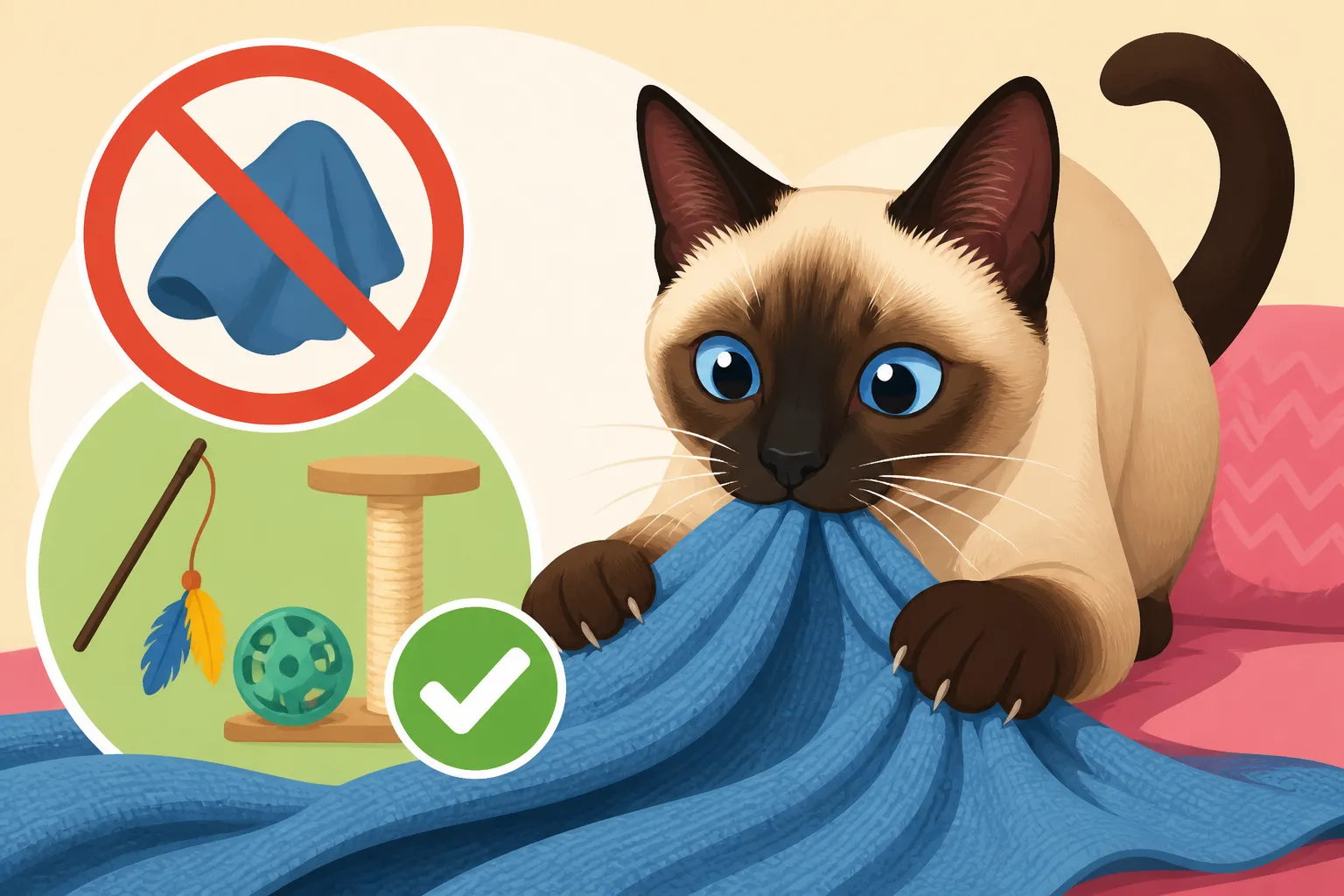
Once you've removed the forbidden fabrics, you need to offer acceptable alternatives. This is where redirection comes in. Your Siamese has an oral fixation, a need to chew and suck. You need to provide healthy outlets for that urge.
Look for toys specifically designed for cats to chew on. These are often made from durable, non-toxic rubber, silicone, or tough nylon. You can find a good selection of these on Amazon by searching for "cat chew toys" or "pica cat toys." Consider items that:
- Have interesting textures: Ridges, nubs, or varied surfaces can be more satisfying to chew than a smooth toy.
- Are safe for ingestion: While the goal is not for them to eat the toy, accidents happen. Ensure the material is non-toxic and won't splinter or break into sharp pieces.
- Can be stuffed with treats: Puzzle feeders or toys that dispense treats can make chewing more rewarding and engaging.
Rotate these toys frequently to keep your cat interested. Don't just give them one; have a few different options available and swap them out every few days. This novelty can help maintain their interest and prevent boredom from setting in. When you catch your cat going for a forbidden fabric, gently redirect them to one of their chew toys. Praise them enthusiastically when they interact with the appropriate toy. This positive reinforcement teaches them what is acceptable to chew on. You might also find some success with bitter-tasting sprays designed for pets. Applied to tempting fabrics (after patch-testing for colorfastness!), these can make the fabric unpleasant and deter chewing. Just be sure to find a spray that's safe for cats and effective without being harmful. For more ideas, Which Toys a Siamese Cat Actually Plays With offers a wealth of suggestions.
Creating a "No-Fabric" Safe Zone
Sometimes, removing every single tempting item from your entire home is just not feasible, especially if your Siamese has a wide range of fabric preferences. In these cases, creating a "no-fabric" safe zone can be a lifesaver. This is a designated area where your cat can roam freely without access to any fabrics that could be ingested.
This space might be a cat-proofed room (like a spare bedroom or a large bathroom) or a secure, spacious cat enclosure. The key is that this area is completely free of any clothing, blankets, towels, curtains, or upholstered furniture that your cat might target. Instead, equip this space with:
- Scratching posts and cat trees: Vertical climbing opportunities are crucial for Siamese cats, providing both exercise and a sense of security.
- Hard plastic or metal toys: These are less likely to be appealing for fabric-eating behaviors and provide alternative chewing opportunities.
- Food and water bowls: Placed away from the litter box.
- Litter box: Kept clean.
- Comfortable, non-chewable bedding: Think durable plastic pet beds with hard, wipeable surfaces, perhaps with a thin, sturdy mat that isn't easily ingested.
This safe zone isn't meant to be a punishment but a sanctuary. It's a place where you can confidently leave your cat when you can't supervise them directly, knowing they won't be ingesting potentially harmful materials. Over time, as their pica behavior lessens with other interventions, you might slowly reintroduce them to other parts of the house under supervision.
Long-Term Strategies for Prevention and Enrichment
Stopping fabric eating isn't just about managing the immediate behavior; it's about addressing the underlying needs that drive it. Long-term success often comes from enriching your Siamese cat's environment and ensuring their overall well-being.
Boosting Mental and Physical Stimulation
A bored Siamese cat is a mischievous Siamese cat, and often, a fabric-eating Siamese cat. These intelligent, high-energy felines need a lot of mental and physical stimulation to stay happy and healthy. If they're not adequately challenged, they'll find their own ways to entertain themselves, and that often involves things you'd rather they didn't do.
- Interactive Play Sessions: Dedicate at least two 10-15 minute play sessions daily using wand toys, laser pointers (but always end with a tangible toy they can "catch"), or feather teasers. These mimic hunting behavior and burn off excess energy. Make sure you're an active participant, not just letting them play alone.
- Puzzle Feeders: These are fantastic for mental enrichment. Instead of just putting food in a bowl, make them work for it. Puzzle feeders require your cat to use their brains and paws to extract treats or kibble, simulating foraging. You can find various types, from simple treat balls to more complex mazes, on Amazon. This can significantly reduce boredom and provide a healthy outlet for their natural instincts. Whether a Puzzle Feeder Occupies a Siamese Cat goes into more detail about how effective these can be.
- Vertical Space: Siamese cats love to climb and observe their surroundings from high vantage points. Invest in tall cat trees, wall-mounted shelves, or window perches. These provide exercise, a sense of security, and visual stimulation. A cat tree with different levels and scratching surfaces can be a central piece of enrichment.
- Outdoor Enclosures (Catios): If safe and feasible, a secure outdoor enclosure (catio) can provide a wealth of new sights, sounds, and smells, offering unparalleled enrichment and reducing indoor boredom.
By keeping their minds and bodies active, you can significantly decrease their need to seek self-soothing behaviors like fabric eating. A tired, happy Siamese is less likely to be a stressed, destructive one.
Addressing Dietary Needs and Fiber Intake
Sometimes, pica can be linked to dietary imbalances. While a vet check is crucial to identify specific deficiencies, you can also review your cat's general diet with your veterinarian. High-quality, species-appropriate food is essential for overall health. Ensure their current food provides a complete and balanced nutritional profile for their age and activity level.
In some cases, increasing dietary fiber might help. Fiber can promote a feeling of fullness, aid digestion, and might even provide a more acceptable texture for chewing. You can discuss with your vet whether adding a small amount of plain canned pumpkin (not pie filling!) or a fiber supplement is appropriate for your cat. Some commercial cat foods are also formulated with higher fiber content. However, never make significant dietary changes without professional guidance, as an imbalance can create new problems. The goal here is to ensure their body is receiving everything it needs, potentially reducing the instinct to seek non-food items. For more on this, check out Whether More Fiber Stops a Siamese Cat's Pica.
Utilizing Feline Pheromones and Calming Aids
If stress and anxiety are contributing factors to your Siamese's fabric eating, environmental calming aids can be incredibly helpful. These products are designed to mimic natural feline pheromones, which signal a sense of security and well-being to cats.
- Pheromone Diffusers: Brands like Feliway offer diffusers that release synthetic versions of feline facial pheromones into the air. These can help create a more serene atmosphere in your home, reducing anxiety and stress-related behaviors. Plug them in areas where your cat spends a lot of time.
- Calming Sprays: Pheromone sprays can be used on carriers for vet visits or on specific areas (away from where your cat eats or grooms) to help ease anxiety during stressful events.
- Calming Treats and Supplements: Some supplements contain ingredients like L-tryptophan or alpha-casozepine, which are known to have calming effects. Always consult your vet before introducing any new supplements, as they can interact with other medications or conditions.
These aids work best when used in conjunction with other behavioral and environmental modifications. They won't magically solve the problem on their own, but they can lower your cat's overall stress level, making them more receptive to other training and enrichment efforts. It’s like turning down the volume on their anxiety, making it easier for them to cope.
When to Seek Professional Veterinary Help
While many cases of fabric eating can be managed at home with consistent effort, there are times when professional intervention is not just recommended, but absolutely critical. Knowing when to escalate your concerns can be life-saving for your Siamese.
Recognizing Warning Signs of an Intestinal Blockage
The most serious risk associated with fabric eating is an intestinal blockage. Cats can't digest fabric, so ingesting large pieces, or even small pieces repeatedly, can lead to a foreign body obstruction in their digestive tract. This is a medical emergency.
Watch out for these critical signs:
- Persistent Vomiting: Especially if it's frequent, forceful, and your cat can't keep any food or water down.
- Loss of Appetite: Refusing to eat or drink for more than 12-24 hours.
- Lethargy and Weakness: Your normally energetic Siamese becomes unusually quiet, withdrawn, and lacks energy.
- Abdominal Pain: Your cat might cry out if their belly is touched, or they might try to hide and avoid interaction.
- Straining to Defecate or No Stool: An inability to pass stool, or producing very little, hard stool.
- Diarrhea: Sometimes, cats with a partial blockage might have diarrhea as liquid contents try to pass around the obstruction.
If you observe any of these symptoms, especially if you know your cat has been eating fabric, do not wait. Get them to an emergency veterinarian immediately. A blockage can quickly become life-threatening, causing severe pain, dehydration, and potentially leading to tissue death if not resolved promptly. It’s vital to be aware of Signs a Siamese Cat Has an Intestinal Blockage.
Diagnostic Tests and Medical Interventions
When you bring your cat to the vet with suspected pica or a blockage, they'll likely start with a thorough physical examination. If a blockage is suspected, they'll move on to diagnostic imaging.
- X-rays (Radiographs): These can often reveal the presence of a foreign body, though fabric can sometimes be difficult to see on a standard X-ray.
- Ultrasound: This imaging technique provides a more detailed view of the soft tissues and can be very effective at identifying fabric obstructions and assessing the health of the intestinal wall.
- Contrast Studies: Sometimes, your vet might give your cat a liquid contrast agent (like barium) to ingest, and then take a series of X-rays over several hours. The barium highlights the digestive tract, making blockages or narrowing more visible.
- Bloodwork: This helps assess your cat's overall health, hydration, and can indicate if there are other underlying medical conditions at play.
If a blockage is confirmed, treatment often involves surgery to remove the foreign body. This is a significant procedure, and recovery can be intensive. The cost and complexity will depend on the severity and location of the obstruction. Timely intervention is key to a positive outcome. Learning about What Blockage Surgery Involves for a Siamese Cat can help you prepare for such a scenario.
Behavioral Consultations and Medication Options
Beyond medical emergencies, ongoing fabric eating that doesn't respond to environmental and enrichment changes warrants a professional behavioral consultation. Your veterinarian might refer you to a board-certified veterinary behaviorist. These specialists have extensive training in animal behavior and can help diagnose complex behavioral issues and develop tailored treatment plans.
A behaviorist will conduct a detailed history, observing your cat's behavior and environment. They might suggest:
- Advanced Environmental Modification: More specific and tailored changes to your home.
- Behavioral Modification Techniques: Step-by-step training and desensitization strategies.
- Medication: In some cases, for severe anxiety, obsessive-compulsive tendencies, or chronic stress that drives pica, anti-anxiety or antidepressant medications might be prescribed. These are not a "cure" but can help manage the underlying emotional drivers, making other behavioral therapies more effective. They are always used under strict veterinary supervision and are typically a last resort after other methods have been exhausted.
The decision to use medication is always made in careful consultation with your vet or a veterinary behaviorist, weighing the benefits against potential side effects. The goal is always to improve your cat's quality of life and help them feel safer and more content in their environment. For more information on this, refer to Whether Medication Helps a Siamese Cat's Pica. Remember, addressing pica is a journey, and patience, persistence, and professional guidance are your best tools.
| Strategy Category | Specific Actions | Expected Benefit | Requires Vet Consultation? | Items to Consider (e.g., from Amazon) |
|---|---|---|---|---|
| Environmental Control | Remove access to tempting fabrics | Prevents immediate ingestion, breaks habit loop | No | Secure laundry hampers, lidded bins, furniture covers |
| Redirection | Offer safe, durable chew toys | Provides acceptable outlet for oral fixation, reduces boredom | No | Rubber cat chew toys, treat-dispensing toys |
| Enrichment | Increase interactive playtime | Reduces boredom, burns energy, strengthens bond | No | Wand toys, feather teasers, laser pointers |
| Use puzzle feeders for meals/treats | Mental stimulation, slows eating, mimics foraging | No | Various puzzle feeders, treat balls | |
| Provide vertical space (cat trees, shelves) | Exercise, security, observation points | No | Tall cat trees, wall-mounted shelves | |
| Dietary Adjustment | Ensure high-quality, balanced diet | Addresses potential nutritional deficiencies | Yes | High-quality cat food, fiber supplements (vet-approved) |
| Anxiety Reduction | Use feline pheromone diffusers/sprays | Creates calming environment, reduces stress | No (but can discuss) | Feliway diffusers, calming sprays |
| Consider calming treats/supplements | Helps manage anxiety and stress (vet-approved) | Yes | Calming treats with L-tryptophan (vet-approved) | |
| Professional Help | Immediate vet visit for emergency symptoms | Addresses potential blockages, life-threatening issues | Yes | N/A |
| Consult veterinary behaviorist | Diagnoses complex behavioral issues, creates tailored plan | Yes | N/A | |
| Discuss medication options | Manages severe anxiety/OCD symptoms to aid behavioral therapy | Yes | Prescription medications (vet-only) |
Disclaimer
This article is for general informational purposes only and does not constitute professional advice. Laws, prices and regulations vary by location and change over time. Consult a qualified professional for guidance on your specific situation.