Whether a Dog Replaces a Siamese Cat’s Companion
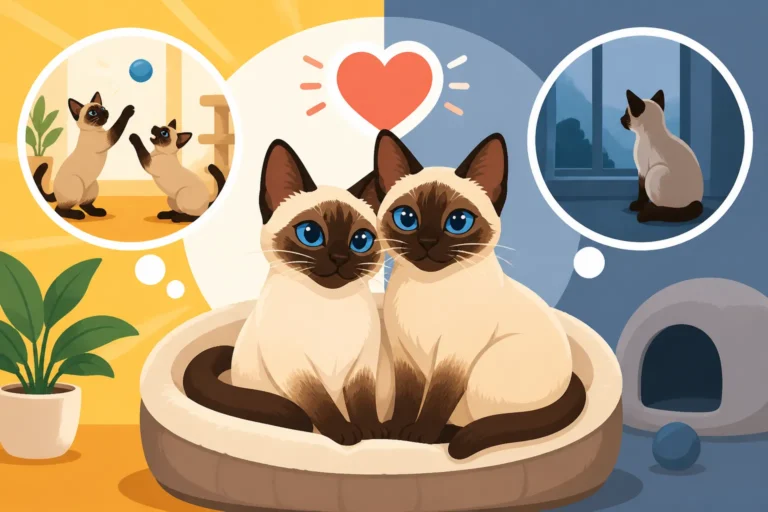
It's a really common dilemma for Siamese cat parents: you adore your vocal, intelligent, and incredibly social feline, but life sometimes demands you be away, leaving your beloved Meezer feeling lonely. The thought then surfaces – could a dog be the answer to their companion needs, a furry sibling to fill those quiet hours? This guide will dive deep into that question, helping you understand the unique social world of the Siamese and whether a canine companion can truly integrate into it, offering solace and engagement.
Understanding the Siamese Cat's Companion Needs
Siamese cats aren't your typical aloof felines who simply tolerate your presence. Oh no, they are the social butterflies of the cat world, demanding attention, conversation, and interaction almost constantly. If you've lived with a Siamese, you know the drill: they follow you from room to room, "talk" to you about their day, and insist on being part of whatever you're doing. This intense need for connection isn't just a quirky personality trait; it's deeply ingrained in their breed.
The Siamese Drive for Connection
From the moment you bring a Siamese kitten home, you'll likely notice their profound attachment. They bond fiercely with their humans, often choosing one or two favorite people to lavish with affection and endless chatter. This isn't just about cuddles; it's about mental stimulation and feeling truly part of the family unit. When a Siamese feels neglected or left alone for too long, they don't just get bored; they can genuinely become stressed and unhappy. They thrive on interaction, whether it's a deep conversation, a game of fetch, or simply sharing your lap while you read. This is why many experienced Siamese owners advocate for ensuring your cat has a companion, be it human or animal, for much of the day. Without it, you might start seeing some less-than-ideal behaviors stemming from loneliness or anxiety.
The Risk of Separation Anxiety and Boredom
When a Siamese cat, with its highly social nature, is left alone for extended periods without adequate mental or physical stimulation, they are particularly prone to developing separation anxiety. This isn't just a human phenomenon; cats can experience it keenly, and Siamese cats are high on the list. Symptoms can range from excessive vocalization, beyond their usual chatty self, to destructive behaviors like scratching furniture or inappropriate urination outside the litter box. Some might even over-groom themselves to the point of bald patches, a condition known as Psychogenic Alopecia in a Siamese Cat. These aren't acts of spite; they are desperate cries for attention and signs of deep distress. An unfulfilled Siamese is a miserable Siamese, and a miserable Siamese can quickly become a destructive Siamese. Providing a suitable companion is often cited as a key strategy to mitigate these risks and ensure their overall well-being. A bored Siamese can be surprisingly creative in finding ways to entertain themselves, often not in ways you appreciate! They need constant engagement, and if you can't provide it, another animal might.
The Unique Dynamics of a Cat-Dog Relationship
Now, let's get to the crux of the matter: can a dog truly be that companion a Siamese craves? The answer is nuanced, depending heavily on the individual personalities of both animals and the environment you create for them. It's not a simple "yes" or "no," but a careful consideration of interspecies dynamics.
Differences in Social Language
Cats and dogs speak different languages, both literally and figuratively. Dogs are pack animals, often displaying their affection and social cues through physical play, vocalizations (barks, growls), and direct interaction. They love a good wrestle, a boisterous chase, or leaning into you for a cuddle. Cats, especially Siamese, can be playful, but their social cues are often more subtle. A slow blink, a gentle head-butt, a quiet purr – these are their expressions of affection. While a Siamese cat loves to "talk," a dog's barking might be overwhelming, and a dog's boisterous play might be perceived as threatening.
Consider a scenario: your Siamese, Mittens, is trying to engage in a quiet game of laser pointer chase. Your new Golden Retriever, Buddy, sees this as an invitation to pounce, bark, and nudge, trying to initiate a rough-and-tumble session. Mittens, being a sensitive soul, might quickly retreat, feeling misunderstood and even stressed. It’s not that Buddy means harm; he just doesn't understand Mittens' nuanced invitations to play. This fundamental difference in communication styles means that while they can coexist, and even form deep bonds, it often requires more active management and understanding from you, their human, to bridge that gap. The dog isn't usually the ideal "listener" for a Siamese's extensive conversations, for example, but they might be a warm body for napping.
The Role of Personality and Breed
When considering a dog as a Siamese cat's companion, personality trumps breed almost every time, but breed can give you a starting point. Some dog breeds are known for being more cat-friendly, often those with lower prey drives or more placid temperaments, like Basset Hounds, Greyhounds (often surprisingly gentle indoors), or even some Cavalier King Charles Spaniels. However, I've seen a tenacious Jack Russell Terrier happily coexist with a Siamese, and a supposedly mellow Golden Retriever accidentally terrorize a shy cat. It truly comes down to the individual.
A successful cat-dog companionship hinges on:
- The dog's temperament: Is the dog naturally calm, gentle, and respectful of personal space? Does it have a low prey drive? Is it easily trainable to understand boundaries?
- The Siamese cat's personality: Is your Siamese bold and confident, or timid and easily spooked? A confident Siamese is more likely to stand its ground and establish boundaries, while a shy one might hide indefinitely. How a Siamese Cat Gets On With a Dog covers more about what to expect.
If your Siamese is particularly demanding for human attention, a dog, no matter how well-behaved, cannot entirely replace your interaction. A dog might provide physical presence and some playful interaction, but it won't engage in the complex, two-way vocal "conversations" that a Siamese thrives on. A Siamese Cat Will Not Be Ignored, and a dog simply can't fill that specific conversational void.
Here’s a quick comparison of what different companions typically offer a Siamese:
| Feature | Another Siamese Cat | Another Cat (different breed) | Dog (cat-friendly) |
|---|---|---|---|
| Shared Play Style | High (chasing, wrestling, mutual grooming) | Moderate to High (varies by breed/personality) | Low to Moderate (often different styles, dog needs training) |
| Communication Style | High (similar vocalizations, body language) | Moderate to High (some differences, but still feline) | Low (barking vs. meowing, different body language) |
| Emotional Bond Potential | High (deep, intuitive understanding) | Moderate to High (can be very strong) | Moderate (can be strong, but different expression) |
| Loneliness Alleviation | High (constant presence, mutual comfort) | High (constant presence, mutual comfort) | Moderate (physical presence, but less intuitive interaction) |
| Physical Comfort (Cuddles) | High (mutual grooming, napping together) | High (mutual grooming, napping together) | Moderate (can be very cuddly, but size/energy differences) |
| Mental Stimulation | High (engaging in complex play, "talking") | Moderate to High | Moderate (requires human mediation to bridge gaps) |
| Independence/Boundaries | Good (understand feline boundaries naturally) | Good | Requires significant training/supervision for dog |
Integrating a Dog as a Siamese Cat's Companion
So, you've weighed the pros and cons and decided to give it a try. Introducing a dog to a Siamese cat needs to be a slow, deliberate, and carefully managed process. Rushing it can lead to stress, fear, and a relationship that never quite blossoms. Think of it less as an instant solution and more as cultivating a delicate garden.
The Importance of a Slow Introduction
The key to success is gradual exposure. You absolutely cannot just toss them in a room together and hope for the best. A stressed Siamese or a fearful dog can lead to lasting negative associations.
- Scent Swapping: Before they even see each other, let them get used to each other's scent. Swap blankets, beds, or even rub a cloth on one and present it to the other. This creates familiarity in a non-threatening way.
- Visual but No Contact: Start with them seeing each other through a barrier, like a baby gate or a glass door. Feed them on opposite sides of the barrier so they associate the other's presence with positive experiences (food!). This is also a good time to ensure your Siamese has high perches or escape routes, easily found on Amazon, should they feel overwhelmed.
- Supervised Meetings: Once they seem comfortable with scent and sight, allow short, supervised meetings in a neutral territory. Keep the dog on a leash and reward both animals for calm behavior. Keep these initial meetings brief and positive.
- Gradual Increase in Time: Slowly increase the duration of their time together, always supervised, until you feel confident in their interactions. Never leave them alone until you are absolutely certain they are safe and comfortable with each other. This process can take weeks, or even months, so patience is paramount. Remember that How to Introduce a Siamese Cat to a Resident Cat offers valuable principles that can be adapted for dog introductions, emphasizing scent, sight, and gradual exposure.
Creating Safe Spaces and Resources
Every cat, especially a social one like a Siamese, needs its own sanctuary. This is doubly true when introducing a new animal, particularly a dog.
- Vertical Space: Siamese cats love to climb and observe from above. Ensure your Siamese has plenty of cat trees, shelves, or high perches where they can escape the dog's reach and feel safe. These can be easily found and ordered from Amazon, ranging from simple scratching posts to elaborate multi-level cat condos. This gives them an advantage point and a sense of security.
- Escape Routes: Make sure your Siamese has multiple ways to exit a room or get away from the dog if they feel overwhelmed. Cat doors, strategically placed furniture, or even child gates that the cat can jump over but the dog cannot are essential.
- Separate Resources: Each animal needs its own food bowls, water bowls, and litter boxes (for the cat). Never make them share. Place the cat's food and water where the dog cannot access it, such as on a counter or in a room with a cat flap. This prevents competition and stress around vital resources. A good rule of thumb for litter boxes is one per cat, plus one extra, and place them in quiet, accessible locations away from the dog's main traffic areas.
Managing Expectations and Potential Challenges
Bringing a dog into a Siamese cat's life with the hope of it becoming a true companion is a wonderful aspiration, but it's important to have realistic expectations. The bond might be different than a cat-cat bond, and there will likely be challenges to navigate.
The Realities of Interspecies Friendship
While some cats and dogs do become the best of friends, sharing beds, grooming each other, and playing together, this isn't always the outcome. More often, they achieve a state of peaceful coexistence, a respectful truce. Your Siamese might tolerate the dog's presence, perhaps even enjoy a calm nap beside it, but may not engage in the deep, interactive play they might with another cat or a human. The dog might become a "warm body" for comfort or a playful distraction, but it might not fulfill all the complex social needs of your Siamese.
It's crucial to observe their interactions closely. Is your Siamese relaxed around the dog, or are they constantly on edge? Are they initiating contact, or always retreating? If your Siamese shows signs of chronic stress, such as excessive hiding, loss of appetite, or behavioral changes mentioned earlier, the dog might not be the right companion, or the introduction might need further adjustment. Remember, the goal is for your Siamese to feel happy and secure, not just for you to have two pets coexisting.
When a Dog Isn't Enough (or Isn't the Right Fit)
Even with the best intentions and the most careful introduction, a dog might not completely replace the specific companionship a Siamese cat needs. Their social needs are so profound that a cat-to-cat bond is often considered the ideal solution, especially with another equally playful and communicative cat. Whether a Siamese Cat Needs a Companion Cat often points to the unique benefits of another feline.
- Different Play Styles: Dogs often play rougher, with more vocalizations and physical contact than many cats prefer. While some bold Siamese might enjoy this, others will find it overwhelming.
- Vocal Disconnect: A dog can't "talk" back to a Siamese in the same nuanced, conversational way another cat or human can. This can leave a very vocal Siamese feeling unheard.
- Individual Needs: Your Siamese might crave grooming, quiet cuddles, or intricate games that a dog simply isn't equipped to provide, or perhaps even understand.
If after a significant period of careful introduction and management, your Siamese is still showing signs of stress, loneliness, or disinterest in the dog, it's okay to admit that it might not be the right fit. In such cases, you might need to consider other solutions, such as dedicating more personal interaction time, using enrichment toys you can purchase on Amazon, or even exploring the possibility of a feline companion. While a dog can certainly add joy to a household, it's important that your Siamese cat's well-being remains the top priority.
Disclaimer
This article is for general informational purposes only and does not constitute professional advice. Laws, prices and regulations vary by location and change over time. Consult a qualified professional for guidance on your specific situation.