How Well a Siamese Cat Fetches
It’s a common misconception that only dogs play fetch. Many cat owners, especially those who’ve adopted a famously vocal and opinionated Siamese, might toss a toy once, watch it get batted away, and then give up, assuming their feline friend isn't interested in that kind of interactive game. But for a Siamese cat, known for their sharp minds and insatiable need for interaction, fetching can be a truly engaging and rewarding activity that strengthens your bond and provides crucial mental and physical stimulation, if you know how to tap into their unique instincts.
Understanding the Siamese Cat's Play Drive
Siamese cats aren't just pretty faces and loud voices; they are highly intelligent, incredibly active, and deeply social creatures. Their play drive is often far more pronounced and sustained than many other cat breeds, making them excellent candidates for games like fetch. It's not just about burning off energy; it's about satisfying their complex needs.
Their High Energy Levels
If you've ever lived with a Siamese, you know they're not content to simply nap the day away. They are bundles of lean muscle and boundless energy, constantly exploring, climbing, and investigating every nook and cranny of your home. This inherent athleticism means they need outlets for physical activity, and passive toys often just don't cut it. A quick batting at a dangling string might offer a moment's amusement, but it rarely truly tires out a determined Siamese.
This high energy isn't just a kitten phase, either; many adult Siamese retain their youthful vigor well into their senior years. Without adequate physical exercise, this energy can manifest in less desirable behaviors, like destructive scratching, excessive nighttime vocalizations, or even pica if they're particularly bored or anxious. Providing structured play, like a good game of fetch, helps channel this energy positively and keeps them healthy and happy. You'll find that a well-exercised Siamese is a much calmer and more contented companion.
Their Innate Intelligence and Curiosity
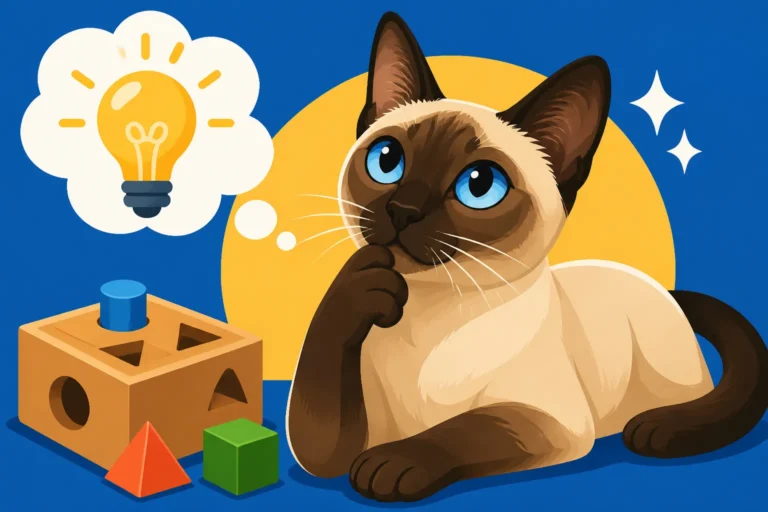
Siamese cats are renowned for their intelligence. They are problem-solvers, often figuring out how to open cupboards, turn on faucets, or even escape from seemingly secure carriers. This sharp mind requires constant stimulation, and routine, repetitive play quickly loses its appeal. They thrive on novelty and challenge. A game like fetch, which involves interaction, prediction, and a clear goal, engages their cognitive abilities in a way that many solo toys cannot.
Their curiosity is equally powerful. They want to understand how things work, why you're doing what you're doing, and what's in it for them. When you introduce a game like fetch, their natural curiosity about the thrown object, combined with their desire to interact with you, often leads them to investigate and participate. They're not just retrieving; they're engaging their brains in a playful puzzle, which is deeply satisfying for them. This intellectual engagement is key to their overall well-being.
Their Need for Interaction
Unlike some more aloof cat breeds, Siamese cats are deeply bonded to their human companions. They thrive on interaction and often demand to be part of whatever you're doing. They're not just pets; they are active family members who want to communicate, play, and cuddle on their own terms. This strong social drive is a huge advantage when it comes to teaching them tricks or engaging them in interactive games.
A game of fetch isn't just about the toy; it's about the shared experience. It's a dialogue, a back-and-forth between you and your cat that reinforces your bond. For a breed that can develop separation anxiety (What Separation Anxiety Looks Like in a Siamese Cat) if left alone too much, interactive play provides critical one-on-one time that reassures them of your affection and attention. This social connection is often the driving force behind their willingness to learn and participate, making fetch more than just a game—it's a relationship-builder.
Why Fetch Appeals to a Siamese Cat
Fetch isn't just a human invention; it taps into several core feline instincts and behavioral traits that are particularly strong in the Siamese breed. Understanding these motivations can help you tailor your approach and increase your chances of success.
The Hunting Instinct Connection
At its heart, fetch is a stylized hunt. You, the "hunter," toss a "prey" item, and your Siamese's natural instincts kick in. They stalk, chase, pounce, and "capture" the object. The act of bringing it back to you, while not a typical part of a wild cat's hunting routine, can be seen as a desire to continue the "hunt" or to bring their prize back to the "den" (you). This mimicry of the hunt-and-kill cycle is incredibly satisfying for cats, especially highly predatory ones like the Siamese.
The key is to make the toy behave like prey. It shouldn't just sit there. The way you throw it – a quick flick, a bounce, a roll – should emulate the darting movement of a mouse or bird. This triggers their inner predator, making the game far more engaging than simply picking up a stationary object. Because of their natural lean build and high metabolism, Siamese cats are always ready to stalk and chase, needing How Much Play a Siamese Cat Needs to keep them mentally and physically sharp.
The Bond-Building Aspect
For a Siamese, every interaction is an opportunity to connect. They crave attention and thrive on feeling like an integral part of your life. When you engage them in a game of fetch, you're not just providing entertainment; you're actively participating in their world. This shared activity strengthens the unique bond you have.
Think of it this way: when your Siamese brings the toy back to you, they're not just dropping it; they're presenting it, inviting you to continue the game. This exchange is a form of communication, a delightful back-and-forth that reinforces trust and affection. This interactive play fulfills their deep need for connection, solidifying their role as your playful, talkative companion. It’s part of What a Siamese Cat's Temperament Is Really Like, their desire to be involved and engaged with their human.
The Mental Stimulation Factor
Siamese cats are smart. Really smart. How Clever a Siamese Cat Is is often surprising to people unfamiliar with the breed. They need more than just physical exercise; their intelligent minds require constant challenges to prevent boredom. A bored Siamese is often a mischievous, and sometimes destructive, Siamese. Fetch provides excellent mental stimulation by requiring them to track the toy, anticipate its landing, and then problem-solve how to bring it back.
This mental workout is just as important as the physical one. It keeps their minds sharp, prevents cognitive decline in older cats, and helps ward off behavioral issues that often stem from under-stimulation. When they successfully retrieve a toy and bring it back, there's a visible sense of accomplishment in their eyes, a little spark that tells you they've enjoyed the challenge. This satisfaction makes them want to play again and again.
Getting Started: Training Your Siamese to Fetch
Training a Siamese to fetch isn't some mystical art; it's a step-by-step process rooted in positive reinforcement and understanding your cat's natural tendencies. Patience and consistency are your best tools.
Choosing the Right "Prey"
The type of toy you use can make all the difference. Siamese cats are often particular, so finding their "perfect prey" is crucial. Look for lightweight items they can easily pick up in their mouths and carry. Crinkle balls, small stuffed mice, bottle caps, or even tightly wadded paper are often popular choices. The key is to find something that mimics the size and feel of small prey.
Consider a variety of textures and sounds. Some Siamese prefer toys that crinkle loudly, others love the soft feel of faux fur, and some are fascinated by shiny, smooth objects. Avoid anything too heavy, too large, or too awkward for them to comfortably hold and carry. Toys that bounce unpredictably or have a feather component can also be highly enticing. You can find a fantastic array of suitable toys, from crinkle balls to lightweight mice, often available on platforms like Amazon, ensuring you have the perfect "prey" for your feline hunter. For more ideas, explore articles like Which Toys a Siamese Cat Actually Plays With.
The Step-by-Step Training Process
Start in a quiet, distraction-free environment. Begin by simply throwing the chosen toy a short distance, just a few feet away.
- Engage and Entice: Wiggle the toy, make it "scamper" on the floor to grab your cat's attention and spark their predatory drive.
- The Toss: Once engaged, toss the toy a short distance.
- The Chase: Most Siamese cats will immediately chase after it. This is their natural instinct.
- The Retrieve (The Tricky Part): This is where human intervention comes in. When your cat gets to the toy, they might bat it around, mouth it, or even just look at it. The goal is to encourage them to bring it back.
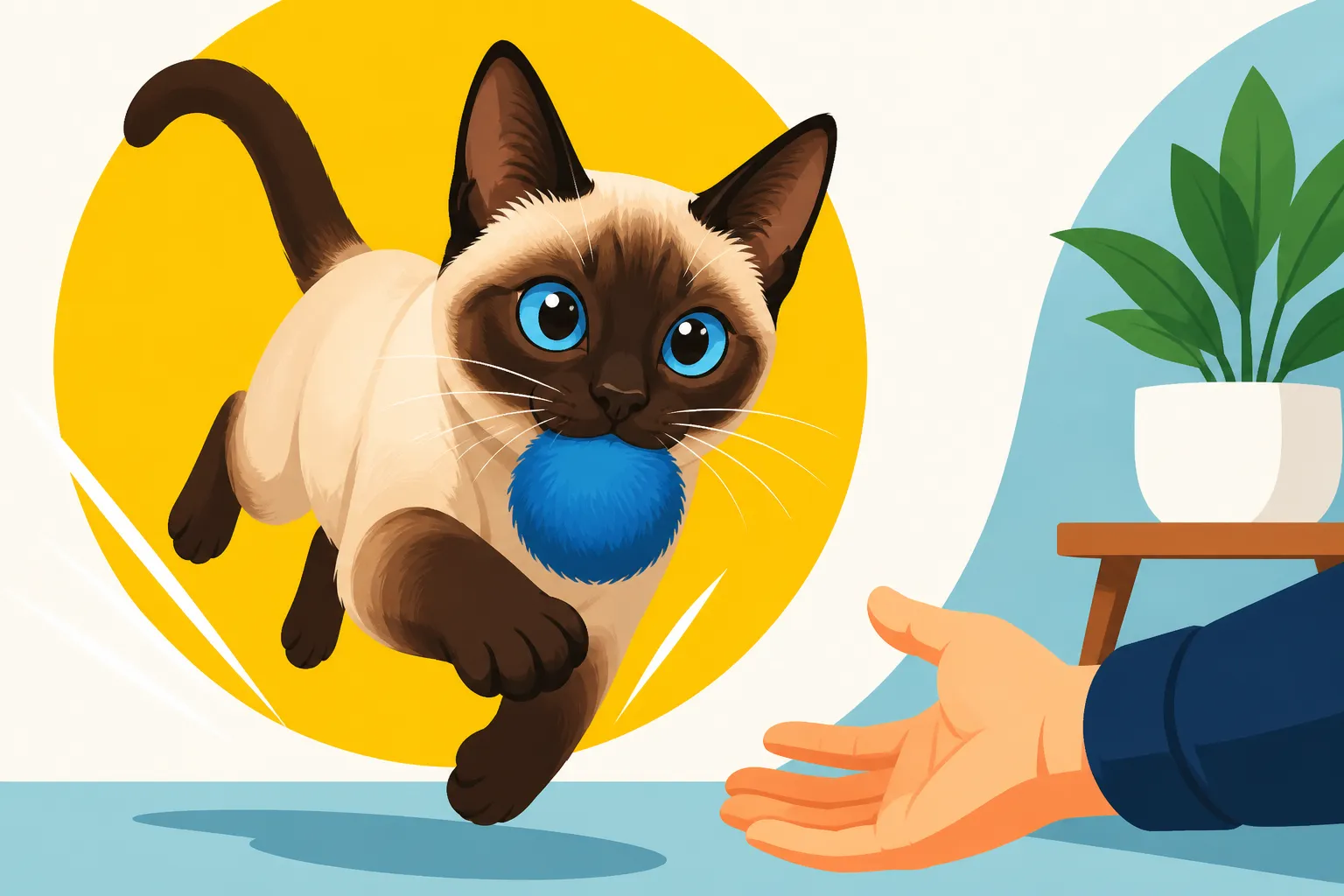
- Lure Them Back: Gently call their name, squat down, and hold out your hand, perhaps with another similar toy or a treat.
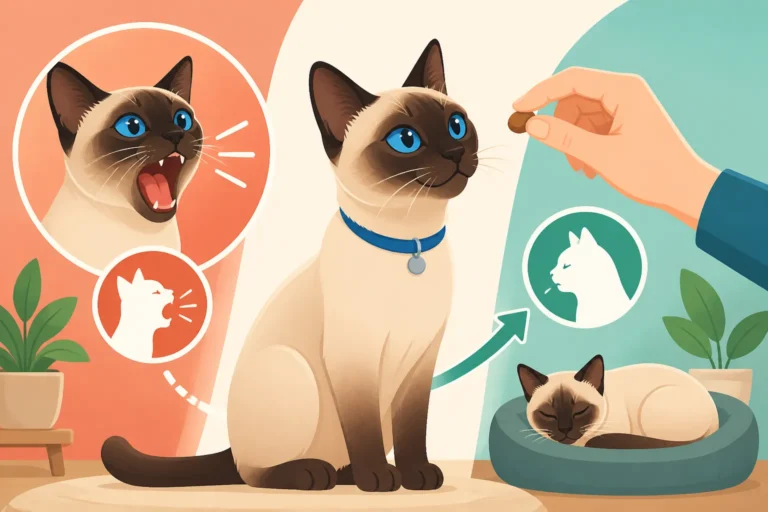
- Positive Reinforcement: The moment they pick up the toy, or even move towards you with it, offer verbal praise ("Good kitty!") and a tiny, high-value treat. If they drop it near you, even if not directly in your hand, reward them.
- Gradual Hand-Off: Slowly work towards having them drop the toy directly into your hand. You can do this by moving your hand closer to where they tend to drop it and rewarding them for closer approximations.
- Repeat and Lengthen: Once they consistently bring the toy back a short distance, gradually increase the throwing distance. Keep sessions short, positive, and end on a high note before your cat loses interest.
Positive Reinforcement is Key
Patience is paramount, but consistent positive reinforcement is the engine that drives success in training a Siamese. Never scold or punish your cat if they don't immediately get it right. This will only make them fearful or resentful of the game and of you. Instead, focus entirely on rewarding desired behaviors.
High-value treats are your secret weapon. These could be small pieces of cooked chicken, salmon, or specialized cat treats they absolutely adore. The reward should be immediate, delivered within seconds of the desired action (picking up the toy, bringing it closer, dropping it). Combine treats with enthusiastic verbal praise and gentle pets if your cat enjoys them. Some owners find How to Clicker Train a Siamese Cat incredibly effective, as the clicker provides a precise marker for the exact moment they perform the correct action, followed by a treat. Remember, you're building a fun game, not enforcing strict rules.
Common Challenges and Troubleshooting
Even with the best intentions and a highly motivated Siamese, you might encounter a few bumps along the road. Don't get discouraged; these are common, and there are ways to work through them.
The "Bring, But Don't Release" Dilemma
This is a classic fetch problem with cats: they'll enthusiastically chase the toy, grab it, bring it right back to you, and then… just stand there, proudly holding it in their mouth, refusing to drop it for another toss. It can be endearing, but it definitely stalls the game! This behavior usually stems from two things: they're not quite understanding the "release" part of the game, or they're enjoying the "keep-away" aspect.
To overcome this, try these tactics:
- Trade-Off Method: Have a second, identical toy ready. As your cat approaches with the first toy, wiggle the second one enticingly. Often, they'll drop the first toy to pounce on the new one. As soon as the first toy is dropped, reward them generously and quickly pick it up to throw it again. This teaches them that dropping the toy leads to more fun.
- Target Training: Use a specific cue. Once they're near you with the toy, hold out your open hand or a small mat and say "drop" or "give." The moment the toy leaves their mouth (even if it rolls off), reward them. Repeat this until they associate the cue with the action.
- Don't Grab: Resist the urge to snatch the toy from their mouth. This can feel like punishment or a challenge, making them even more likely to hold onto it. Let them drop it, or encourage the trade.
Loss of Interest or Distraction
Sometimes your Siamese might start strong, then suddenly wander off mid-game to stare at a dust bunny, groom themselves, or simply decide they're done. This is perfectly normal cat behavior. Cats have shorter attention spans for structured play than dogs, and their environment is full of fascinating stimuli.
Here’s how to manage it:
- Keep Sessions Short: Instead of trying for a 20-minute fetch marathon, aim for several short 5-10 minute sessions throughout the day. This keeps the game fresh and prevents boredom. End on a high note before they lose interest completely.
- Minimize Distractions: Try playing in a quieter room where there aren't other pets, loud noises, or interesting things to stare at outside a window. Put away other toys that might divert their attention.
- Vary the Toys: If they're losing interest in one toy, switch it up. Present a different item, or introduce a new type of toy. As mentioned before, Which Toys a Siamese Cat Actually Plays With are key for engaging their interest. A new crinkle ball or a feather toy from Amazon might reignite their enthusiasm.
- Respect Their Choice: If your Siamese truly isn't in the mood, don't force it. Some days they just want to cuddle or nap. Trying to coerce them will only make them associate fetch with negativity. Just try again later, or another day.
When Your Siamese Just Isn't Interested
Despite your best efforts, some Siamese cats just won't "get" fetch, or they simply won't enjoy it. While the breed as a whole is highly playful and intelligent, individual personalities vary wildly. It's important to remember that not every cat will love every game, and that's okay.
- Re-evaluate Motivation: Are your treats truly high-value? Is the toy genuinely exciting to them? Sometimes a different type of reward or a new "prey" item can spark interest.
- Simplify the Game: Break it down into even smaller steps. Instead of expecting a full retrieve, celebrate just the chase. Then, celebrate picking up the toy. Gradually build from there.
- Try Different Play Styles: If fetch isn't their thing, don't despair. Siamese cats need interaction, so explore other games. Laser pointers (used carefully, ending with a physical toy catch), wand toys, puzzle feeders, or even fetching with a different object can be just as engaging. A bored Siamese will resort to destructive behavior, so finding some outlet for their energy is crucial to prevent What a Bored Siamese Cat Destroys.
- Don't Take It Personally: Your cat isn't rejecting you; they're just expressing their preferences. Continue to provide plenty of love, attention, and other forms of enrichment. The goal is a happy, stimulated cat, not necessarily one who plays fetch.
Making Fetch a Lifelong Game
Once your Siamese has mastered the art of fetch, you’ll want to keep the game exciting and a regular part of their routine. This isn't just about fun; it’s about maintaining their physical and mental health.
Keeping it Fresh and Engaging
Repetition can lead to boredom for a clever Siamese. To keep fetch a thrilling activity, you need to introduce variety. Think of yourself as a cat-game show host, always coming up with new twists.
- Rotate Toys: Don't use the same fetch toy every single time. Have a small selection of approved fetch toys and rotate them every few days. This makes each toy feel new and exciting when it reappears. Some cats even have a "favorite" they only play fetch with.
- Vary the Location: Instead of always playing fetch in the living room, try it in a different room, or even in a secure Whether a Siamese Cat Enjoys a Catio if you have one. New environments add an element of exploration to the game.
- Introduce Obstacles: Once your cat is a fetching pro, you can make it a bit more challenging. Toss the toy behind a chair, under a rug they have to "fish" out, or up onto a low cat tree. This adds a puzzle element that their intelligent minds will appreciate. Just make sure the obstacles are safe and won't frustrate them too much.
- Different "Throws": Instead of a simple straight toss, try bouncing the toy off a wall, rolling it, or using a wand toy to "flick" it. This mimics different prey movements and keeps them guessing.
Integrating Fetch into Daily Routine
Consistency is key to keeping fetch a regular part of your Siamese's life. It shouldn't just be an occasional activity; it should be integrated into their daily rhythm, especially as part of their predatory "hunt" cycle.
- Pre-Meal Play: A great time to play fetch is just before a meal. In the wild, cats hunt and then eat. Mimicking this pattern by playing fetch (the "hunt") followed by their dinner (the "meal") can be very satisfying for them. It also helps burn off some energy before they settle down to eat.
- Scheduled Sessions: Try to have at least one or two dedicated fetch sessions a day, even if they're short. Your Siamese will quickly learn the routine and might even "ask" for it by bringing you the toy or Why a Siamese Cat Meows So Much when it's game time. For busy owners, these scheduled times provide predictable interaction, helping to avoid What a Siamese Cat Does While You Are Out when boredom sets in.
- Respond to Invitations: If your Siamese brings you a toy, even outside of your scheduled times, try to engage for a few tosses. This reinforces their initiation and encourages them to continue bringing you items. It shows them you're always game for a quick play session.
- Consider a Companion: While fetch is a human-cat game, sometimes a second cat can encourage more play in general. Whether a Siamese Cat Is Happier in a Pair is a common question, and for some, having a playmate can enhance their overall activity levels, even if the second cat doesn't fetch.
Knowing When to Stop
Just as important as knowing when to start a game is knowing when to end it. Overplaying can lead to boredom, frustration, or overstimulation, making your Siamese less likely to want to play again.
- End on a High Note: Always try to end the fetch session when your cat is still engaged and having fun, but perhaps showing the first signs of winding down. If you wait until they're completely bored or walked away, they'll associate the end of the game with negativity. A few successful retrieves followed by a final treat and praise is perfect.
- Watch Their Cues: Your Siamese will tell you when they're done. This might be by lying down, starting to groom, batting the toy half-heartedly, or simply walking away. Respect these signals.
- Don't Exhaust Them: While Siamese cats are energetic, don't push them to the point of exhaustion. A tired cat is less likely to enjoy the game the next time. The goal is satisfying play, not a rigorous workout.
- Provide a Cool-Down: After an intense fetch session, some cats appreciate a quiet moment, perhaps a cuddle, or a small drink of water. This helps them transition from "hunt mode" to relaxation. It's a way to reinforce the positive experience and make them look forward to the next game.
| Toy Type | Pros for Fetching Siamese Cat | Cons for Fetching Siamese Cat | Ideal Usage |
|---|---|---|---|
| Crinkle Balls | Lightweight, easy to pick up, makes appealing noise. | Can be destroyed quickly, may not last long. | High-energy play, initial training. |
| Small Stuffed Mice | Realistic "prey" feel, soft, easy to carry. | Can get lost easily, some cats rip stuffing out. | Gentle play, comforting aspect. |
| Bottle Caps | Free, lightweight, slides well on hard floors. | Noisy, can be chewed up, potential choking hazard if small. | Quick, spontaneous play, short sessions. |
| Wadded Paper/Foil | Easy to make, crinkles, unpredictable bounce. | Tears apart easily, leaves mess. | Disposable fun, good for testing preferences. |
| Spring Toys | Bouncy, unpredictable, encourages batting and chasing. | Can be hard to pick up and carry, rolls under furniture. | Encourage chasing, not ideal for full retrieve. |
Disclaimer
This article is for general informational purposes only and does not constitute professional advice. Laws, prices and regulations vary by location and change over time. Consult a qualified professional for guidance on your specific situation.