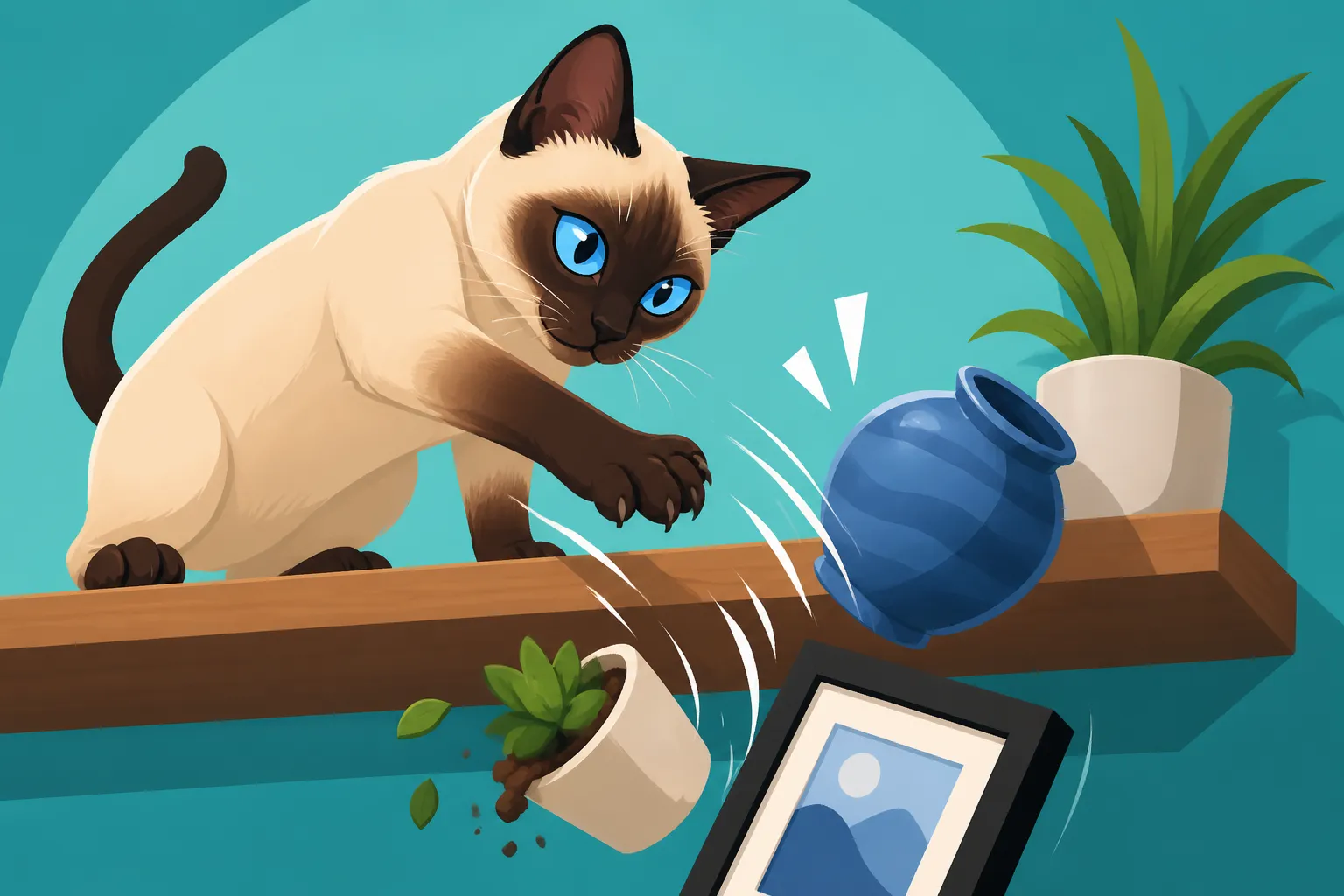
What a Bored Siamese Cat Knocks Off the Shelf
You walk into the living room, only to find your favorite ceramic mug shattered on the floor, or your pen collection scattered across the rug. For many Siamese cat owners, this isn't an isolated incident; it's a daily occurrence. The truth is, a bored Siamese cat often resorts to knocking things off shelves, tables, and counters, not out of malice, but as a direct consequence of their immense intelligence and boundless energy. This guide will dive deep into why your beloved meezer engages in this gravity-defying mischief and, more importantly, how you can channel their innate curiosity into more acceptable, and less destructive, forms of play.
The Method Behind the Madness: Why Siamese Cats Knock Things Over
It's easy to get frustrated when your treasured knick-knacks are sent flying, but understanding the root cause of this behavior in Siamese cats can help you address it with patience and effective strategies. These aren't just random acts; they're often deliberate, even calculated, efforts stemming from their unique personality.
"Gravity Experiments" and Attention-Seeking
Let's be honest, watching things fall is inherently interesting, especially for a creature with a keen intellect and a natural curiosity about how the world works. For a Siamese cat, batting a small object off a shelf and watching it clatter to the floor is a fascinating "gravity experiment." They learn cause and effect very quickly. If they bat a pen and it makes a noise, that's a sensory reward. If they bat a pen and you come running, making sounds and picking it up, well, that's an even bigger reward: attention.
Think about it from their perspective: you're busy on your computer, ignoring them. They glance at your desk, spot your reading glasses, and with a swift paw, send them tumbling. Suddenly, you're engaged, maybe even yelling a little. To your Siamese, that's interaction. Any attention, positive or negative, is still attention. They quickly associate the act of knocking something over with getting a reaction from you. This can become a self-reinforcing cycle, especially if they're feeling neglected or understimulated. They've figured out your weakness: your stuff!
Hunting Instincts and Play Drive
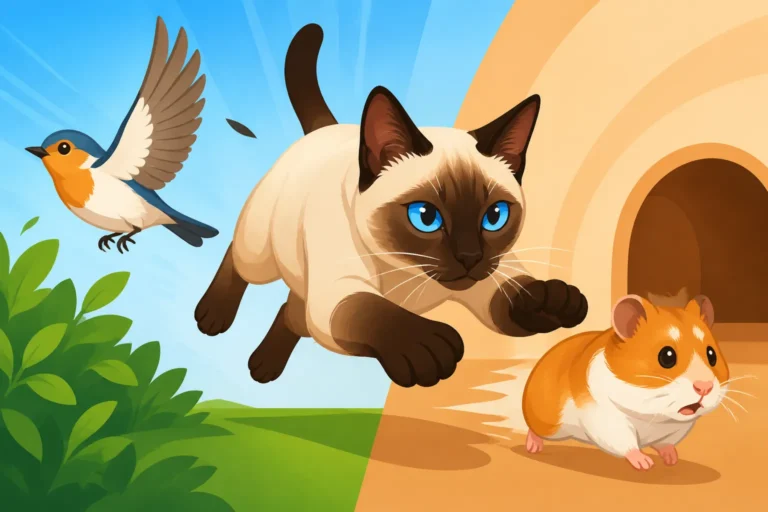
Siamese cats are natural hunters, agile and incredibly intelligent. Their ancestors were adept at stalking prey, and even though your pampered pet might only "hunt" a feather wand, that instinct is still incredibly strong. When they bat an object, especially one that rolls or slides, they're often simulating the hunt. They're engaging their predatory instincts, making the "prey" move, then pouncing or batting it again. This is a fundamental part of their play behavior.
These cats have an incredibly high play drive. They need a lot of mental and physical stimulation to be truly content. If they don't get enough interactive playtime, that pent-up energy and hunting drive has to go somewhere. A glass vase might not be a mouse, but it’s a movable object that responds to their touch and makes a satisfying sound when it hits the floor. It’s a substitute for the proper hunt they crave. If you've ever wondered How Much Play a Siamese Cat Needs, the answer is usually "more than you think!" They're not content to just lounge around all day; they need to do things, to explore, to problem-solve, and to burn off energy.
Environmental Understimulation and Frustration
An unstimulated Siamese cat is a mischievous Siamese cat. These felines are known for their high intelligence and need for constant engagement. If their environment is boring, or they're left alone for long periods without adequate mental and physical outlets, they can become deeply frustrated. This frustration often manifests as destructive behaviors, including knocking things off shelves.
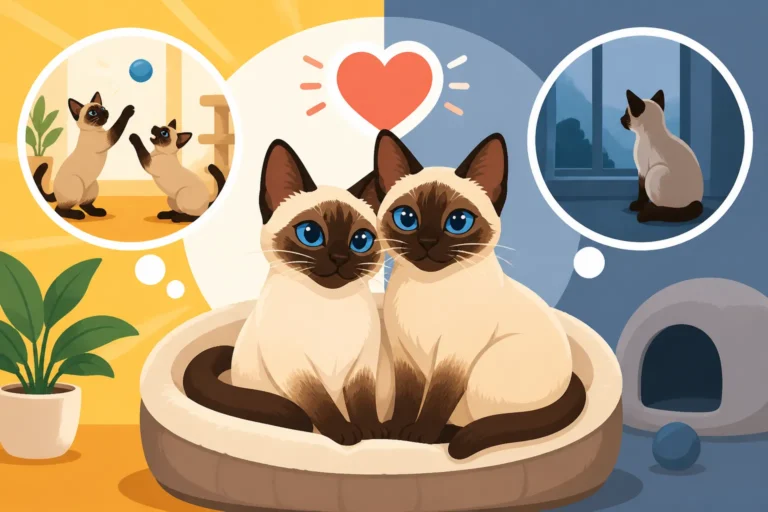
Imagine being incredibly smart, full of energy, and stuck in a monotonous routine. You'd probably start looking for ways to entertain yourself, wouldn't you? For a Siamese, this might mean systematically clearing off a bookshelf, one item at a time. It’s not just about getting attention; it's about making their environment more interesting, even if it means creating chaos. They crave novelty and challenge. Without sufficient Enrichment for a Siamese Cat That Gets Bored in an Hour, they'll create their own fun, and your possessions might become their unfortunate playthings. This can be especially true if they are an only cat, lacking a companion to play with.
Common Targets and Their Appeal to a Siamese Cat
It often feels like they intentionally go for the most breakable or valuable items, doesn't it? While they don't understand monetary value, they do understand what causes the most dramatic effect or gets the quickest human reaction.
Small, Lightweight Objects
These are the easiest targets and often the first to go. Pens, pencils, hair ties, keychains, remote controls, bottle caps, small decorative trinkets – anything that can be easily nudged or swatted by a paw. The appeal is multi-faceted:
- Ease of engagement: They require minimal effort to move. A quick flick of a paw is all it takes.
- Satisfying movement and sound: A pen rolling off a table, a hair tie skittering across the floor, or keys jangling as they fall. These provide immediate sensory feedback, which is highly rewarding for a Siamese.
- "Prey" simulation: Small, lightweight items can be batted around like prey. They mimic the erratic movements of a mouse or an insect, triggering the Siamese's hunting instincts. They might bat it off, chase it, and then bat it again, creating their own elaborate game. This is especially true for items that bounce slightly or have an unpredictable trajectory.
Consider a simple pen on your desk. To you, it's a writing tool. To your Siamese, it's a potential toy that's just begging to be pushed off the edge and pursued. The sound it makes when it hits the floor, the way it rolls under the sofa—it's all part of the game.
Items on High Perches or Shelves
Siamese cats are agile climbers, and height offers a unique vantage point and an enhanced "gravity experiment" experience. Books, plants, framed photos, and decorative vases are prime targets when placed on tall shelves, mantelpieces, or wall units. The higher the item, the more dramatic the fall, and the more satisfying the clatter.
The appeal of these higher items ties into a few key Siamese traits:
- Love of heights: Siamese cats love to be up high. It allows them to survey their domain and feel secure. If they're exploring a tall bookshelf, anything within paw's reach is fair game. How High a Siamese Cat Climbs might surprise you; they can reach places you never thought possible.
- Maximized impact: A book tumbling from a high shelf creates a much louder noise and more dramatic scene than a pen falling from a coffee table. This increases the "reward" for their behavior. It's like they're saying, "Look what I can do!"
- Accessibility: If a shelf is just within jumping or reaching distance, it becomes a challenge they can't resist. They'll stretch, balance precariously, and use all their athletic prowess to dislodge the item. Sometimes, the mere act of reaching and pushing is the fun part, regardless of the item itself.
Items that Belong to You
This category often feels the most personal, because it usually involves items you interact with frequently: your phone, glasses, wallet, remote controls, or even your coffee cup. The reason these are targeted often circles back to attention-seeking.
Your Siamese is a deeply social and communicative cat. They observe you constantly and learn what holds your attention. If you're engrossed in your phone, and they can't get your eye, knocking the phone off the table is a surefire way to break your focus. They've learned that these particular items are important to you, and therefore, their manipulation of these items will elicit a strong response.
Consider your phone. It emits sounds, lights up, and you spend a lot of time looking at it. To a Siamese, it's a rival for your affection. A swipe of the paw, and suddenly all your attention is on them. Similarly, if you're trying to work, and your Siamese decides to sit on your keyboard, you might find your mouse or anything else on the desk suddenly making its way to the floor. Why a Siamese Cat Sits on Your Keyboard isn't just about warmth; it's about proximity and being central to your activity. Knocking things off your desk is an extension of this desire for shared space and attention.
| Common Shelf Target | Siamese Motivation | Suggested Enrichment Alternative |
|---|---|---|
| Pens, Keys, Small Trinkets | "Gravity experiments," hunting small prey, attention | Small bouncy balls, crinkle toys, spring toys, Amazon puzzle feeders |
| Books, Vases, Plants | Climbing exploration, dramatic impact, attention | Sturdy cat trees, wall shelves, window perches, cat hammocks |
| Phone, Glasses, Remotes | Attention-seeking, interaction, perceived rivalry | Interactive wand toys, clicker training, dedicated lap time |
| Potted Plants | Digging instinct, novelty, attention | Cat grass, supervised outdoor time, secure plant covers |
Strategies to Redirect This Energetic Behavior
The good news is that you can absolutely work with your Siamese cat to redirect their natural instincts into more appropriate channels. It requires consistency, understanding, and a willingness to engage with their unique needs.
Providing Ample Interactive Play
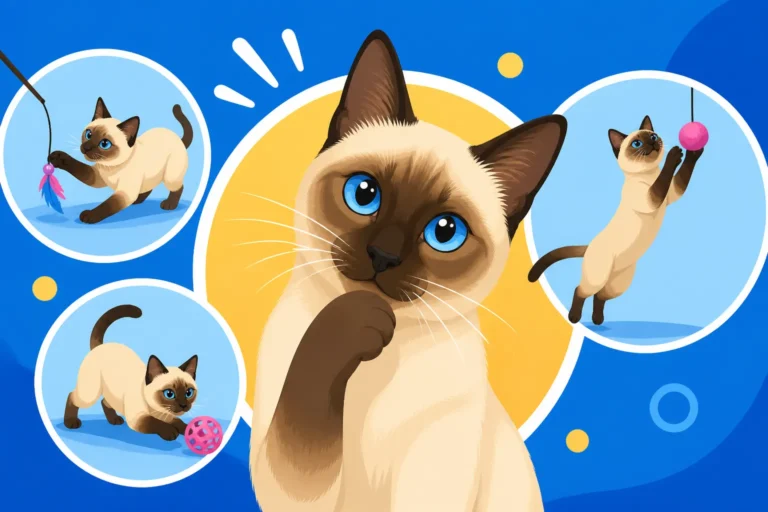
This is arguably the most crucial step. A tired Siamese cat is a good Siamese cat! They need consistent, engaging play sessions every single day. We're not talking about leaving out a toy for them to bat around alone, though that helps; we're talking about active, interactive play where you are involved.
Aim for two to three sessions of 10-15 minutes each day, mimicking a hunt. Use wand toys with feathers, ribbons, or small stuffed animals at the end. Make the toy dart, hide, and pounce like prey. Let your cat "catch" the toy at the end of each session so they feel successful. Laser pointers can be fun but always end with a tangible toy catch to prevent frustration. Rotate toys frequently to keep things interesting. You can find a fantastic selection of durable wand toys and other interactive playthings on Amazon that will stand up to even the most vigorous Siamese play. The goal is to wear them out physically and mentally. Which Toys a Siamese Cat Actually Plays With can vary, so experiment to find their favorites!
Enriching Their Environment
Beyond direct play, their living space needs to be a stimulating playground. This means providing vertical space, scratching opportunities, and mental challenges.
- Vertical Space: Siamese cats love to climb. Invest in a tall, sturdy cat tree, or install wall-mounted cat shelves. These give them safe, acceptable places to explore heights and survey their domain. Placing a cat tree near a window offers entertainment as they watch birds and squirrels. Many great options for What a Cat Tree for a Siamese Cat Costs are available, and you can find many reviews on Amazon to help you choose.
- Puzzle Feeders: These are brilliant for mental stimulation. Instead of just eating from a bowl, your Siamese has to work for their food, solving a small puzzle to get kibble or treats. This taps into their problem-solving abilities and can significantly reduce boredom.
- Rotation of Toys: Don't leave all their toys out all the time. Rotate them every few days or once a week. This keeps toys "new" and exciting, preventing boredom from familiar objects. A simple box of "inactive" toys that get swapped out regularly can make a big difference.
Remember, a rich environment reduces the need for them to create their own excitement by knocking things over.
"Cat-Proofing" and Designated Spaces
While prevention is not a substitute for enrichment, it's a vital part of protecting your belongings and keeping your cat safe.
- Remove Temptation: The simplest solution for particularly valuable or fragile items is to remove them from shelves and counters that are accessible to your cat. Store breakables in cabinets, or place them on shelves that are truly out of reach (which for a Siamese, means very high!).
- Secure Items: For things you can't or don't want to move, try securing them. Museum putty or double-sided tape can help keep lighter objects in place. Heavy books can be stacked more securely.
- Create "Yes" Spaces: Designate certain areas or shelves where your Siamese is allowed to bat things around. Perhaps a low shelf with sturdy, cat-safe toys, or a dedicated play basket. By giving them acceptable outlets, you reinforce what they can do, rather than constantly scolding them for what they can't. Think of it as creating a "yes" list rather than a "no" list. This proactive approach is part of How to Cat Proof a Home for a Siamese Cat effectively.
Consistency and Positive Reinforcement
Your reaction to their behavior plays a huge role. It's tough, but try to avoid yelling or sudden loud noises when they knock something over. Remember, negative attention is still attention to a Siamese.
- Ignore (When Safe): If they knock something over that isn't dangerous or valuable, try to ignore it. Don't rush to pick it up immediately. Wait until your cat has lost interest and moved away, then calmly retrieve the item. This breaks the link between the action and your immediate reaction.
- Redirect: When you see them eyeing an item on a shelf, redirect their attention before they knock it over. Grab a wand toy and initiate an immediate play session, or call them over for cuddles. Reward them enthusiastically for engaging in the desired behavior.
- Positive Reinforcement: Shower them with praise and treats when they play with their designated toys, use their cat tree, or engage with puzzle feeders. Make it clear that these activities are fun and rewarding. Clicker training can be incredibly effective for Siamese cats, teaching them tricks or commands and giving their intelligent minds a constructive challenge.
When to Consult a Professional
While most shelf-clearing behavior in Siamese cats is a sign of boredom or a bid for attention, there are times when it might indicate something more, or when you simply need extra help.
Persistent or Destructive Behavior
If you've consistently implemented enrichment strategies, increased playtime, and cat-proofed your home, but the behavior persists, escalates, or becomes genuinely destructive (e.g., repeatedly breaking valuable items despite your efforts, or showing aggression), it might be time to seek professional guidance. A certified feline behaviorist can observe your cat's environment and interactions, identify specific triggers, and develop a tailored plan.
They can offer insights into subtle cues you might be missing or suggest advanced enrichment techniques. Sometimes, an outside perspective is exactly what's needed to break a stubborn habit. Don't feel like you've failed if you reach this point; it's a responsible step towards ensuring your cat's well-being and your household's peace.
Changes in Behavior or Other Concerning Signs
Any sudden or significant change in your cat's behavior, including a sudden onset of destructive tendencies, should always prompt a visit to your veterinarian. While knocking things off shelves is often behavioral, a change in routine, an increase in vocalization, or other unusual actions could sometimes be a symptom of an underlying medical issue.
For example, increased anxiety due to pain, hyperthyroidism, or even dental discomfort could manifest as unusual behaviors. Your vet can perform a thorough examination and rule out any health problems before you delve deeper into behavioral modifications. Pay attention to other signs, such as changes in appetite, litter box habits, or general demeanor. Signs a Siamese Cat Is Unwell can be subtle, and a vet check-up is always the first step to ensure your beloved meezer is healthy and happy.
Disclaimer
This article is for general informational purposes only and does not constitute professional advice. Laws, prices and regulations vary by location and change over time. Consult a qualified professional for guidance on your specific situation.