Whether a Siamese Cat Can Become Overweight
It's a common belief, almost a badge of honor, among Siamese cat owners that their lithe, energetic companions simply cannot get fat. We see their slender frames, their boundless energy, and often assume they're immune to the weight struggles that plague many other domestic felines. But let me tell you, as someone who has shared a home with these vocal beauties for years, that assumption can be a real trap. While it might seem counterintuitive given their naturally lean build, a Siamese cat absolutely can become overweight, and when they do, it poses significant risks to their health and well-being. This guide will delve into why this happens, how to recognize the signs, and most importantly, how to help your beloved Meezer stay at a healthy weight.
The Myth of the Eternally Lean Siamese
Many of us are drawn to Siamese cats for their elegant, almost ethereal appearance. They're often described as sleek, svelte, and "tubular," with long legs and a refined bone structure. This natural athleticism and high metabolism certainly play a role in why they tend to stay lean, but it doesn't grant them immunity from weight gain.
Why Siamese Cats Appear Naturally Slender
Siamese cats are built like athletes. They have a lean, muscular physique that's quite different from the stockier builds of some other breeds. Their coat is short and close-lying, which means there's no fluffy fur to hide any extra padding. When you run your hands along a healthy Siamese, you should be able to easily feel their ribs, hips, and spine, covered by a thin layer of muscle and skin. This is a characteristic that often makes us, as owners, feel like they are perpetually thin, almost bony, and that's okay – that's often how they're supposed to feel. If you're wondering about a healthy feel, you might be interested in Why a Siamese Cat Feels Bony.
Their high energy levels are another factor. Siamese cats are notorious for their endless curiosity and need for interaction. They love to play, climb, and explore, burning off calories at a remarkable rate compared to more sedentary breeds. It's this combination of genetic predisposition for leanness, short coat, and high activity that has led to the widespread belief that Siamese cats simply don't get fat. They seem to burn through everything they eat, right? They're always on the go, always demanding attention, always chasing a toy or a sunbeam. It’s easy to look at that slender form and think, "My cat could never get chunky."
When the Myth Becomes a Problem
The problem with this pervasive myth is that it can lead to complacency in feeding. Because we perceive our Siamese cats as naturally thin, we might be less vigilant about portion control. We might interpret their constant "chattering" for food as a sign that they're genuinely starving, rather than just being vocal and demanding, which, let's be honest, is a huge part of their charm! If you've ever had a Siamese follow you to the kitchen, yowling dramatically the entire way, you know exactly what I mean.
This can result in owners overfeeding their Siamese, either by leaving food out all day (free-feeding), giving too many treats, or simply serving larger portions than necessary. We might also overlook subtle signs of weight gain because we're so accustomed to their slender appearance. The extra pounds can creep on slowly, almost imperceptibly, until one day you realize your once-sleek feline now has a distinct little belly pouch or you can't feel their ribs as easily. That’s when the "thin" becomes problematic, and it’s important to understand that even the most active Siamese isn't immune to the effects of excess calories. For more on their natural slimness, see Why a Siamese Cat Stays So Thin.
Understanding Weight Gain in Siamese Cats
Just like humans, a Siamese cat's weight is a delicate balance between calorie intake and calorie expenditure. When the calories consumed consistently outweigh the calories burned, weight gain is inevitable, regardless of breed.
Factors Contributing to Overweight Siamese Cats
Several factors can tip this balance towards an unhealthy weight for your Siamese:
- Diet and Portion Sizes: This is probably the biggest culprit. Modern cat foods, especially dry kibble, can be calorie-dense. If you're free-feeding, or simply guessing at portion sizes, it's incredibly easy to overfeed. A Siamese might have a high metabolism, but it's not infinite. They need a specific number of calories per day, and exceeding that regularly will lead to weight gain. Treats, while a lovely way to bond, also add up. Many owners don't factor treats into their cat's daily caloric intake, which can quickly push them over the edge.
- Activity Levels: While Siamese cats are known for being active, individual activity levels can vary. An indoor-only Siamese might not get as much exercise as one with safe access to a catio or a secure outdoor enclosure. Even active cats can become less so as they age, or if their environment doesn't offer enough mental and physical stimulation. A busy owner might not have as much time for interactive play, leading to a more sedentary lifestyle for the cat.
- Age: As cats mature, their metabolism naturally slows down. A Siamese that maintained a perfect weight in its youth might start to put on pounds as it enters its senior years, even if its diet hasn't changed. Less active play and more napping contribute to this shift. This is a time when many owners need to adjust their cat's diet to prevent creeping weight gain.
- Spaying/Neutering: Hormonal changes post-spay or neuter can lead to a decrease in metabolic rate and often an increase in appetite. It’s a double-whammy that can make weight management more challenging. Many vets will recommend adjusting a cat's food intake after these procedures to prevent weight gain.
- Medical Conditions: Though less common, certain medical conditions can contribute to weight gain. Hypothyroidism (underactive thyroid) is rare in cats but can slow metabolism. Other conditions that cause pain or discomfort, such as arthritis, might reduce a cat's willingness to move and play, indirectly leading to weight gain. It's always wise to rule out medical causes with your vet if you notice sudden or significant weight changes.
It's truly a balancing act, and every Siamese is unique. What works for one cat might not work for another, even within the same breed. Understanding How Many Calories a Siamese Cat Needs a Day can be an eye-opener for many.
Recognizing the Signs of an Overweight Siamese
Because Siamese cats are built so leanly, recognizing early signs of being overweight can be tricky, but it's crucial for their long-term health. Don't wait until they look round to start paying attention.
Here's what to look for:
- Difficulty Feeling Ribs: A healthy Siamese should have ribs that are easily palpable under a thin layer of muscle and skin, much like the back of your hand. If you have to press firmly to feel them, or can't feel them at all, your cat is likely carrying too much weight.
- Loss of a Defined Waist: When viewed from above, a healthy Siamese should have a noticeable "waist" indentation behind their ribs. If they look more like a straight line or bulge outwards, they've lost their ideal silhouette.
- Belly Sag: While a small primordial pouch (a saggy belly flap) is natural in many cats, an excessive amount of fat hanging down or a belly that looks truly round rather than tucked up is a red flag. This isn't just loose skin; it's fat accumulation.
- Reluctance to Jump or Play: An overweight Siamese might become less enthusiastic about their usual activities. They might struggle to jump onto high surfaces they once easily scaled, or they might seem winded or less agile during play. You might notice they prefer napping to chasing toys.
- Grooming Issues: Overweight cats often have difficulty reaching certain areas to groom, especially their lower back and tail base. This can lead to matted fur, flaky skin, or dandruff in those hard-to-reach spots.
- Changes in Temperament: While not solely indicative of weight, a generally less energetic, more lethargic demeanor could be a sign your cat is uncomfortable due to extra weight.
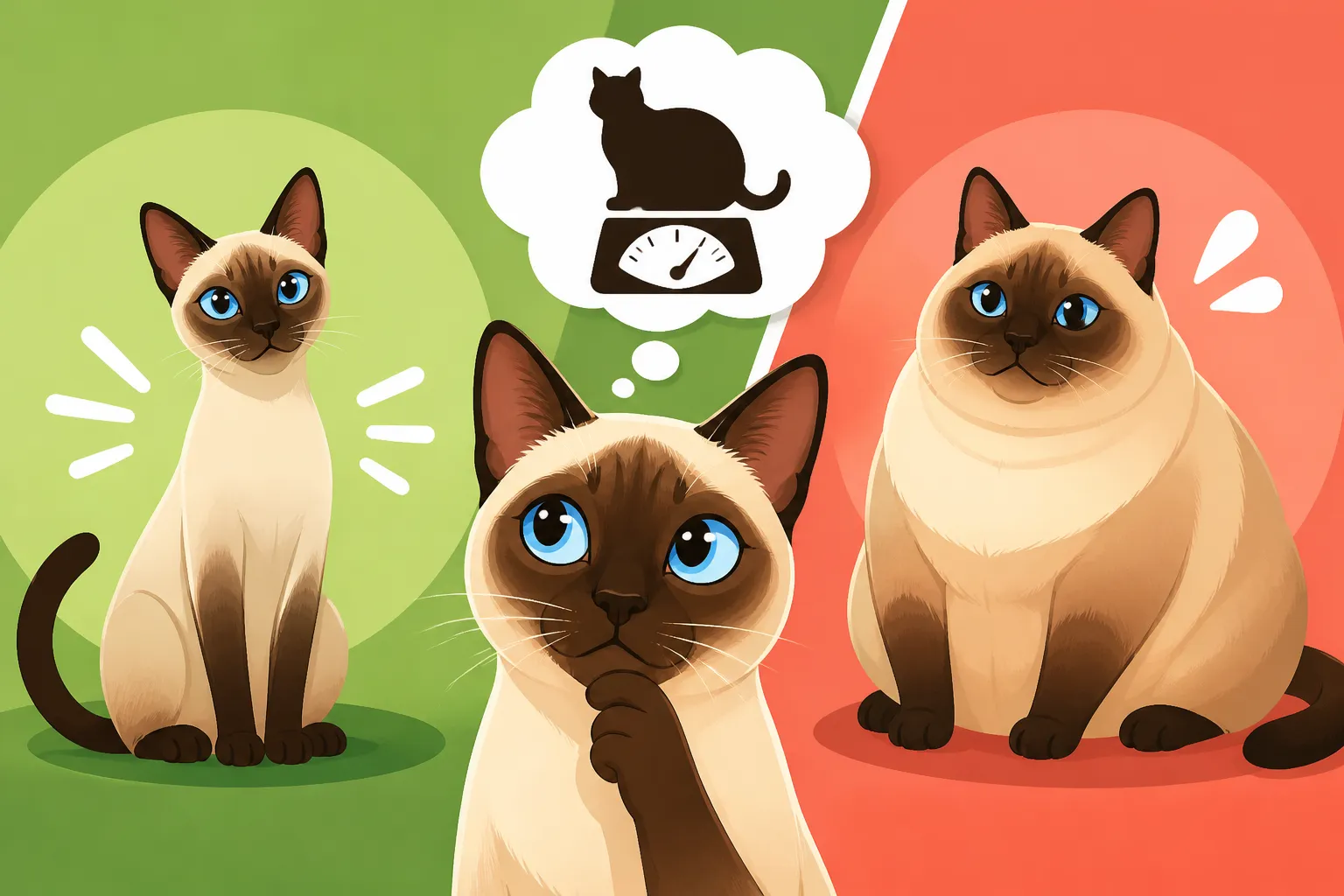
It can be difficult to assess your own cat objectively. Sometimes, it takes a friend or family member, or even better, your veterinarian, to point out the subtle changes. To help you visualize, here's a comparison:
| Characteristic | Healthy Siamese (Ideal) | Overweight Siamese |
|---|---|---|
| Ribs | Easily palpable under a thin layer of skin/muscle. | Difficult to feel, requires firm pressure. |
| Waistline | Clearly visible indentation behind the ribs when viewed from above. | Straight line or bulging out behind the ribs. |
| Abdominal Tuck | Abdomen tucked up, no significant sag. | Rounded belly, noticeable fat pad (beyond a normal primordial pouch). |
| Energy/Activity | Agile, playful, enjoys jumping and climbing. | Less active, reluctant to jump, seems winded easily. |
| Grooming | Self-grooms thoroughly, coat is sleek and clean. | May have matted or dull fur on back/tail due to difficulty reaching. |
| Back/Spine | Easily felt with light pressure. | Cushioned, difficult to feel prominent bones. |
Comparing this to How to Tell If a Siamese Cat Is Too Thin can help you get a full picture of what a healthy weight looks and feels like.
The Risks of an Overweight Siamese Cat
Being overweight isn't just about aesthetics; it's a serious health concern for any cat, including the typically lean Siamese. The extra pounds put a strain on their entire system and can significantly impact their quality of life and lifespan.
Health Consequences
The health risks associated with obesity in cats are well-documented and can be severe:
- Diabetes Mellitus: Overweight cats are at a much higher risk of developing type 2 diabetes. Their bodies become less responsive to insulin, leading to high blood sugar levels. Managing feline diabetes often involves daily insulin injections and a strict diet, which is a significant commitment for owners. Learning about Diabetes in a Siamese Cat can highlight the seriousness of this condition.
- Joint Problems (Arthritis): Those extra pounds put undue stress on a cat's joints, particularly in their hips, knees, and spine. This can lead to or exacerbate arthritis, making movement painful and reducing their mobility. Imagine trying to jump and play with achy joints – it's no fun for our active Siamese.
- Heart Disease: Just like in humans, excess weight can strain the cardiovascular system. It can contribute to high blood pressure and increase the workload on the heart, potentially leading to or worsening conditions like Heart Disease in a Siamese Cat.
- Liver Issues (Hepatic Lipidosis): This is a particularly dangerous condition for overweight cats. If an overweight cat suddenly stops eating (due to stress, illness, or a diet too low in calories for rapid weight loss), their body starts mobilizing fat to the liver. The liver can become overwhelmed and filled with fat, leading to liver failure. This condition requires intensive veterinary care and can be fatal.
- Reduced Lifespan: All these health issues combine to potentially shorten your cat's life. Studies consistently show that pets maintained at a healthy weight live longer, healthier lives than their overweight counterparts.
- Difficulty with Grooming and Skin Issues: As mentioned before, an overweight Siamese may struggle to reach all areas of their body for grooming. This can lead to matted fur, skin infections, and uncomfortable dandruff.
It's a stark reality that while our intention might be to show love through treats and generous portions, we could inadvertently be contributing to serious health problems for our furry family members.
Impact on Quality of Life
Beyond the specific medical conditions, being overweight significantly diminishes a Siamese cat's overall quality of life.
- Less Playful, More Lethargic: The joy of watching a Siamese leap and chase a toy is one of the great pleasures of owning them. An overweight cat, however, will often be less inclined to play. They might become more sedentary, spending more time napping and less time engaging with you or their environment. This isn't just a loss for them; it's a loss for the bond you share.
- Pain or Discomfort: Whether it's arthritic joints aching with every movement or simply the strain of carrying extra weight, an overweight Siamese can be in constant discomfort. They might hide their pain, as cats are masters of disguise, but it affects their mood and willingness to interact.
- Difficulty Navigating Their Environment: Jumping to their favorite perch on the cat tree, squeezing through tight spaces, or even just getting in and out of the litter box can become a chore for an overweight cat. This can lead to frustration, accidents outside the litter box, and a general feeling of being limited in their own home.
Ultimately, keeping your Siamese at a healthy weight is one of the most loving things you can do for them. It allows them to live their best, most active, and most comfortable life.
Helping Your Siamese Cat Maintain a Healthy Weight
Okay, so we've established that Siamese cats can indeed become overweight, and it's a serious issue. The good news is that with attention and consistent effort, you absolutely can help your beloved Meezer maintain a healthy weight or even slim down if they've gained a few too many pounds.
Strategic Feeding and Diet Management
This is often the most impactful area to address when managing a cat's weight. It's not about starving them, but about providing the right amount of the right kind of food.
- Measure, Don't Guess: This is the golden rule. Instead of eyeball estimates, use a kitchen scale to weigh your cat's daily portion of food, or at least a standard measuring cup if using kibble. Cat food bags often provide general guidelines, but your vet can give you a more precise calorie target based on your cat's current weight, ideal weight, and activity level. If you've been free-feeding, transitioning to scheduled meals is critical.
- Choose Appropriate Food: Look for high-quality cat foods that are rich in animal protein and have moderate fat content. Many cats thrive on wet food, which has higher moisture content and can help with satiety. If using dry food, ensure it's not simply packed with fillers. When looking for good options, you'll find plenty of choices at retailers like Chewy or on Amazon, with various brands and formulations available. Fresh food options that can be precisely portioned are also available.
- Limit Treats (or Make Them Healthy): Those little crunchy treats add up fast! If you give treats, factor them into the daily calorie count. Consider using healthy alternatives like small pieces of cooked chicken breast, freeze-dried meat treats (many available through Chewy or Amazon), or even a portion of their regular kibble as treats. Puzzle feeders, which we'll discuss next, are excellent for making treats last longer and providing mental stimulation.
- Meal Feeding vs. Free Feeding: For weight management, scheduled meals are almost always better than free-feeding. Divide your cat's daily allowance into two or three meals. This helps regulate their hunger, allows you to monitor their intake, and prevents them from overeating out of boredom. For guidance on portions and frequency, check out How Much an Adult Siamese Cat Eats and Which Food Suits a Siamese Cat.
Remember, consistency is key. Every member of the household needs to be on board with the feeding plan.
Boosting Activity and Mental Enrichment
Siamese cats are inherently active and intelligent. Channeling that energy into productive play and mental stimulation is vital for calorie burning and overall well-being.
- Interactive Play Sessions: Dedicate at least two to three short (10-15 minute) interactive play sessions daily. Use wand toys, feather teasers, or laser pointers (be sure to end laser play with a tangible toy they can "catch" to prevent frustration). This taps into their natural prey drive and gets them moving.
- Puzzle Feeders: These are brilliant for slowing down fast eaters and providing mental enrichment. Instead of just eating from a bowl, your cat has to "work" for their food by batting it around or solving a small puzzle. You can find a wide variety of puzzle feeders on Amazon or Chewy. This can be a game-changer for a bored Siamese that tends to overeat. For more ideas, see What a Puzzle Feeder for a Siamese Cat Costs.
- Catios/Safe Outdoor Access: If possible and safe, providing a secure outdoor enclosure (catio) can give your Siamese new sights, sounds, and smells to explore, encouraging more movement. Even supervised leash walks (if your cat tolerates a harness) can offer a change of scenery and exercise.
- Vertical Space: Siamese cats love to climb! Ensure they have tall cat trees, wall-mounted shelves, and other vertical spaces that encourage jumping and climbing. Place toys or small portions of food on different levels to encourage exploration.
- Regular Play Sessions: These aren't just for kittens. An adult Siamese still needs vigorous play to stay physically and mentally fit. Learn more about the amount of activity they need in How Much Play a Siamese Cat Needs.
Engaging your Siamese in regular, stimulating play not only helps them burn calories but also strengthens your bond and prevents boredom-induced behaviors.
Regular Vet Check-ups
You are your cat's best advocate, but your veterinarian is your ultimate partner in their health journey.
- Professional Assessment: During annual wellness exams, your vet will weigh your cat and perform a body condition score. They can objectively assess whether your Siamese is at a healthy weight, too thin, or overweight. They can also rule out any underlying medical conditions that might be contributing to weight gain. This is also a good time to get specific recommendations on their ideal weight, which can vary slightly between individuals.
- Tailoring a Weight Loss Plan: If your Siamese is overweight, your vet can help you create a safe and effective weight loss plan. This might include specific dietary recommendations, a prescribed calorie intake, and advice on increasing activity. Crash diets are dangerous for cats and can lead to serious liver problems, so always follow professional guidance.
- Monitoring Progress: Regular weigh-ins at the vet's office can help track progress and make necessary adjustments to the plan. Some clinics even offer "weight loss clinics" where you can bring your cat in for weigh-ins and advice without a full exam fee. It's often difficult to notice small changes at home, but a consistent record at the vet will show the trend. For the complete picture of wellness care, check out How Often a Siamese Cat Needs a Wellness Exam.
Working closely with your vet ensures that your Siamese is losing weight safely and effectively, setting them up for a longer, healthier, and happier life. After all, isn't that what we all want for our beloved Meezers? What a Healthy Siamese Cat Weighs is a great benchmark to discuss with your vet.
Disclaimer
This article is for general informational purposes only and does not constitute professional advice. Laws, prices and regulations vary by location and change over time. Consult a qualified professional for guidance on your specific situation.