Whether a Red Point Is a Siamese Cat
A red point cat has the familiar Siamese color pattern but warm orange-red markings instead of the traditional dark points. Whether it is officially a Siamese depends on the registry, the cat’s pedigree, and how “Siamese” is being used. This guide explains the terminology, the breed-label differences, and what to check before trusting a description.
What red point means in a cat
The color pattern, from pale body to warm points
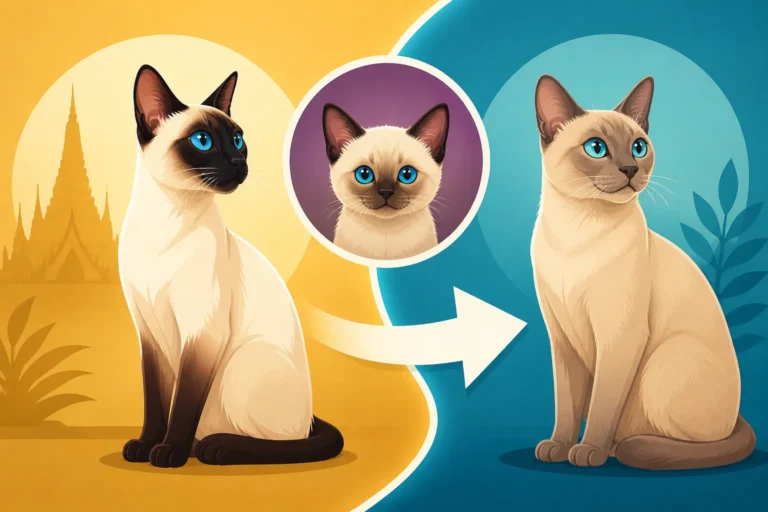
A red point cat has a light-colored body and darker coloring on the cooler parts of the body: the face, ears, paws, and tail. Those colored areas are called points. In a red point, the points are usually shades of orange, red, or apricot rather than seal brown, blue-gray, chocolate, or lilac.
The contrast can vary from cat to cat. Some red points have noticeably deeper orange markings, while others look soft and creamy. The face mask, legs, and tail may not all appear equally dark, and the body can develop more color with age. A red point kitten may start out looking almost entirely pale, with its points becoming clearer as it grows.
This pattern is temperature-sensitive: pigment develops more strongly in cooler areas of the body. That is why the extremities tend to be darker than the warmer torso. The same basic pattern appears across several pointed breeds, so color alone does not prove a cat is Siamese.
Red point and flame point are often names for similar coloring
“Red point” and “flame point” are commonly used for cats with orange-red points. The wording can depend on the country, breeder, registry, or seller. “Flame point” is particularly familiar in North America, while “red point” is widely used elsewhere. A listing might also use terms such as “orange point” or “cream point,” though cream usually describes a paler, softer shade.
These labels are not always applied consistently. One person may call a cat flame point because the points look vivid, while another may use red point for a similar cat. The distinction can also depend on the cat’s underlying color and how the organization registering it defines color classes. If the exact term matters to you, ask the breeder or organization to explain the label rather than assuming every seller uses it in the same way.
The key point is that “red point” describes coat color, not breed by itself. For a broader look at the possible colors and registry differences, see Which Point Colors Other Registries Accept in a Siamese Cat and Which Colors a Siamese Cat Comes In.
What makes red points look different from traditional points
Traditional Siamese point colors are often described as seal, blue, chocolate, and lilac. Red points look different because their markings are orange-toned rather than brown, gray, or mauve. Some red-point cats also have tabby-like markings in their points, sometimes called lynx or tabby point, and some have tortoiseshell patterns.
Color can be difficult to judge from a photograph. Lighting may make warm cream fur look brighter, while shadows can make pale points seem darker. A kitten’s color may also change as it matures. When evaluating a particular cat, look at clear photographs in natural light and ask for the registered color name if the cat has papers.
A red-point cat can still have the blue eyes and pointed pattern people associate with Siamese cats. But those traits are shared by other colorpoint cats as well, so they cannot settle the breed question on their own. What a Siamese Cat Looks Like by the Standard explains the physical features typically considered alongside color.
Is a red point officially a Siamese cat
The answer depends on the registry
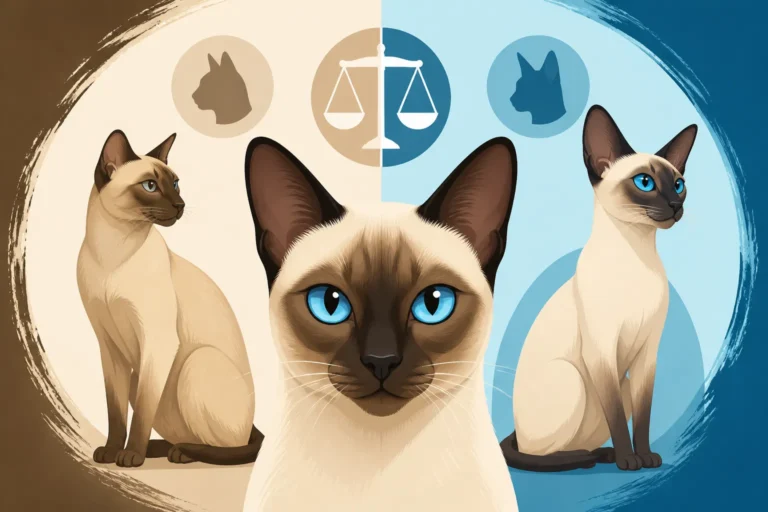
Cat registries do not all use the same breed categories or accept the same point colors. Some registries reserve the Siamese name for cats in the four traditional point colors. In those systems, a red-point cat may instead be registered under another breed category, such as Colorpoint Shorthair, or may not fit the registry’s Siamese standard.
Other organizations may group pointed cats or colors differently. That means two cats with very similar appearances can have different official labels depending on their registry and documented ancestry. There is no single worldwide naming system that every breeder, show organization, and pet owner follows.
For a registry-specific comparison, read Which Four Point Colors the CFA Accepts in a Siamese Cat and Which Registry Splits the Siamese Cat From the Colorpoint Shorthair. If a breeder says a red point is a Siamese, ask which registry they mean and request the registration paperwork. The organization’s own standard and records are more useful than a general label in an advertisement.
Siamese appearance and Siamese registration are not identical
In everyday conversation, people often call a cat “Siamese” because it has a slender body, blue eyes, large ears, and a pointed coat. That can be a reasonable visual description, but it does not necessarily mean the cat is registered as a Siamese with a particular organization.
A red-point cat may have Siamese ancestry, a Siamese-like appearance, or both. It might also be a Colorpoint Shorthair, a mix, or a cat whose background is unknown. Without pedigree records, appearance alone cannot establish its precise breed history. A cat can look very much like a Siamese and still have no documented pedigree.
This difference is especially important when adopting. A shelter or rescue may use “Siamese” as a practical description for a pointed cat rather than as a formal pedigree claim. That doesn’t make the description dishonest; it simply means the label may be based on appearance. For more detail on the distinction, see What a Colorpoint Shorthair Is Next to a Siamese Cat.
How to interpret a breeder or seller’s label
If you are considering a red-point kitten from a breeder, ask for the registered breed name, the registry, and the kitten’s pedigree or registration details. Ask whether “red point” is the registered color or the breeder’s descriptive term. A responsible breeder should be able to explain the wording and show you the documentation that supports the claim.
A broad breed explainer from a retailer such as Chewy can help you get familiar with common cat terms, but general educational content is not a pedigree record. Chewy’s descriptions may be useful for orientation; they cannot confirm how a specific cat is registered. If you are comparing what you read on Chewy with a breeder’s claim, treat the registry paperwork as the more relevant evidence for official classification.
The same distinction applies to online photos and social media posts. A caption saying “red point Siamese” may describe the cat’s appearance, but it does not tell you which registry, if any, recognizes the cat under that name. Ask for clarification before relying on the label for showing, breeding, or documenting ancestry.
Red point Siamese, Colorpoint Shorthair, and mixed cats
Why Colorpoint Shorthair is part of the conversation
Colorpoint Shorthair is a breed category used by some registries for pointed cats in colors beyond the traditional Siamese palette. A red-point cat may be registered as a Colorpoint Shorthair rather than a Siamese under those rules. The cats can look very similar, which is why the distinction is easy to miss if you are looking only at photographs.
The difference is not necessarily that one cat looks “more Siamese” than another. It often comes down to the registry’s definition, the accepted colors, and the cat’s documented lineage. A cat described casually as a red-point Siamese could therefore have a different formal breed name on its papers.
That is why the label on a breeder’s website should be read as a starting point, not the final word. The article Whether a Lynx Point Is a Siamese Cat or a Colorpoint Shorthair explores a similar naming issue with another pointed coat pattern.
Red point cats without pedigree papers
A shelter cat or privately rehomed cat may have a red-point coat and a strongly Siamese-like appearance without any known paperwork. In that situation, it is usually most accurate to describe the cat by what you can observe: a red-point or flame-point cat with a pointed coat. You can still say the cat looks Siamese, while recognizing that its exact ancestry is unconfirmed.
This is not a lesser or less meaningful way to describe a pet. For most households, temperament, health, and the cat’s needs matter far more than the exact registry category. A rescue’s breed estimate can offer a helpful clue, but it should not be treated as proof of pedigree. For more on visual identification and its limits, see How to Tell a Siamese Cat From a Mixed Breed.
A DNA test may provide information about genetic ancestry, but it does not automatically replace registry records or certify a cat for registration. Test results can be difficult to interpret, especially when the cat’s family history is unknown. Read Whether a DNA Test Confirms a Siamese Cat before treating a test result as a definitive breed certificate.
How to compare labels without getting stuck on the name
When you encounter a red-point cat described as Siamese, consider what the person is trying to communicate. They may be describing the coat and general appearance, or they may be making a formal pedigree claim. Those are different claims and deserve different kinds of evidence.
| What you want to know | What to check |
|---|---|
| What color the cat appears to be | The coat pattern, point color, and clear photographs |
| Whether the cat is officially registered as Siamese | The registry name and registration paperwork |
| Whether the cat has Siamese ancestry | Pedigree documents, if available |
| Whether a rescue cat is a Siamese mix | The organization’s stated basis for its breed description |
| Whether red point is accepted as Siamese in a given system | That registry’s own breed and color standards |
If the question is simply “What should I call this cat?”, “red-point cat” is a clear, useful description of its coloring. If the question is “Is this cat officially a Siamese?”, the answer requires the relevant registry’s rules and documentation. A general guide from Chewy or another pet-information source can help explain the terminology, but it cannot make that specific determination. Use Chewy’s broad descriptions as background reading, then verify formal claims with the registry or the cat’s records.
What to ask when you are buying or adopting a red point cat
Questions for a breeder
Ask the breeder which registry the kitten is registered with, what breed and color appear on the paperwork, and whether the parents are registered. If the breeder describes the kitten as a red-point Siamese, ask whether that phrase refers to appearance, ancestry, or official registration. A clear answer should not depend on you guessing what “Siamese” means in that particular listing.
You can also ask to see the parents’ registration details and the kitten’s contract. Read the paperwork carefully, especially if you plan to show or breed the cat. Registration rules can affect what the cat may be entered as, and a casual color description may not match the official breed category.
A breeder should be comfortable explaining the difference between coat color and breed classification. If answers are vague, inconsistent, or focused only on the kitten’s appearance, pause before placing a deposit. The goal is not to challenge every description; it is to understand exactly what is being promised.
Questions for a rescue or shelter
With a rescue cat, ask what the organization knows about the cat’s history and whether “Siamese” is a confirmed breed or an appearance-based estimate. If the cat came in without records, the staff may not know its ancestry, and that is normal. A careful rescue will usually distinguish known history from a best guess.
You can also ask about the cat’s personality, medical background, and behavior in foster care. Those details are often more useful for deciding whether the cat fits your home than a formal breed name. A red-point coat can be striking, but it does not predict an individual cat’s exact temperament or care needs.
If you are reading general breed information while preparing for adoption, use it as a guide to questions rather than as a checklist the cat must match. Chewy’s general cat-care material may help you think through everyday needs, but the rescue team and your veterinarian are better placed to discuss the individual animal in front of you.
A practical way to describe the cat
If you do not have papers, you can say, “This is a red-point cat with Siamese-like features,” or simply, “This is a flame-point cat.” Those descriptions are honest about what you can see without making a formal breed claim you cannot verify. If documents later confirm a registered breed, you can use that official label when it matters.
Ultimately, a red point may be called Siamese in casual conversation, but whether it is officially a Siamese depends on the relevant registry and the cat’s documentation. The color tells you about the coat; it does not, by itself, establish the breed.
Disclaimer
This article is for general informational purposes only and does not constitute professional advice. Laws, prices and regulations vary by location and change over time. Consult a qualified professional for guidance on your specific situation.