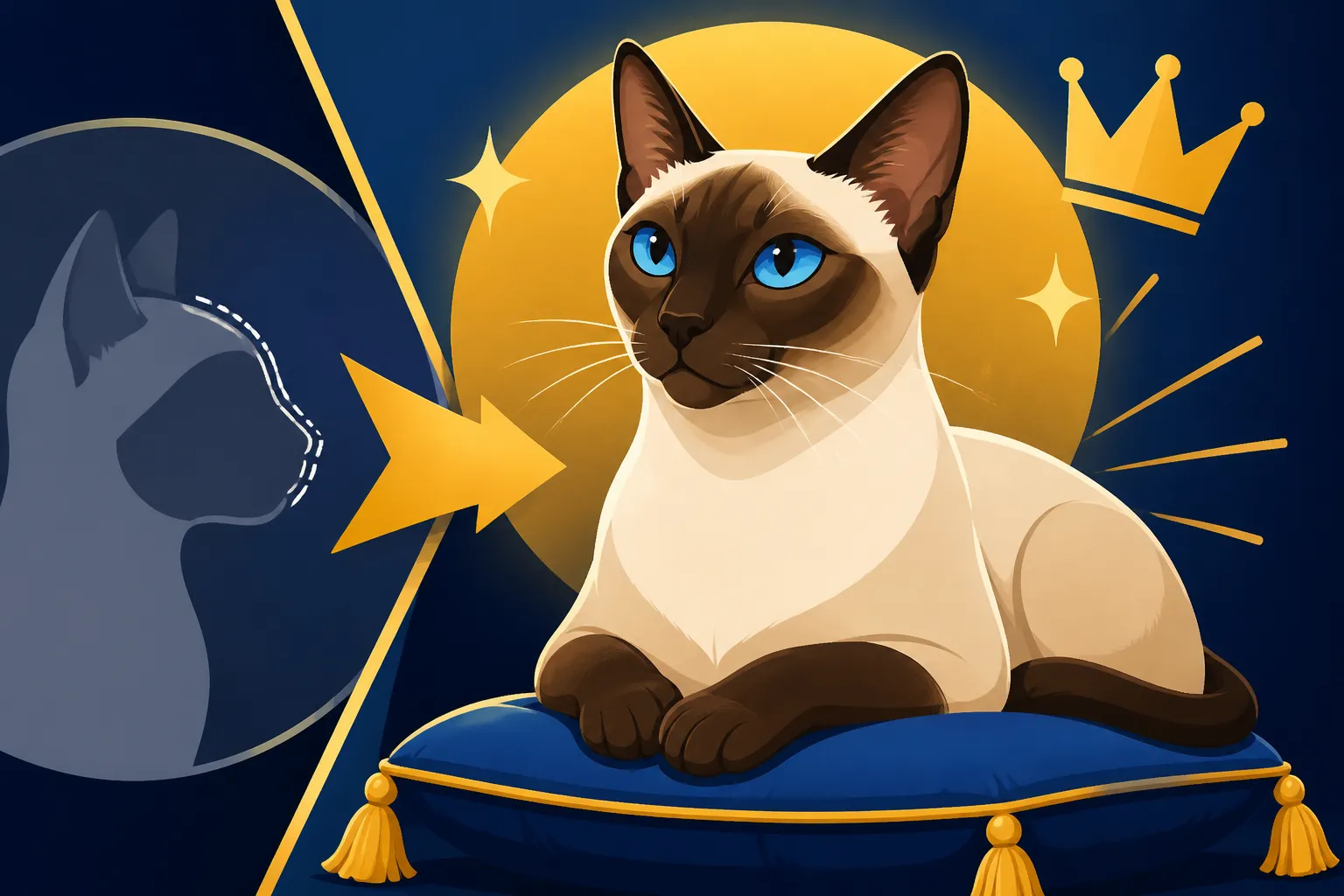
Why the Wedge Siamese Cat Commands More
It's a common observation for anyone delving into the world of Siamese cats: the prices can vary wildly, and you might find yourself wondering why certain types of Siamese cats seem to command a significantly higher price tag than others. This isn't just about color or age; often, it boils down to the distinct physical characteristics that differentiate the traditional "applehead" from the sleek, modern "wedge" Siamese. This guide will help you understand the forces at play, from breed standards to breeding practices, that contribute to why the wedge Siamese cat often costs more.
Understanding the Siamese Cat's Appearance Evolution
The journey of the Siamese cat's appearance is a fascinating one, marked by a deliberate shift in breeding preferences over many decades. What we consider "traditional" today often refers to an older style that was once the norm, while the "modern" look has become synonymous with competitive show rings and specific breed ideals. This evolution isn't just cosmetic; it reflects the dedication and direction of countless breeders who have shaped the breed we know today.
The Traditional "Applehead" Versus the Modern "Wedge"
When you picture an "applehead" Siamese, you're likely envisioning a cat with a rounder head, a sturdier, more compact body, and eyes that might be slightly less almond-shaped than their modern counterparts. These cats often have a sweet, almost cherubic expression, and their overall build is robust. They harken back to the early days of the breed's introduction to the Western world, resembling the cats that first captivated enthusiasts in the late 19th and early 20th centuries. Many breeders of this type of cat refer to them as "traditional" or "old-style" Siamese. If you're wondering, you can learn more about What an Applehead Siamese Cat Looks Like.
In stark contrast, the "wedge" Siamese is a study in elegant angles and elongated lines. Their heads are a distinct wedge shape, tapering from wide-set ears to a fine muzzle. Their bodies are long, svelte, and muscular, with whip-like tails and long, slender legs. Their eyes are typically almond-shaped and slanted, adding to their exotic allure. This look is the result of focused breeding programs aiming for a specific, refined aesthetic. The name "wedge" perfectly describes the striking silhouette of their head, which is a hallmark of the modern show Siamese. For a visual comparison, you might be interested in What a Modern Wedge Siamese Cat Looks Like.
The Shift in Breed Standards and Preferences
The divergence between the applehead and wedge didn't happen overnight; it was a gradual process driven largely by the evolving breed standards set by cat fancier associations. As the Siamese cat gained popularity in the West, breeders and judges began to develop a consensus on what constituted the "ideal" Siamese. Over time, the preference shifted away from the more rounded, traditional look towards the sleek, angular, and refined features of the modern wedge. This doesn't mean the traditional cats disappeared; rather, they became less favored in the show ring, leading to two distinct lines of breeding.
This shift wasn't without its controversies, and even today, there are passionate advocates for both styles. Some argue that the traditional applehead represents the true historical appearance of the Siamese, while others champion the modern wedge as a testament to selective breeding and refinement. This change in standards directly influenced breeding goals, with breeders aiming to produce cats that would excel in competition and embody the new aesthetic. It's a prime example of how human preferences can reshape a breed over generations, creating different markets and different values for each type.
Visual Distinctions That Drive Value
The distinct visual differences between the applehead and wedge Siamese are the primary drivers of their market value. The modern wedge, with its extreme and refined features, aligns perfectly with current show standards set by major cat registries. This means that a cat that closely embodies the wedge ideal is considered "show quality," and animals bred to this standard inherently carry a higher perceived value. Their striking appearance, often described as elegant and aristocratic, appeals to a segment of the market looking for that specific, highly stylized look.
Think of it like art or fashion: certain aesthetics become highly sought after, and the creators who master those aesthetics can command premium prices. For a wedge Siamese, every angle of the head, the set of the ears, the slant of the eyes, and the length of the body are all carefully considered and bred for. These are not accidental traits; they are the result of deliberate and costly breeding choices. The commitment to maintaining and enhancing these specific characteristics plays a huge role in Why Show Demand Drives the Wedge Siamese Cat Price.
The Role of Breed Registries and Show Standards
When we talk about why a wedge Siamese commands more, we can't ignore the immense influence of breed registries and the competitive world of cat shows. These organizations establish the "gold standard" for what a Siamese cat should look like, and breeders who consistently produce cats that meet or exceed these standards are highly regarded, and their kittens naturally command higher prices.
What Constitutes a "Show Quality" Siamese
A "show quality" Siamese isn't just any beautiful cat; it's a cat whose physical attributes adhere almost perfectly to the detailed breed standard published by major cat fancier associations like the Cat Fanciers' Association (CFA) or The International Cat Association (TICA). For the modern Siamese, this standard emphasizes the long, lean, and angular "wedge" look. This includes specific requirements for the head shape, ear set, eye shape and color, body length, leg structure, and tail. Every aspect is meticulously judged.
For example, a judge will look for a head that forms a perfect triangle from the outer base of the ears to the tip of the nose, with no break in the line. The ears should be strikingly large and wide at the base, continuing the lines of the wedge. The eyes must be a deep, vivid blue, almond-shaped, and set to complement the wedge. Achieving this level of conformity to the standard is incredibly difficult, requiring extensive knowledge of genetics and careful selection of breeding pairs. When a breeder consistently produces kittens that could potentially achieve champion status, their prices reflect that expertise and the inherent quality of the line.
The Influence of Cat Fancier Associations
Cat Fancier Associations are the arbiters of breed purity and standards. They define what a Siamese cat is in the show world. By establishing detailed and often rigid criteria for each breed, they guide breeders and influence consumer perception of what makes a "good" or "correct" example of the breed. The current standards for the Siamese cat heavily favor the modern wedge type, meaning that breeders who adhere to these standards are the ones producing cats that are eligible for competition and recognition.
These associations also maintain pedigrees, ensuring that cats are purebred and that their lineage is traceable. This documented lineage adds another layer of value, as buyers can see generations of champion bloodlines behind a kitten. The very act of being registered with one of these prestigious organizations, particularly if the parents have achieved titles, elevates the status and price of the offspring. It's a system that, for better or worse, heavily rewards adherence to the currently accepted show standard, thus influencing Which Siamese Cat Colors the Registries Accept and, more broadly, the overall physical characteristics that are deemed desirable.
Breeding for the Standard: Effort and Expense
Breeding for the show standard is an enormous undertaking, far more involved than simply allowing two cats to mate. It requires a significant investment of time, money, and expertise. Breeders must thoroughly research pedigrees, selecting breeding cats not just for their beauty but for their genetic compatibility to produce offspring that will hopefully meet the rigorous standards. This often means importing cats from other lines to diversify genetics or improve specific traits, which can be incredibly costly.
Beyond the initial investment in top-quality breeding stock, there are ongoing expenses. Regular veterinary check-ups, specialized nutrition, health screenings for common Siamese ailments, and the cost of showing cats to achieve titles all add up. For example, breeders should be performing health tests on their breeding animals, something that is crucial in ensuring the health of the offspring. You can learn more about Which Health Tests a Siamese Cat Breeder Runs to understand the financial commitment. Every step in the process, from carefully planning a litter to raising healthy, well-socialized kittens, is designed to produce cats that embody the pinnacle of the breed standard. This intense effort and financial outlay are directly passed on in the price of a wedge Siamese kitten from a reputable breeder.
The Dedicated Breeder's Investment in Wedge Type
Behind every well-bred wedge Siamese lies the meticulous, often obsessive, work of a dedicated breeder. This isn't a casual hobby; it's a profound commitment to preserving and refining the breed, and that commitment comes with a hefty price tag in terms of time, education, and financial resources. When you pay a premium for a wedge Siamese, you're not just paying for a kitten; you're investing in generations of careful planning and ethical practices.
Line Breeding and Genetic Selection
Achieving the consistent, refined look of the modern wedge Siamese requires deep knowledge of feline genetics and often involves line breeding. This practice involves breeding closely related cats to concentrate desirable traits within a bloodline. While this can be controversial if not managed carefully, in the hands of an experienced and ethical breeder, it’s a powerful tool for fixing specific physical characteristics, like the distinctive wedge head, large ears, and slender body that define the modern Siamese. Breeders spend countless hours studying pedigrees, evaluating conformation, and understanding the genetic heritage of their cats to make informed decisions about pairings.
This isn't about throwing two cats together; it's a scientific approach to breeding, aiming to create predictable outcomes while avoiding potential pitfalls. It requires an understanding of how genes are passed down and how different combinations can produce the desired look. It's a long-term game, often taking several generations to achieve the desired consistency in type. This level of genetic stewardship is a huge investment in time and intellectual capital, and it's reflected in the value of the kittens produced.
Health Screening and Ethical Breeding Practices
A truly dedicated breeder of wedge Siamese cats prioritizes the health and welfare of their animals above all else. This means going far beyond basic vaccinations and deworming. Ethical breeders conduct extensive health screenings on their breeding stock to ensure they are not passing on inherited diseases. For Siamese cats, this includes screening for conditions such as Progressive Retinal Atrophy (PRA) and being aware of the risks of amyloidosis. While there is no DNA test for amyloidosis, a responsible breeder will still be transparent about health in their lines. You might be interested in What a Siamese Cat Breeder Should Have Screened to understand the full scope.
These screenings, which can include DNA tests, ophthalmic exams, cardiac screenings, and regular vet check-ups, are expensive but absolutely essential. Furthermore, ethical breeders provide optimal living conditions, high-quality nutrition, and constant socialization for their kittens. They ensure their cats are raised in a clean, stimulating environment and are well-adjusted before going to their new homes. This commitment to health and responsible breeding practices, which prevents undue suffering and heartache for future owners, adds significantly to the overall cost of raising a litter.
The Time, Care, and Resources Involved
Beyond the intellectual and financial investments in breeding stock and health testing, there's the sheer amount of daily time and care involved in running a reputable cattery. Dedicated breeders spend countless hours cleaning, feeding, grooming, and socializing their cats and kittens. They wake up in the middle of the night to check on expectant mothers and newborn kittens. They meticulously track growth, monitor health, and engage in daily play and interaction to ensure the kittens are well-adjusted and confident. This hands-on, round-the-clock care is invaluable.
Consider the cost of premium cat food, veterinary care for unexpected issues, enrichment toys (which can be found on sites like Chewy, offering a vast selection of high-quality products), and comfortable bedding. Factor in the time spent educating prospective buyers, reviewing applications, and providing ongoing support once a kitten goes to its new home. It’s a labor of love, certainly, but it's also a full-time job. This immense dedication, the unwavering commitment to producing healthy, well-adjusted, and type-correct kittens, is a significant component of What a Siamese Cat Kitten Costs From a Breeder. The higher price of a wedge Siamese reflects this unparalleled level of investment.
Market Dynamics and Perceived Value
The market for purebred cats is influenced by many factors, just like any other market. When it comes to the wedge Siamese, specific dynamics drive its perceived value and, consequently, its higher price. This isn't just about what breeders put in; it's also about what buyers are looking for and how the breed is presented to the world.
Demand for the "Classic" Show Look
Despite the term "modern," the wedge Siamese has been the predominant show type for many decades, so much so that it's often considered the "classic" Siamese look by those familiar with the breed standard. This means there's a strong, consistent demand for cats that embody these specific, elegant features. People who admire Siamese cats and are familiar with the breed often picture the sleek, angular profile of a wedge when they think of the breed. This widespread recognition and preference contribute to the higher demand for kittens bred to this standard.
This demand isn't just from individuals looking for a pet; it also comes from other breeders seeking to improve their lines, and from those who wish to show their cats competitively. When there's high demand for a specific type, especially one that is challenging and costly to produce to a high standard, prices naturally rise. It's a testament to the enduring appeal of the wedge Siamese's distinctive aesthetic.
The Exclusivity Factor
Part of the appeal, and thus the higher price, of the wedge Siamese also lies in its perceived exclusivity. Producing a genuinely show-quality wedge Siamese is a specialized skill. There are fewer breeders capable of consistently producing cats that meet the exacting standards of the major registries, especially for cats that are truly exceptional. This creates a smaller supply of top-tier wedge kittens compared to more generalized or traditional Siamese types.
This exclusivity is amplified by the fact that many top breeders operate with waiting lists that can stretch for months or even over a year. Securing a kitten from a highly reputable cattery often means patiently waiting for the right match. This sense of acquiring something rare and expertly crafted adds to its premium status. If you're curious about the process, you might explore How Long a Siamese Cat Waitlist Runs. The combination of specialized breeding, limited supply, and high demand contributes to an overall sense of exclusivity that supports the higher price point.
Understanding the "Cost of Quality"
Ultimately, the higher price of a wedge Siamese cat from a reputable breeder is a reflection of the "cost of quality." This isn't an arbitrary markup; it's the sum total of all the investments, efforts, and expertise that go into producing a healthy, well-adjusted, and type-correct animal. When you're considering the expense, it's helpful to remember everything it encompasses:
| Feature | Applehead Siamese (General) | Wedge Siamese (Show Quality) |
|---|---|---|
| Head Shape | Rounder, broader, "apple" shape | Long, tapering wedge, wide-set ears |
| Body Build | More cobby, muscular, stocky | Long, slender, tubular, graceful |
| Eye Shape | More rounded, less slanted | Almond-shaped, slanted towards the nose |
| Ear Size/Set | Medium size, often less flared | Large, wide at base, continuing head lines |
| Temperament | Often described as robust, sweet | Highly intelligent, active, often vocal |
| Breeding Focus | Health, temperament, traditional appearance | Strict adherence to show standard, specific aesthetics |
| Price Point | Generally lower, more variable | Higher, reflects adherence to show standard |
This table illustrates how the distinct characteristics, which require specific breeding focus and extensive investment, translate into different market values. The quality isn't just about appearance; it's also about the genetic health and foundational care the kitten receives. Investing in a higher-priced wedge Siamese from a responsible breeder is often an investment in a pet that has had the best possible start in life, with health checks that mitigate future concerns, potentially saving you money and heartache down the road. It's about recognizing the true value of careful, ethical breeding.
Beyond Appearance: Health and Temperament Considerations
While the physical appearance and adherence to breed standards are primary drivers for the wedge Siamese's higher price, it's natural for prospective owners to wonder if these aesthetic choices impact other crucial aspects like health and temperament. It's a valid concern, as the pursuit of extreme physical traits in some breeds has, unfortunately, led to health issues.
Are Wedge Siamese Cats Healthier or Unhealthier?
There's a common misconception that the more "extreme" look of the modern wedge Siamese inherently leads to more health problems compared to the more moderate applehead. However, this isn't a universally true statement and depends heavily on the individual breeder's practices. A truly responsible breeder, regardless of whether they breed applehead or wedge types, will prioritize health. They will conduct extensive genetic screening for hereditary conditions known to affect the breed, such as Progressive Retinal Atrophy (PRA) or amyloidosis.
It's crucial to understand that health issues like Amyloidosis Is the Disease That Kills Young Siamese Cats or PRA and the Siamese Cat Eye Test That Does Not Settle It can affect any Siamese cat, regardless of head shape, if ethical breeding practices aren't followed. The key isn't the head type itself, but the breeder's commitment to robust health screening and responsible genetic selection. Some argue that the broader genetic pool often found in traditional lines might offer more natural resilience, while others contend that careful line breeding in wedge types can actually eliminate undesirable health traits. The most important factor is always the integrity and diligence of the breeder, not merely the cat's aesthetic.
Temperament Differences (Or Lack Thereof)
Another common question revolves around whether the temperament of a wedge Siamese differs from an applehead. Generally speaking, the core Siamese temperament—known for its vocal nature, intelligence, and intense bond with its human companions—remains consistent across both types. Siamese cats are famous for being incredibly communicative, often described as "dog-like" in their loyalty and desire to interact. They are highly intelligent, playful, and demand attention. If you're considering a Siamese, be prepared for The Siamese Cat Talks and Expects an Answer.
While individual personality can vary within any litter, there's no inherent difference in temperament directly tied to the head shape. A wedge Siamese can be just as affectionate, playful, and talkative as an applehead, and vice versa. Any perceived differences are more likely due to individual cat personalities, early socialization, and environmental factors rather than a direct consequence of their physical type. What does tend to remain constant is the need for mental stimulation and companionship; a Siamese cat, regardless of its head shape, generally thrives on interaction and can suffer from What Separation Anxiety Looks Like in a Siamese Cat if left alone too often.
Finding the Right Fit for Your Family
Ultimately, whether you choose a wedge Siamese or an applehead Siamese should come down to personal preference for appearance and, most importantly, finding a cat that is healthy, well-socialized, and a good fit for your lifestyle. While the wedge type might command a higher price due to show standards and breeding efforts, both types offer the unique and wonderful companionship characteristic of the Siamese breed.
When seeking a kitten, focus on finding a reputable breeder who is transparent about their health testing, provides excellent care, and prioritizes the well-being of their cats. Ask detailed questions about the parents' health history, temperament, and living conditions. Don't be swayed solely by price; a lower-priced kitten from a backyard breeder might end up costing you more in vet bills and heartache in the long run. Whether you gravitate towards the sleek elegance of the wedge or the charming robustness of the applehead, ensure you're adopting a healthy, happy cat from a responsible source. Resources like Healthy Paws can help you think about pet insurance options to cover unexpected health costs, regardless of the cat's type.
Disclaimer
This article is for general informational purposes only and does not constitute professional advice. Laws, prices and regulations vary by location and change over time. Consult a qualified professional for guidance on your specific situation.