What a Siamese Cat Should Weigh at One Year
It's incredibly common for Siamese cat owners to stare at their lithe, elegant feline and wonder, "Is my cat too thin, or is this just… Siamese?" Especially as they approach their first birthday, this question can be a real source of anxiety. This guide will walk you through what a healthy weight looks like for a one-year-old Siamese, helping you understand their unique physique and how to confidently assess their well-being.
The Siamese Cat's Lean Build at One Year Old
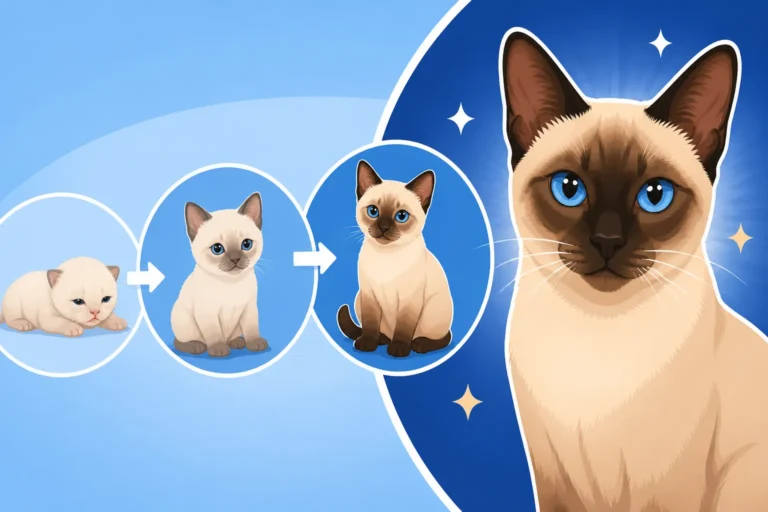
Let's face it, Siamese cats don't exactly fit the bill of a chunky, plush lap cat. They are the supermodels of the feline world – long, sleek, and often surprisingly bony to the touch. This can be alarming if you're used to other breeds, but it's entirely normal and part of their distinct genetic makeup. At one year old, most Siamese cats are officially considered young adults and have largely reached their full physical size, though some might continue to fill out slightly for another six months or so. Their energy levels are typically still through the roof, and their metabolism often feels like a furnace, burning through calories at an impressive rate.
Why They Look So Slender
The Siamese cat's striking appearance is defined by its svelte, tubular body, long neck, triangular head, and large ears. Their short, fine coat lies close to their body, offering no fluff to hide their contours. This means you can often clearly see their hip bones, spine, and ribs, which in many other breeds would be a red flag for being underweight. For a Siamese, however, it's often a sign of a healthy, athletic physique. They are built for agility and speed, not for carrying extra padding. Trying to make a Siamese "chubby" to fit a perceived notion of health can actually lead to obesity and associated health problems, which are just as detrimental to a Siamese as any other cat. Understanding this breed-specific conformation is the first step to knowing if your one-year-old is at a good weight.
Male vs. Female Size Differences
Just like in many other species, there are noticeable differences in size and weight between male and female Siamese cats as they mature. Typically, male Siamese cats are larger and heavier than their female counterparts. A one-year-old male might have a slightly more robust frame and carry a little more muscle mass, even if he still looks incredibly lean. Females, on the other hand, tend to be even more delicate and fine-boned. It's not uncommon for a male Siamese to be a pound or two heavier than a female of the same age and condition, and both can be perfectly healthy. This natural variation is important to remember; don't compare your female to a friend's male and assume one is unhealthy based purely on the number on the scale. When considering What a Siamese Cat Should Weigh at One Year, remember that a range is more accurate than a single number.
Ideal Weight Ranges for a One-Year-Old Siamese
When it comes to the scale, numbers can be helpful, but they rarely tell the whole story for a Siamese cat. Their unique body type means that standard weight ranges for domestic cats might not apply, and even within the Siamese breed, there's a fair bit of natural variation.
General Guidelines and Natural Variation
For a one-year-old Siamese cat, a healthy weight typically falls within the range of 6 to 10 pounds (approximately 2.7 to 4.5 kg). However, it's crucial to understand that this is a broad guideline. Some particularly large males might lean towards the higher end or even slightly above, while a petite female might comfortably sit at the lower end. Their lineage also plays a role; if your Siamese comes from a line of smaller, more delicate cats, they will likely be smaller themselves. Conversely, if their parents were on the larger side, your cat might follow suit. What's more important than hitting an exact number is observing their overall body condition and energy levels. A cat that falls slightly outside this range but has excellent muscle tone, a sleek coat, bright eyes, and a zest for play is likely in perfect health. You can find many resources about What a Healthy Siamese Cat Weighs to compare.
The Pitfalls of Relying Solely on the Scale
While a scale can give you a numerical value, it can be quite misleading for a Siamese. Imagine two one-year-old Siamese cats, both weighing exactly 8 pounds. One might be a lean, muscular, perfectly conditioned male with great bone structure, while the other might be a slightly overweight female carrying a little too much fat around her belly. The number alone doesn't differentiate between muscle and fat, or account for individual bone structure. Therefore, obsessing over a precise weight measurement can cause unnecessary worry or, worse, lead to overfeeding a cat that is already at a healthy weight, simply because you believe they should weigh more. For this reason, many vets and experienced owners advocate for body condition scoring as a far more reliable method of assessing a Siamese cat's health. It provides a visual and tactile evaluation that respects the breed's natural leanness.
How to Accurately Assess Your Siamese Cat's Body Condition
Since the scale can be deceiving, learning how to "read" your Siamese cat's body condition is truly the gold standard. This involves both visual inspection and a gentle hands-on check. It’s a skill that will serve you well throughout your cat’s life, helping you spot subtle changes before they become significant problems. This method helps you answer Whether a Thin Siamese Cat Is Underweight more accurately than just a number.
The Visual Cues: Ribs, Waist, and Tuck
When you look at your one-year-old Siamese from above, you should see a distinct waistline, much like an hourglass figure, behind their ribs. It shouldn't be a straight line from shoulder to tail, nor should it bulge out. From the side, their belly should tuck up slightly towards their hind legs, not hang low or appear distended. You should also be able to see their ribs and hip bones when they move or stretch, without them protruding sharply. If they look like a perfectly smooth tube with no waist or abdominal tuck, they might be carrying too much weight. If their ribs, spine, and hip bones are extremely prominent and easily visible even without movement, and there's obvious hollowing in their flanks, they could be underweight.
A great visual guide is often found in Body Condition Score (BCS) charts, which give a visual reference from emaciated to obese. Most Siamese cats should aim for a BCS of around 3 out of 5, or 4 out of 9, depending on the chart your vet uses. This usually means "ideal" or "lean," which is perfectly normal for them.
The Hands-On Check: Feeling for Muscle and Fat
Beyond just looking, you need to feel your cat. Run your hands gently along their sides, over their ribs, and down their spine.
- Ribs: You should be able to feel their ribs easily, like feeling the knuckles on your hand, but without much fatty padding over them. They shouldn't feel like they're directly under the skin with no cushioning, nor should you have to press hard to locate them.
- Spine: Similarly, you should be able to feel the individual bumps of their vertebrae along their spine without them feeling sharp or overly prominent.
- Hip Bones: Their hip bones should be palpable but not jutting out sharply.
- Waist: When you gently cup their waist, you should feel the lean muscle, not a thick layer of fat.
If you struggle to feel their ribs or spine, or if they feel very padded, your Siamese might be carrying too much weight. Conversely, if their bones feel very sharp and distinct with no discernible muscle or fat covering, they might be underweight. This hands-on method provides critical information that visual cues alone might miss, especially under certain lighting or coat conditions.
Keeping Track: Tools for Monitoring Progress
Regular monitoring is key, especially if you have concerns or are making changes to your cat's diet or exercise routine. While a weekly or bi-weekly weigh-in on a small pet scale (you can find affordable options on Amazon) can be useful for tracking trends, always couple it with a body condition assessment.
Consider keeping a simple journal where you note down their weight and your BCS assessment. You might also want to take a monthly photo from above and the side to visually track changes. If you’re ever unsure, your veterinarian is your best resource. They can perform a professional BCS and offer guidance tailored to your specific cat.
| Body Condition Score (BCS) | Visual Assessment (Siamese Focus) | Palpation (Feeling) Assessment | Implication |
|---|---|---|---|
| 1 (Emaciated) | Ribs, spine, hip bones easily seen from a distance; no muscle mass; severe abdominal tuck. | Ribs, spine, hip bones feel very sharp; no fat or muscle padding. | Severely underweight; urgent vet attention needed. |
| 2 (Very Thin) | Ribs, spine, hip bones very prominent; minimal muscle mass; marked abdominal tuck. | Ribs, spine, hip bones easily felt with minimal fat; little muscle definition. | Underweight; vet consultation recommended. |
| 3 (Ideal/Lean) | Ribs visible when moving, easily felt but not protruding; clear waist; abdominal tuck. | Ribs easily palpable with slight fat covering; spine and hip bones felt with minimal pressure. | Healthy for a Siamese! Keep doing what you're doing. |
| 4 (Overweight) | Ribs difficult to feel under moderate fat; less defined waist; belly may sag slightly. | Ribs require firm pressure to feel; noticeable fat layer over spine and abdomen. | Overweight; diet and exercise changes suggested by vet. |
| 5 (Obese) | Ribs not palpable; no waist; obvious fat deposits on back, tail base, and belly. | Ribs cannot be felt; extensive fat deposits; sagging abdomen. | Obese; significant weight loss plan with vet needed. |
(Note: This table uses a 5-point BCS scale, common in many veterinary practices.)
Nurturing a Healthy Weight in Your Young Adult Siamese
Maintaining a healthy weight for your one-year-old Siamese isn't just about what they should weigh; it's about a holistic approach to their care, factoring in their unique biology and personality. These cats are known for their high energy and intelligent minds, both of which play a significant role in their metabolism and overall well-being.
Tailoring Nutrition to Their High Metabolism
Siamese cats have a notoriously high metabolism. It often feels like they eat and eat and never gain an ounce, and there's some truth to that! This means they generally need a high-quality diet that provides ample protein and appropriate fat to fuel their active lifestyles. Look for cat foods with real meat as the first ingredient. Many owners find success with specialized formulas designed for active cats or those with higher caloric needs. Brands available on Chewy offer a wide range of options, from kibble to wet food. Some owners even explore fresh food options for optimal nutrition, though it's always wise to discuss significant dietary changes with your vet first.
Free-feeding isn't always the best approach, especially if you have multiple cats or are trying to monitor intake. Instead, consider portion control with multiple small meals throughout the day to keep their energy levels stable and metabolism humming. This mimics how cats naturally eat in the wild. If you're wondering How Many Calories a Siamese Cat Needs a Day, or How Much Food a Siamese Cat Gets Per Meal, your vet can give you specific guidance based on their individual needs.
The Importance of Consistent Activity and Play
A well-fed Siamese is only half the equation for a healthy weight; consistent physical and mental activity is the other. These aren't cats content to nap all day. A one-year-old Siamese has boundless energy and a keen intellect that needs channeling. Daily interactive play sessions are non-negotiable. Think feather wands, laser pointers (used responsibly to avoid frustration), and toys that mimic prey. You might even find your Siamese enjoys games of fetch, as they are surprisingly dog-like in their playfulness.
Puzzle feeders, readily available on Amazon, can turn mealtime into an engaging mental workout, slowing down eating and stimulating their minds. Providing vertical space like tall cat trees or wall-mounted shelves encourages climbing and exploration, burning calories and satisfying their natural instincts. A bored Siamese is more prone to destructive behaviors or, ironically, may become lethargic, which can contribute to weight gain over time. Keeping them active ensures their metabolism stays revved and their muscles stay toned.
When to Consult Your Veterinarian
Even with the best intentions and diligent home monitoring, there are times when a professional opinion is essential. If you've been assessing your one-year-old Siamese and consistently find they are either too thin (BCS 1 or 2) or too heavy (BCS 4 or 5), it's time to schedule a visit with your veterinarian.
Rapid weight changes, either loss or gain, are always a cause for concern and warrant immediate veterinary attention, as they can be indicators of underlying health issues like hyperthyroidism or even early-onset kidney problems. Your vet can perform a thorough physical exam, perhaps recommend blood work (especially if you're curious about What a Siamese Cat's Yearly Bloodwork Should Cover), and discuss your cat's diet, exercise routine, and any behavioral changes. They can rule out medical conditions and help you develop a tailored plan to get your Siamese back to their ideal, lean, and healthy weight. Sometimes, a Siamese cat's "thinness" is a symptom, not just a breed trait, and early intervention is always best. Don't hesitate to seek their expertise if you have any doubts about your cat's weight or overall health.
Disclaimer
This article is for general informational purposes only and does not constitute professional advice. Laws, prices and regulations vary by location and change over time. Consult a qualified professional for guidance on your specific situation.