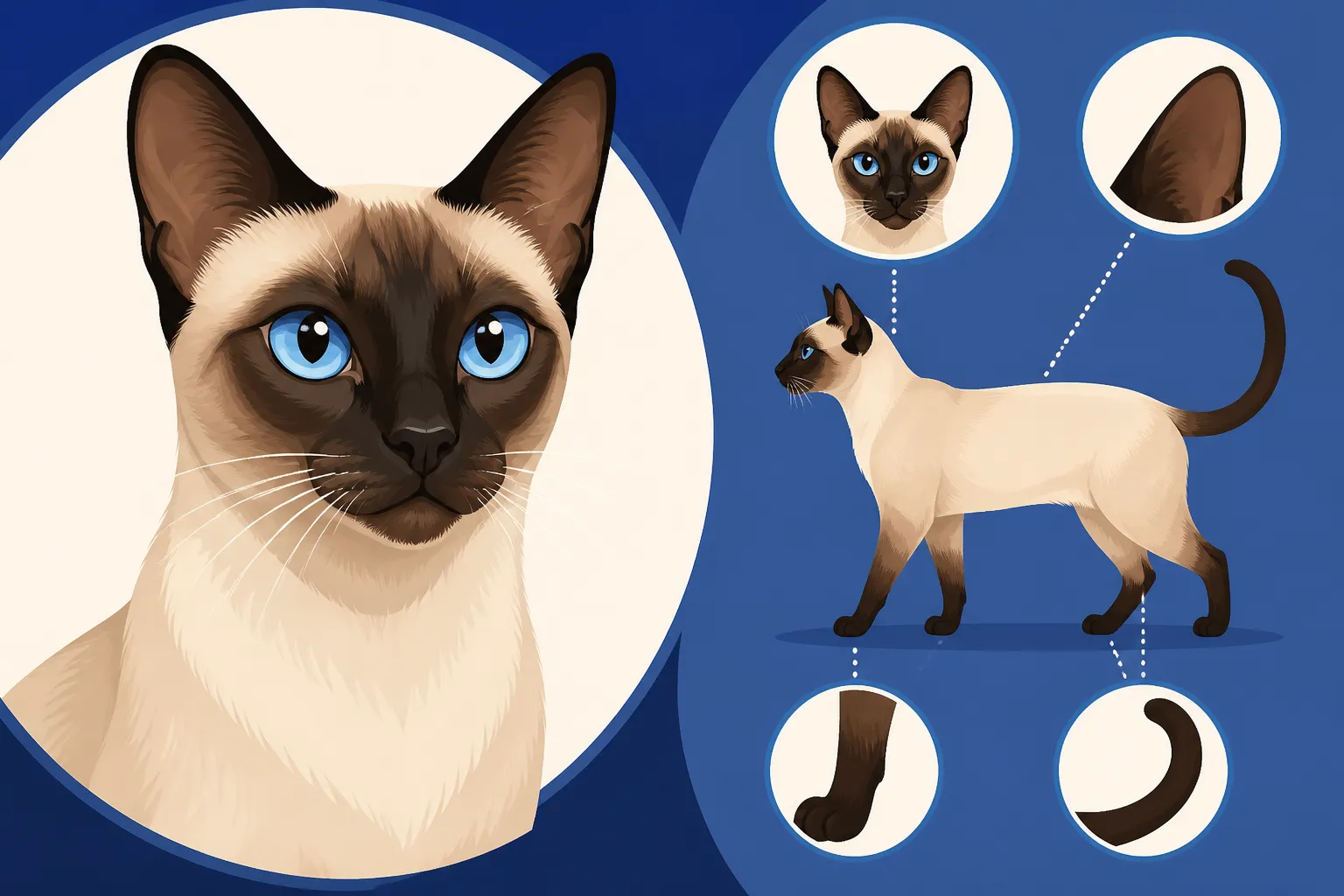
What a Siamese Cat Looks Like by the Standard
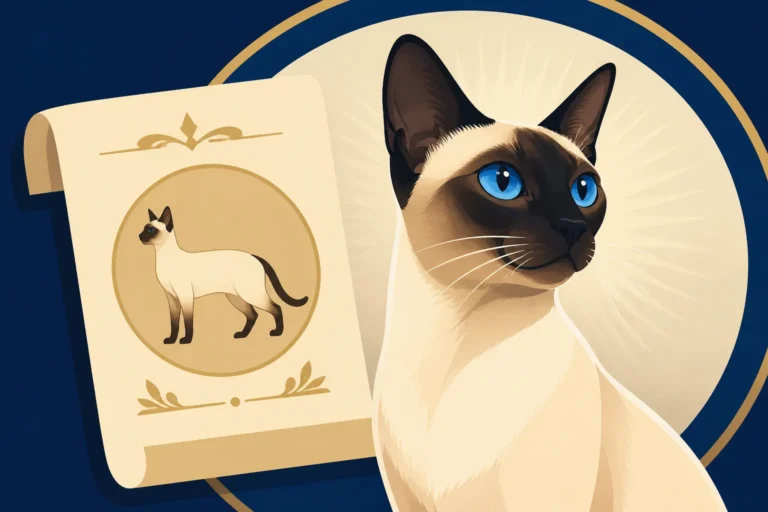
Bringing a Siamese cat into your life is an adventure, but understanding what makes a "classic" Siamese can be confusing, especially with so many different appearances out there. This guide will walk you through the official breed standard, helping you appreciate the meticulous details that define the physical beauty and elegance of a show-quality Siamese, and how that translates to the wonderful companion you might have at home.
The Foundation of the Look: Understanding the Breed Standard
When we talk about a "breed standard" for a Siamese cat, it's easy to picture some unapproachable, rigid rulebook. But really, it’s a detailed blueprint created by cat fancier associations like the Cat Fanciers' Association (CFA) or The International Cat Association (TICA). These standards describe the ideal characteristics—everything from their head shape and eye color to their body structure and coat pattern—that a purebred Siamese should possess. Think of it less as a strict mandate and more as a guide to preserving the unique traits that make the Siamese so distinctive and beloved.
What Is a Breed Standard, Anyway?
A breed standard is essentially a written description of the perfect example of a particular cat breed. It's a comprehensive document that outlines the desired physical attributes, temperament, and even general health expectations. For the Siamese, this means detailing the elegant, svelte body, the striking blue eyes, the expressive ears, and, of course, the iconic point coloration. Breeders strive to produce cats that align as closely as possible with this ideal, ensuring the breed's integrity and recognizing the best representatives in cat shows.
It’s not just about aesthetics, either. The standards often reflect traits that contribute to the overall health and functionality of the breed. For example, specific mentions of bone structure or muscle tone aren't just for looks; they contribute to the cat's agility and well-being. When you see a Siamese cat winning in the show ring, it's because they embody these characteristics to a remarkable degree, a testament to thoughtful breeding and care.
For pet owners, understanding the standard offers insight into why their own beloved Siamese looks the way it does, even if it has minor variations. It helps appreciate the history and dedicated effort that went into developing and maintaining the breed. While your couch companion might not be a show champion, knowing the standard helps you understand the lineage and the distinct traits that make your Siamese unique.
Why Standards Evolve for the Siamese
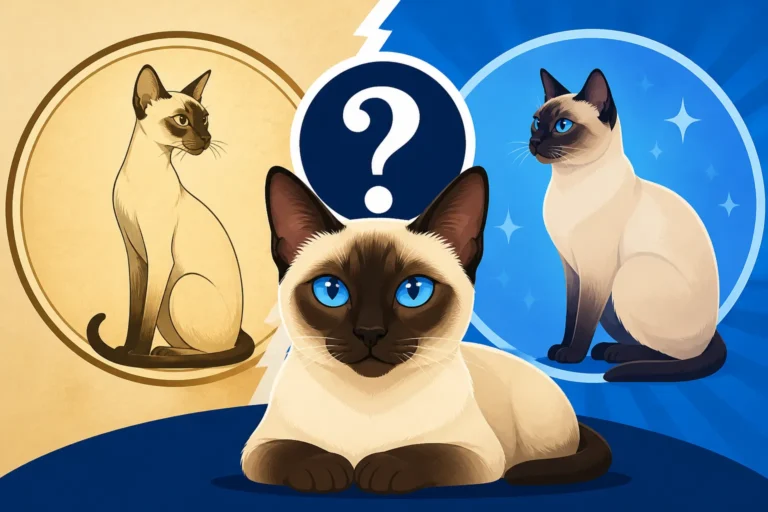
Breed standards aren't set in stone; they can and do evolve over time. The Siamese cat, in particular, has seen significant changes in its "ideal" appearance over the last century. Originally, the breed standard favored a more moderate, "applehead" or "traditional" look with a rounder head and sturdier body. However, over decades, selective breeding in the West began to lean towards a more extreme, slender, and angular aesthetic, eventually leading to the "wedgehead" Siamese that is commonly seen in show rings today.
This evolution is often driven by breeders' preferences and judging trends within the cat fancy world. What was once considered a desirable trait might become a fault, and vice versa, as breeders aim for a specific "look" that stands out. This can sometimes lead to confusion for new owners or those unfamiliar with the breed's history, as they might encounter pictures of older, more traditional Siamese cats that look quite different from the modern show cat. You can read more about how this evolution occurred in How the Siamese Cat's Head Changed Shape in Fifty Years.
It’s important to remember that these changes, while sometimes dramatic in appearance, are always intended to refine and enhance what breeders believe is the pinnacle of the breed. While some lament the loss of the "old style," others celebrate the sleek, sophisticated lines of the modern Siamese. Ultimately, these evolving standards highlight the dynamic nature of selective breeding and the continuous pursuit of an ideal.
The Signature Head: A Study in Angles and Elegance
When you first look at a modern Siamese, it's often their head that captures your attention. The standard emphasizes a very particular shape and set of features that contribute to their sophisticated and almost alien-like beauty. It's not just about a pretty face; every element, from the line of their muzzle to the placement of their ears, is carefully considered to create a harmonious and striking impression.
The Distinctive Wedge Shape
The head of a show-quality Siamese is described as a long, tapering wedge. This isn't a round or broad head; instead, it should form a smooth, straight line from the tip of the nose right up between the ears, creating a perfect triangle. The wedge begins at the nose and flares out gradually to the ears, without any break or pinch at the whiskers. The muzzle should be fine and neither pointed nor blunt, flowing seamlessly into the wedge. This sleek, angular profile is one of the most defining characteristics of the modern Siamese.
Imagine drawing a straight line from the outer corner of each ear down to the tip of the nose; these lines should form an almost perfect, unbroken triangle. This extreme wedge is what differentiates the modern Siamese from its more traditional, round-headed ancestors. It gives them an incredibly elegant and somewhat aristocratic appearance. When a breeder talks about "type," they are often referring to how well a cat's head conforms to this specific wedge ideal.
This highly refined head shape requires precise breeding and is often the first thing judges evaluate in the show ring. Any sign of a "pinch" at the muzzle, a break in the straight line of the profile, or a head that is too short or too round would be considered a fault. It's a demanding standard, but it's what gives the modern Siamese its unmistakable, sculpted look. Whether an Applehead Siamese Cat Is Registrable explores how traditional head shapes fit into these standards.
The All-Important Blue Eyes
Perhaps the most captivating feature of a Siamese cat is their striking blue eyes. The breed standard is very clear on this: Siamese cats must have deep, vivid, clear blue eyes. Anything less than this intense blue, such as pale or greenish eyes, would be considered a serious fault in the show ring. The shape of the eyes is equally important; they should be medium-sized, almond-shaped, and slanted towards the nose, aligning with the wedge of the head.
These mesmerizing blue eyes are directly linked to the same genetic mutation that gives the Siamese its point coloration. The gene responsible for their color restriction also affects eye pigment, preventing full color development and resulting in that stunning sapphire hue. You can dive deeper into this fascinating genetic trait in Why a Siamese Cat Has Blue Eyes at All. The intensity of the blue is highly prized, with darker, more brilliant shades being preferred.
One common trait often associated with Siamese cats, though usually considered a fault in modern standards, is crossed eyes. Historically, this was more prevalent and even romanticized in old legends. While most modern breeders try to eliminate this trait, it's still something you might encounter, especially in non-show lines. Understanding what the standard asks for helps clarify why some traits, while charming, are no longer considered ideal for the breed. Why a Siamese Cat's Eyes Cross provides more historical context on this feature.
Large, Expressive Ears
Completing the distinctive head shape are the Siamese cat's ears. The standard dictates that they should be strikingly large and pointed, broad at the base, and set in a way that continues the wedge of the head. When viewed in profile, the outer line of the ears should follow the straight lines from the tip of the nose, extending the triangular look. They are usually set fairly wide apart, giving the cat an alert and intelligent expression.
These prominent ears aren't just for show; they are incredibly functional, giving the Siamese exceptional hearing, which pairs well with their highly vocal nature. Their large size often means they are also very mobile, swiveling and twitching to catch every sound, reflecting their innate curiosity and responsiveness to their environment. This expressiveness adds greatly to their charismatic personality.
For breeders, the correct placement and size of the ears are crucial to achieving the overall balance and elegance of the head. Ears that are too small, too low-set, or not broad enough at the base can disrupt the continuous wedge shape and detract from the ideal appearance. It's another example of how every detail in the standard contributes to the unique and unmistakable look of the modern Siamese cat.
The Lithe Body: Grace, Length, and Muscle
Beyond the head, the Siamese body is a masterpiece of feline elegance. The breed standard calls for a body that is long, sleek, and muscular, embodying grace and athleticism. This isn't a stocky or cobby cat; every line and curve speaks to agility and refinement. When a Siamese moves, it should do so with fluidity and effortless power, a direct reflection of its carefully defined body structure.
A Long, Tubular Torso
The body of a Siamese cat is described as long and tubular, often referred to as "slinky" or "cobby" in contrast to other breeds. It should be firm and muscular, but never bulky or heavy. The chest should be narrow, and the shoulders and hips should continue the sleek, streamlined appearance. This elongation is a hallmark of the breed, giving them a distinctly elegant silhouette.
This emphasis on length isn't just about appearance; it's a structural component that contributes to their renowned agility and acrobatic abilities. A Siamese can leap and climb with incredible grace, often finding the highest perch in a room. Their long bodies allow for a wide range of motion, making them incredibly playful and active companions. How Long a Siamese Cat's Body Is delves further into these physical attributes.
The balance of the body is key. While long, it must also be well-proportioned, with everything flowing harmoniously. A body that is too short, too heavy, or lacking muscle tone would not meet the standard. Breeders work to maintain this delicate balance, ensuring that the cat's physique is both beautiful and functional, a true testament to the breed's athletic nature. If you've ever wondered Why a Siamese Cat Looks So Slender, their tubular body is a big part of it.
Slender, Muscular Legs and Delicate Paws
Complementing their long body are the Siamese cat's legs, which are described as long and slender, yet firm and well-muscled. The hind legs should be slightly longer than the front, giving them a powerful spring for jumping. The paws are small, neat, and oval-shaped, often referred to as "dainty." These refined features contribute to their overall delicate yet athletic appearance.
When you observe a Siamese, you'll notice how their legs contribute to their characteristic gait—light, agile, and purposeful. They move with an almost dance-like quality, reflecting their inherent grace. Their muscular build, though slender, provides the strength needed for their energetic play and climbing prowess. Even the smallest details, like the shape of their paws, are considered within the standard to ensure consistency in their elegant presentation.
Maintaining a healthy weight is crucial for a Siamese, as excess weight can obscure these defined lines and put undue strain on their slender frame. Proper nutrition, with high-quality protein, supports their muscle development and lean physique. You can find excellent options for supportive cat food and treats at pet retailers like Chewy, ensuring your Siamese gets the nutrients they need to maintain their svelte figure. How Much a Male Siamese Cat Weighs provides insight into healthy weight ranges for the breed.
The Whip-Like Tail
The tail is the finishing touch on the Siamese cat's elegant profile. The breed standard describes it as long, thin, and tapering to a fine point, much like a whip. It should be free of kinks or abnormalities, flowing smoothly from the rump. When the cat is relaxed, the tail should ideally be carried gracefully, not curled tightly or held stiffly. This "whip-like" tail accentuates the breed's overall lean and elongated aesthetic.
Historically, kinked tails were a common trait in Siamese cats, even celebrated in some legends about royal temple cats. However, modern breed standards consider a kinked tail a fault or even a disqualification in the show ring. Breeders have worked diligently over generations to breed out this characteristic, aiming for the perfectly smooth, tapering tail. Why a Siamese Cat's Tail Kinks explores the fascinating history and legends behind this trait.
The tail also serves as an important indicator of a Siamese cat's mood and balance. While in motion, it acts as a counterbalance, aiding their incredible agility and coordination. Its length and flexibility are integral to their athletic capabilities, allowing them to make sharp turns and land gracefully from high jumps. A well-conformed tail is not just an aesthetic detail but a functional component of the quintessential Siamese physique.
The Iconic Coat: Color, Texture, and Points
The Siamese cat's coat is perhaps its most recognizable feature, defined by its striking point coloration and unique texture. The breed standard pays close attention to these details, ensuring that each cat exhibits the characteristic markings and feel that are synonymous with the breed. It's a coat that not only looks beautiful but also tells a fascinating genetic story.
The Short, Fine, Close-Lying Coat
The Siamese coat is notably short, fine, and lies close to the body, giving the cat a sleek and almost velvety feel. Unlike many other breeds, the Siamese typically lacks an undercoat, which contributes to its streamlined appearance and minimal shedding. This dense, smooth texture is an important part of the breed standard, as it highlights the underlying muscle definition and elegant lines of their body.
When you pet a Siamese, you'll immediately notice the difference. There's no fluff or shagginess; just a smooth, almost sensual surface. This makes grooming a breeze—a quick brush once or twice a week with a rubber curry brush or a grooming glove, available at places like Chewy, is usually all that's needed to keep their coat in pristine condition. This low-maintenance coat is a huge bonus for owners, especially those sensitive to pet dander.
The lack of an undercoat means that Siamese cats can be more sensitive to cold temperatures than other breeds. They often seek out warm spots, snuggle under blankets, or even enjoy heated beds to stay cozy. Why a Siamese Cat Has No Undercoat delves into the genetic reasons behind this unique coat characteristic. Their sleek fur is not just beautiful; it's a distinct part of their physical make-up that influences their care needs.
The Four Classic Point Colors
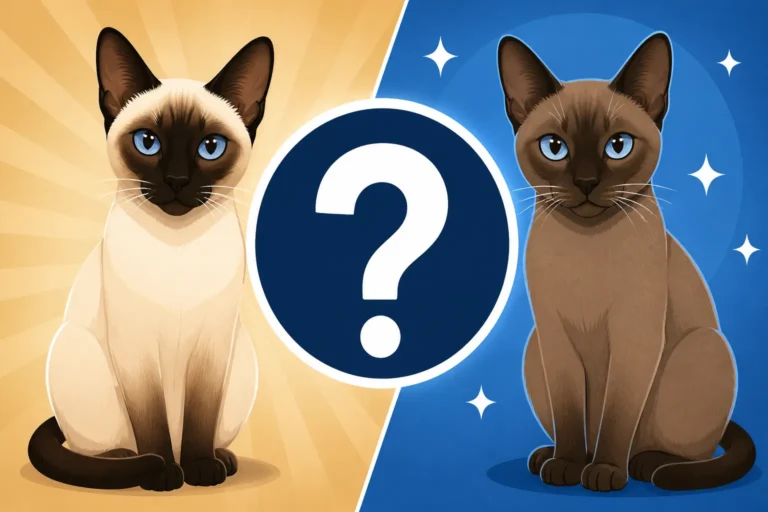
The defining characteristic of the Siamese coat is its "point" coloration. This means the darker pigment is concentrated on the cooler extremities of the body: the face (mask), ears, paws, and tail, with the body remaining a much lighter color. The breed standards recognize four traditional point colors, which are the most widely accepted and shown:
- Seal Point: This is the most famous and darkest point color, featuring deep seal brown (almost black) points with a rich fawn to cream-colored body. The contrast is dramatic and stunning.
- Blue Point: A softer, cooler version of the Seal Point, with deep slate blue points and an icy white body that often has a blueish tint. It's a very elegant and sophisticated color.
- Chocolate Point: These cats have warm, milk-chocolate brown points against an ivory body. The contrast is softer than a Seal Point but still distinct, with a lovely creamy appearance.
- Lilac Point: The lightest and most delicate of the four, featuring frosty grey points with a pinkish tone, set against a glacial white body. This color often has a dove-grey appearance.
These four colors are the foundation of the Siamese breed, and each has its own devoted following. Which Four Point Colors the CFA Accepts in a Siamese Cat goes into more detail about these specific colors and their nuances according to the various registries. While other point colors exist (like Red Point or Lynx Point), they are often considered part of the Colorpoint Shorthair breed by some associations, or recognized under expanded Siamese categories by others.
The Role of Temperature in Point Color
The fascinating aspect of Siamese point coloration is its temperature-dependent nature. The gene responsible for their color pattern is heat-sensitive. This means the pigment-producing enzyme (tyrosinase) only functions effectively in cooler parts of the cat's body. The core body, being warmer, produces less pigment, resulting in the light cream or white base color, while the cooler extremities—ears, face, paws, and tail—develop the darker points. What Point Coloration in a Siamese Cat Is explains this phenomenon in depth.
This unique genetic trait leads to some interesting variations throughout a Siamese cat's life. Kittens are born completely white or very pale because they were warm inside their mother's womb. Their points gradually develop as they are exposed to cooler air after birth. You'll see their ears and nose darken first, followed by their paws and tail.
Furthermore, a Siamese cat's point coloration can change with age and environmental temperature. Older Siamese cats often develop a darker body coat as their metabolism slows and body temperature regulation changes. Similarly, a Siamese living in a colder climate might have more intense, darker points than one living in a consistently warm environment. Even a shaved patch of fur will grow back darker because the skin temperature in that area drops. This dynamic coloration is a constant source of wonder for Siamese owners.
Faults and Disqualifications: What the Standard Rejects
While the breed standard describes the ideal Siamese, it also outlines specific traits that are considered "faults" or "disqualifications." These are deviations from the ideal that can penalize a cat in the show ring or even prevent it from being registered or shown as a purebred Siamese. Understanding these helps highlight the specific characteristics breeders are striving to maintain and eliminate.
Common Physical Faults
Many common physical traits, while perhaps endearing to pet owners, are considered faults in the context of the breed standard. These don't necessarily make a cat "unhealthy" or "bad," but they mean the cat doesn't perfectly align with the show ideal. Examples include:
- Crossed Eyes: As mentioned earlier, while historically present, pronounced crossed eyes are now a fault. Why a Siamese Cat's Eyes Cross details the history of this trait.
- Kinked Tail: Any deviation, bend, or irregularity in the tail is a fault. The tail should be a smooth, tapering "whip." Why a Siamese Cat's Tail Kinks further explains this.
- Pale Eye Color: Eyes that are too light blue, grey, or greenish rather than a deep, vivid sapphire blue are considered a fault.
- Round Head or Muzzle Pinch: A head that lacks the defined wedge shape or has a noticeable pinch at the muzzle where it meets the cheek is a fault.
- Cobby Body: A body that is too short, stocky, or heavy, rather than long and svelte, goes against the ideal.
- Faint Points or Body Shading: Points that are not clearly defined or a body that is too dark and heavily shaded, reducing the contrast between points and body, can be considered a fault.
These faults are often genetic and can be passed down, so responsible breeders strive to minimize their occurrence in their breeding lines. A cat with minor faults might still be a wonderful pet but wouldn't fare well in competitive cat shows. It’s a way for the fancy to maintain the aesthetic integrity and distinctiveness of the breed.
Serious Disqualifications
Beyond minor faults, there are certain characteristics that are considered serious disqualifications. A cat exhibiting any of these traits would not be allowed to compete in a show, regardless of its other qualities, and might even be ineligible for registration as a purebred Siamese with some associations. These often involve traits that significantly deviate from the core identity of the breed or suggest a genetic issue that could compromise health or breed integrity.
Examples of disqualifying features for a Siamese include:
- Any Eye Color Other Than Blue: This is a fundamental defining trait. Green, yellow, or mismatched eye colors would immediately disqualify a cat.
- Polydactyly: Having extra toes is a disqualifying trait in almost all purebred cat standards, including the Siamese.
- White Patches or Spots: The Siamese is a color-pointed breed; any white patches on the body outside of the standard point pattern would be a disqualification.
- Incorrect Number of Toes: Just as extra toes are disqualifying, so is having fewer than the standard number.
- Deafness: While not always outwardly visible, verified deafness can be a disqualifying factor, especially if linked to genetic lines.
- Obvious Illness or Poor Condition: Any cat that appears unwell, emaciated, or otherwise in poor health would be disqualified from competition, as the standard emphasizes a healthy, vigorous animal.
These disqualifications serve as strong indicators for breeders and judges to ensure that only the healthiest and most breed-typical examples are promoted. It's a crucial aspect of maintaining the genetic health and purity of the Siamese breed, preventing undesirable traits from becoming widespread. It underscores the serious commitment breeders have to the long-term well-being and characteristic appearance of these remarkable cats.
Beyond the Show Ring: The Everyday Siamese Look
While the breed standard is critical for breeders and show enthusiasts, it's also important to remember that most Siamese cats are beloved pets who never set paw in a show ring. Their appearance might deviate slightly (or significantly) from the highly refined standard, but they still embody the wonderful spirit and distinctive look that makes them Siamese.
Pet-Quality vs. Show-Quality
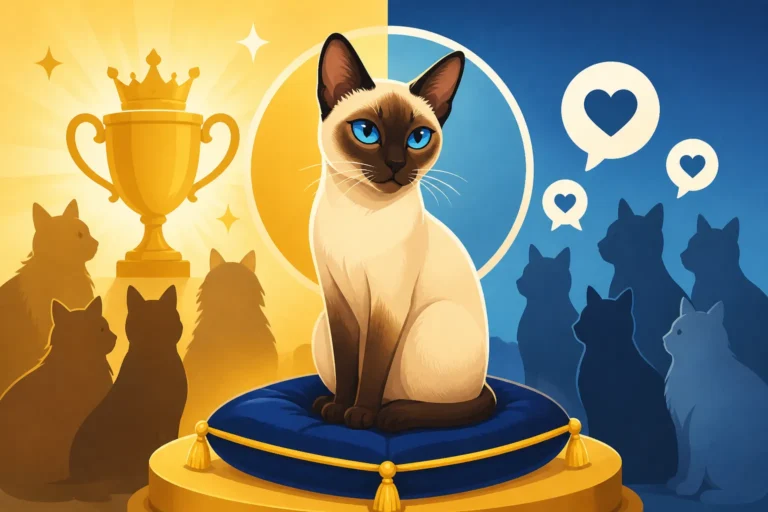
You've probably heard the terms "pet quality" and "show quality" when discussing purebred cats. A "show-quality" Siamese cat is one that adheres very closely to the breed standard, with minimal to no faults, making it a strong contender in cat shows. These cats are often the product of generations of careful, selective breeding, with breeders constantly striving for that ideal wedge head, deep blue eyes, and svelte body. They represent the pinnacle of the breed's physical characteristics.
A "pet-quality" Siamese, on the other hand, might have one or more minor faults that would prevent it from excelling in the show ring, such as slightly crossed eyes, a less extreme wedge, or a small tail kink. Perhaps its point color isn't quite as vivid, or its body is a little less tubular than the standard calls for. These variations don't impact the cat's health, temperament, or ability to be a loving companion in any way. They are simply not "perfect" according to the very specific demands of the breed standard.
It's a common misconception that "pet quality" means "inferior" or "unhealthy." This is rarely the case. A pet-quality Siamese is typically just as healthy, intelligent, and affectionate as its show-winning counterparts. The distinction is purely about conformation to a strict aesthetic ideal. Many wonderful Siamese cats who enrich homes across the globe are "pet quality," and their slight deviations from the standard simply add to their unique charm. A good breeder will always place pet-quality kittens into loving pet homes, often with a spay/neuter contract.
The Enduring Appeal of the Siamese Aesthetic
Whether a Siamese cat perfectly embodies the show standard or has a few charming quirks, their overall aesthetic has an undeniable, enduring appeal. It's their combination of sleek elegance, striking point coloration, and piercing blue eyes that captures hearts. Even a Siamese with a slightly rounder head or a faint tail kink still carries that unmistakable Siamese "look" that generations of cat lovers have adored.
The Siamese is a visual delight, a living piece of art that moves with grace and confidence. Their clean lines and distinctive coloring make them stand out in any home. This unique appearance is deeply intertwined with their spirited personality; their expressive faces and agile bodies perfectly complement their vocal and intelligent nature. It’s hard to imagine a breed where the physical characteristics and temperament are so intrinsically linked.
Ultimately, the breed standard serves as a guide, a vision of what the Siamese can be. But the true beauty of these cats lies not just in their conformity to a written ideal, but in their individuality, their vibrant personalities, and the joy they bring to our lives. Whether you admire them for their perfect wedge head or adore them for their slightly imperfect charm, the Siamese cat remains a truly captivating and visually stunning companion. And whether they're a showstopper or a sofa surfer, providing them with quality nutrition and enrichment from retailers like Chewy helps them stay healthy and beautiful.
| Feature | Breed Standard Description | Common Pet Variation (Often a Fault) |
|---|---|---|
| Head Shape | Long, tapering wedge, straight profile from nose to ear base. | Rounder or "applehead" shape, pinched muzzle, shorter profile. |
| Eye Color | Deep, vivid, clear blue. Almond-shaped and slanted. | Pale blue, greenish tint. Pronounced cross-eyes. |
| Ears | Strikingly large, pointed, broad at base, continuing wedge of head. | Smaller, rounded, or set too low. |
| Body | Long, tubular, svelte, firm, and muscular. Narrow chest. | Shorter, cobby, or stocky appearance. Bulky. |
| Legs & Paws | Long, slender, well-muscled legs. Small, neat, oval paws. | Shorter, thicker legs. Larger, rounder paws. |
| Tail | Long, thin, tapering to a fine point, whip-like, free of kinks. | Shorter, thicker, or kinked tail. |
| Coat Texture | Short, fine, close-lying, no undercoat. | Slightly thicker or softer coat (rarely a severe fault). |
| Point Color | Clear, distinct points (Seal, Blue, Chocolate, Lilac). Cream body. | Faint points, overly shaded body, less contrast. |
Disclaimer
This article is for general informational purposes only and does not constitute professional advice. Laws, prices and regulations vary by location and change over time. Consult a qualified professional for guidance on your specific situation.