Whether the Traditional Siamese Cat Still Exists
It can feel a bit disheartening when you start researching Siamese cats and all the beautiful pictures you find online showcase an extreme, ultra-svelte look that doesn't quite match the sturdy, round-headed cat you remember from your childhood or family photos. Many people wonder if the "old-fashioned" Siamese cat, the one with the more moderate build and apple-shaped head, still even exists or if the breed has completely transformed. This guide is here to reassure you and explore the fascinating journey of the Siamese cat, confirming that yes, the traditional look absolutely endures, albeit sometimes under a different name.
The Shifting Sands of the Siamese Standard: From Traditional to Modern
The journey of the Siamese cat, from its royal origins in Siam (now Thailand) to the beloved companion it is today, is a tale of evolving preferences and selective breeding. What we now call the "traditional" Siamese was once simply the Siamese cat. Over the past century, the breed standard, especially in the Western show world, began to lean towards a more extreme aesthetic, slowly but surely transforming the breed's appearance.
The Original Siamese Look
When the first Siamese cats arrived in the West in the late 19th century, they were known for their elegant point coloration, piercing blue eyes, and vocal personalities. Their physique, however, was what we would now consider quite "traditional." Imagine a cat of medium build, neither excessively bulky nor needle-thin. They had a moderately rounded head, often referred to as an "applehead," with ears that were proportionate to their head and set slightly less wide than today's show cats. Their bodies were muscular and substantial, their tails a good length but not whip-thin, and their eyes had a pleasing, slightly almond shape that wasn't overly slanted. They were robust and agile, perfectly suited to a life that might have involved hunting rodents or simply lounging in royal palaces. These cats carried themselves with dignity and grace, embodying the ancient descriptions found in the What the Tamra Maew Manuscripts Show About the Siamese Cat.
The Evolution to the Modern Wedge
As the Siamese cat gained popularity in cat shows, particularly in North America and Europe, breed standards began to be formalized and refined by various cat associations. Over decades, judges and breeders developed a preference for a more angular, elongated look. This wasn't an overnight change; it was a gradual process of selecting cats with increasingly wedge-shaped heads, larger ears set wide apart, and exceptionally slender, tubular bodies. The goal was to achieve a sleek, almost ethereal appearance, emphasizing long lines and extreme refinement. This push led to the modern "wedge-head" Siamese we see dominating the show rings today. If you've ever looked at vintage photos of Siamese cats from the 1950s and compared them to a contemporary show winner, the difference is striking. It's a testament to how profoundly human preferences can reshape a breed's physical characteristics through selective breeding. This transformation, and How the Siamese Cat's Head Changed Shape in Fifty Years, is a major point of discussion among enthusiasts.
What We Mean by 'Traditional' and 'Modern' Siamese
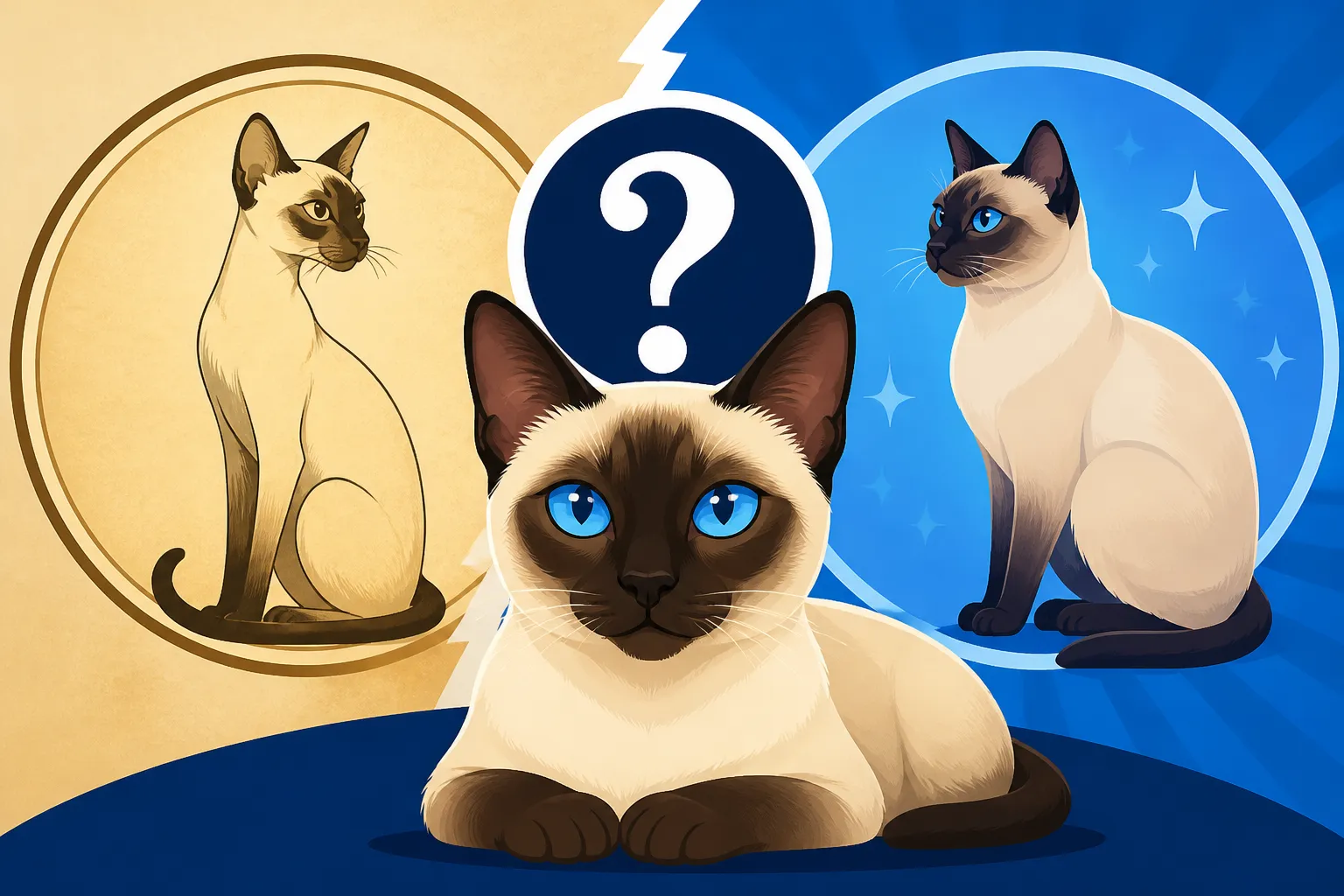
Understanding the distinction between "traditional" and "modern" Siamese is crucial for anyone seeking a cat that matches their nostalgic idea of the breed, or simply for those who appreciate the historical lineage. It's not just about a slight difference; these are two distinct aesthetics born from different breeding philosophies.
The Applehead (Traditional) Siamese
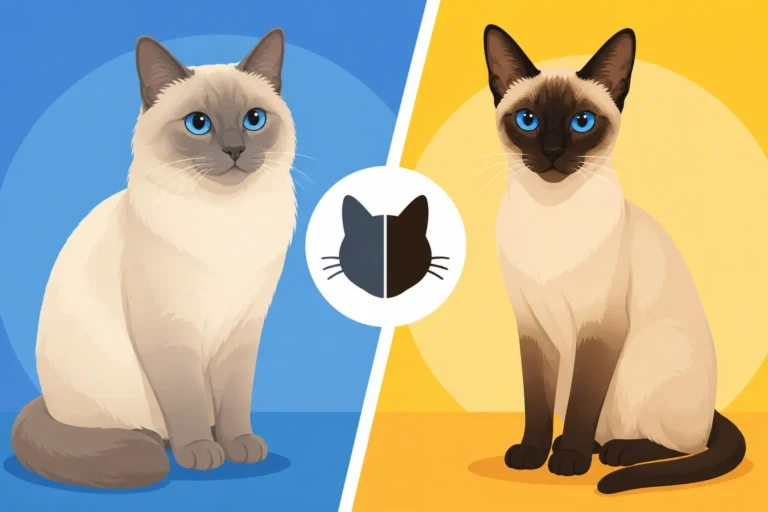
When enthusiasts talk about a "traditional Siamese," they are often referring to the "applehead" type. This term vividly describes their most defining feature: a broad, rounded head, reminiscent of an apple. These cats have a sturdier, more substantial body structure, often described as cobby or medium-boned, giving them a more robust and less fragile appearance. Their ears are typically medium-sized and set closer together than their modern counterparts. Their eyes are still a striking blue, but they tend to be more rounded in shape, contributing to a softer, less intense facial expression. Think of the Siamese cats featured in older films or illustrations – chances are, they're sporting this traditional look. What an Applehead Siamese Cat Is delves deeper into these characteristics. They possess the same intelligence and vocal nature as any Siamese, but their physical presentation is a throwback to the breed's earlier days.
The Wedge-Head (Modern) Siamese
The "modern" Siamese, on the other hand, adheres to the current show standards favored by many major cat registries like the Cat Fanciers' Association (CFA) and The International Cat Association (TICA) for their main Siamese division. This type is characterized by an extremely elongated, triangular head that forms a distinct wedge from the tips of the ears to the nose. Their ears are large, wide-set, and broad at the base, flaring out significantly. The body is famously slender and tubular, often described as "pipestem," with long, fine legs and a long, whip-like tail. Their eyes are distinctly almond-shaped and often appear more slanted, giving them a very intense, angular look. What a Modern Wedge Siamese Cat Looks Like offers a full description. This aesthetic is a result of generations of breeding to achieve a specific, refined silhouette that is highly prized in the competitive show circuit.
Here's a quick comparison of the key physical differences:
| Feature | Traditional Siamese (Applehead/Thai) | Modern Siamese (Wedge/Show) |
|---|---|---|
| Head Shape | Broad, rounded, "applehead" | Long, distinct wedge, narrow |
| Body Build | Sturdy, muscular, medium | Svelte, tubular, fine-boned |
| Ears | Medium size, moderately set | Large, wide-set, flared |
| Eye Shape | More rounded | Almond-shaped, distinctly slanted |
| Profile | Gentle curve from forehead to nose | Long, straight, flat profile |
| Legs | Proportionate, medium length | Long, slender |
| Tail | Medium length, often thicker at base | Long, thin, whip-like |
The Quest for the Classic Look: Why Breeders Diverged
The divergence in Siamese cat appearance isn't just a random occurrence; it's a fascinating story of breeding goals, aesthetic preferences, and the dedication of different groups of enthusiasts. While the show world pushed for the extreme, others actively worked to preserve the traditional features.
Preserving the Original Lines
As the modern wedge type became the dominant look in the show halls, a number of dedicated breeders felt a sense of loss for the classic, more moderate Siamese. They cherished the sturdy build, the rounder head, and the less extreme features that they believed represented the true heritage of the breed. These breeders made a conscious decision to step away from the evolving show standards and focus their efforts on maintaining the older genetic lines. They sought out cats that still exhibited the traditional "applehead" characteristics, often tracing pedigrees back to earlier imports or lines that had not been heavily influenced by the new show trends. Their aim was not to create a new breed, but to safeguard the original form of the Siamese cat. This dedication has ensured that the genetic pool for the traditional look has been preserved, even if it meant operating outside the mainstream show circuits for a time.
The Influence of Show Standards and Public Demand
The driving force behind the shift to the modern wedge-head Siamese was, undeniably, the cat fancy's show standards. Judges at major competitions began to reward cats that exemplified the elongated, refined look, and breeders naturally followed suit to produce winning animals. The cycle perpetuated itself: as more extreme cats won, they were bred, and their offspring further pushed the boundaries of the "wedge" ideal. This created a strong demand within the show community for these highly stylized cats, inadvertently marginalizing the traditional look. Why Show Demand Drives the Wedge Siamese Cat Price highlights this competitive aspect. However, it's also true that public perception plays a role. The striking, almost alien beauty of the modern Siamese captured the imagination of many, and the breed became synonymous with this sleek, angular aesthetic. For those looking for a show cat, the modern wedge is the undisputed standard, but for many pet owners, the traditional look still holds a strong appeal.
Enter the Thai Cat: A Familiar Face with a New Name
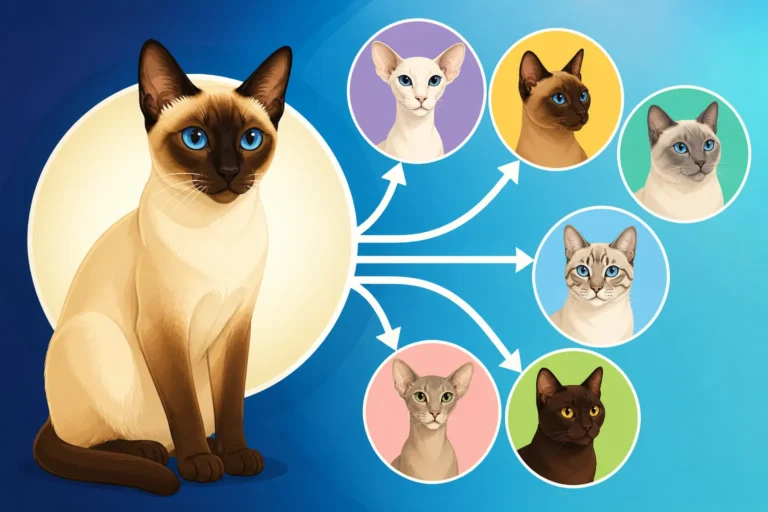
For those longing for the traditional Siamese cat of yesteryear, there's good news: not only does the look still exist, but it also has its own recognized breed category, often referred to as the Thai cat. This separate recognition has been a huge win for enthusiasts of the older style.
The Revival of the Original Siamese as the 'Thai'
The "Thai" cat is, in essence, the traditional Siamese cat, preserved and now recognized as its own distinct breed. When the Siamese breed standard diverged so dramatically from its origins, a group of dedicated individuals realized that the cats still found in Thailand often retained the original, moderate build. These cats, known as Wichianmat in their homeland, are the direct descendants of the cats that were first brought to the West. Enthusiasts and breeders began importing these cats or working with existing "applehead" lines in the West, aiming to establish a breed that specifically conformed to the older style. The breed was eventually named the Thai, reflecting its country of origin and differentiating it from the modern Siamese. This gave the traditional look a clear identity and a path to formal recognition in some registries, allowing it to be judged and bred according to a standard that celebrates its original characteristics. What the Thai Cat Is Next to a Siamese Cat provides excellent context on this fascinating development.
What the Thai Standard Asks For
The breed standard for the Thai cat explicitly calls for the traditional Siamese attributes: a moderate, sturdy body, a rounded or "apple" shaped head, and ears that are proportionate and medium-sized. Their eyes are a brilliant blue, but more rounded than the extreme almond shape of the modern Siamese. The Thai cat is described as robust, muscular, and active, with a short, close-lying coat and a full, normal-length tail. Essentially, if you closed your eyes and imagined a Siamese cat from a classic 1950s advertisement, you're picturing a Thai cat. This distinct standard ensures that breeders focusing on the Thai are producing cats that consistently embody that cherished traditional appearance, separate from the evolving standards of the modern Siamese. It’s a wonderful example of how passionate individuals can safeguard a piece of living history.
Finding Your Piece of History: Sourcing a Traditional Siamese Today
If you're eager to welcome a traditional Siamese into your home, you'll be pleased to know it's entirely possible. However, the search might require a slightly different approach than finding a modern show-line Siamese.
Identifying Breeders of Traditional Lines
Finding a breeder dedicated to the traditional Siamese look means looking for those who specify "applehead Siamese," "old-style Siamese," or increasingly, "Thai cats." These breeders are typically passionate about preserving the older genetics and will emphasize the moderate body type and rounded head in their descriptions. They may not show their cats in the main Siamese divisions of major registries, or they might participate in registries that have separate categories for Thai cats or traditional Siamese. It's crucial to ask questions about their breeding philosophy, the physical characteristics of their breeding cats, and whether they prioritize health and temperament alongside appearance. A reputable breeder will be transparent about their lines and happy to discuss the heritage of their cats. Looking for breed clubs specifically dedicated to the Thai cat or traditional Siamese is also a fantastic starting point. Remember that while a modern Siamese breeder might use services like Chewy for their cat's essentials, traditional breeders are a specific niche.
Adoption and Rescue Options for the Classic Look
Sometimes, the perfect traditional Siamese finds you through rescue. Many wonderful cats end up in shelters or breed-specific rescues for various reasons, and it's not uncommon to find cats that exhibit the older, more moderate Siamese characteristics. These might be purebred traditional Siamese whose owners could no longer care for them, or they could be Siamese mixes with strong traditional features. Organizations dedicated to Siamese rescue, or even local humane societies, often have a rotating cast of beautiful cats. Don't discount the possibility of finding an adult cat with the look you love who desperately needs a loving home. When browsing adoption sites, pay close attention to the photos and descriptions. Sometimes, words like "sturdy build" or "round head" will clue you in that you're looking at a cat with traditional lineage. Even for a rescue cat, you'll still need supplies, and platforms like Chewy can be incredibly helpful for stocking up on everything from carriers to cat trees once your new family member is settled.
Beyond Looks: Temperament and Health Comparisons
While the physical appearance is what often draws people to either the traditional or modern Siamese, it's vital to remember that a cat is more than its looks. Temperament and health are paramount considerations for any potential cat owner.
Temperament: The Siamese Essence Endures
Regardless of whether a Siamese cat sports a refined wedge or a classic applehead, the core Siamese personality shines through. These are highly intelligent, vocal, and interactive cats. They crave companionship and are known for forming strong bonds with their human families. You can expect a Siamese, traditional or modern, to "talk" to you, follow you from room to room, and generally be an active participant in your daily life. They are often described as "dog-like" in their devotion and their ability to be leash-trained or learn tricks. While some anecdotal evidence suggests that the very extreme modern types might be slightly more high-strung, this is not a universally accepted truth, and individual personality varies greatly within both types. Ultimately, the legendary Siamese "meezer" charm and conversational nature are inherent to the breed, no matter its head shape. Finding engaging toys and enrichment on sites like Chewy is important for any Siamese to keep their sharp minds occupied.
Health Considerations: Debunking Myths and Facing Realities
When it comes to health, there's often a misconception that the traditional Siamese is inherently healthier than the modern Siamese. While it's true that extreme conformation can sometimes introduce or exacerbate health issues in any breed, both traditional and modern Siamese cats generally share a similar genetic predisposition to certain conditions. For example, Amyloidosis Is the Disease That Kills Young Siamese Cats is a concern for the breed as a whole, affecting cats regardless of their head shape. Similarly, conditions like Progressive Retinal Atrophy (PRA) are linked to genetic markers found across Siamese lines.
What can be different is how breeders prioritize health screening. Reputable breeders of both types will focus on health testing and responsible breeding practices. However, some criticisms leveled at the modern wedge-head lines suggest that the emphasis on extreme features might lead to narrower gene pools or a greater incidence of certain conformational issues, though this is debated. Conversely, some traditional lines might not have undergone the same rigorous health screening prevalent in mainstream show breeding programs simply because they operate outside those systems. Therefore, the key is not necessarily which "type" you choose, but rather the responsibility and ethics of the breeder you choose. Always ask about health guarantees, parental health history, and what genetic tests have been performed, especially concerning conditions like PRA and the Siamese Cat Eye Test That Does Not Settle It or heart health. Good breeders, whether traditional or modern, often provide extensive information on their kittens, including their first vaccines and perhaps a starter bag of food, which can then be replenished from a source like Chewy.
In conclusion, the traditional Siamese cat absolutely still exists. It thrives under various names like "applehead Siamese," "old-style Siamese," and most notably, the officially recognized "Thai" cat. These cats offer the charm and personality that has made the Siamese famous, combined with a beloved, classic appearance. If your heart is set on a Siamese that harks back to yesteryear, rest assured, you can find your perfect companion.
Disclaimer
This article is for general informational purposes only and does not constitute professional advice. Laws, prices and regulations vary by location and change over time. Consult a qualified professional for guidance on your specific situation.