Whether a DNA Test Confirms a Siamese Cat
A DNA report that labels a cat “Siamese” can feel like a clear answer, especially when the cat has blue eyes and pointed coloring. But a consumer DNA test cannot, by itself, prove that a cat is a pedigreed Siamese. This guide explains what those results can show, what they cannot establish, and how to assess a cat’s breed history.
What a Cat DNA Test Can Tell You
Breed ancestry is an estimate, not a certificate
Cat DNA tests compare a sample—usually collected with a cheek swab—with genetic reference groups used by the testing company. The report may suggest that a cat shares genetic similarities with Siamese cats or other breeds. That can be interesting context, especially for a rescue cat whose background is unknown, but it is not the same as confirming breed registration.
A breed percentage should be read as an estimate based on the company’s reference samples and analysis. It does not necessarily mean that a cat has a specific, verifiable Siamese ancestor, and it should not be treated like a pedigree document. Different companies may use different reference populations and methods, so results can vary.
Think of a test as one clue in a larger picture. If a report suggests Siamese ancestry, it may support the idea that Siamese-related cats are in the family tree. It cannot establish exactly when or how that ancestry entered the line, or prove that the cat meets a breed registry’s requirements.
This distinction matters if you are trying to document a cat for breeding, registration, or a sale. A DNA result is not a substitute for the records that show a cat’s parents and pedigree. For appearance and background questions, How to Tell a Siamese Cat From a Mixed Breed offers another way to think about what visual traits can—and cannot—tell you.
A genetic trait is not exclusive to one breed
A DNA test may also identify traits associated with a Siamese cat’s appearance. Pointed coloring, for example, is connected with a temperature-sensitive form of the color gene: pigment develops more strongly in cooler parts of the body, which is why a pointed cat may have darker ears, face, paws, and tail. But a genetic result for pointed coloring does not prove the cat is Siamese. The trait can occur in cats with different backgrounds.
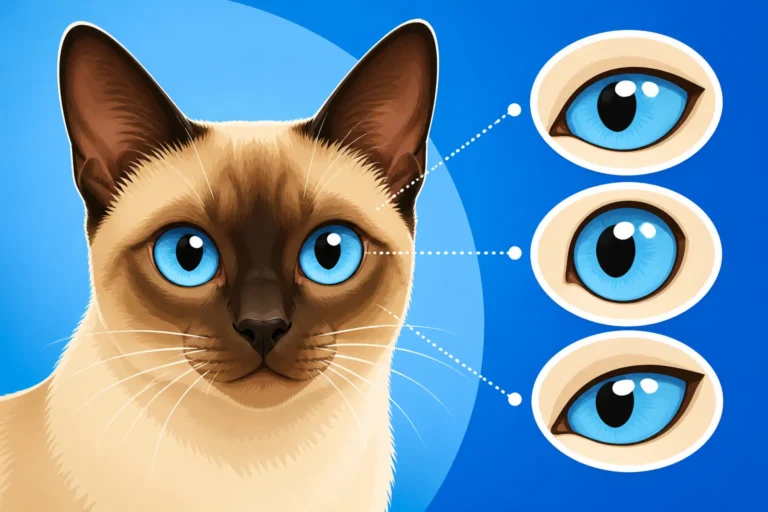
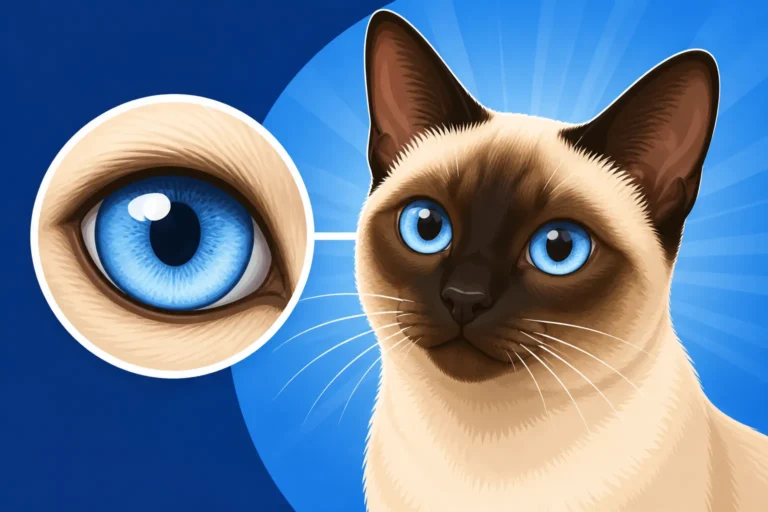
The same caution applies to other visible features. Blue eyes and a pale body with darker points can make a cat look strongly Siamese, but resemblance alone does not confirm pedigree. Cats from different family lines can share similar coloring, body shape, or facial features.
A report that identifies a color or coat trait is answering a different question from “Is this cat a pedigreed Siamese?” It may tell you something about the biology behind the cat’s appearance; it does not establish breed identity. For more on the visual side, What a Siamese Cat Looks Like by the Standard explains how a breed standard describes the cat’s overall appearance, while Which Point Colors Other Registries Accept in a Siamese Cat explores how color recognition can differ across registries.
Why a DNA Test Cannot Prove Pedigree
Breed identity depends on documented lineage
A pedigreed cat’s identity is generally supported by records connecting the cat to registered parents and ancestors. Those records provide a family history that a consumer ancestry test cannot recreate on its own. A DNA report may point toward Siamese-related ancestry, but it does not verify each parent or establish a registration lineage.
This can be frustrating when a cat looks unmistakably like a Siamese. A family may have adopted a pointed cat from a shelter, heard that one parent was Siamese, and hoped a DNA kit would settle the question. The test may offer an ancestry estimate, but if there are no pedigree records, it still cannot certify the cat as a registered Siamese.
If you are considering a cat from a breeder, ask what documentation is available and what the registration papers actually cover. For a rescue, the most honest answer may be that the cat is a Siamese-type or Siamese-looking cat with unknown ancestry. That does not make the cat any less lovable; it simply keeps the label accurate. The history of related breeds can add to the confusion, so Which Thai Cats Are Related to the Siamese Cat and Whether a Thai Cat Is a Siamese Cat can help clarify why similar-looking cats may be described differently.
Mixed ancestry and breed labels can be complicated
Domestic cats have complex family histories. A cat can inherit a striking point pattern or facial shape without being a recent cross with a pedigreed Siamese. And terms such as “Siamese mix,” “Siamese-type,” and “pedigreed Siamese” do not mean the same thing.
There is also a related breed distinction: the Colorpoint Shorthair shares a close relationship with the Siamese but is recognized separately by some registries. This is one reason that a DNA result containing a Siamese label may not settle how a registry would classify a cat. What a Colorpoint Shorthair Is Next to a Siamese Cat and Which Registry Splits the Siamese Cat From the Colorpoint Shorthair explain why breed names and registration categories do not always map neatly onto a consumer DNA report.
| What you want to know | What a DNA test may help with | What it cannot prove by itself |
|---|---|---|
| Whether a cat has Siamese-related ancestry | It may estimate genetic similarity to a Siamese reference group | A complete, verified pedigree |
| Why a cat has pointed coloring | It may identify a genetic trait associated with coat color | That the cat belongs to the Siamese breed |
| Whether a cat is registered as Siamese | It may provide background information | Registry eligibility or registration status |
| Whether a cat has a health-related variant | It may report specific variants included in that test | That the cat is free of all inherited or future health problems |
How to Read a Siamese DNA Test Result
Check what the test actually analyzes
Before ordering a kit, look at the company’s description of its breed ancestry section. Ask how the company defines breed matches, whether it provides a confidence explanation, and whether its report separates ancestry estimates from coat traits and health findings. A result is easier to interpret when you know what question the test was designed to answer.
If you come across a cat DNA kit while browsing Chewy, read the product details carefully rather than assuming that a breed label in the report will serve as official proof. Check whether the test offers ancestry estimates, health-variant screening, or both. These are different kinds of results, and a kit may include one without including the other.
When a result arrives, note the exact wording. “Siamese ancestry,” “Siamese-like,” and a specific percentage are not the same as “registered Siamese.” If the report gives a percentage, treat it as an estimate produced by that test’s method—not a literal measurement of how much of the cat is Siamese in a pedigree sense.
Separate ancestry findings from health findings
Some DNA kits report selected health-associated genetic variants as well as breed ancestry. Those results should be considered separately. A health screening may identify a particular variant included in the panel, but a negative result does not mean a cat cannot develop illness. It also does not replace a veterinary exam or tests recommended for an individual cat.
If you are concerned about a symptom—such as changes in appetite, weight, breathing, or activity—do not wait for an ancestry report to decide whether the cat needs care. Share any relevant genetic findings with your veterinarian and ask what, if anything, they mean for that cat. Breed ancestry alone cannot diagnose a condition or predict a cat’s complete health future.
When comparing options on Chewy or another retailer’s site, make sure you understand whether a product is an ancestry test, a health test, or a combined panel. Look for an explanation of how samples are collected, how the report distinguishes trait results from disease-associated variants, and what steps to take if a result raises a health question.
Practical Steps Before and After Testing
Choose a test for the question you have
Start by writing down what you actually want to learn. If you are curious about a rescue cat’s possible background, an ancestry estimate may satisfy that curiosity while remaining an estimate. If you need proof of pedigree, ask for registration and lineage documents; a consumer DNA test is not a replacement. If you are trying to understand a health concern, speak with your veterinarian about appropriate clinical testing rather than relying on a general breed report.
Before ordering, compare the test’s stated purpose, sample instructions, and reporting categories. If buying through Chewy, use the listing to review the kit’s stated features, but also check the testing company’s own information for details about interpretation and limitations. The name of a retailer does not change what a genetic test can establish.
Follow the sample instructions closely. Avoid collecting a swab immediately after the cat has eaten or groomed, if the kit specifies a waiting period, and use the correct sample for the correct cat. In a multi-cat home, label the sample carefully and keep it separate from other pets’ kits. A sample mix-up can make even a technically sound report useless.
Use the result as one piece of the story
When you receive the report, read the explanation and limitations before focusing on the breed percentage. Keep a copy with adoption, veterinary, and registration records. If the result conflicts with what you were told about the cat, it may be worth asking the testing company how it reached its estimate—but do not assume that one report automatically overrides documented pedigree records.
If the report identifies a health-related variant, discuss it with a veterinarian before making decisions about treatment, breeding, or screening relatives. The meaning can depend on the specific variant, the cat’s health, and the test’s intended use. A consumer report can start a useful conversation, but it should not become a diagnosis.
And if your cat turns out to have no detectable Siamese ancestry, nothing about the bond changes. DNA can offer clues about family background; it cannot measure personality, companionship, or the particular way a cat claims the warmest spot in the house. A Siamese-looking cat with an unknown history is still exactly the cat who sleeps on your pillow and calls you to dinner.
Disclaimer
This article is for general informational purposes only and does not constitute professional advice. Laws, prices and regulations vary by location and change over time. Consult a qualified professional for guidance on your specific situation.