Whether the Tamra Maew Pictures a Modern Siamese Cat
Many of us who adore Siamese cats often wonder about their ancient origins. We hear tales of the 'Royal Cat of Siam' and ancient texts like the Tamra Maew, and it's natural to picture our sleek, vocal companions in those same historical scenes. But how much do those ancient depictions actually resemble the Siamese cat we know and love today? This guide will dive deep into the descriptions from the Tamra Maew and compare them to the various forms the Siamese cat has taken over the centuries, right up to our modern-day feline friends, revealing some fascinating similarities and striking divergences.
The Tamra Maew: A Glimpse into Ancient Siamese Feline Lore
Before we can compare, we need to understand what the Tamra Maew is and why it's so pivotal to the Siamese cat's story. This isn't just a casual collection of old cat pictures; it's a significant historical document.
What is the Tamra Maew and its Significance?
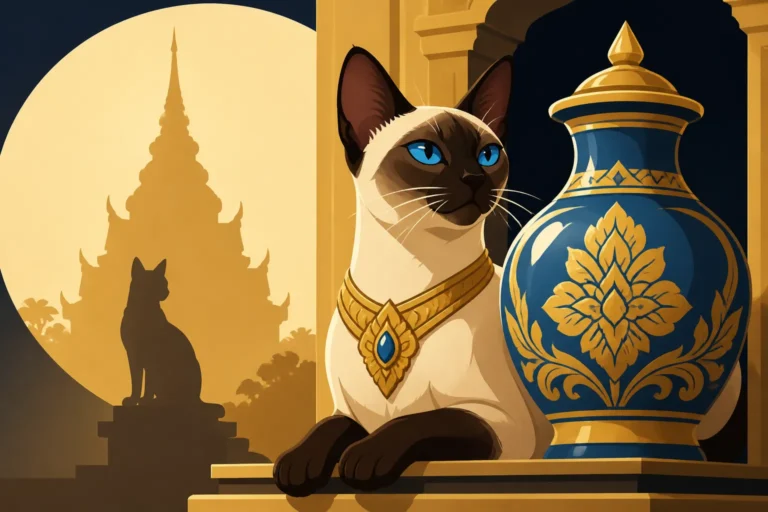
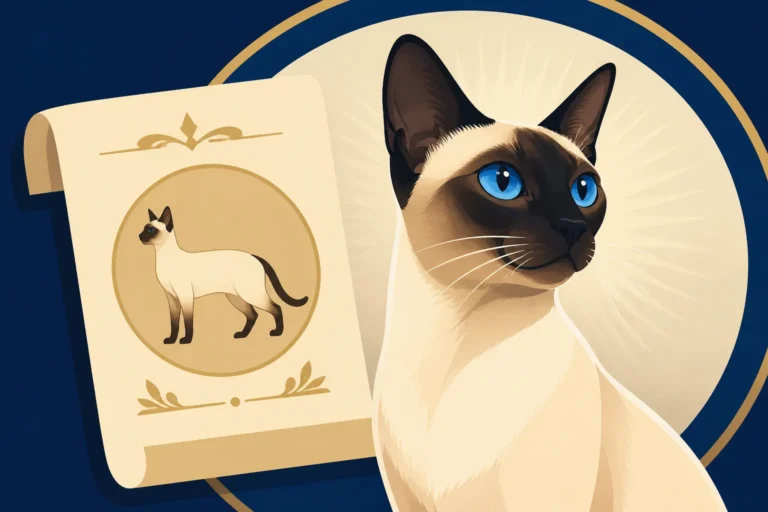
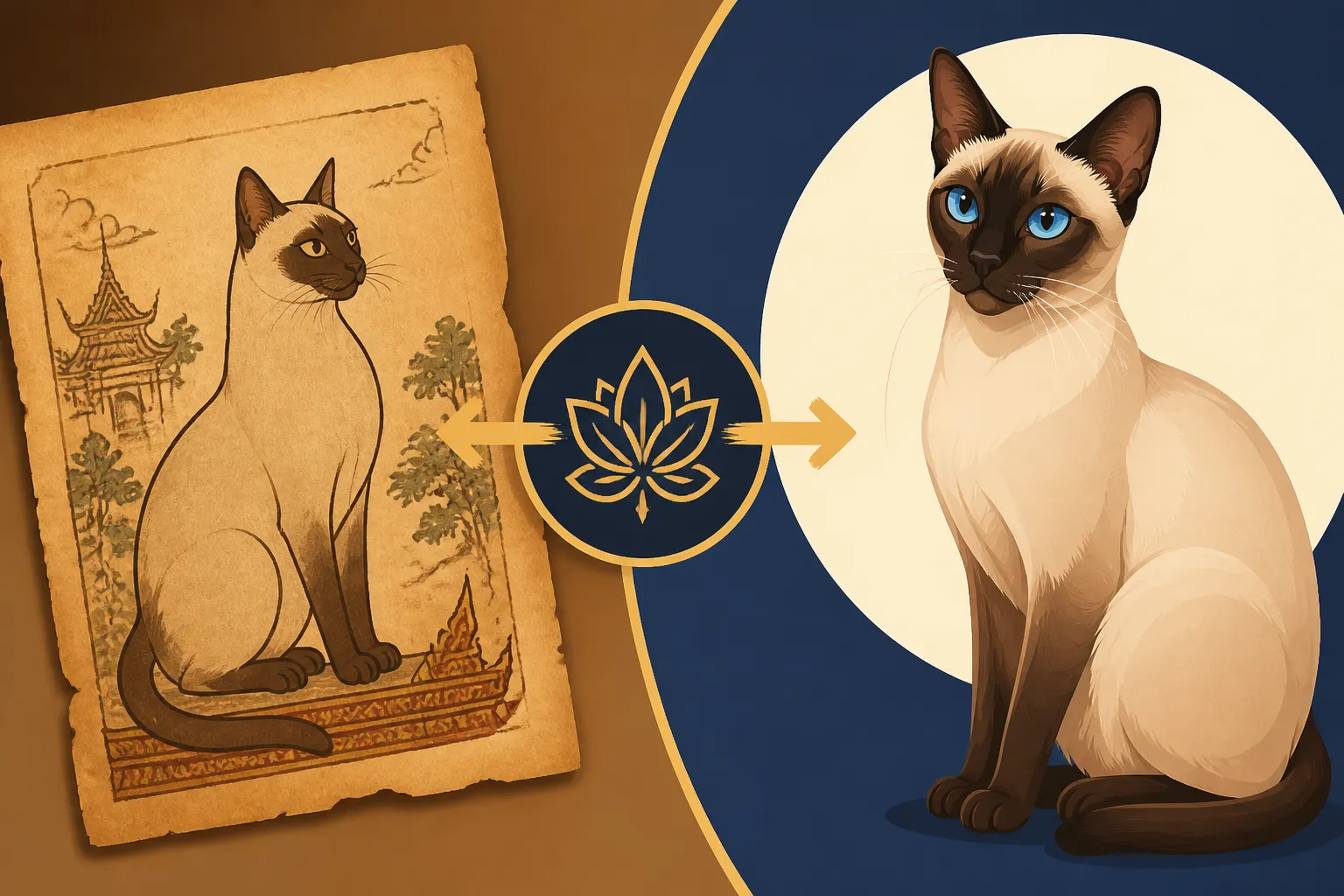
The Tamra Maew, often translated as "The Cat Book Poems" or "Treatise on Cats," is an ancient Thai manuscript that holds profound cultural and historical significance for cat lovers, especially those interested in the origins of the Siamese. These beautifully illustrated texts, penned in ancient Siam (now Thailand), date back several centuries, with some experts suggesting versions as old as the 14th century, though most surviving copies are from the 18th and 19th centuries. They were far more than simple children's books; they served as guides, detailing the characteristics of various cats, distinguishing between those believed to bring good fortune and those thought to bring ill luck. These manuscripts were often kept by royalty and the elite, providing insight into the esteemed place cats held in ancient Siamese society. What the Tamra Maew Manuscripts Show About the Siamese Cat sheds more light on the depth of these historical records.
The significance of the Tamra Maew lies in its detailed descriptions and charming illustrations of cats that were native to the region. Unlike modern breed standards, these were not rigid genetic blueprints, but rather poetic observations of the cats' appearance, temperament, and perceived magical or auspicious qualities. They were written at a time when cats, particularly those with unique markings or temperaments, were revered and considered sacred. The stories and imagery within these books paint a vivid picture of the types of felines that captivated the people of Siam long before Westerners ever laid eyes on the distinctive, pointed cats we now call Siamese. It's a window into a world where a cat's color pattern or a specific vocalization might predict your future.
The "Wichianmat" and Other Cats Described
Among the various cats celebrated in the Tamra Maew, one description stands out as the direct ancestor of our modern Siamese: the "Wichianmat" cat. The name "Wichianmat" itself is quite poetic, often translated as "Moon Diamond" or "Diamond Gold," referring to the striking blue eyes and golden body, which would darken into points. This particular cat was described as having a pale body with dark points on its ears, face, paws, and tail – precisely the defining characteristics of the Siamese cat we know. The manuscripts noted its elegant appearance, intelligence, and often its vocal nature, suggesting a personality that matches the talkative Meezers we cherish today. What Wichianmat Means in the Siamese Cat's Homeland delves deeper into the linguistic roots and cultural context of this important term.
However, the Tamra Maew didn't just feature the Wichianmat. It described 23 "good luck" cats, including the Suphalak (a solid copper-colored cat, thought to be the ancestor of the Burmese), the Konja (a sleek, solid black cat), and the Kao Manee (a pure white cat with bright eyes, often one blue and one gold). These descriptions reveal a rich tapestry of feline diversity in ancient Siam. While the Wichianmat holds a special place, it's crucial to remember that it existed within a spectrum of beloved and documented cats. The Tamra Maew celebrated various feline forms, each with its own charm and spiritual connotations, not just one singular breed. This comprehensive approach underscores how deeply cats were integrated into the cultural fabric of The Siamese Cat Came From Siam, Not Thailand.
Defining the "Modern" Siamese Cat
To truly compare, we need to have a clear understanding of what a "modern" Siamese cat entails. This isn't as simple as it sounds, as the breed itself has undergone significant transformations over the past century and a half.
The "Wedge" vs. "Traditional/Applehead" Divide
When we talk about "modern" Siamese cats, it's important to acknowledge that there isn't just one single look. Over time, selective breeding in Western countries has led to a noticeable divergence in appearance, creating what is often referred to as the "Wedge" type and the "Traditional" or "Applehead" type. The Wedge Siamese, also known as the Modern Siamese, is the type predominantly seen in cat shows today. Breeders have meticulously selected for an increasingly elongated, angular, and refined appearance, pushing the boundaries of what was once considered the breed standard. What a Modern Wedge Siamese Cat Looks Like elaborates on these distinct features.
On the other hand, the Traditional or Applehead Siamese represents an older style, closer to the cats originally imported from Siam in the late 19th and early 20th centuries. These cats possess a rounder, broader head (hence "applehead"), a more robust body, and generally less extreme features than their wedge-headed counterparts. They maintain the classic point coloration and piercing blue eyes, but with a less angular physique. While not typically seen in modern show rings, the Applehead still has a devoted following among enthusiasts who prefer the more "original" look. What an Applehead Siamese Cat Looks Like provides a deeper dive into their appearance. This divide highlights how human preference and breeding goals can dramatically alter a breed's physical characteristics over generations.
Key Physical Characteristics of the Modern Show Siamese
The modern, show-standard Siamese, often referred to as the "Wedge" Siamese, is an unmistakable cat, known for its extreme elegance and striking features. Its body is long, slender, and tubular, often described as "slinky" or "sylph-like," built for agility and grace. This isn't a fluffy, chunky cat; it's all lean muscle and refined lines. The legs are long and slim, tapering down to small, oval paws, and the tail is long, thin, and whip-like, ending in a fine point.
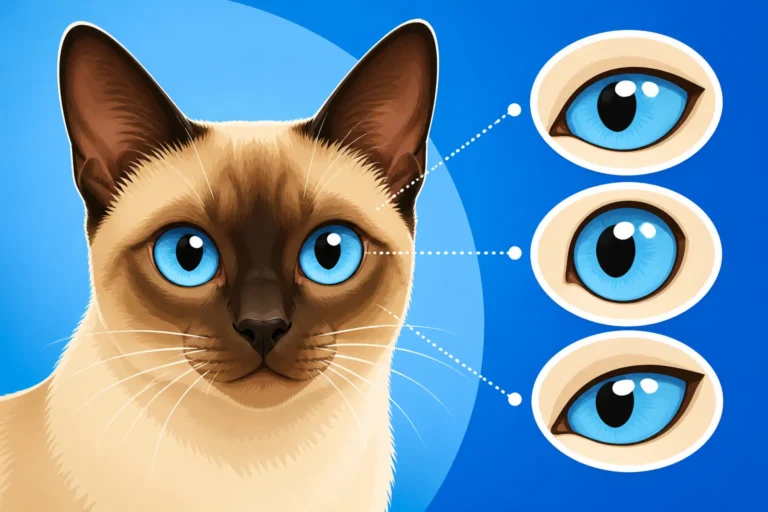
Perhaps the most defining characteristic is the head. It's a perfect wedge, forming a triangle from the tip of the nose to the tips of the large, wide-set ears. These ears are another prominent feature, continuing the lines of the wedge head. The eyes are almond-shaped and slanted towards the nose, set wide apart, and possess an intense, vivid blue color that can truly mesmerize. Why a Siamese Cat's Eyes Cross and Its Tail Kinks discusses some of the more historical aspects of these features. The coat is short, fine, and lies close to the body, emphasizing its lithe physique, and, of course, features the classic "point" coloration – a pale body with darker, contrasting points on the extremities, which darkens further with age and in cooler temperatures. Which Point Colors the Registries Accept details the range of accepted point colors.
Comparing Ancient Descriptions to Modern Realities
Now for the exciting part: putting the ancient records side-by-side with our contemporary understanding of the Siamese cat. The comparisons reveal a journey of transformation.
Similarities: Coloration, Intelligence, Vocal Nature
Despite centuries of selective breeding and geographic separation, some core aspects of the Wichianmat, as described in the Tamra Maew, still resonate strongly with the Siamese cat of today. The most obvious similarity, and the very essence of the breed, is the point coloration. The ancient texts describe cats with pale bodies and dark extremities – ears, face, paws, and tail – which is the hallmark of every Siamese cat, whether modern wedge or traditional applehead. This unique genetic trait has been preserved across generations, a testament to its striking beauty and the care taken by breeders. What Point Coloration in a Siamese Cat Is further explores this fascinating genetic phenomenon.
Beyond physical appearance, the Tamra Maew also hints at the intelligence and distinct vocalizations of the Wichianmat. Descriptions often portrayed these cats as intelligent, attentive, and sometimes even talkative, qualities that are quintessential to the Siamese personality today. Any Siamese owner will tell you their cat is not just smart but also highly communicative, using a vast repertoire of meows, chirps, and the famous "Meezer yowl" to express desires, opinions, and observations. This suggests that the inherent intellect and vocal nature were appreciated and noted centuries ago, making it a truly enduring trait of the breed. What a Siamese Cat's Temperament Is Really Like explores this in greater detail.
Differences: Body Type, Head Shape, Eye Set, Tail Kinks
However, the differences between the Tamra Maew's implicit depictions and the modern show Siamese are significant, especially concerning the extreme physical traits. The illustrations in the ancient manuscripts, while stylized, generally show cats with more moderate body types – a sturdy, muscular, and medium-sized build, far removed from the ultra-slender, tubular body of the modern show Siamese. The ancient cats likely had a more robust frame, suited to a life in a bustling palace or temple environment, rather than the delicate elegance prized in the show ring.
The head shape is perhaps the most dramatic divergence. The Tamra Maew cats, and the early imported Siamese, had rounder, broader heads, similar to what we now call the Applehead type. This is in stark contrast to the pronounced, elongated "wedge" head of the modern show Siamese, which has been intensely bred for. The evolution of the Siamese cat's head shape over the past fifty years is a remarkable study in selective breeding. How the Siamese Cat's Head Changed Shape in Fifty Years vividly illustrates this transformation. Additionally, while the Tamra Maew often depicted cats with crossed eyes and kinked tails, these features are now largely considered undesirable faults in the modern show standard, though they were once common and even celebrated in folklore.
Let's summarize these key differences:
| Characteristic | Implied by Tamra Maew (Ancient Wichianmat) | Traditional/Applehead Siamese (Early 20th C. & Modern Resurgence) | Modern Show/Wedge Siamese (Current Standard) |
|---|---|---|---|
| Body Type | Sturdy, muscular, medium build | More robust, medium-sized, less extreme | Long, slender, tubular, highly athletic |
| Head Shape | Rounder, broader, less angular | Rounded, broad, "apple-shaped" | Pronounced wedge, long, triangular, extreme |
| Ears | Moderate size, set further apart | Medium-large, proportionate to head | Very large, wide-set, continuing wedge lines |
| Eyes | Blue, rounder, perhaps slightly crossed | Deep blue, almond-shaped, slightly angled | Intense blue, distinct almond shape, slanted |
| Tail | Often depicted with kinks | Variable, kinks less common but can occur | Long, thin, whip-like, no kinks accepted |
| Legs | Proportionate, sturdy | Sturdy, proportionate | Long, slender |
The Role of Selective Breeding in the Divergence
The striking differences we observe today are not due to natural evolution in the jungles of Siam, but rather the direct result of intensive selective breeding programs in the West, particularly in Europe and North America, starting in the late 19th and early 20th centuries. When the first Siamese cats were introduced to these regions, they were admired for their exotic appearance and engaging personalities. Breeders quickly took an interest in refining these traits, often emphasizing certain features to create a more distinctive and "elegant" look.
This process involved choosing cats with slightly more elongated bodies, larger ears, or more triangular heads, and breeding them together over many generations. Each generation pushed the envelope further, gradually moving away from the more moderate body type seen in the original landrace cats from Siam. The goal was to produce a cat that stood out in the show ring, often leading to an exaggeration of features. While this has resulted in the iconic "Wedge" Siamese we know, it has also created a distinct separation from the cats that inspired the Tamra Maew. This journey highlights the powerful influence humans have had on the physical manifestation of cat breeds.
The Journey from Landrace to Pedigree: Evolutionary Changes
The story of the Siamese cat is a fascinating example of how a natural landrace can be transformed into a highly specific pedigree breed through human intervention.
How Ancient Cats Were Viewed vs. Modern Breed Standards
In ancient Siam, the cats described in the Tamra Maew, including the Wichianmat, were viewed through a lens of cultural and spiritual significance. They were not "breeds" in the modern sense, defined by strict genetic standards and show points. Instead, they were cherished companions, symbols of good fortune, and integral parts of daily life, often associated with royalty and temples. Their appearance, while noted, was appreciated as a natural variation. A kinked tail or crossed eyes might have been seen as charming quirks or even divine markers, not faults to be bred out. This perspective valued the cat as a holistic being, tied to local legends and a rich heritage.
Fast forward to the modern era, and the paradigm shifts dramatically. Modern breed standards, established by organizations like the Cat Fanciers' Association (CFA) or The International Cat Association (TICA), are incredibly precise. They dictate everything from the exact angle of the head wedge to the preferred depth of blue in the eyes, and even the number of segments in the tail. Every physical trait is meticulously judged, and deviations from the standard can lead to disqualification in the show ring. This transformation from a revered natural creature to a carefully engineered pedigree animal reflects a fundamental change in how humans interact with and define their feline companions. It's a journey from cultural appreciation to systematic aesthetic selection.
The Impact of Western Breeding Programs
The arrival of the Siamese cat in Western countries in the late 19th century marked a pivotal moment in its history. European and American breeders, accustomed to developing distinct dog and cat breeds with specific, idealized characteristics, took the charming Siamese and began to mold it. They applied principles of selective breeding with an eye toward creating a more refined, "oriental" look that would capture attention in burgeoning cat shows. This wasn't about preserving the exact form of the cats from the Tamra Maew; it was about evolving them into something new and exciting.
The impact was profound. Features that were considered natural variations or even attractive in Siam, such as a more robust body or a rounder head, became less desirable. Breeders began actively selecting for narrower heads, larger ears, and more slender bodies. This was not always without controversy, with some lamenting the loss of the "old style" cats. However, the momentum of the show world drove the development of the "Wedge" Siamese, making it the dominant image of the breed for many decades. This intense focus on specific aesthetic traits, sometimes at the expense of diversity within the gene pool, irrevocably altered the Siamese cat's physical lineage.
The Rise of Different "Styles" Within the Siamese Breed
The story doesn't end with the Wedge Siamese. The very divergence created by Western breeding led to a counter-movement and the recognition of different "styles" within the broader Siamese family. As the show Siamese became more extreme, some breeders and enthusiasts felt a strong desire to preserve or even restore the look of the earlier imported cats. This led to a resurgence of interest in what is now often called the "Traditional" or "Applehead" Siamese. These cats are still genetically Siamese, possessing the same point coloration and vocal personality, but their physical structure harks back to the cats more closely resembling those from the Tamra Maew illustrations.
Furthermore, this drive to preserve the older style also led to the official recognition of the Thai cat (also known as the "Old-Style Siamese" or "Wichianmat" in some circles) as a separate but related breed. The Thai cat standard specifically aims to represent the original, moderate Siamese body type as it existed in Siam prior to Western selective breeding. How the Thai Split From the Siamese Cat explores this fascinating development in breed recognition. So, while the Tamra Maew may not directly picture the modern show Siamese cat, it certainly illustrates the ancestral form that has now branched into several distinct, yet equally beloved, "styles" of Siamese cat. It's a reminder that beauty truly comes in many forms, and that cultural interpretations and breeding goals can shape a breed's destiny in unexpected ways. When considering the diverse needs of these various styles, whether it's specialized food for a lean show cat or a cozy blanket for a more robust traditional one, pet supply retailers like Chewy cater to every Siamese owner. You can find everything from high-protein kibble to engaging toys for their active minds. Even for those unique grooming needs, Chewy offers brushes perfectly suited for their short, sleek coats.
Disclaimer
This article is for general informational purposes only and does not constitute professional advice. Laws, prices and regulations vary by location and change over time. Consult a qualified professional for guidance on your specific situation.