How Much a Female Siamese Cat Weighs
A female Siamese can look surprisingly light beside a sturdier cat, and that does not automatically mean she is underweight. What matters is her build, age, muscle condition, and body shape—not a number on the scale alone. This guide explains the usual weight range for an adult female Siamese, how to assess her condition at home, and when a change deserves a veterinary check.
Typical weight for a female Siamese cat
The usual adult range
A healthy adult female Siamese often weighs about 6 to 10 pounds, or roughly 2.7 to 4.5 kilograms. That is a useful general range, not a strict target. Some healthy cats fall a little outside it because they have a smaller or larger frame, different ancestry, or more muscle.
Siamese cats are typically long-bodied and fine-boned, so they may weigh less than a stockier cat of similar length. Two females can both be healthy while one weighs noticeably less than the other. If your cat is active, eating normally, and maintaining a stable weight with a suitable body shape, the scale number by itself may not be concerning.
For an overview of how body size varies across the breed, see How Big a Siamese Cat Gets. You may also find What a Siamese Cat Weighs helpful for understanding why a single breed-wide number cannot describe every individual cat.
Why build and family history matter
A cat’s frame can make a meaningful difference. A petite female with narrow hips and fine legs may be in good condition at a weight that would be too low for a larger, longer-bodied Siamese. Conversely, a cat with a broader frame or more muscle may weigh more without carrying excess fat.
Family history can offer clues, but it is not a dependable weight chart. Even littermates can grow into different-sized adults. A breeder’s estimate or a previous owner’s description may help explain your cat’s build, but her own health record and physical condition are more useful than comparisons with another cat.
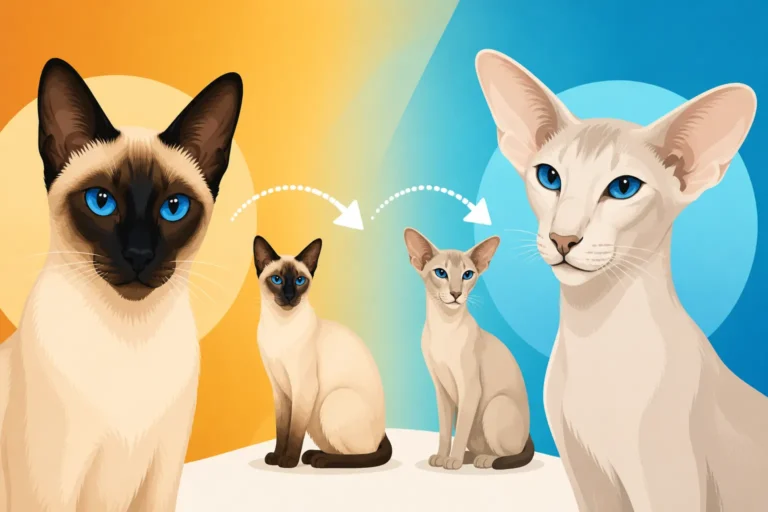
Head type and overall appearance can vary, too. The breed’s different looks are discussed in How the Siamese Cat's Head Changed Shape in Fifty Years. Whatever her type, a healthy Siamese should not be judged by whether she matches a particular photograph or someone else’s idea of an ideal size.
When she reaches adult size
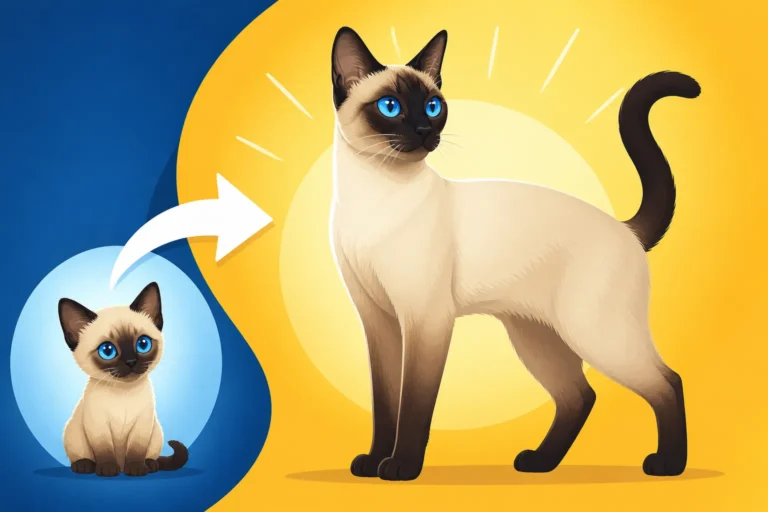
Many cats approach their adult size around a year old, but some continue filling out and developing muscle after that. A young Siamese may look especially slender during her growth phase. That can be normal, provided she is gaining appropriately, eating well, and being monitored as she grows.
Rather than trying to make a kitten reach an adult weight by a certain birthday, track her growth over time. Your veterinarian can assess whether her development is on course and advise when to transition from kitten food to an adult diet. If you are unsure what is normal for her age, When a Siamese Cat Reaches Full Size provides more context about growth and maturity.
How to tell whether your Siamese is at a healthy weight
Look at her shape, not just the scale
A simple hands-on check can tell you more than a quick glance. With your cat standing comfortably, look for a waist behind the ribs when viewed from above. From the side, her abdomen should rise gently toward the hind legs rather than hanging low. You should be able to feel her ribs beneath a light layer of tissue, but they should not be sharply visible or feel like they are covered by almost nothing.
Siamese cats naturally have a sleek outline, so a defined waist is not automatically a sign of being too thin. The distinction is in the feel and overall condition. If her spine, hip bones, or ribs are prominent and easy to see, or if she seems to be losing muscle, arrange a veterinary assessment rather than assuming it is simply her breed shape.
The reverse can happen as well. If you can barely feel her ribs, her waist has disappeared, or her belly is becoming rounder, she may be carrying extra weight. A veterinary team can score her body condition and help you set a healthy goal. For more on a slim-looking cat’s build, see Why a Siamese Cat Looks So Slender.
Use a consistent weighing routine
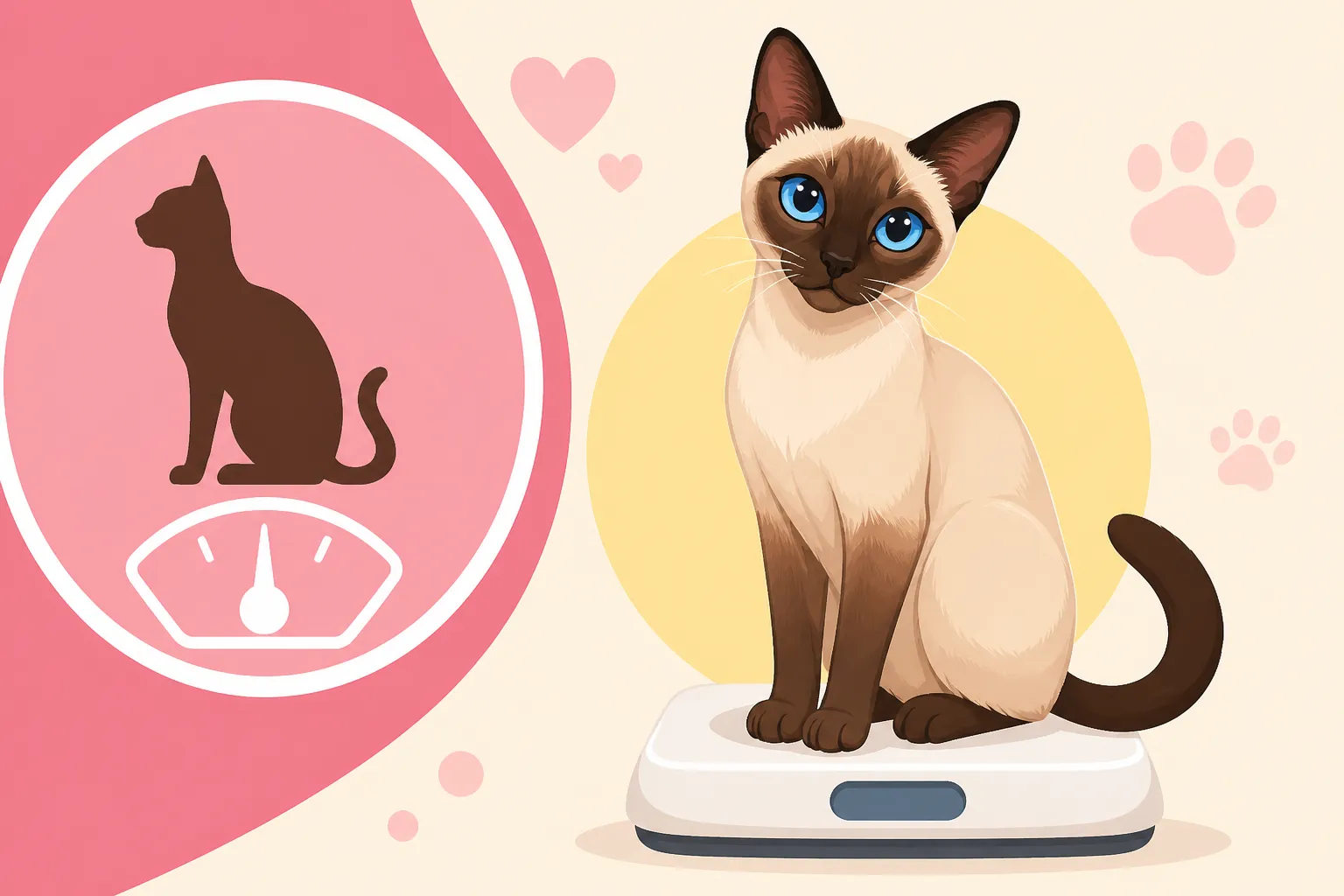
Regular weighing is especially helpful when your cat is growing, recovering from illness, or changing food. A pet scale is convenient, but a household bathroom scale can work for a rough check: weigh yourself, then weigh yourself holding your cat, and subtract the first number from the second. Because the result can fluctuate, use the same scale and method each time.
Weigh her at a similar time of day, ideally before a meal, and record the date and result. A small difference from one reading to the next may simply reflect food, water, or a recent litter-box visit. A steady trend is more meaningful than a single reading.
If your cat dislikes being lifted, do not turn weighing into a wrestling match. Ask your veterinary clinic to weigh her during a routine visit, or try setting a carrier on the scale and subtracting the carrier’s weight. Keep the experience calm and reward her afterward.
What the numbers can and cannot tell you
A number is a starting point, not a diagnosis. A female Siamese at the lower end of the usual range might be perfectly healthy, while another at the same weight could be underweight if she has lost muscle or used to weigh more. Her age, medical history, appetite, and changes over time all matter.
| What you notice | What it may suggest | A sensible next step |
|---|---|---|
| Stable weight, ribs easy to feel, visible waist | Often consistent with a healthy body condition | Keep monitoring and discuss at routine visits |
| Ribs, spine, or hips becoming prominent | Possible weight or muscle loss | Arrange a veterinary check, especially if the change is new |
| Ribs difficult to feel and waist less visible | Possible excess body fat | Ask your vet to assess body condition and feeding |
| Sudden change in appetite or weight | Could reflect a health problem | Contact your veterinarian for advice |
| Gradual change during kitten growth | May be part of normal development | Track the trend and review it at kitten visits |
This table is a guide, not a substitute for an examination. If your cat’s weight changes unexpectedly, the reason matters as much as the amount.
What affects a female Siamese cat’s weight
Age, activity, and muscle
Kittens need energy for growth, while adult cats need enough food to maintain their condition without steadily gaining fat. As a cat gets older, she may become less active or lose muscle. A lower number on the scale is not always reassuring if it comes with weakness, a rougher coat, or a change in how she moves.
Indoor cats can also be less active than cats with more room to explore, though play and climbing opportunities make a real difference. Short, regular play sessions with a wand toy or a food puzzle can encourage movement without forcing strenuous exercise. Adjust food thoughtfully if activity changes, rather than making a large cut based only on an online calorie calculator.
Some health conditions can alter weight or appetite. Increased thirst, frequent urination, vomiting, diarrhea, difficulty chewing, or a sudden change in energy alongside weight loss should prompt a veterinary call. For older cats, What Changes in a Siamese Cat After Twelve offers further context on age-related changes to watch for.
Food portions and feeding habits
Feeding instructions on a package are a starting point. Your cat’s ideal portion depends on her age, activity, body condition, whether she has been spayed, and the energy content of the food. Measure meals rather than estimating by eye, and include treats in the overall daily amount. A small handful of treats can add up when given repeatedly.
If you are comparing foods or arranging delivery, Chewy may be one place to browse options, but the label and your cat’s needs should guide the choice—not a product’s marketing. You can also discuss the food’s calorie content with your veterinarian and ask for a portion recommendation. If you order food through Chewy, check that you are choosing a complete and balanced diet appropriate for your cat’s life stage.
Some Siamese cats eat quickly or ask for food often. That behavior does not necessarily mean they need more food. Dividing the daily portion into several measured meals, using a timed feeder, or offering part of the meal in a puzzle feeder can help. If she seems persistently hungry while losing weight, do not simply increase portions without investigating the cause.
Spaying and changes over time
After spaying, some cats need fewer calories to maintain their weight, while their appetite may stay the same or increase. That can make gradual gain easy to miss. Continue measuring meals and checking her body shape, especially during the months after the procedure.
Weight management does not mean putting a cat on a restrictive diet without guidance. Cats need adequate nutrition, and sudden or severe food restriction can be dangerous. If your female Siamese is gaining weight, your veterinarian can help determine whether to adjust the food, portion size, activity routine, or investigate a medical factor.
If you are choosing food supplies or looking for portion-control tools, Chewy can be a convenient retailer to compare, but consult your vet before starting a weight-loss diet. A feeding plan should be gradual and built around your cat’s health, not simply a target weight.
When weight changes deserve a veterinary check
Gradual gain or loss
A slow change can be easy to overlook when you see your cat every day. That is why occasional weighing and a quick body-condition check are useful. If you notice her waist disappearing over time, her spine becoming more visible, or her usual food no longer keeping her weight steady, make a note of when the change began and bring that information to her appointment.
Your vet may ask about appetite, thirst, activity, stool, vomiting, medications, and the exact food and portion she receives. A clear record can help distinguish a feeding issue from a possible medical problem. If a new food or household change occurred around the same time, mention that too.
Sudden loss, reduced appetite, or other symptoms
Contact a veterinarian promptly if your cat loses weight quickly, stops eating, repeatedly vomits, has ongoing diarrhea, seems weak, or is drinking and urinating much more than usual. Do not wait for her to look visibly thin. Cats can hide discomfort, and a change in routine behavior may be one of the first signs that something is wrong. Signs a Siamese Cat Is Unwell can help you think through other changes worth mentioning.
A sudden weight increase can also merit attention, particularly if it comes with a swollen-looking abdomen, breathing difficulty, or reduced energy. The cause may not be simple fat gain. A veterinarian can examine her and decide whether tests or a change in care are appropriate.
Preparing for an appointment
Before the visit, write down her recent weights, food brand and type, approximate daily portions, treats, and any changes in appetite or behavior. If you have been comparing products on Chewy or another retailer, bring the food label or a clear photo of it so the clinic can review the nutritional information.
Ask the veterinarian to assess her body condition and muscle condition, not just tell you whether the number is within a broad range. If she needs to gain or lose weight, request a specific feeding plan and a schedule for checking progress. That way, you are not left guessing whether a small change is normal or whether you should adjust her meals again.
Disclaimer
This article is for general informational purposes only and does not constitute professional advice. Laws, prices and regulations vary by location and change over time. Consult a qualified professional for guidance on your specific situation.