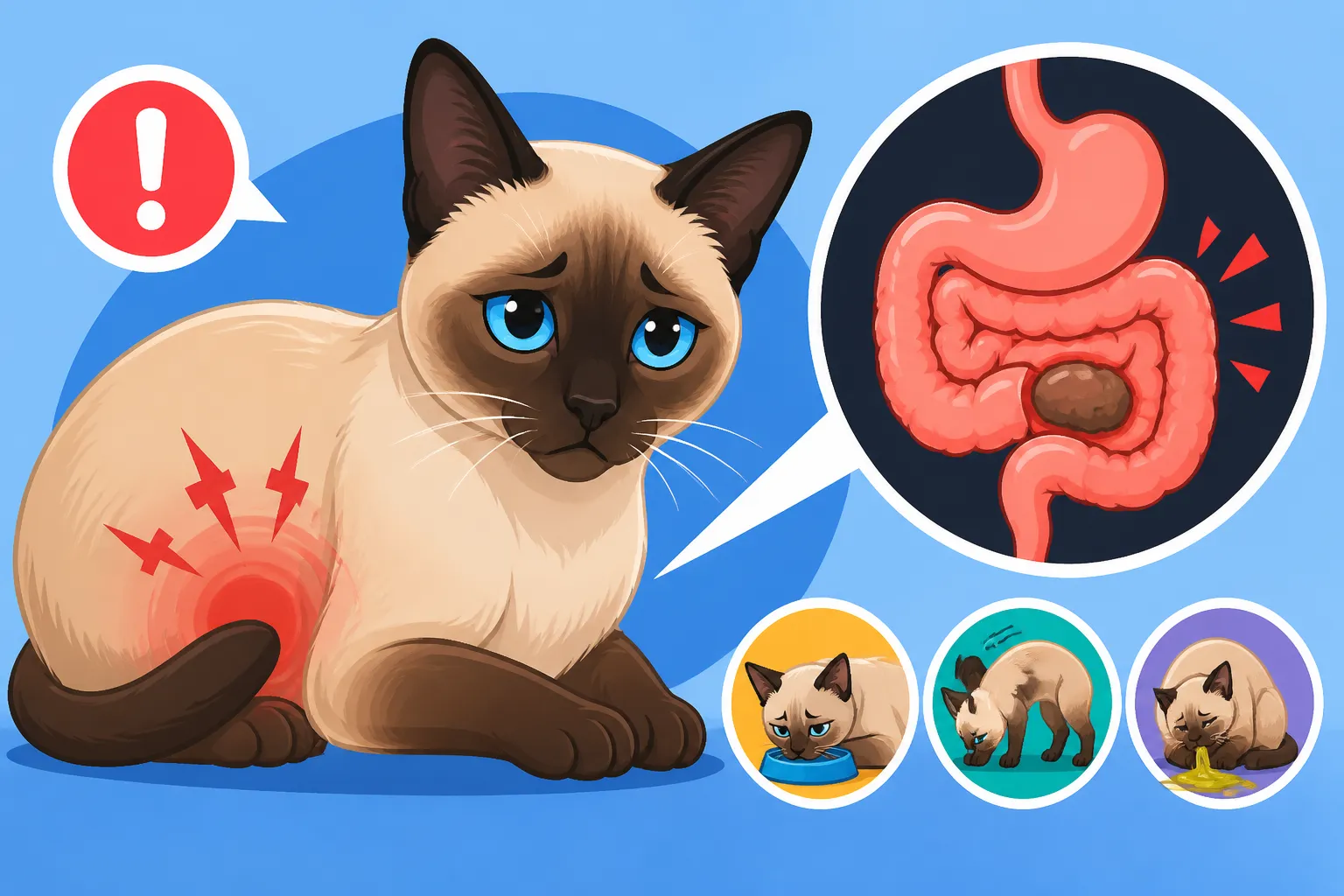
Signs a Siamese Cat Has an Intestinal Blockage
It’s a truly terrifying scenario for any cat owner: you notice your beloved Siamese isn't quite themselves, and soon you're facing the possibility of an intestinal blockage. This isn't just a minor upset; it's a critical, life-threatening emergency that can develop quickly and silently. Understanding the tell-tale signs of an intestinal blockage in your Siamese cat is crucial for getting them the urgent care they need to survive.
What Exactly Is an Intestinal Blockage in a Siamese Cat?
An intestinal blockage, or gastrointestinal obstruction, is exactly what it sounds like: something is physically impeding the normal flow of food, water, or waste through your cat's digestive tract. Imagine a plumbing system where a pipe gets clogged, and nothing can pass through. That's essentially what happens inside your cat, and it can be incredibly dangerous because it prevents proper digestion, leads to dehydration, and can even cause parts of the intestine to die.
Types of Blockages and Their Urgency
Blockages aren't all created equal. They can range from a partial obstruction, where some material can still pass but with difficulty, to a complete obstruction, where absolutely nothing gets through. A partial blockage might allow your Siamese to show symptoms that wax and wane, making it harder to diagnose. Your cat might still eat a little, or pass small amounts of stool, lulling you into a false sense of security. However, even a partial blockage can cause significant pain, dehydration, and lead to more serious issues over time.
A complete blockage, on the other hand, is an immediate and dire emergency. When the intestine is fully blocked, pressure builds up, the intestinal wall can be compromised, and toxins can leak into the bloodstream. This can lead to peritonitis, a severe abdominal infection, or even rupture of the intestine, both of which are often fatal if not treated immediately. It's why recognizing the signs quickly is so paramount; every hour can truly make a difference in your cat's outcome.
Common Causes of Intestinal Blockages in Siamese Cats
Siamese cats, with their curious, intelligent, and often oral personalities, are unfortunately prone to certain behaviors that can lead to intestinal blockages. One of the most common culprits is the ingestion of foreign objects. We call this phenomenon "pica," which is the eating of non-food items. Many Siamese cats are famous for their love of chewing and even consuming fabrics like wool, blankets, or even electrical cords. You can learn more about why your Siamese cat might have this tendency in our guide, Why a Siamese Cat Sucks Wool. If your Siamese has a habit of eating string, thread, small toys, or even hair ties, these items can easily become lodged, especially linear foreign bodies which can cause the intestine to pleat like an accordion.
Beyond pica, other causes include large hairballs that accumulate in the stomach or intestines, especially if your cat isn't shedding them effectively or has underlying digestive issues. Tumors, particularly in older Siamese cats, can also grow large enough to obstruct the bowel. Less commonly, severe constipation, intussusception (where one segment of the intestine telescopes into another), or even inflammatory bowel disease can lead to blockages. It’s a wide array of potential issues, but the common thread is the obstruction itself.
Recognizing the Early Warning Signs
Spotting an intestinal blockage early can be tricky because the initial symptoms can be subtle and easily mistaken for a common upset stomach. However, paying close attention to your Siamese cat’s routine and demeanor is key. They are creatures of habit, and any deviation, no matter how minor it seems, warrants a closer look.
Changes in Appetite and Drinking Habits
One of the first things you might notice is a change in your Siamese cat's eating or drinking. They might suddenly become picky, turn their nose up at their favorite wet food, or refuse to eat altogether. If it's a partial blockage, they might still try to eat but then vomit shortly after, unable to keep anything down. This isn't just about refusing food; it’s about a sustained lack of interest in food, which is a big red flag for cats.
Accompanying this, you might see a change in their water intake. With vomiting and an inability to properly digest, cats can become dehydrated very quickly. Your Siamese might drink more water in an attempt to compensate, or they might stop drinking entirely due to nausea. Either extreme is concerning. If your cat usually enjoys a water fountain or insists on fresh tap water, and suddenly ignores it, that’s a sign something is amiss. A good pet insurance plan, like one from Healthy Paws, can be a huge relief in these urgent situations, helping to cover the diagnostic costs when every moment counts.
Subtle Shifts in Litter Box Habits
The litter box is an invaluable diagnostic tool for cat owners. When an intestinal blockage is forming, your Siamese cat's litter box habits will almost certainly change. You might notice they are straining to defecate, spending more time in the box without producing anything, or producing very small, hard stools if it's a partial blockage. With a complete obstruction, there might be no fecal output at all.
It's important not to confuse this with simple constipation, though constipation can sometimes lead to a blockage. A cat with a blockage typically shows other symptoms like vomiting and lethargy in addition to straining. Keep a close eye on the quantity, consistency, and frequency of their bathroom trips. Any significant deviation, especially if sustained over several hours, should raise an alarm.
Behavioral Indicators and Mood Changes
Siamese cats are known for their lively, demanding personalities. They love to interact, "talk" to you, and be at the center of attention. So, when a Siamese cat becomes withdrawn, quiet, or less interactive, it's a huge sign that they're unwell. An intestinal blockage causes significant discomfort and pain, which can lead to behavioral changes. They might hide more often, refuse to play, or become irritable when handled, especially around their abdomen.
You might also notice them trying to find a comfortable position, shifting around, or looking uncomfortable. They might even assume a "prayer" position (front end down, rear end up), which is often a sign of abdominal pain. It’s crucial to understand that How a Siamese Cat Hides Pain can make this tricky, but a persistent change in their usual highly social demeanor is a serious indicator.
The More Obvious and Critical Symptoms
As a blockage progresses, the symptoms become more pronounced and alarming. These are the signs that scream "emergency" and require immediate veterinary intervention. Waiting even a few hours once these symptoms appear can have severe consequences.
Persistent Vomiting and Regurgitation
This is perhaps the most classic and concerning sign of an intestinal blockage. Your Siamese cat might vomit repeatedly, often bringing up food, water, or even foamy bile. Unlike a typical hairball or occasional upset, this vomiting is persistent and often unproductive. They might retch numerous times without expelling much. The vomit may also contain digested blood, appearing dark or coffee-ground like, indicating irritation or damage to the stomach or intestinal lining.
If your Siamese cat has a history of chewing on fabric, and you suddenly see them vomit, it's highly suspicious. Our article, Why a Siamese Cat Vomits After Eating Fabric, delves into this specific issue. Remember, if your cat can't keep water down, dehydration becomes a rapid threat, compounding the danger of the blockage itself.
Abdominal Pain and Tenderness
A cat with an intestinal blockage will almost certainly experience significant abdominal pain. This can be difficult to assess in cats, as they are masters at concealing discomfort. However, you might notice them tensing their abdominal muscles if you try to gently touch their belly. They might cry out, hiss, or pull away sharply. Some cats will hunch over, guard their abdomen, or avoid being picked up.
In severe cases, the abdomen might appear distended or bloated, especially if gas and fluid are building up behind the obstruction. Palpating a foreign body is not something you should try yourself, as it can be painful and potentially harmful, but if your vet gently feels a firm, painful lump, it’s a strong indicator.
Lethargy and Weakness
As the body struggles with a blockage, cats quickly become weak and lethargic. The constant vomiting, dehydration, and the body's battle against toxins can drain their energy reserves. Your usually energetic Siamese might become extremely subdued, sleeping much more than usual, and showing no interest in their surroundings or favorite activities. They might appear dull-eyed, slow to respond, and have less muscle tone.
This profound weakness can escalate to collapse if left untreated, as the body starts to shut down. This isn't just "being tired"; it's a significant systemic response to a severe internal problem. If you see Signs a Siamese Cat Is Unwell, and these include vomiting, lack of appetite, and changes in bowel habits, it's time to act immediately.
Absence of Bowel Movements or Straining
While we touched on this in early signs, in a severe or complete blockage, the complete absence of any fecal matter in the litter box is a very critical symptom. Your Siamese might still try to go, squatting and straining, but nothing will be produced. This is a clear indicator that something is completely blocking the passage. Even if they pass a tiny amount of liquid stool, it can sometimes be "overflow diarrhea" where only liquid can squeeze past a partial obstruction, which can be misleading.
It’s not just about what isn't coming out, but also the discomfort associated with trying. Prolonged straining can lead to other issues, but more importantly, it signifies a problem that cannot resolve on its own.
What to Do If You Suspect a Blockage
If you even suspect your Siamese cat has an intestinal blockage, it's time for immediate action. This is not a "wait and see" situation.
The Urgency of Veterinary Care
An intestinal blockage is a critical emergency that requires immediate veterinary attention. Do not try home remedies, do not wait for the morning, and do not assume it will pass. Call your veterinarian or your nearest emergency veterinary clinic right away. Inform them of your concerns and your cat’s symptoms so they can prepare for your arrival. Time is of the essence, as delays can significantly worsen your cat's prognosis and lead to more complicated and costly treatments.
If you have pet insurance, like Healthy Paws, knowing you have coverage can help you make decisions based on your cat's needs rather than solely on cost, which is invaluable in an emergency. They often cover accidents and illnesses, including surgeries for foreign body ingestion.
Diagnostic Procedures Your Vet Will Perform
Once you get to the vet, they will perform a thorough physical exam, which will include gently feeling your cat's abdomen. Don't be surprised if they also recommend a series of diagnostic tests to pinpoint the problem.
- X-rays (Radiographs): These are often the first line of defense. They can sometimes reveal the foreign object itself, or show tell-tale signs like gas and fluid buildup in the intestines, or an abnormal shape of the bowel.
- Ultrasound: An abdominal ultrasound is incredibly valuable, especially for elusive objects or intussusceptions. It provides a real-time, detailed view of the soft tissues, allowing the vet to see the intestinal layers, detect fluid, identify a foreign body, and assess blood flow to the affected areas. You can learn more about this in What a Siamese Cat's Emergency Ultrasound Costs.
- Bloodwork: Blood tests will check for signs of dehydration, electrolyte imbalances, infection, or organ damage, all of which are common complications of a blockage.
- Contrast Studies: In some cases, your vet might administer a contrast agent (like barium) that your cat drinks. X-rays are then taken over several hours to track its movement through the digestive tract, revealing exactly where the blockage is and whether it's partial or complete.
Emergency Treatment Options
The treatment for an intestinal blockage depends entirely on its cause, location, and severity.
- Fluid Therapy and Supportive Care: If your cat is dehydrated or in shock, they will immediately be put on intravenous fluids to stabilize them. Pain medication will also be given to make them more comfortable.
- Endoscopy: For some foreign bodies, particularly those in the stomach or very upper small intestine, an endoscope (a flexible tube with a camera) can be inserted down the throat to retrieve the object without surgery. This is less invasive but not always possible.
- Surgery: The most common and often necessary treatment for a complete or severe partial blockage is abdominal surgery (exploratory laparotomy). During surgery, the vet will locate the obstruction, remove the foreign body or affected section of the intestine, and repair any damage. This is a major procedure, and our article What Blockage Surgery Involves for a Siamese Cat provides more insight. Post-operative care is crucial for recovery.
- Monitoring and Medical Management: For very mild partial blockages or severe constipation, sometimes aggressive fluid therapy, enemas, or specific medications can help things move along. However, this is decided on a case-by-case basis and requires careful monitoring.
The cost of these emergency procedures can be substantial, which is where having a reliable pet insurance provider like Healthy Paws can truly make a difference, helping to alleviate the financial burden during such a stressful time.
Preventing Future Blockages
While some blockages are unavoidable, many can be prevented, especially those related to pica.
- Cat-Proof Your Home: Be diligent about removing small objects your Siamese might be tempted to chew or swallow. Put away string, yarn, rubber bands, hair ties, small toys, and anything made of fabric that they tend to suck on.
- Enrichment and Play: A bored Siamese cat is a mischievous Siamese cat. Provide plenty of interactive toys, puzzle feeders, and dedicated playtimes to keep their intelligent minds and bodies active. This can redirect their oral fixations away from inappropriate items.
- Dietary Fiber: For hairball-related blockages, ensuring your Siamese cat has enough fiber in their diet can help. Consult your vet about appropriate hairball control diets or supplements. Some specific foods are formulated to help manage pica tendencies, which can be found in Which Food Helps a Siamese Cat With Pica.
- Regular Grooming: Brushing your Siamese regularly, especially during shedding season, can significantly reduce the amount of loose fur they ingest, thereby minimizing hairball formation.
- Scheduled Vet Check-ups: Regular wellness exams allow your vet to catch potential underlying issues, like dental disease or early signs of gastrointestinal problems, that could contribute to blockage risk.
| Symptom | Partial Blockage | Complete Blockage |
|---|---|---|
| Appetite | Reduced, intermittent eating, may try to eat | Absent or refusal to eat |
| Vomiting | Intermittent, often after eating/drinking | Frequent, persistent, unproductive, bile/blood |
| Stool Production | Small, hard, infrequent, or straining | None, or severe straining with no output |
| Abdominal Pain | Mild to moderate, intermittent | Severe, constant, guarded abdomen, distension |
| Energy Level | Mild lethargy, reduced playfulness | Profound lethargy, weakness, collapse |
| Dehydration | Possible, but may not be immediately obvious | Rapid onset, severe, sunken eyes, skin tenting |
| Progression | Can linger for days, may worsen | Rapidly progressive, life-threatening in hours |
Being prepared means not only knowing the signs but having a plan for immediate action. Your swift response can be the difference between a full recovery and a tragic outcome for your cherished Siamese companion.
Disclaimer
This article is intended for informational purposes only and does not constitute medical advice. Always consult with a qualified veterinarian for any health concerns or before making any decisions related to your pet's care.