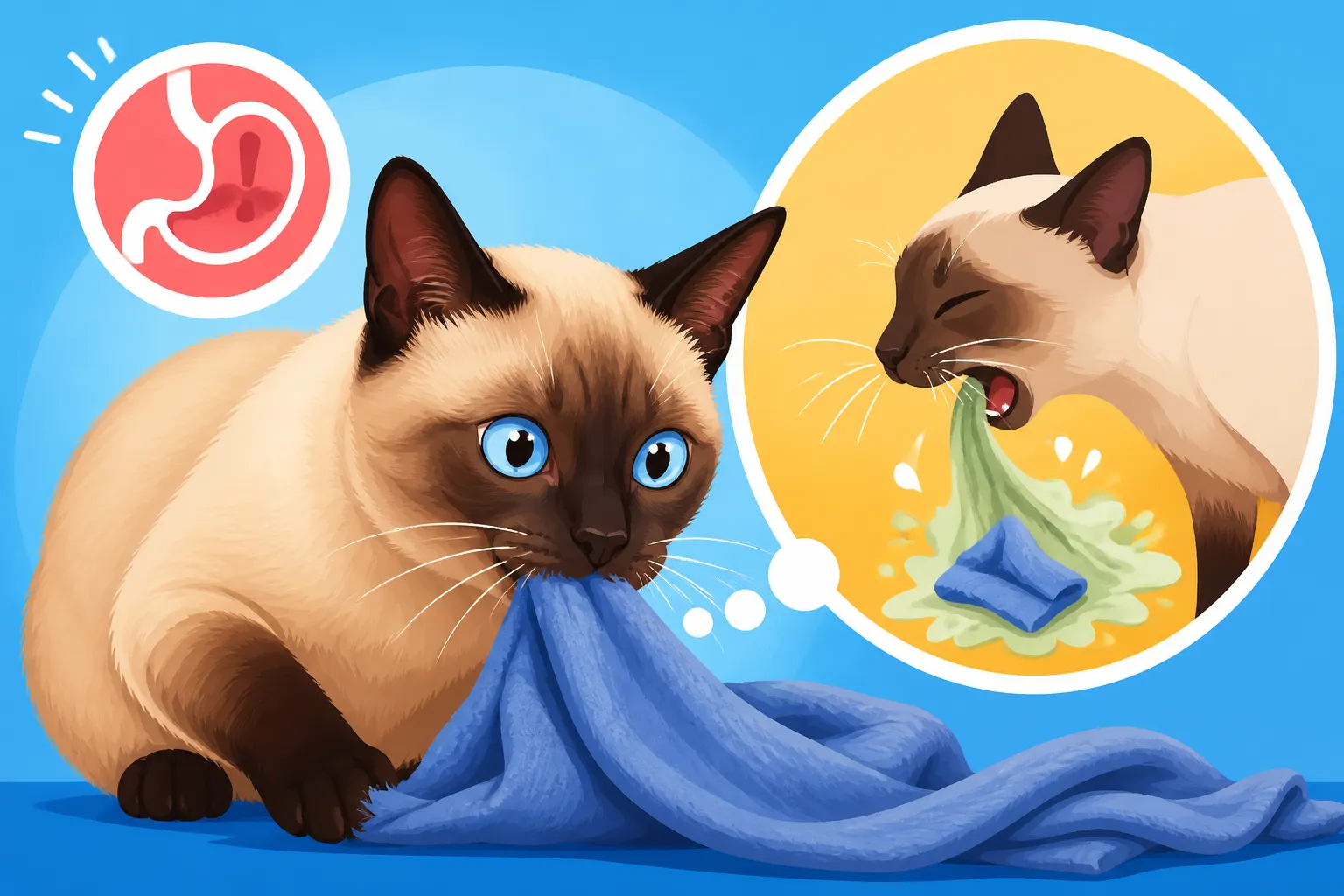
Why a Siamese Cat Vomits After Eating Fabric
It's incredibly distressing, isn't it? You walk into a room to find your beloved Siamese cat has managed to chew up a favorite blanket, a piece of clothing, or even a child's toy. And then, the worst part: they vomit. Sometimes it's just a bit of fabric, sometimes it's bile, and sometimes it's accompanied by other worrying symptoms. This guide is here to shed light on why your Siamese cat might be eating fabric, why it leads to vomiting, and most importantly, what you can do about it to keep your intelligent, curious companion safe and healthy.
Understanding Pica in Siamese Cats
The act of eating non-food items, whether it's fabric, plastic, or even dirt, has a name in the veterinary world: pica. And if you're a Siamese cat owner, you're probably all too familiar with it. While any cat can develop pica, it's a frustratingly common issue in certain breeds, and our vocal, intelligent Siamese friends seem particularly predisposed. It's not just a quirky habit; it can be a significant health risk.
What is Pica and Why is it Common in Siamese Cats?
Pica is more than just curiosity; it's a compulsive disorder that drives cats to ingest things that aren't food. For Siamese cats, this often manifests as an obsession with fabric. You might find them gnawing on blankets, wool sweaters, socks, shoelaces, or even synthetic materials like microfiber cloths. It's truly baffling to witness, and you might wonder why your otherwise perfectly cared-for cat would engage in such a potentially dangerous behavior.
There are a few theories about why Siamese cats, in particular, seem to struggle with pica. One strong contender is genetics. It's believed that a predisposition to wool sucking and pica can be inherited, passed down through generations of these beautiful cats. This isn't something you've done wrong as an owner; it's just part of their unique genetic makeup, an unfortunate side effect of their breeding history. You can learn more about this specific behavior in the article, Why a Siamese Cat Sucks Wool.
Beyond genetics, their highly intelligent and somewhat high-strung nature also plays a role. Siamese cats thrive on interaction and mental stimulation. If they're bored, stressed, or not getting enough attention, they can develop behavioral issues, and pica can be one of them. It can be a self-soothing mechanism, similar to how human children might suck their thumbs. An owner often feels helpless when faced with this, wondering if there's an underlying problem that isn't immediately obvious. Rest assured, many owners face this exact problem, and there are ways to manage it.
The Immediate Risk: Foreign Body Obstruction
The biggest concern when your Siamese cat eats fabric and then vomits isn't just the mess; it's the very real risk of a gastrointestinal foreign body obstruction. Unlike food, which is designed to be broken down and passed, fabric simply isn't digestible. When ingested, it can clump together in the stomach or intestines, or worse, become a linear foreign body.
Linear foreign bodies, like string, yarn, or even strands of carpet, are particularly dangerous. Imagine your cat swallowing a long piece of thread. One end might get caught under the tongue or in the stomach, while the rest travels down the intestines. As the intestines try to move, they effectively "accordion" or bunch up along the string, which can act like a saw, cutting through the delicate intestinal walls. This can lead to peritonitis, a life-threatening infection of the abdominal cavity, or even sepsis. These situations are immediate emergencies and incredibly expensive, a fact that often surprises owners. If your cat has ingested string, it's critical to act fast. Signs your cat has swallowed fabric can be subtle at first, but escalate quickly. You can also explore Whether Pica Is a Medical Problem in a Siamese Cat for a deeper understanding of the medical implications.
Even if it's not a linear foreign body, a wad of fabric can become lodged. Picture a dense piece of cloth, like part of a sock or a washcloth, trying to pass through the narrow confines of your cat's digestive tract. It simply can't. This blockage prevents food and water from moving through, causing severe pain, dehydration, and ultimately, tissue death if left untreated. This is why vomiting is such a critical sign, indicating the body is trying desperately to expel something it can't handle. Early detection of symptoms like Signs a Siamese Cat Has an Intestinal Blockage can be lifesaving.
Why Fabric Ingestion Leads to Vomiting
When your Siamese cat eats fabric, its body recognizes this material as something foreign and potentially harmful. Vomiting isn't just a random event; it's often a protective mechanism, an attempt by the body to rid itself of whatever shouldn't be there. The nature of the vomiting can also tell your vet a lot about the severity and location of the problem.
The Body's Natural Defense Mechanism
Think of vomiting as your cat's involuntary last resort. If the fabric is sitting uncomfortably in the stomach, causing irritation to the sensitive lining, the stomach muscles will contract to try and force it back up. This is particularly common if the fabric is large, indigestible, or has sharp edges that are scratching the gastric mucosa. Sometimes, this can be successful, and your cat might throw up the offending item, leaving you with a mix of relief and disgust.
However, if the fabric has moved beyond the stomach into the intestines, vomiting can still occur, but it often signifies a more serious issue. A partial obstruction might allow some liquids to pass, but solids, including the fabric, get stuck. This backup of stomach contents, bile, and food triggers persistent vomiting because the body cannot process anything further down the line. A complete blockage, on the other hand, is even more critical; nothing can pass, leading to continuous, forceful vomiting, often of fluid and bile, as the cat becomes increasingly dehydrated and sick. This distinction between partial and complete is crucial for determining the urgency and type of veterinary intervention needed.
Signs Beyond Just Vomiting
While vomiting is the most obvious sign, it's rarely the only one. Your Siamese cat, being the stoic creature they often are, might try to hide other symptoms, but a careful observer will notice changes. Look for a decrease in appetite or complete refusal of food. If your cat, usually so eager for mealtime, turns their nose up at their favorite wet food, something is definitely wrong. They might also stop drinking water, or drink less, leading to dehydration.
Lethargy is another huge red flag. A normally playful and active Siamese cat becoming withdrawn, sleeping more, and showing no interest in toys or interaction is a clear indicator of discomfort or illness. Abdominal pain can manifest as hunching, guarding their belly, or vocalizing when touched. You might also notice straining to defecate, or a complete absence of feces, or even diarrhea. Any combination of these symptoms, especially paired with repeated vomiting, warrants immediate veterinary attention. Don't wait for things to get worse; a day can make a huge difference in these situations. Here's a quick reference table for recognizing symptoms:
| Symptom Group | Description | Potential Severity |
|---|---|---|
| Vomiting | Occasional, with fabric | Mild to Moderate |
| Vomiting | Frequent, persistent, bile/fluid only | Moderate to Severe |
| Appetite Change | Refusal to eat for 12+ hours | Moderate to Severe |
| Lethargy | Unusually sleepy, withdrawn, no interest in play | Moderate to Severe |
| Abdominal Pain | Hunching, guarding belly, vocalizing when touched | Moderate to Severe |
| Defecation Changes | Straining, no feces, or diarrhea | Moderate to Severe |
| Dehydration | Sunken eyes, dry gums, skin tenting | Severe |
When vomiting becomes an emergency, it's usually when it's persistent, contains no food, or is accompanied by severe lethargy, collapse, or significant abdominal pain. This is not a "wait and see" situation. Your cat's life could depend on swift action.
What to Do When Your Siamese Cat Vomits After Eating Fabric
It's a terrifying moment when you realize your Siamese has eaten fabric and is now vomiting. Your mind races with panic and concern. The most important thing is to remain calm and know the right steps to take immediately. Delaying appropriate action can have serious consequences.
Immediate Steps and When to Call the Vet
First and foremost, do not try to induce vomiting yourself. There's a common misconception that you can just give your cat hydrogen peroxide, but this can cause severe irritation, aspiration pneumonia (if the cat inhales vomit), and isn't reliably effective in cats. Plus, if the fabric is a linear foreign body, inducing vomiting could cause even more damage as it pulls through the esophagus. If you find the fabric, try to keep a sample, or at least remember what it was, as this information will be crucial for your veterinarian.
Your immediate next step should always be to call your veterinarian or an emergency veterinary clinic. Describe what happened, what your cat vomited, and any other symptoms you've observed. Be honest and detailed. They will advise you on whether to come in immediately for an emergency visit or if it's safe to monitor your cat. It's almost always better to err on the side of caution. Even if your cat seems to perk up, a piece of fabric could still be lodged and cause problems later. These emergency visits can be expensive, and it's during times like these that having pet insurance can truly be a lifesaver. Many owners rely on providers like Healthy Paws to help cover unexpected costs from emergencies like these. You may find it helpful to review What a Siamese Cat's Blockage Surgery Costs to understand the financial implications.
Veterinary Diagnosis and Treatment Options
Once you arrive at the clinic, your vet will perform a thorough physical examination. They'll palpate your cat's abdomen, check for signs of pain, dehydration, and listen to their gut sounds. This initial exam will give them clues about whether an obstruction might be present. If they suspect a foreign body, they'll move on to diagnostic imaging.
X-rays are often the first step. While fabric itself doesn't always show up clearly on a standard X-ray, the vet can often see signs of obstruction, like gas patterns in the intestines or an accumulation of fluid. Sometimes, they might recommend a contrast study, where your cat swallows a special liquid that shows up on X-rays, allowing them to track its movement and pinpoint a blockage. An ultrasound is another incredibly useful tool, providing a real-time view of the internal organs and often directly identifying the foreign material and its location. In some cases, an endoscopy might be performed, where a tiny camera is inserted down the esophagus to visually inspect and sometimes even retrieve objects from the stomach.
Treatment varies greatly depending on the situation. If it's determined that the fabric is small, non-obstructing, and likely to pass, your vet might recommend supportive care, such as fluids to help prevent dehydration and medications to soothe the stomach. However, if there's a confirmed or highly suspected obstruction, surgery is often the only option. This involves carefully opening the abdomen and removing the foreign body from the stomach (gastrotomy) or intestines (enterotomy). It's a major surgical procedure, but one that is often successful in saving a cat's life. Post-surgery, your cat will need careful monitoring, pain management, and a special diet to aid recovery. It’s a huge ordeal, but seeing your cat come through it is worth every moment of worry and every penny.
Preventing Future Incidents of Fabric Eating
It's one thing to deal with an emergency, but it's another to prevent it from happening again. For Siamese cat owners, proactive prevention is key to managing pica and keeping their curious companions safe. This often involves a multi-faceted approach, addressing both environmental factors and potential underlying behavioral or medical causes.
Environmental Modifications and Enrichment
The first and most immediate step is to cat-proof your home. This means being incredibly vigilant about putting away any tempting items. Think like a cat: what's soft, easy to chew, and left lying around? Common culprits include socks, underwear, sweaters, blankets, shoelaces, charging cables, and even synthetic bathmats or curtains. Consider locking away laundry, putting clothes hampers in secure closets, and using bins with tight lids. For blankets your cat usually sleeps on, choose materials that are less appealing, or that fray less easily if chewed. Prevention is far better than a trip to the emergency vet, and can save you from a major bill. Remember, pet insurance from companies like Healthy Paws can help with unforeseen medical costs, but avoiding them altogether is the best scenario.
Beyond simply removing access, you need to provide appropriate outlets for your Siamese cat's natural instincts and high energy. These cats are incredibly smart and get bored easily, which often contributes to destructive behaviors like pica. Invest in a variety of robust, cat-safe chew toys. Look for toys made from natural materials that are too large to swallow or that are designed to withstand heavy chewing. Puzzle feeders are also fantastic. They tap into your Siamese cat's intelligence, making them "work" for their food, which can be incredibly enriching and distracting. Consider a cat tree for climbing, or regularly rotate their toys to keep things interesting. Check out our guide on Which Toys a Siamese Cat Actually Plays With for some great ideas.
Finally, dedicate ample time each day to interactive play. Siamese cats crave attention and mental stimulation. Use wand toys to mimic hunting, play fetch (yes, many Siamese cats love to fetch!), and engage them in conversation. Even a good 15-20 minute session twice a day can make a world of difference in reducing boredom and anxiety, which are often precursors to pica. If your cat often seems lonely or you’re away for long periods, consider whether A Siamese Cat Should Not Live Alone is a relevant consideration, and explore options like Whether a Siamese Cat Is Happier in a Pair for companionship.
Addressing Underlying Behavioral or Medical Causes
While environmental changes are crucial, sometimes pica points to deeper issues. Stress is a major trigger for many compulsive behaviors in cats. Changes in routine, new pets, moving homes, or even just feeling ignored can cause anxiety in a sensitive Siamese. You might consider using feline pheromone diffusers, like Feliway, which can help create a calmer environment. Maintaining a consistent daily routine for feeding, playtime, and sleep can also provide a sense of security for your cat. The article on How Long a Siamese Cat Can Be Left Alone offers more insights into managing their emotional needs.
Dietary deficiencies are less common if your cat is on a high-quality, balanced commercial cat food, but it's always worth discussing with your vet. Sometimes, increasing the fiber content in their diet can help some cats, or switching to a different protein source. Don't make drastic dietary changes without professional veterinary advice, as this can cause other digestive upsets. In rare cases, medical conditions can cause pica, so a full vet check-up is always recommended to rule out underlying illnesses.
For persistent or severe cases of pica, especially when it leads to dangerous ingestion, consulting a certified feline behaviorist can be incredibly beneficial. These experts can help identify the root cause of the behavior, whether it's anxiety, compulsive disorder, or another behavioral issue, and develop a tailored modification plan. This might involve counter-conditioning, desensitization, or in some instances, short-term medication to help break the cycle of compulsive behavior, similar to how How Psychogenic Alopecia in a Siamese Cat Is Treated addresses stress-related grooming. It's an investment in your cat's long-term health and your peace of mind.
Disclaimer
This article is for general informational purposes only and does not constitute professional advice. Laws, prices and regulations vary by location and change over time. Consult a qualified professional for guidance on your specific situation.