Whether Answering a Siamese Cat Makes It Worse
That incessant meow, the piercing yowl that seems to demand your undivided attention at all hours – it's a familiar soundtrack for many of us who share our homes with a spirited Siamese cat. You love them dearly, but sometimes you can't help but wonder if your attempts to soothe or acknowledge their vocalizations are actually making the problem worse, inadvertently training them to be even louder. This guide will dive deep into the fascinating world of Siamese cat communication, exploring why they're so vocal, how our responses shape their behavior, and practical strategies to cultivate a more harmonious, and perhaps a tad quieter, household without stifling their unique personalities.
Understanding Your Siamese Cat's Vocal Nature
It's easy to feel like your Siamese is trying to get on your nerves with their constant chatter, but it's crucial to remember that their vocalizations are a fundamental part of who they are. They aren't being "naughty" – they're simply being Siamese! Understanding the roots of this behavior can help you approach it with more patience and empathy.
Why Siamese Cats Are So Talkative
The Siamese breed is famous, or infamous depending on your perspective, for its incredibly vocal nature. This isn't just a quirk; it's deeply ingrained in their genetics and historical temperament. Unlike some other more reserved feline breeds, Siamese cats were selectively bred, over generations, for their outgoing, communicative personalities. They are often described as having dog-like qualities due to their strong bond with their humans and their desire for interaction. They don't just meow; they have a vast repertoire of sounds, from soft chirps and trills to full-blown "meezer yowls" that can sound surprisingly human-like, sometimes even resembling a baby's cry. This talkativeness is a hallmark of the breed, a defining characteristic that sets them apart.
Many new Siamese owners are initially charmed by this chattiness, but it can quickly become overwhelming if not managed. They communicate their every thought, desire, and complaint with vocalizations. They'll tell you when they're hungry, when they want to play, when they're bored, when they want attention, and sometimes, it seems, just because they can. This intense need to communicate is part of What a Siamese Cat's Temperament Is Really Like. It's not something you can truly "breed out" or eliminate entirely, nor would most owners want to. Instead, it's about channeling it appropriately and understanding its nuances.
The Different Meanings Behind Their Meows
Not all meows are created equal, and learning to decipher your Siamese's vocalizations is key to understanding their needs. A quick, sharp meow as you walk into the room is often a greeting, a happy "hello!" A series of urgent, drawn-out meows near the food bowl is a clear demand for dinner. A soft trill might be an invitation to play or a sign of contentment. A truly distressing yowl, especially if accompanied by pacing or hiding, could signal pain or fear.
It's common for Siamese cats to develop specific "calls" for different situations. My own Siamese, for instance, has a distinct, almost growling meow for when he's spotted a bird outside the window, completely different from the plaintive cry he uses when he wants extra cuddles. Pay attention to the context, body language, and the type of sound your cat is making. Are they looking at their empty bowl? Are they rubbing against your legs? Are they staring intently at a closed door? This detective work helps you differentiate between genuine needs and pure attention-seeking, which is crucial for deciding how to respond. You might find it useful to read about What a Siamese Cat's Yowl Means to get a better grasp of these different expressions.
The Attention-Seeking Cycle: Does Answering Fuel the Fire?
This is the million-dollar question for many frustrated Siamese owners: are you inadvertently training your cat to be even louder by responding to their every demand? The short answer is, very often, yes. Understanding the principles of behavioral reinforcement can shed light on why your well-intentioned responses might be contributing to the problem.
The Reinforcement Principle in Cat Behavior
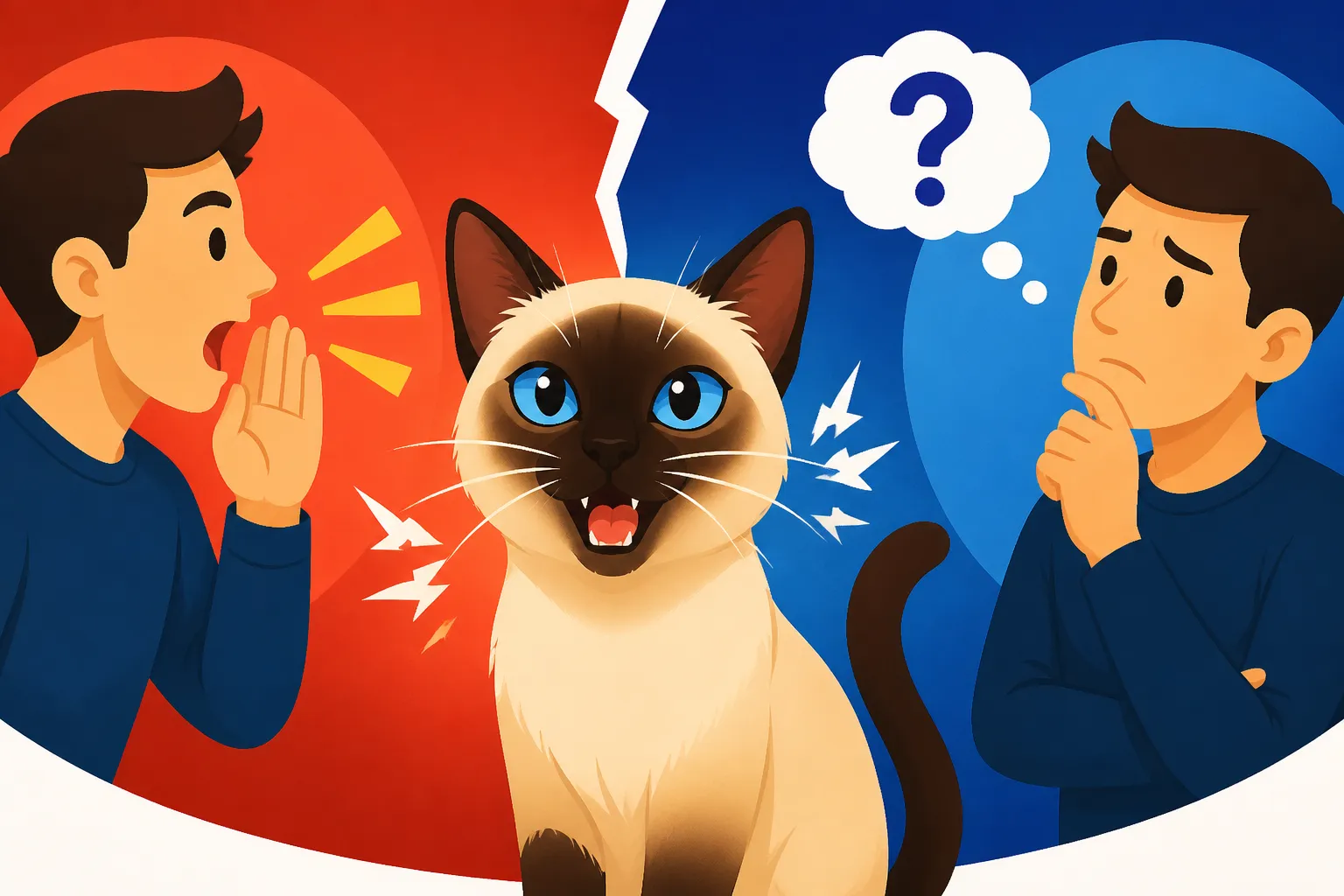
Cats, like all animals, learn through consequences. If a behavior leads to a positive outcome, they are more likely to repeat it. If it leads to a negative or neutral outcome, they are less likely to repeat it. When your Siamese meows for attention, and you immediately respond – whether by petting them, talking to them, looking at them, or even scolding them – you are providing attention. To a Siamese, any attention is often better than no attention. This is called positive reinforcement. They learn that "Meow = Human interaction," and so, they meow more.
Imagine a scenario: your Siamese starts to yowl loudly at 3 AM. You, being a caring pet parent, groan, get up, and perhaps try to shush them, or worse, give them a quick pet to quiet them down. What has your cat learned? That yowling at 3 AM gets your attention. The next night, they're likely to try it again, perhaps even louder, because it worked before. Even a negative reaction, like a sharp "No!" or a spray of water (which we generally don't recommend as it can damage your bond), is still a form of attention. The challenge with a Siamese is their sheer persistence and the volume of How Loud a Siamese Cat Is. Ignoring them feels counter-intuitive and frankly, very difficult to do when they're sounding like a fire alarm. This reinforcement cycle is a common pitfall for many well-meaning owners.
When Responding Becomes a Problem
The issue isn't responding to your cat's needs; it's responding to every single vocalization, especially those that are clearly just for attention or demanding something immediately. If your cat learns that a simple meow will get them what they want, they will escalate their efforts. You'll find yourself in a constant battle of wills, where their vocalizations become more frequent, louder, and harder to ignore. This can lead to significant stress for both you and your cat.
For example, if your Siamese cries for food even when their bowl is full, and you rush to give them a treat or fresh kibble, you're teaching them that their meow overrides the established feeding schedule. If they follow you from room to room, meowing incessantly, and you stop what you're doing to engage with them every time, you're reinforcing the idea that constant vocalization is the most effective way to control your movements and attention. This can make everyday life quite challenging, especially if you live in an apartment where neighbors might hear the persistent calls, or if you have young children and don't want to disrupt their sleep. This is why many owners eventually reach a point where they wonder Whether Ignoring a Siamese Cat's Meowing Works as a solution. It's not about being cruel; it's about setting boundaries for a peaceful coexistence.
Breaking the Cycle: Strategies for a Quieter Home
The good news is that you can modify your Siamese cat's excessive vocalization without crushing their spirit. It requires consistency, patience, and a shift in how you interact with them. The goal isn't to silence them completely, but to teach them that calm communication is more effective than demanding shrieks.
Proactive Attention and Enrichment
One of the most powerful tools against attention-seeking meows is proactive attention. Instead of waiting for your cat to demand your time with a yowl, initiate interaction on your terms. Schedule dedicated playtimes throughout the day, perhaps 15-20 minutes in the morning and evening, using interactive toys like wand toys or laser pointers. During these times, give them your full, undivided attention. Talk to them, pet them, and engage them in activities they love. This fills their "attention bucket" before it overflows into desperate vocalizations.
Beyond direct interaction, ensure your Siamese has plenty of environmental enrichment. These are highly intelligent and active cats who get bored easily. A bored Siamese is often a vocal Siamese. Provide tall cat trees for climbing and observation, puzzle feeders that make them work for their food, and a variety of toys they can play with independently. Items like interactive toys that move on their own or treat-dispensing balls can be great. You can find many excellent options on Amazon, such as the popular Trixie Activity Fun Board or various automatic laser pointers, to keep their minds engaged. Remember, Enrichment for a Siamese Cat That Gets Bored in an Hour is not just a luxury; it's a necessity for their well-being and your sanity.
The Art of Strategic Ignorance (and When to Break It)
This is perhaps the hardest part, but it's essential: once you've met your cat's basic needs (food, water, clean litter, health check) and provided adequate proactive attention, you must commit to strategically ignoring their attention-seeking meows. This means no eye contact, no talking, no petting, and no getting up to investigate. It feels harsh, especially when they're pouring their heart out, but remember, you are teaching them that these specific vocalizations are no longer effective.
Consistency is absolutely critical. If you ignore them for ten minutes and then cave, you've just taught them that they need to meow for longer and louder to get what they want. It often gets worse before it gets better – this is known as an "extinction burst," where the cat tries even harder to elicit the old response before giving up. Be prepared for this phase and hold firm.
Now, here's when to break it: if your cat approaches you quietly, perhaps with a soft chirp or by gently rubbing against your leg, that is when you reward them with attention. This reinforces calm, polite communication. And, of course, if their meow genuinely sounds distressed, or if it's accompanied by signs of illness like hiding, panting, or unusual behavior, investigate immediately. Always rule out pain or illness first, especially for older cats who might be experiencing cognitive decline or other health issues. For more specific training methods, explore resources on How to Teach a Siamese Cat a Quiet Cue.
Addressing Underlying Needs and Health Concerns
Before embarking on any behavioral modification, it's paramount to rule out any underlying needs or health issues. A suddenly very vocal Siamese might be trying to tell you something important.
- Hunger or Thirst: Is their food bowl truly empty? Is their water fresh? Consider a pet water fountain (many good ones are available on Amazon) to encourage more drinking, as some cats prefer running water.
- Litter Box Issues: Is their litter box clean? Do they have enough boxes? A dirty box can definitely lead to vocal complaints.
- Pain or Illness: This is especially crucial. A cat in pain will often vocalize more. An older cat might be experiencing joint pain, dental problems, or other age-related discomforts. Conditions like hyperthyroidism or kidney disease can also increase vocalization and thirst. If your Siamese's vocalization is new, sudden, or accompanied by other behavioral changes, a vet visit is absolutely necessary. Reading up on When a Siamese Cat's Meowing Means Pain can help you identify concerning symptoms.
- Cognitive Decline: Older Siamese cats, like older humans, can sometimes experience feline cognitive dysfunction (dementia). This can manifest as increased nighttime vocalization, disorientation, or changes in routine. If you have an older Siamese, learning about Why an Old Siamese Cat Yowls More can provide valuable insights. Your vet can offer advice and sometimes medication to help manage these symptoms.
A comprehensive veterinary check-up should always be your first step to rule out any medical causes for excessive vocalization. Once health issues are addressed, you can confidently apply behavioral strategies.
Tools and Techniques to Help Manage Vocalization
While consistency and understanding are your primary tools, there are also some specific aids and training techniques that can support your efforts in managing your Siamese cat's vocalizations.
Environmental Adjustments
Creating a stimulating and secure environment can significantly reduce stress and boredom, two major drivers of excessive meowing.
- Vertical Space: Siamese cats love to climb and observe their territory from above. Invest in sturdy, tall cat trees or install wall-mounted shelves. Giving them "their own space" away from the hustle and bustle can reduce anxiety and the need to demand attention.
- Window Perches: A comfortable perch by a window provides endless entertainment, allowing them to watch the world go by. This mental stimulation can tire them out and make them less prone to boredom meows.
- Feliway Diffusers: Feliway is a synthetic feline facial pheromone that can help create a calming environment for cats. While not a magic bullet, many owners find it helps reduce stress-related behaviors, including excessive vocalization. These diffusers are widely available, including on Amazon, and can be plugged into rooms where your cat spends a lot of time. It's a subtle way to tell your cat, "It's safe here."
- Consistent Routines: Cats thrive on routine. Establishing consistent times for feeding, play, and bedtime can reduce anxiety and the vocal demands that often stem from uncertainty. When they know what to expect, they feel more secure.
Training and Redirection
Siamese cats are incredibly intelligent and highly trainable. You can use their cleverness to your advantage by teaching them alternative, quieter ways to get your attention.
- Clicker Training: This is an excellent way to communicate precisely with your Siamese. You can use a clicker to mark and reward quiet behavior. For instance, if your cat is about to meow but pauses or makes a soft sound instead of a loud yowl, click and treat. You can also teach them a "quiet" cue. How to Clicker Train a Siamese Cat provides a fantastic starting point for this engaging training method.
- Reward Calmness: Actively seek out moments when your Siamese is quiet and calm, and reward them with a small treat, a gentle stroke, or a soft word. This is positive reinforcement for the behavior you want to see. If they are lying quietly on their bed, go over and give them a quiet pet.
- Redirection: If your cat starts a vocal demanding session, try redirecting their energy. Instead of giving direct attention, toss a favorite toy for them to chase, or activate an automatic feeder (if appropriate). This shifts their focus from demanding attention to engaging in an acceptable activity.
- Ignoring Specific Triggers: Identify if there are specific triggers for their vocalizations (e.g., you walk into the kitchen, you sit down to work). If you can predict the meowing, try to preempt it with play or a puzzle toy, or be prepared to ignore it consistently.
| Response Type | Impact on Vocalization | Effectiveness | Examples |
|---|---|---|---|
| Immediate Response | Reinforces vocalization, cat learns it "works" | Low for reducing excessive meowing, high for quick fixes | Talking back, petting, feeding, getting up immediately when cat meows for attention. |
| Strategic Ignorance | Extinguishes attention-seeking meows, cat learns it "doesn't work" | High, but requires consistency and patience | No eye contact, no speaking, no touching when cat is demanding. Only respond to quiet, calm overtures. |
| Proactive Attention | Reduces need for demanding meows, builds trust | High, prevents boredom and attention-seeking before it starts | Scheduled playtimes, petting sessions, interactive toys, puzzle feeders given before cat demands them. |
| Redirection | Channels vocal energy into acceptable activities | Moderate to High, useful for immediate distraction | Tossing a toy, activating a feeder, providing a new stimulating object when meowing begins. |
| Addressing Needs | Solves core issues, ensures cat is truly comfortable | Very High, essential first step | Checking food/water/litter, vet visits for health concerns, providing warmth, secure spaces. |
Remember, your Siamese cat wants to connect with you. The goal isn't to make them silent, but to foster communication that is mutually respectful and enjoyable. By being consistent, patient, and understanding, you can guide your vocal companion towards a more harmonious way of sharing their thoughts and feelings.
Disclaimer
This article is for general informational purposes only and does not constitute professional advice. Laws, prices and regulations vary by location and change over time. Consult a qualified professional for guidance on your specific situation.