How a Siamese Cat Handles a House Move
Moving house is often cited as one of life's most stressful events for humans, but for a sensitive and deeply territorial creature like a Siamese cat, it can feel like their entire world is being turned upside down. The familiar scents, sounds, and routines they rely on are suddenly gone, replaced by a bewildering array of newness that can trigger significant anxiety. This guide is here to walk you through how your beloved Siamese cat might react to a house move and provide actionable steps to make the transition as smooth and stress-free as possible for both of you.
Understanding Your Siamese Cat's Sensitivity to Change
Siamese cats are known for their intelligence, vocal nature, and intense bond with their human families. However, this deep connection often comes with a strong attachment to their environment and a finely tuned sensitivity to disruption. A house move isn't just a change of scenery for them; it's a fundamental shift in their core security.
Why Moves Are So Stressful for Siamese Cats
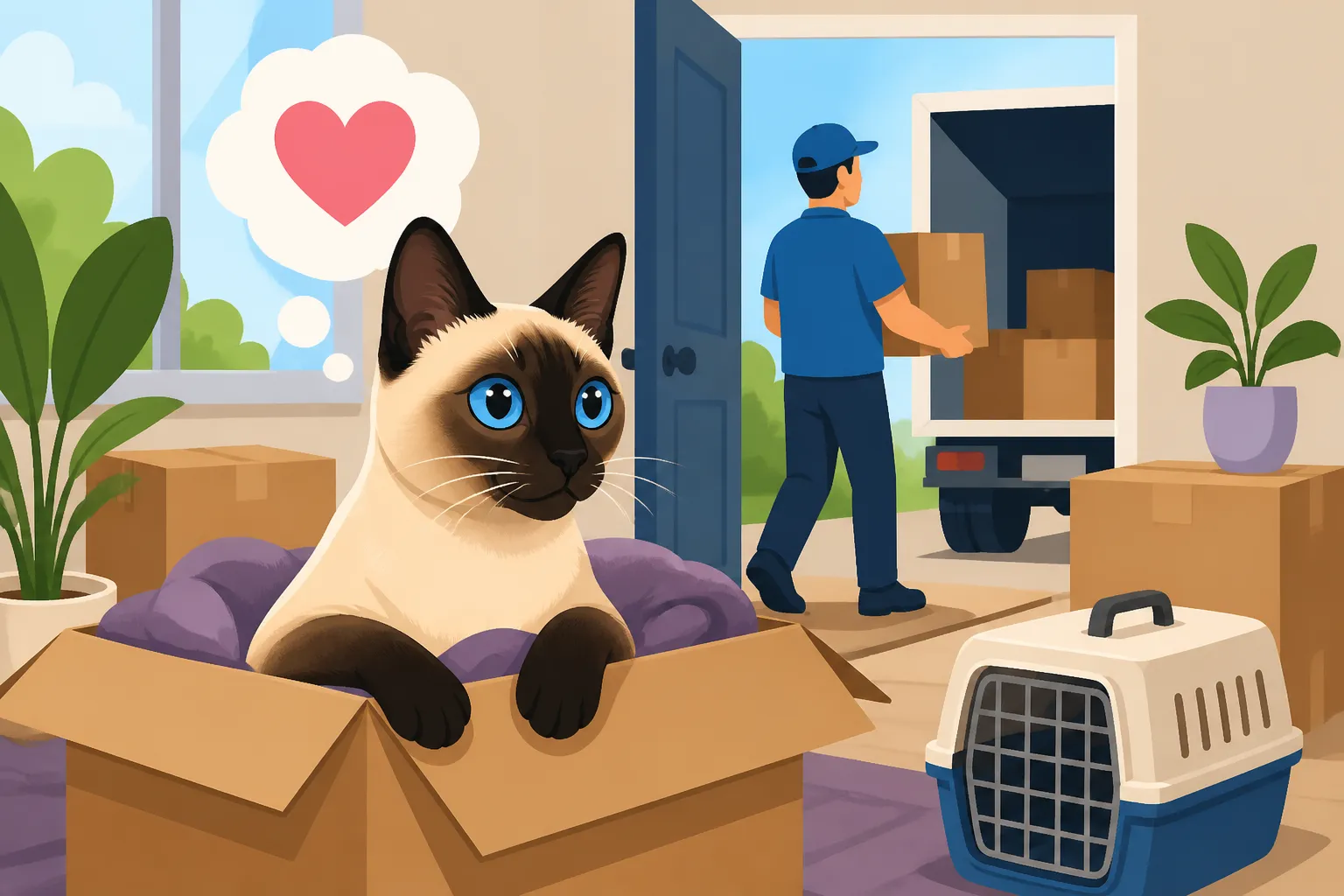
Imagine waking up one day to find your entire home packed into boxes, strangers walking through your space, and the familiar furniture disappearing one by one. This is essentially what a house move feels like for your Siamese. They are creatures of habit and territory. Their home is their castle, marked with their scent and understood through their daily patrols. Every corner, every high shelf, every sunbeam spot is part of their established domain. When this is disrupted, it causes profound stress because their sense of safety and predictability vanishes.
The breed's inherent intelligence and emotional depth mean they often process changes more acutely than some other cat breeds. They notice every little detail, from a new box in the hallway to the subtle shift in your own stress levels. Their territorial instincts are strong, making the idea of leaving one territory and entering another, filled with unknown scents and potential threats, incredibly daunting. This is why a well-meaning move can sometimes lead to What a Siamese Cat Costs in Damaged Clothing if they react with destructive behaviors borne of anxiety.
Recognizing Signs of Stress Before, During, and After a Move
Your Siamese cat might not tell you they're stressed in words, but their body language and behavior will speak volumes. It's crucial to be attuned to these signals, as early intervention can make a big difference. Before the move, you might notice changes as packing begins: increased vocalization (more "meezer yowls" than usual), hiding more often, decreased appetite, or even inappropriate urination or defecation outside the litter box. Some cats might become clingier, while others might withdraw entirely.
During the actual moving process, they might exhibit extreme fear, trying to escape, growling, hissing, or swatting. Once in the new home, the signs can persist or even intensify. They might refuse to eat or drink, hide for days, or develop compulsive behaviors like excessive grooming, leading to What Psychogenic Alopecia Does to a Siamese Cat. Signs a Siamese Cat Is Unwell often overlap with stress signs, so if concerns about physical health arise, a vet visit is always recommended. Pay close attention to their litter box habits, as changes can indicate stress or a medical issue.
Here’s a quick overview of what to look out for:
| Stressful Behavior | Potentially Normal Behavior (if temporary/mild) |
|---|---|
| Persistent hiding/withdrawal | Exploring new spaces cautiously |
| Excessive vocalization (howling, growling) | Curious meows, chirps, trills while investigating |
| Inappropriate urination/defecation | Using litter box, even if a new one |
| Aggression (hissing, swatting) | Playful pounces, chasing toys |
| Refusal to eat or drink for extended periods | Eating less for a day or two, then resuming |
| Destructive behavior (scratching, chewing) | Using designated scratchers, playing with appropriate toys |
| Over-grooming (bald patches) | Regular, healthy grooming |
| Constant trembling or panting (seek vet advice) | Relaxed posture, purring |
Pre-Move Preparation: Easing the Transition
The key to a successful move with a Siamese cat lies in preparation. The more you can do to gradually introduce changes and maintain a sense of security, the better your cat will cope.
Gradual Acclimation to Moving Boxes and Changes
Don't wait until the last minute to bring out the moving boxes. Introduce them weeks, or even a month, before you start packing. Let them sit around the house empty. Your Siamese will naturally investigate them. Turn them into fun hiding spots or new perches. You can even place familiar blankets or treats inside them to create positive associations. This desensitization process makes the boxes seem less like a harbinger of doom and more like just another part of the furniture.
As you start packing, try to do it slowly and incrementally. Pack one room at a time, keeping your cat's main areas (food, water, litter box, favorite sleeping spots) untouched for as long as possible. If possible, avoid packing these essential items until the very last moment. Maintain their feeding schedule and playtimes religiously, as consistency provides comfort. Consider using Feliway diffusers in the weeks leading up to the move, which release calming pheromones that can help reduce stress. You can often find these easily on Amazon.
Establishing a "Safe Zone" in the Old Home
As the house becomes chaotic with packing, it's vital to create a dedicated "safe zone" for your Siamese. Choose a quiet room that won't be packed until the very end, perhaps a spare bedroom or a bathroom. Equip this room with their favorite bed, food and water bowls, litter box, and familiar toys. Close the door to this room while you're packing elsewhere to prevent them from getting underfoot, or becoming distressed by the commotion.
Spend extra time with your cat in this safe zone, offering cuddles, playtime, and reassurance. This helps them associate the room with positive experiences and a feeling of security, even as the rest of the house transforms around them. On moving day itself, this room will be their sanctuary, completely off-limits to movers.
Preparing for the Journey Itself
The actual travel can be one of the most stressful parts of a move. Start carrier training well in advance if your Siamese isn't already comfortable with their carrier. Leave the carrier out with the door open, adding soft bedding and treats inside. Encourage them to explore it and even sleep in it. How a Siamese Cat Behaves at the Vet often depends on their comfort with the carrier and car rides, so practicing these can have long-term benefits.
For longer journeys, consider talking to your vet about calming aids or mild sedatives, especially if your cat has a history of severe travel anxiety. Never administer any medication without veterinary guidance. Ensure the carrier is secure, well-ventilated, and large enough for them to stand and turn around comfortably. Line it with absorbent pads in case of accidents, and bring a familiar blanket that smells like home. You can find a wide variety of carriers suitable for Siamese cats on Amazon, from soft-sided bags to hard plastic kennels.
Moving Day: Minimizing Trauma
Moving day itself is often a flurry of activity and noise, which can be terrifying for a Siamese cat. Your primary goal is to keep them safe, secure, and as calm as possible.
Securing Your Siamese Cat on Moving Day
On the day of the move, your Siamese cat needs to be completely out of the way of the movers. The safest place is in their designated "safe zone" room. Place them in their carrier within this room, with their favorite blanket, a small toy, and fresh water (a spill-proof bowl is ideal). Put a "Do Not Open" sign on the door to ensure movers don't accidentally let them out or disturb them.
Ideally, move your cat's carrier to the new home in your personal vehicle before the movers arrive at the old house, or immediately after they've left. This minimizes their exposure to strangers and loud noises. Having a designated person responsible for the cat throughout the entire process is also incredibly helpful, ensuring they're not overlooked in the chaos.
The Journey to the New Home
Whether it's a short drive or a long road trip, make the journey as calm as possible. Secure the carrier in your car so it doesn't slide around. Avoid loud music or sudden stops. Talk to your Siamese in a soft, reassuring voice. Cover the carrier with a light blanket to reduce visual stimulation, but ensure good airflow. Check on them periodically, but avoid opening the carrier until you are in a secure, enclosed space in the new home.
If it's a very long drive, plan for safe stops where you can offer water and a chance to use a portable litter box, but only if you can do so in a completely secure, enclosed environment (like a pet-friendly hotel room, not a public rest stop). For most moves, it's best to keep them in the carrier until they reach their dedicated safe room at the destination. How a Siamese Cat Copes With Boarding can offer insights into managing extended periods of unfamiliar environments, though direct travel is usually preferred for a move.
Settling Into the New Home: A Step-by-Step Approach
Arriving at the new house is just the beginning. The real work of helping your Siamese adjust starts now. Patience and consistency are paramount.
Setting Up the Initial Sanctuary Room
Before any furniture is unloaded in the new house, set up a dedicated "sanctuary room" for your Siamese. This room should be quiet, secure, and contain everything they need: food, water, litter box, scratching post, and their bed. Place familiar items like their favorite blanket or a toy that smells like the old home in this room. This is their base camp, a small, manageable territory where they can feel safe.
Bring your Siamese directly to this room in their carrier. Once the door is closed and secured, you can open the carrier and let them come out at their own pace. Don't force them. Sit quietly in the room, talk softly, or simply read a book. Let them explore the room on their terms. This small, controlled environment helps prevent them from feeling overwhelmed by a vast, unfamiliar space. It also prevents them from getting lost or hiding in inaccessible spots while you're unpacking.
Gradual Introduction to the Rest of the House
Once your Siamese is comfortable and confidently using their sanctuary room (this might take a few hours, a day, or even several days), you can begin the gradual introduction to the rest of the house. Start by opening the door to their room, allowing them to venture out into an adjacent area, like a hallway or another quiet room. Supervise these explorations closely. Don't rush them.
Keep other pets or young children away during these initial explorations. Let them sniff, rub, and mark their new territory with their scent. Over several days or even weeks, slowly expand their access to the rest of the house, always ensuring they have a clear path back to their safe room. At night, or when you're away, it's often best to confine them back to their sanctuary room to prevent them from becoming disoriented or stressed when unsupervised. This slow process helps avoid issues like Whether a Siamese Cat Wrecks Furniture out of anxiety.
Maintaining Routine and Reinforcing Security
Consistency is king when settling a Siamese into a new home. Maintain their feeding schedule, playtimes, and grooming routines as much as possible. This predictability helps them feel secure and re-establishes normalcy. Spend quality time with them, offering plenty of affection and reassurance. Engage them in play with their favorite toys, perhaps some new ones purchased from Amazon to add excitement to the new environment. Which Toys a Siamese Cat Actually Plays With can vary, but wand toys and puzzle feeders are often great for engaging their intelligent minds.
Continue using calming pheromone diffusers if you found them helpful. Ensure their litter boxes are easily accessible and kept meticulously clean. Re-establish vertical spaces like cat trees or shelves, as Siamese cats love to climb and survey their domain from a height. How to Rearrange a Home for a Blind Siamese Cat provides excellent advice on creating a consistent and safe layout, which is beneficial for any cat in a new home, allowing them to navigate confidently by memory. It takes time, but with patience and understanding, your Siamese cat will eventually feel right at home.
Disclaimer
This article is for general informational purposes only and does not constitute professional advice. Laws, prices and regulations vary by location and change over time. Consult a qualified professional for guidance on your specific situation.