How Long It Takes to Clicker Train a Siamese Cat
Many Siamese cat owners find themselves utterly charmed by their feline friend's intelligence and boundless energy, only to then feel completely bewildered when it comes to training. It's easy to assume cats, especially these chatty, opinionated "Meezers," are untrainable, leaving you frustrated when your clever companion seems to have a mind entirely of their own. This guide will walk you through the rewarding journey of clicker training your Siamese cat, demystifying the process and giving you realistic expectations on how long it truly takes to teach them new behaviors.
Why Siamese Cats Are Prime Candidates for Clicker Training
Let's be real, the idea of training a cat might sound a bit ambitious, especially when you're dealing with a breed as notoriously independent and vocal as the Siamese. However, their unique personality traits actually make them fantastic students for clicker training, far more so than many other cat breeds. They aren't your typical aloof felines; they thrive on interaction and mental stimulation, which is exactly what training provides.
Their High Intelligence and Curiosity
Siamese cats are often described as having dog-like personalities, and a big part of that comes from their sharp minds. They are incredibly intelligent, always observing, learning, and figuring things out. This isn't a cat content to just nap in a sunbeam all day; they want to engage with their environment and, more importantly, with you. This inherent cleverness means they grasp concepts quickly, making the connection between a desired action, the click, and the treat almost intuitive for them. You'll often notice them watching you intently, trying to predict your next move, a trait that can be wonderfully leveraged in training. If you've ever wondered How Clever a Siamese Cat Is, you'll see it firsthand during training sessions.
Their Desire for Interaction
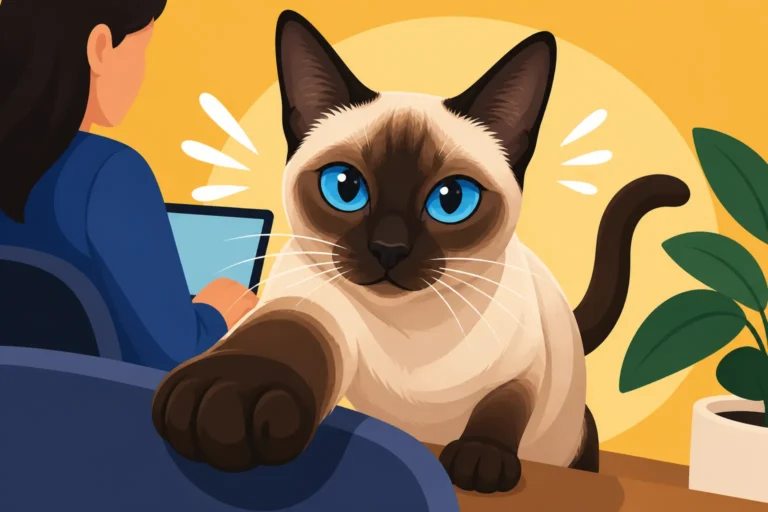
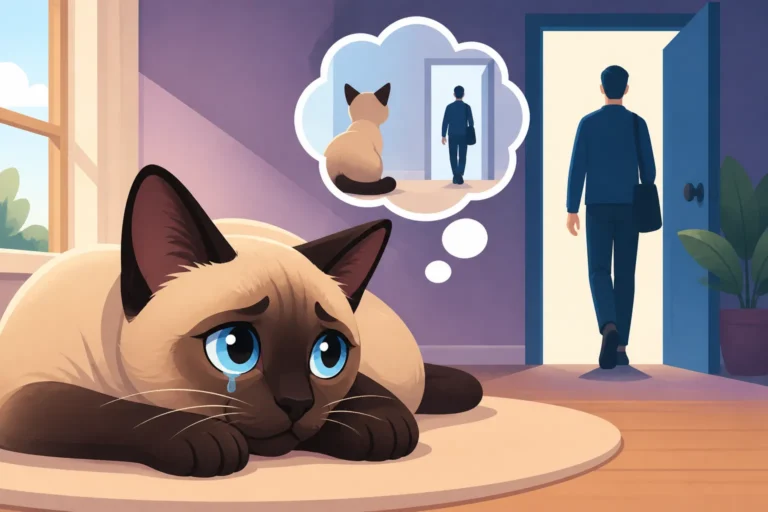
Anyone who lives with a Siamese cat knows they are not shy. They are companion animals through and through, forming deep bonds with their humans and craving attention. This intense desire to be part of your world is a huge advantage in training. They see it not as a chore, but as a special bonding activity with their favorite person. They genuinely enjoy the one-on-one time, the praise, and the mental challenge, which means they'll often be eager participants. This connection is far more profound than just food motivation; it's about shared experience and strengthening your relationship.
Their Vocal Nature and Expressiveness
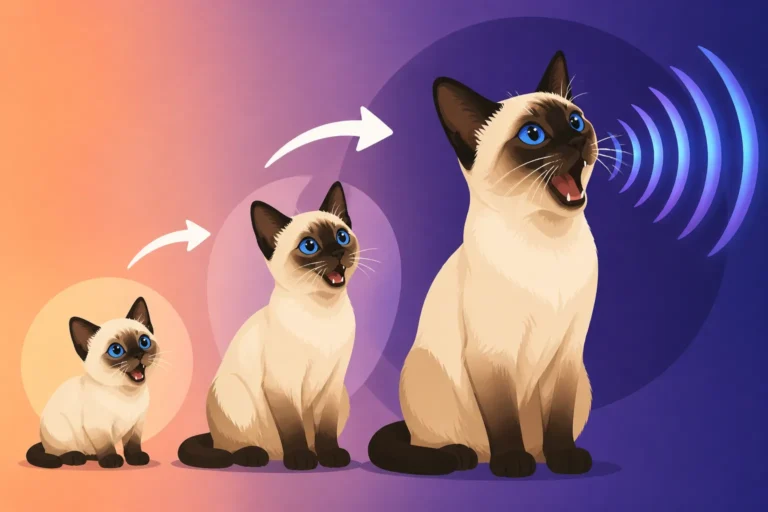
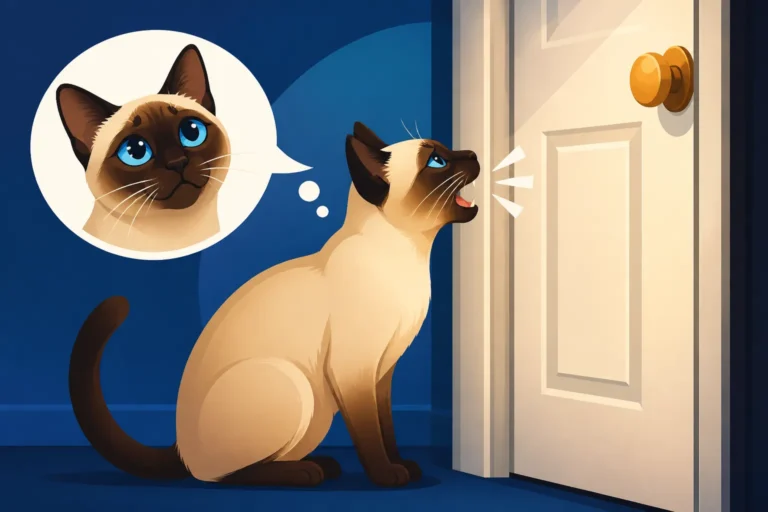
Siamese cats are famous for their "Meezer yowl" and their wide range of vocalizations. While this can sometimes be perceived as a drawback (especially at 3 AM!), it's also a sign of their communicative nature. They are constantly trying to tell you something, and they respond to your voice and body language. When you start clicker training, you'll find they often "talk" their way through the process, offering enthusiastic meows or trills when they understand a cue or successfully complete a task. This expressiveness makes the training journey even more engaging and often quite comical. It's another layer of their personality that makes them so uniquely suited to this interactive learning method.
The Foundations of Clicker Training Your Siamese
Before we dive into timelines, it's essential to understand the basic mechanics of clicker training. It's a simple yet incredibly powerful method that relies on positive reinforcement and precise timing. It's less about force and more about communication and motivation.
What is Clicker Training and Why It Works
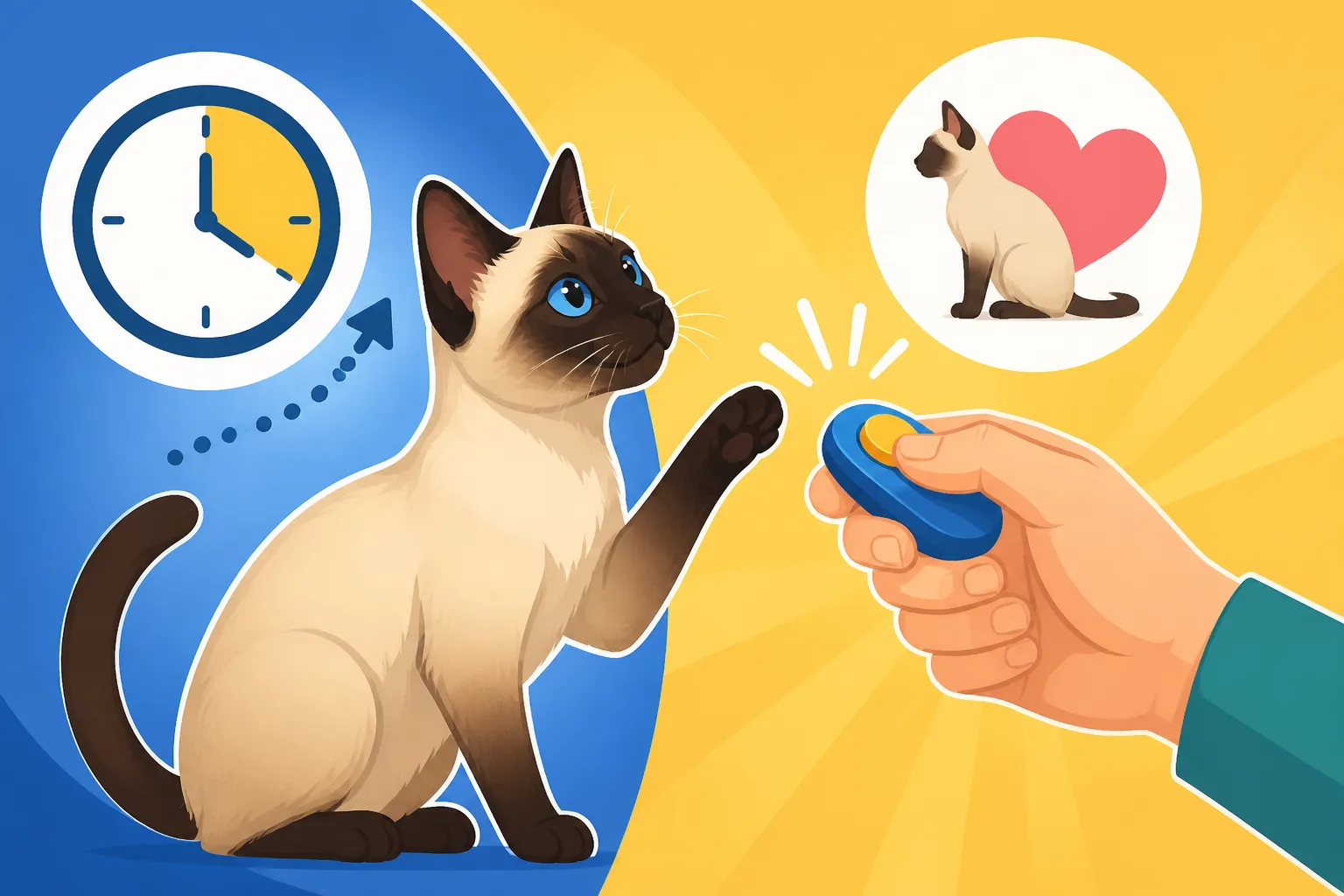
Clicker training uses a small device that makes a distinct "click" sound. This sound acts as a marker – it tells your cat exactly at the moment they performed the correct behavior. Think of it as taking a photograph of the good behavior. Right after the click, a reward (usually a tiny, high-value treat) is given. The click isn't a command; it's an acknowledgment. This method works so well because it removes ambiguity. Cats learn by association, and the click's consistent, instantaneous nature creates a clear, positive link between their action and the reward. Unlike verbal praise which can vary in tone, the click is always the same, making it a reliable signal.
Charging the Clicker: The Critical First Step
You can't just start clicking and expecting your Siamese to understand. First, you need to "charge" the clicker, meaning you teach your cat that the click predicts a treat. This is super easy! Find a quiet spot, grab your clicker and some pea-sized, irresistible treats (like boiled chicken bits or freeze-dried salmon – many great options can be found on Amazon). Click, then immediately give a treat. Do this about 10-20 times in a short session. Don't ask for any behavior, just click and treat. Your cat will quickly learn that "click = yummy treat." Once your Siamese starts looking for a treat after the click, you know the clicker is charged and ready for action. You might be surprised how quickly it learns from watching you (How a Siamese Cat Learns From Watching You) during this foundational step.
Essential Gear and Optimal Training Environments
You don't need much to get started, which is part of the beauty of clicker training.
- The Clicker: A basic clicker is perfect. You can often find multi-packs on Amazon, which is handy if you tend to misplace things.
- High-Value Treats: These are non-negotiable. Small, soft, and utterly delicious treats that your Siamese doesn't get at any other time. Think tiny pieces of cooked chicken, turkey, tuna, or specialized training treats.
- Quiet Space: Start in a low-distraction environment. A quiet room where your cat feels comfortable and there are no other pets, loud noises, or interesting things to chase (like a laser pointer, which can be great for Which Toys a Siamese Cat Actually Plays With but distracting during training).
- Short Sessions: Cats have short attention spans. Keep sessions brief – 2 to 5 minutes at most, especially when starting out. Multiple short sessions throughout the day are far more effective than one long, tedious one. Always end on a high note, even if it means doing a super easy trick they already know.
Factors That Influence Your Siamese Cat's Training Timeline
So, you're ready to teach your clever Siamese some tricks! But how long will it really take? The truth is, there's no single answer, as several factors play a significant role in determining how quickly your cat picks things up. Understanding these can help you set realistic expectations and adjust your approach.
The Cat's Age and Prior Experience
Just like with people, younger cats often pick up new concepts faster. A Siamese kitten is a sponge, eager to explore and learn, making them excellent candidates for early training. They haven't developed ingrained habits or fears that might need to be "untrained." An adult Siamese, however, can absolutely be clicker trained, but it might take a little more patience if they've had no prior positive training experiences. If they're a rescue, they might need extra time to build trust and feel secure before their full learning potential shines through. Don't be discouraged if your older cat takes a bit longer; consistency is key.
Your Consistency and Dedication
This is arguably the biggest factor. Training isn't a one-and-done event; it's an ongoing process. If you only train once a week for 20 minutes, progress will be slow. If you commit to 2-3 short (2-5 minute) sessions every day, you'll see remarkable results much faster. Consistency means not just frequency but also using the same cues, the same clicker, and similar treats. Your Siamese will thrive on routine and predictability during training. Life happens, of course, but the more you can stick to a regular schedule, the faster your cat will learn and retain new behaviors.
The Complexity of the Trick
Naturally, some tricks are easier to teach than others. A simple behavior like "sit" or "touch" (touching their nose to your finger) is generally much quicker to teach than a multi-step sequence like "fetch" or walking on a leash. Behaviors that are closer to a cat's natural movements, like sitting, will be learned faster than something more abstract or requiring sustained effort. Consider breaking down complex tricks into smaller, manageable steps. For example, How to Leash Train a Siamese Cat involves many steps, from harness acceptance to walking comfortably.
Individual Cat Personality and Motivation
Every Siamese cat, despite breed similarities, has their own unique personality. Some are highly food-motivated, others are more play-motivated, and some just want to please their human. A highly motivated cat will learn faster. A shy or easily distracted cat might take longer to engage fully. Observe your cat: What truly excites them? Is it that freeze-dried salmon, a quick game with a feather wand after a successful trick, or just your enthusiastic praise? Tailoring your rewards to your cat's individual preferences can dramatically speed up the learning process. Some Siamese cats are incredibly driven by interactive play, needing How Many Play Sessions a Siamese Cat Needs a Day to stay happy and engaged.
Typical Timeframes for Popular Siamese Cat Tricks
Now for the burning question: how long does it really take? While the factors above mean there's no exact answer, we can offer some general timelines based on the complexity of common tricks. Remember, these are averages, and your Siamese might be a superstar or need a little extra nudging!
Simple Behaviors: Sit, Stay, Touch
These are your foundation tricks, and thankfully, they're usually the quickest to teach.
- "Sit": Many Siamese cats will naturally sit down when they're observing or waiting for something. You can often capture this behavior by clicking the moment their bottom hits the ground, then treating. Alternatively, lure them into a sit with a treat. With consistent 2-5 minute sessions daily, many Siamese can reliably "sit" on cue within 3-7 days. The key is to click the instant they sit. We have a detailed guide on How to Teach a Siamese Cat to Sit if you want to dive deeper.
- "Touch" (Targeting): This is fantastic for building focus and teaching other behaviors later. Hold out a finger or a target stick (available on Amazon), and when your cat touches it with their nose, click and treat. Your Siamese can usually master "touch" in 3-5 days, making it a versatile tool for opening doors or moving them from one spot to another.
- "Come": This is arguably one of the most important behaviors for safety and bonding. Start by calling their name and "come" when they're already moving towards you, then click and treat. Gradually increase the distance. For a cat that loves attention, "come" can be solid in 1-2 weeks with regular practice. It's truly amazing How to Teach a Siamese Cat to Come and have them respond reliably.
Intermediate Behaviors: Fetch, High Five, Spin
These tricks require a bit more coordination or a sequence of actions, so they naturally take a little longer.
- "Fetch": This is a classic "dog-like" trick many Siamese adore. Start with a toy they love. When they mouth it, click and treat. When they pick it up, click and treat. When they bring it closer to you, click and treat. Gradually build up to them bringing it all the way back. A Siamese cat can often learn a basic "fetch" (bringing a toy back to you) within 2-4 weeks, though perfecting the "drop" might take longer. We have more on How Well a Siamese Cat Fetches for interested owners.
- "High Five": This involves targeting (touching your hand) and then lifting a paw. You might start by luring their paw up with a treat. This can take 2-3 weeks to get a consistent "high five."
- "Spin": Lure your cat in a circle with a treat. Click and treat as they complete the rotation. This trick can be learned in about 1-2 weeks for many Siamese, especially if they're agile and enjoy the motion.
Advanced Behaviors: Leash Walking, Solving Puzzles
These are more complex, often involving multiple steps, overcoming natural instincts, or sustained concentration.
- Leash Walking: This is a multi-stage process. First, getting your Siamese comfortable with the harness, then the leash, then walking indoors, and finally outdoors. Some cats take to it naturally, while others resist. Expect anywhere from 1 month to several months to achieve comfortable leash walking. It's a testament to How to Get a Siamese Cat Used to a Harness that requires immense patience.
- Solving Puzzle Feeders: While not a "trick" in the performance sense, teaching a Siamese to use a puzzle feeder is a fantastic enrichment activity. It involves problem-solving and can range from easy to difficult. Introducing basic puzzle feeders can take a few days, but mastering complex ones might be an ongoing challenge over weeks or months, providing continuous mental stimulation. You can find many varieties of What a Puzzle Feeder for a Siamese Cat Costs on sites like Amazon.
Here's a quick overview of estimated training times for different behaviors:
| Behavior | Complexity | Estimated Training Time (Consistent Daily Sessions) | Notes |
|---|---|---|---|
| Sit | Simple | 3-7 days | Often can be "captured" as a natural behavior. |
| Touch (Targeting) | Simple | 3-5 days | Excellent foundation for other tricks. |
| Come | Simple | 1-2 weeks | Crucial for safety and bonding. Practice at varying distances. |
| High Five | Intermediate | 2-3 weeks | Requires precise targeting and paw lifting. |
| Fetch | Intermediate | 2-4 weeks | Best with a favorite small toy; breaking it into steps helps. |
| Spin | Intermediate | 1-2 weeks | Lure-based trick that most agile Siamese enjoy. |
| Leash Walking | Advanced | 1-3+ months | Multi-stage process requiring comfort with harness, leash, and environment. |
| Using Puzzle Feeder | Advanced | Days to Weeks (ongoing) | More about mental enrichment than a single "trick." |
Troubleshooting and Maximizing Your Training Success
Even with the smartest Siamese, you'll hit a few bumps in the road. It's completely normal for a cat to have an off day or for a particular trick to feel stuck. Don't get discouraged! Persistence, flexibility, and a deep understanding of your cat's needs will carry you through.
Common Training Hurdles and How to Overcome Them
One of the most common issues is lack of motivation. If your cat isn't interested in the treats, try different ones! Sometimes, a cat might be bored with chicken but go wild for shrimp. Another hurdle is distraction. If your Siamese is constantly looking around or trying to play with something else, your training environment might be too stimulating. Go back to a super quiet room.
Sometimes, owners get frustrated because their cat isn't doing the trick perfectly. Remember to reward approximations. If your cat just starts to lift a paw for "high five," click and treat that! You can refine the behavior later. Avoid scolding or punishment, as this will only teach your Siamese to fear training, not to learn. If your cat is feeling stressed, they might start Psychogenic Alopecia in a Siamese Cat by over-grooming, a clear sign to dial back the pressure.
Keeping Training Fun and Engaging for Your Siamese
The moment training stops being fun for your Siamese, you've lost them.
- Keep sessions short: Seriously, 2-5 minutes is often ideal. Ending before they get bored keeps them eager for the next session.
- Vary your treats: Rotate different high-value treats to keep things exciting.
- Incorporate play: A short play session with a favorite wand toy (like those often found on Amazon) before or after training can boost their mood and energy.
- Don't overdo it: If your cat isn't "getting it" after a few tries, take a break. Come back to it later or try an easier trick they know for a confidence boost.
- Listen to your cat: If they're restless, swatting at you, or trying to walk away, it's time to stop. Forcing them will only make them resent the process.
- Positive Reinforcement Only: Always keep it positive. The click and treat should be joyful events, building a stronger bond, not a source of stress. This positive association ensures your Siamese sees training as a fun game with you, rather than a task.
The Power of Patience and Positive Reinforcement
Ultimately, the biggest secret to clicker training success with a Siamese cat is patience. They are incredibly smart, but they are still cats, and they operate on their own timeline. Celebrate every small victory, even if it's just a tiny step towards the full trick. Your enthusiasm and consistent positive reinforcement will be far more effective than any pressure or frustration. Remember, you're not just teaching tricks; you're building a deeper understanding and communication with your amazing Siamese companion, enriching both of your lives. This consistent, positive interaction is vital for their overall behavior and enrichment.
Disclaimer
This article is for general informational purposes only and does not constitute professional advice. Laws, prices and regulations vary by location and change over time. Consult a qualified professional for guidance on your specific situation.