How a Siamese Cat Learns From Watching You
Have you ever noticed your Siamese cat mimicking a behavior you just did, or figuring out how to open a cupboard latch after watching you struggle with it for weeks? It’s a common and often startling realization for many Siamese owners: these aren't just intelligent cats; they are incredibly observant learners. This guide will delve into the fascinating world of how your Siamese absorbs information by simply watching you and their environment, and how this unique trait impacts everything from their daily mischief to their capacity for training.
The Keen Intellect of Your Siamese Cat: More Than Just a Pretty Face
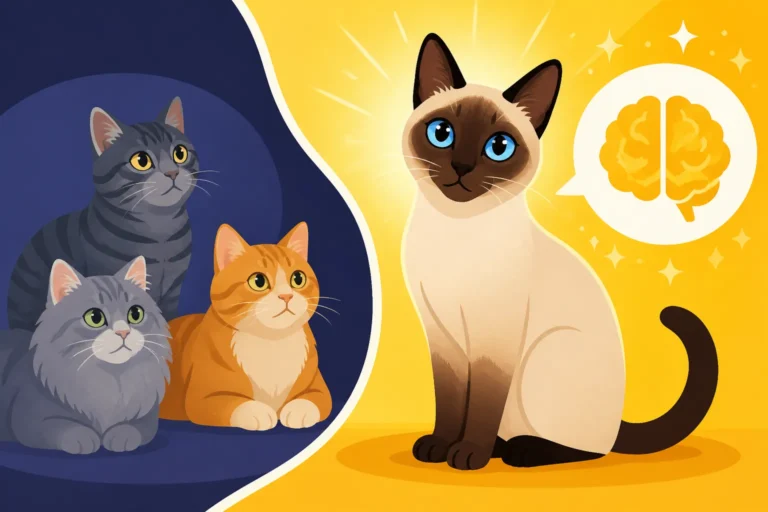
Let's be real, Siamese cats aren't just known for their stunning blue eyes and sleek points; they're famous for their brains. But it’s not just about raw intelligence; it’s about how they use it. They are problem-solvers, communicators, and, perhaps most notably, master observers. This isn't just a quirky trait; it's a fundamental aspect of their genetic makeup and what makes them such captivating (and sometimes challenging) companions. They don't just exist in your home; they actively analyze it, and you, for clues.
Decoding Their Observational Prowess
Your Siamese isn't just "watching TV" when they're staring intently at you from across the room. They're often performing a deep analysis of your actions, your routine, and the cause-and-effect relationships within their world. They are constantly gathering data, even when you think they're just napping in a sunbeam. This keen observational skill allows them to bypass traditional trial-and-error learning in many situations, jumping straight to a solution based on what they've witnessed. Think about it: a cat that watches you open the treat cupboard knows exactly which lever to bat at to get what they want. It’s a form of social learning that is more typically associated with primates or canines, but our Meezers are right there with them, perhaps even exceeding some. How Clever a Siamese Cat Is really shines through this ability.
The Role of Their Environment
While their natural intelligence is key, the environment you provide plays a massive role in fostering or inhibiting this observational learning. A stimulating home, full of opportunities for interaction and exploration, gives them more to observe and more reasons to apply what they've learned. If your Siamese lives in a static, unengaging space, they might not have as many "problems" to solve or human actions to mimic. But introduce a new toy, a new piece of furniture, or change up your routine, and suddenly their little brains are in overdrive, processing the new information. They thrive on novelty and the chance to flex their mental muscles, often with unexpected (and sometimes hilarious) results.
Unpacking Observational Learning: What Your Siamese Really Sees
It’s one thing to say Siamese cats learn by watching, but what does that actually look like in day-to-day life? It’s far more intricate and impactful than simply seeing them imitate a paw gesture. They pick up on patterns, sequences, and even the emotional cues that accompany your actions. This isn't just about mimicking; it's about understanding the why behind what you do.
The Art of Mimicry and Pattern Recognition
One of the most common examples of observational learning in a Siamese is their ability to mimic actions that lead to a desired outcome. For instance, if you always open a particular door by pushing down on the handle, don't be surprised if your Siamese eventually tries the same method. They see the entire sequence: human touches handle, handle moves, door opens. They don't necessarily understand the mechanics of the latch, but they understand the actionable steps. This is how many learn How a Siamese Cat Opens Doors or How a Siamese Cat Gets Into Cupboards. It’s not magic; it's meticulous observation.
Consider the simple act of opening a bag of treats. Most cats learn the sound of the bag and associate it with food. A Siamese, however, might also learn the motion you use to reach for the bag, the specific cupboard it comes from, and even the posture you adopt just before treat time. They're building a mental map of the entire event, which they can then use to anticipate or even initiate the action themselves (often by loudly reminding you it's treat time!). This level of pattern recognition is why they can seem so uncannily aware of your intentions.
Learning Household Rules (and How to Break Them)
Observational learning isn't just for positive outcomes. Your Siamese is also watching how you interact with household rules. If you sometimes give in and let them on the counter when guests aren't around, they learn that the "no counters" rule is flexible. They observe the conditions under which the rule applies (or doesn't). They see you clean up a spilled drink and might then understand that knocking things over gets your immediate attention, even if it's not the kind of attention you want to give.
They're essentially miniature social scientists, testing hypotheses based on their observations. They might watch you prepare their food in a specific bowl, then recognize that bowl even when it’s empty, bringing it to your attention. This constant assessment of their environment and your behavior is a significant part of What a Siamese Cat Does While You Are Out. They might be experimenting with all those things they saw you do!
Harnessing Their Gaze: Training and Enrichment Through Observation
Understanding that your Siamese learns by watching isn't just a fun fact; it's a powerful tool for training, enrichment, and building a stronger bond. By being mindful of your own actions, you can intentionally teach your cat new behaviors and even manage unwanted ones.
Demonstrating Desired Behaviors
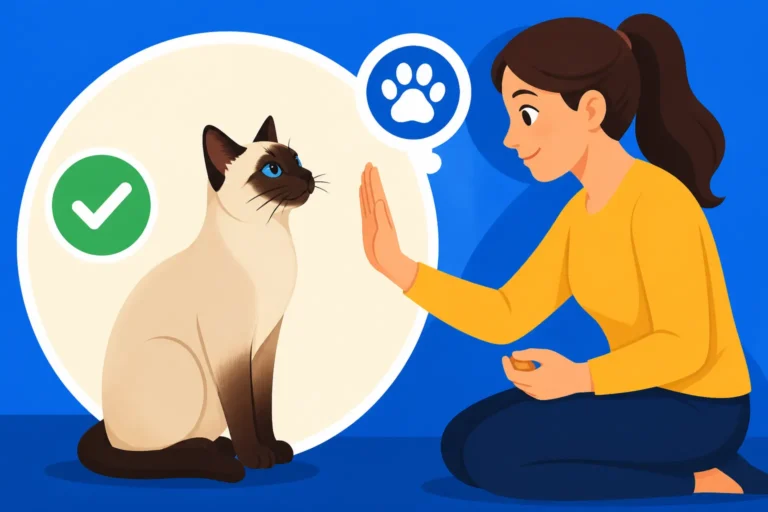
Want your Siamese to use a new scratch post? Instead of just placing them in front of it, demonstrate. Gently scratch the post yourself (or use a scratcher toy), showing them the motion and the sound. Your cat might watch intently, process the information, and then try it themselves. This applies to many things: using a water fountain, approaching a new carrier, or even playing with a new puzzle toy.
Let's say you're trying to introduce a Puzzle Feeder for a Siamese Cat. Instead of just filling it and letting them figure it out, show them how the treats come out. Push the slider, roll the ball, or lift the lid a few times while they watch. You're giving them a visual blueprint, making the learning process much faster and less frustrating for both of you. You might even find some excellent, interactive puzzle feeders on sites like Amazon that are perfect for this kind of observational learning.
Intentional Modeling for Positive Reinforcement
You can intentionally model behaviors you want your Siamese to adopt. For example, if you want them to sit on a specific mat when you're eating dinner, consistently guide them to the mat, praise them, and give them a small reward. Over time, they'll observe the sequence: human sits at table, cat goes to mat, cat gets praise/treat. They might start to pre-emptively go to the mat. How to Teach a Siamese Cat to Sit or How to Teach a Siamese Cat to Come can be significantly enhanced if they also observe you giving these cues and rewarding the actions with other cats or even family members (though perhaps don't sit on the mat yourself!).
This observational learning can also extend to how they interact with new people or animals. If you greet a new guest warmly and calmly, your Siamese is more likely to observe your relaxed demeanor and be less wary. If you introduce a new kitten with gentle, reassuring actions, they might pick up on your calm energy, making the transition smoother.
Table: Leveraging Observational Learning in Siamese Cats
| Scenario | Owner's Action (Demonstration) | Siamese Cat's Likely Observation & Learning | Outcome/Benefit |
|---|---|---|---|
| New Scratching Post | You gently scratch the post with your nails or a toy. | Cat observes the physical action and the purpose. | Cat starts using the new post faster, saving your furniture. |
| Opening a Door | You consistently use a specific method (e.g., pushing handle). | Cat learns the sequence of movements to operate the door. | Cat can open doors independently, giving them access or "escape." |
| Puzzle Feeder | You show how to manipulate parts to release treats. | Cat understands the mechanism and desired interaction. | Cat engages with the feeder effectively, preventing boredom. |
| "Sit" Command | You say "Sit," gently guide the cat, then treat & praise. | Cat connects the verbal cue, physical action, and reward. | Cat learns to sit on command for rewards, improving obedience. |
| Ignoring Undesired Behavior | You turn away or leave the room when cat meows incessantly. | Cat learns that excessive meowing does not yield attention. | Cat learns to modulate vocalizations, leading to a quieter home. |
When Curiosity Becomes Cat-tastrophe: Managing a Smart Siamese
While their intelligence and observational skills are a joy, they can also lead to challenges. A Siamese cat that learns quickly isn't always learning what you want them to learn. Their cleverness can become a source of frustration if not managed properly.
The Double-Edged Sword of Observation
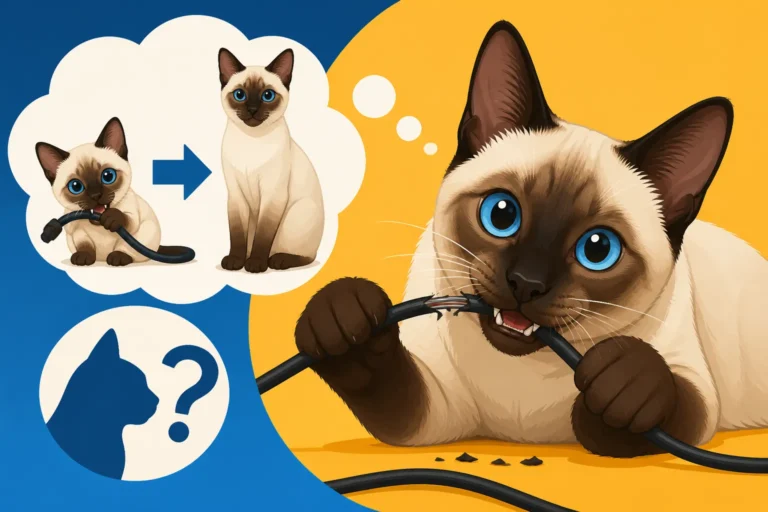
That same brilliant mind that figured out how to use the puzzle feeder can also figure out how to open the pantry door where the treats are stored. They might watch you put away your delicate earrings and then, fueled by curiosity, learn to open that drawer to play with them. This is where What a Bored Siamese Cat Destroys comes into play. If their intelligent minds aren't adequately stimulated, they'll find their own "puzzles" to solve, often involving things you'd rather they leave alone.
You might come home to discover your ingenious feline has managed to turn on the bathroom faucet after watching you do it countless times. Or perhaps they've observed you opening the child-proof lock on the cabinet where the cleaning supplies are kept. It's not maliciousness; it's simply a cat applying learned knowledge, often with less regard for consequences than a human would have. Secure any areas with valuable or dangerous items, and for particularly clever cats, consider investing in stronger cat-proofing items available on Amazon.
Preventing Undesired Learning
The key here is proactive management. If there's a behavior you absolutely do not want your Siamese to learn by watching you, then don't do it in front of them, or take steps to make it impossible for them to replicate.
For instance, if you don't want them jumping on counters, make sure you consistently remove them every time, and avoid leaving food out that might entice them to learn how to access it. If they see you easily reach a high shelf for a toy, they might observe the exact leverage points you used and try to scale it themselves.
Enrichment is also critical. A mentally stimulated Siamese is less likely to engage in destructive problem-solving. Provide plenty of vertical space with sturdy Cat Tree for a Siamese Cat Costs (look for well-rated, stable options on Amazon!), interactive toys, and regular play sessions. These outlets allow them to exercise their observational skills and intelligence in appropriate ways, rather than turning their keen intellect towards opening every cabinet in your home.
Living With a Master Observer: The Ultimate Bond
Living with a Siamese cat who learns from watching you is truly an experience like no other. It requires you to be more self-aware of your own habits and more creative in providing enrichment and setting boundaries. But the payoff is immense: a deeply bonded companion who understands you on a level many other breeds might not.
They learn your routines, anticipate your next move, and can even pick up on your moods. This creates a powerful connection, but it also means you need to be consistently clear in your communication, both verbal and non-verbal. Remember, your Siamese is always watching, always learning, and always processing. Embrace their cleverness, give them appropriate outlets for their intelligence, and enjoy the unique, insightful relationship that comes with sharing your life with such an extraordinary feline. It's a journey of mutual learning, where you teach them, and they, in their own silent, observing way, teach you a great deal about patience, consistency, and the astonishing capacity of the feline mind.
Disclaimer
This article is for general informational purposes only and does not constitute professional advice. Laws, prices and regulations vary by location and change over time. Consult a qualified professional for guidance on your specific situation.