How Fussy a Siamese Cat Is About Food
It's a familiar scene for many Siamese cat owners: you lovingly prepare a meal, perhaps a new, highly-recommended pâté, only for your elegant companion to sniff it disdainfully and walk away, as if you've offered them yesterday's garbage. The frustration is real when your Siamese turns up their nose at perfectly good food, leaving you wondering if they're simply being finicky or if there's something more going on. This guide will delve deep into the world of Siamese cat eating habits, exploring why they can be so particular about their meals and offering practical, empathetic strategies to ensure your beloved Meezer gets the nutrition they need without turning every mealtime into a battle of wills.
Understanding the Siamese Cat's Palate: More Than Just Picky?
Many cat breeds can be selective, but Siamese cats often seem to take it to another level. They're known for their strong personalities, and that extends right down to their dinner bowl. It's not always just about being "spoiled"; there are often deeper reasons for their particular preferences.
The Siamese Instinct: Hunter and Opportunist
Think about your Siamese cat's wild ancestors. They were efficient hunters, primarily catching small prey like birds, rodents, and insects. These meals were fresh, often still warm, and varied in texture – muscle, bone, fur, organs. This primal instinct still lurks within your sleek house cat. When presented with a cold, canned meal that smells uniform and has a consistent texture day in and day out, it might not trigger their innate drive to eat.
For a Siamese, the "freshness" factor can be huge. A meal that's been sitting out for even a short while might be deemed unappetizing because, in the wild, stale food could mean rot or illness. They might meticulously pick out certain pieces, suggesting they're looking for a specific texture or component they'd naturally get from a whole prey animal. This isn't just snobbery; it's a deeply ingrained evolutionary trait. They're programmed to seek out the best, freshest options available, and your kibble might just not be cutting it for their refined, ancient palate.
The Role of Genetics and Environment in Pickiness
While all cats have some degree of selectivity, some Siamese lines or individual cats might be predisposed to being more particular. Just like humans, some cats are simply born with more sensitive taste buds or a stronger aversion to certain smells and textures. However, early environmental factors often play an even larger role in shaping their food preferences.
Consider what your Siamese kitten ate during their critical developmental period. Was it a high-quality wet food? Was it a single brand of kibble? Breeders often feed a consistent diet, and kittens become imprinted on these flavors and textures. Suddenly changing their food in a new home can be jarring for them. If a kitten was weaned too early, or had a stressful start, they might develop anxieties around food that manifest as fussiness. A cat's early experiences, including the type of food offered by their first caregivers and the consistency of their feeding schedule, lay a powerful foundation for their future eating habits. Trying to introduce new foods suddenly to an adult Siamese who has been accustomed to one particular type of meal for years can feel like asking a human to suddenly enjoy a cuisine they've never encountered. Patience and gentle introduction are key.
Common Reasons Your Siamese Cat Might Be a Fussy Eater
It’s easy to label a Siamese as "fussy" and move on, but often, their pickiness is a signpost pointing to something deeper. Understanding these common culprits can help you address the issue more effectively.
Texture, Temperature, and Presentation Matters
For a Siamese, food isn't just fuel; it's a sensory experience. The way a meal feels, its temperature, and even how it's presented can make or break their appetite.
Many Siamese cats have strong preferences when it comes to texture. Some adore smooth pâtés, easily lapping them up, while others prefer chunky gravies or shredded meat, enjoying the act of chewing. Then there are those who demand a mix of both, perhaps picking out the gravy and leaving the solids behind. Have you ever noticed your Siamese cat pushing food around the bowl with their nose? They might be trying to assess the texture or even trying to separate out parts they don't like. Kibble comes with its own textural challenges; some prefer small, uniform pieces, while others might like larger, crunchier bits. If you've ever tried to switch from a soft pâté to a chunky stew or vice-versa, you've likely seen their clear disapproval.
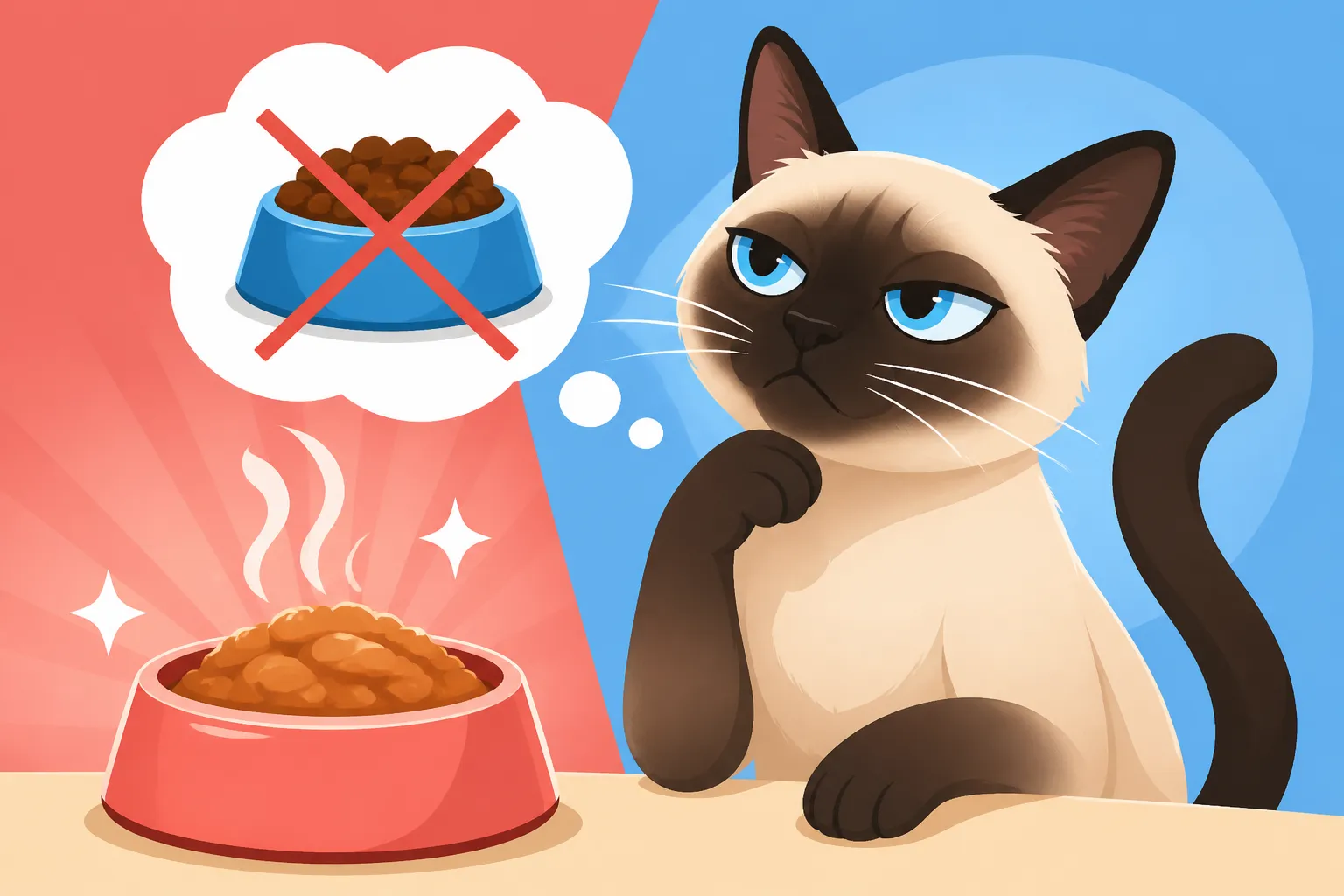
Temperature is another subtle but significant factor. Cats, like their wild counterparts, prefer food that is body temperature, mimicking a freshly caught meal. Food served straight from the refrigerator can be unappealingly cold. A quick zap in the microwave (being extremely careful to avoid hot spots) or mixing in a little warm water can transform a cold meal into something far more appetizing. The difference can be astounding for a particularly discerning Siamese. Beyond temperature, the actual serving vessel can impact their willingness to eat. A deep bowl might irritate their sensitive whiskers (this is known as "whisker fatigue"), causing them discomfort. Flat, shallow dishes or wide ceramic plates are often preferred. Some cats even develop an aversion to certain materials, like plastic, which can harbor odors or scratches. The location of the bowl matters, too. Is it in a high-traffic area? Next to their litter box? Cats are private eaters, and a quiet, safe spot can make all the difference.
Stress, Environment, and Health Concerns
Sometimes, the issue isn't the food itself, but the environment or an underlying health problem. Siamese cats are highly sensitive creatures, and stress can manifest in many ways, including a loss of appetite or increased pickiness.
A change in routine, a new pet, a house move, loud noises, or even subtle tensions within the household can make a Siamese feel anxious and disrupt their eating habits. They might suddenly refuse a food they once loved, or only eat small amounts. Consider if anything in their world has shifted recently. A stressed Siamese may also exhibit other behavioral changes, such as over-grooming or increased vocalization. Signs a Siamese Cat Is Unwell can sometimes include a change in appetite.
More seriously, fussiness can be a red flag for an underlying health issue. Dental pain, for example, can make eating hard kibble or even some wet foods excruciating. If your Siamese is unusually picky, drooling, or shies away from touching their mouth, a trip to the vet is in order. Dental Disease in a Siamese Cat is sadly common, and many cats hide the pain until it's severe. Other conditions like kidney disease, hyperthyroidism (especially in older cats), gastrointestinal upset, or even certain cancers can cause nausea and a general aversion to food. A cat that suddenly becomes extremely fussy or stops eating entirely needs immediate veterinary attention. It’s always best to rule out medical causes before assuming it’s just a behavioral quirk. Regular veterinary check-ups, including bloodwork, can often catch these issues early. How Often a Siamese Cat Needs a Wellness Exam is crucial for catching subtle changes.
Strategies to Encourage a Fussy Siamese Cat to Eat
Dealing with a fussy Siamese can feel like a full-time job, but there are many strategies you can employ to make meal times more successful and less stressful for both of you.
Gradual Transitions and Variety
Cats are creatures of habit, yet sometimes a touch of variety can pique their interest. The key is how you introduce it.
If you're trying a new food, whether it's a different flavor, brand, or texture, the golden rule is gradual introduction. Don't just swap out their old food entirely; your Siamese will likely stage a hunger strike. Instead, start by mixing a tiny amount of the new food (perhaps a teaspoon) with their familiar meal. Over the course of a week or two, slowly increase the proportion of the new food while decreasing the old. This allows their digestive system to adjust and their palate to get accustomed to the new taste and texture without feeling overwhelmed. If you notice any digestive upset, slow down the transition even further. Fresh, human-grade food can be appealing for some picky eaters, but even with premium options, a slow introduction is paramount.
Some owners find success with food rotation, offering two or three different types of food (wet or dry) on a rotating basis. This can prevent a cat from becoming overly fixated on one specific food and then refusing everything else if that food becomes unavailable or they simply get bored. However, this strategy needs careful management; some Siamese cats prefer unwavering consistency, while others thrive on variety. Pay close attention to your cat's response. If they seem stressed by the rotation, stick to one or two tried-and-true options. When selecting new foods, consider their nutritional content. Which Food Suits a Siamese Cat generally involves high-quality protein and appropriate fat content. Chewy and Amazon both offer a vast selection of different cat food brands and types, allowing you to explore various options until you find what truly resonates with your Siamese.
Enhancing Appeal and Routine
Sometimes, it's not the food itself, but how it's presented. Small changes can make a big difference for a Siamese who needs a little extra coaxing.
Try making their existing food more enticing. If you feed wet food, warm it slightly to body temperature (remembering to stir well to avoid hot spots). The warmth enhances the aroma, which is a major draw for cats. You can also mix in a tiny amount of warm, low-sodium chicken or beef broth, or even a bit of warm water, to create a more palatable consistency and boost the smell. Toppers can also be a game-changer: a sprinkle of freeze-dried meat treats, a dash of nutritional yeast, or a spoon of their favorite pureed pumpkin can sometimes be enough to encourage them to start eating. These should be used sparingly, though, to ensure they're still eating a balanced diet.
Establish a consistent feeding schedule. Cats thrive on routine, and knowing exactly when their meals are coming can reduce anxiety and encourage appetite. Small, frequent meals (2-3 times a day for adults, more for kittens) often work better than one large meal, mimicking their natural hunting patterns. Place their food bowl in a quiet, low-traffic area, away from their litter box and noisy appliances. A wide, shallow ceramic or stainless steel bowl can prevent whisker fatigue and is easier to keep clean. Consider using a puzzle feeder for dry food. This can turn mealtime into a stimulating activity, appealing to their intelligence and hunter instincts, which can sometimes encourage a reluctant eater. Whether a Puzzle Feeder Occupies a Siamese Cat depends on the individual cat, but it's a worthwhile experiment. If your Siamese is known for howling at an empty bowl, Why a Siamese Cat Yowls at an Empty Bowl explains that it's often a demand for interaction as much as food.
| Strategy Type | Action | Potential Benefit |
|---|---|---|
| Food Introduction | Gradual transition for new foods | Prevents digestive upset, builds acceptance |
| Enhancing Appeal | Warm food slightly | Increases aroma, more palatable |
| Add broth or warm water | Improves consistency, boosts scent | |
| Use food toppers (sparingly) | Adds enticing flavor/texture | |
| Serving & Routine | Use wide, shallow bowls | Prevents whisker fatigue |
| Place bowl in a quiet area | Reduces stress during meals | |
| Consistent feeding schedule | Establishes routine, reduces anxiety | |
| Offer small, frequent meals | Mimics natural hunting patterns, aids digestion | |
| Consider puzzle feeders (for dry food) | Engages hunting instinct, slows eating |
When to Consult Your Vet
While some fussiness is normal for a Siamese, there are clear signs that it’s time to call your veterinarian. Don't hesitate if you notice any of these red flags.
If your Siamese completely stops eating for more than 24 hours, or only eats a minuscule amount, this is an emergency. Cats can develop serious liver problems (hepatic lipidosis) very quickly when they don't consume enough calories. Even if they're still drinking water, a lack of food intake can be life-threatening. If their pickiness is new and sudden, or accompanied by other symptoms like vomiting, diarrhea, lethargy, hiding, changes in urination, or difficulty breathing, seek immediate veterinary attention. These could be signs of serious underlying health issues that need prompt diagnosis and treatment.
Even if the fussiness isn't an emergency, but is persistent and you're struggling to maintain their weight or ensure adequate nutrition, a vet visit is warranted. Your vet can perform a thorough physical exam, dental check, and recommend bloodwork or other diagnostic tests to rule out medical causes. They can check their What a Siamese Cat's Yearly Bloodwork Should Cover to ensure no underlying issues are missed. If medical problems are ruled out, your vet can offer advice on behavioral strategies, prescription diets tailored for sensitive stomachs, or even appetite stimulants if necessary. Remember, a healthy weight for a Siamese cat means they can still feel a bit bony; Why a Siamese Cat Feels Bony is often just their natural lean build, but excessive weight loss is concerning. It's always better to be safe than sorry when it comes to your beloved cat's health, as even minor changes in eating habits can sometimes signal bigger problems.
Debunking Myths About Siamese Cat Food Preferences
There are a lot of misconceptions floating around about why Siamese cats are so particular about their food. Let's clear up a couple of common ones that can lead owners down the wrong path.
The "Siamese Only Eats Expensive Food" Myth
It's a common belief, especially among those new to the breed, that because Siamese cats are so elegant and discerning, they must only deign to eat the most expensive, gourmet cat food on the market. While many Siamese do appreciate high-quality ingredients and carefully prepared meals, equating high price with high appeal isn't always accurate.
The reality is that a cat's preference is often more about taste, texture, and individual palatability than the cost of the ingredients. Some Siamese cats will happily devour a mid-range wet food while turning their nose up at an ultra-premium, grain-free, ethically-sourced pâté that cost a fortune. Conversely, some will only eat the most expensive, specialized diet. The crucial factor isn't the price tag; it's whether the food meets their specific sensory demands and nutritional needs. Focus on reading ingredient labels: look for high-quality animal protein as the first ingredient, minimal fillers, and appropriate nutrient balance for their life stage. Sometimes, a cat food available on Chewy at a reasonable price point might be perfectly palatable, while a boutique brand found elsewhere may go untouched. What matters most is that your Siamese eats it consistently and thrives on it. It’s about finding their sweet spot, not emptying your wallet trying to find the most exclusive brand.
Is a Siamese Cat Always Hungry? (No, but they act like it!)
If you live with a Siamese, you know their vocal repertoire is extensive, and often, it's used to demand food. They can yowl, chirp, trill, and carry on as if they haven't seen a morsel of food in days, even if they just ate an hour ago. This leads many owners to believe their Siamese is constantly, insatiably hungry.
While Siamese cats are naturally lean and have a fast metabolism, meaning they do burn calories efficiently, their persistent demands for food aren't always a sign of genuine hunger. Often, it's a form of communication and attention-seeking. They've learned that being vocal often gets a response from you, whether it's a treat, extra kibble, or even just a reassuring pat. If you constantly give in to these demands, you're inadvertently reinforcing the behavior. A healthy adult Siamese typically needs a specific amount of calories per day, divided into a few meals. How Many Calories a Siamese Cat Needs a Day can be calculated based on their weight and activity level, and How Much Food a Siamese Cat Gets Per Meal should be a controlled portion. Feeding them beyond their caloric needs can lead to weight gain, despite their lean build.
Instead of automatically refilling the bowl, try engaging them in play, offering a puzzle feeder, or simply talking to them without giving food. Sometimes, their "hunger" is actually boredom, or a desire for interaction. It takes strong will to resist their persuasive yowls, but teaching them that not every vocalization leads to a snack is important for their long-term health and your sanity. Of course, if you're truly concerned about their weight or genuine hunger, consult your vet to ensure there isn't an underlying medical condition causing increased appetite, such as hyperthyroidism in older cats. For the most part, though, your vocal Siamese is probably just being their charmingly demanding self.
Disclaimer
This article is for general informational purposes only and does not constitute professional advice. Laws, prices and regulations vary by location and change over time. Consult a qualified professional for guidance on your specific situation.