How the Snowshoe Came From the Siamese Cat
A Snowshoe can look like a Siamese wearing white socks, which makes it easy to assume the breed is simply a color variation. Its story is more specific: breeders developed the Snowshoe from Siamese cats and other domestic cats, selecting for a distinctive combination of pointed coloring, blue eyes, and white markings. This guide explains that history and what the Siamese connection does—and does not—mean.
The Siamese connection behind the Snowshoe
The first Snowshoes appeared through a chance-looking pattern
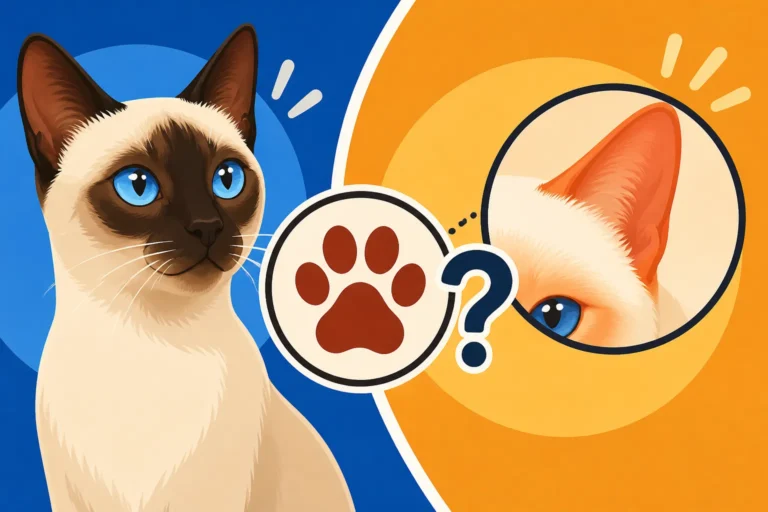
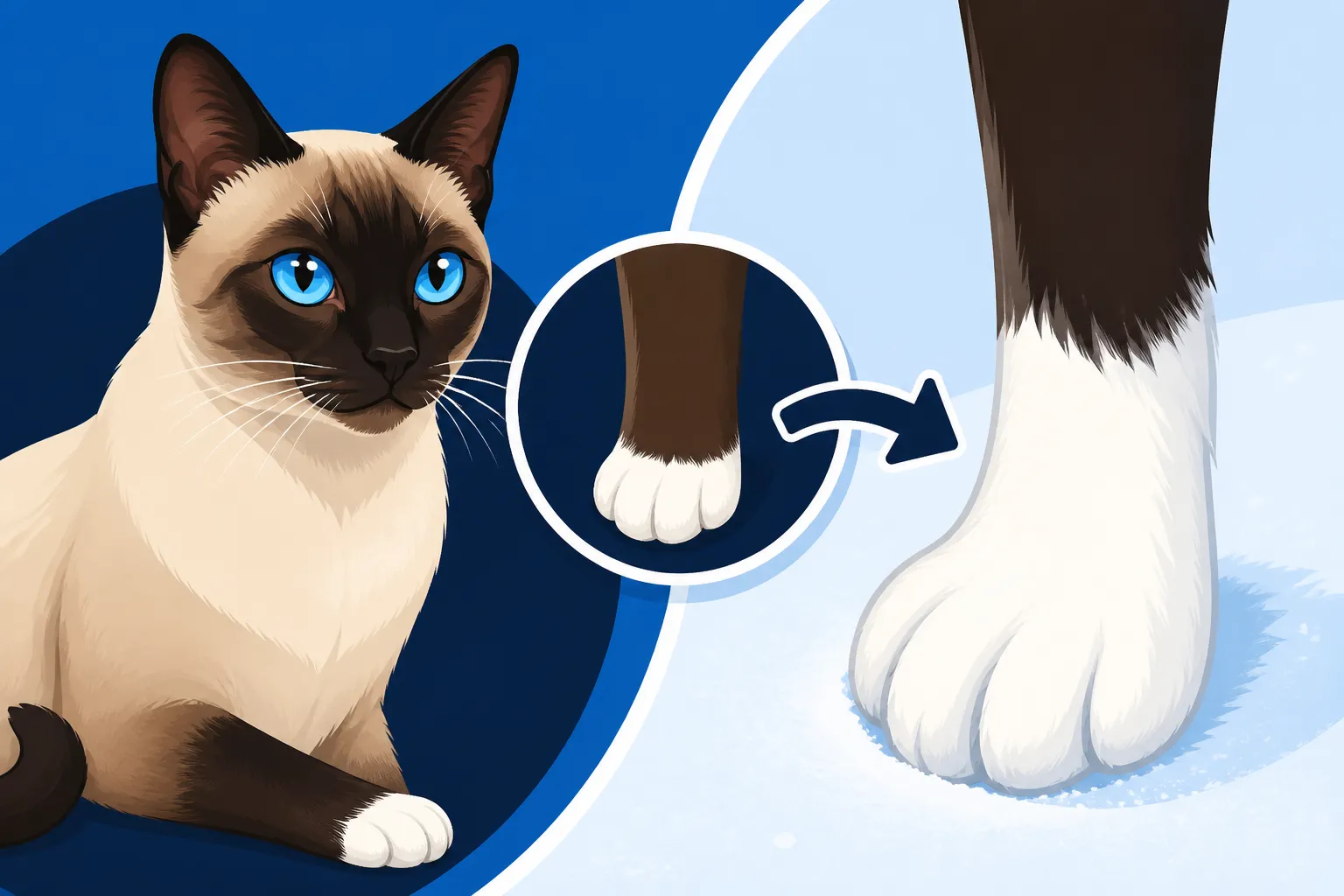
The Snowshoe’s modern development is generally traced to the United States in the 1960s. Breeder Dorothy Hinds-Daugherty noticed Siamese kittens in a litter with white feet, an unexpected contrast to the breed’s familiar dark points and pale body. Rather than treating the markings as a one-off curiosity, she began working to establish a cat with that look.
The cats she bred were not simply ordinary Siamese with their paws painted white. The Snowshoe’s appearance combines the Siamese pointed pattern with white spotting, a separate feature that changes where white fur appears. Breeders used cats from outside the Siamese breed, including American Shorthairs, to help develop the type and markings they were seeking.
That mix is central to the Snowshoe’s origin. The Siamese contributed the pointed coloring and helped shape the breed’s appearance, but the Snowshoe developed through deliberate crossbreeding and selection. It is one example of the breeds that came from the Siamese’s influence; The Breeds a Siamese Cat Founded explores that wider family tree.
Why the breed is not just a Siamese with white paws
A pointed coat and blue eyes can make a Snowshoe look unmistakably Siamese at first glance. Yet the Snowshoe’s white areas are an important part of its identity. The familiar pattern may include white feet and legs, a pale underside, and a white marking on the face. The exact arrangement and amount of white can vary from cat to cat.
The pointed coloring itself is associated with temperature-sensitive pigment production. Cooler body areas tend to develop darker fur, which is why a pointed cat’s ears, face, paws, and tail are usually darker than its torso. White spotting, by contrast, creates areas where pigment is absent or reduced. These features work together to produce the Snowshoe’s distinctive look, but they are not the same genetic trait.
It also helps to separate breed identity from appearance. A cat with blue eyes, dark points, and white paws may resemble a Snowshoe without having a documented Snowshoe pedigree. Depending on the cat’s ancestry and the registry involved, it might instead be a mixed-breed cat or belong to a related colorpoint category. What a Colorpoint Shorthair Is Next to a Siamese Cat explains why similar-looking cats can fall into different breed descriptions.
How breeders shaped the Snowshoe
Selective breeding turned unusual markings into a breed type
The first white-footed kittens gave breeders a starting point, not an instant, reliably repeatable breed. Establishing a consistent look takes generations of choosing which cats to mate, observing the kittens they produce, and deciding which traits to preserve. In the Snowshoe’s case, breeders worked toward a balanced combination of pointed color, white markings, blue eyes, and a body type that was neither extremely slender nor heavy.
That work can be complicated by how markings appear. White spotting does not always produce an identical arrangement from one kitten to the next, even when the parents have white markings themselves. A litter may include kittens whose white areas are more extensive, less extensive, or distributed differently than a breeder hoped. As a result, breeders have had to balance appearance with sound health, temperament, and the overall structure of the cat.
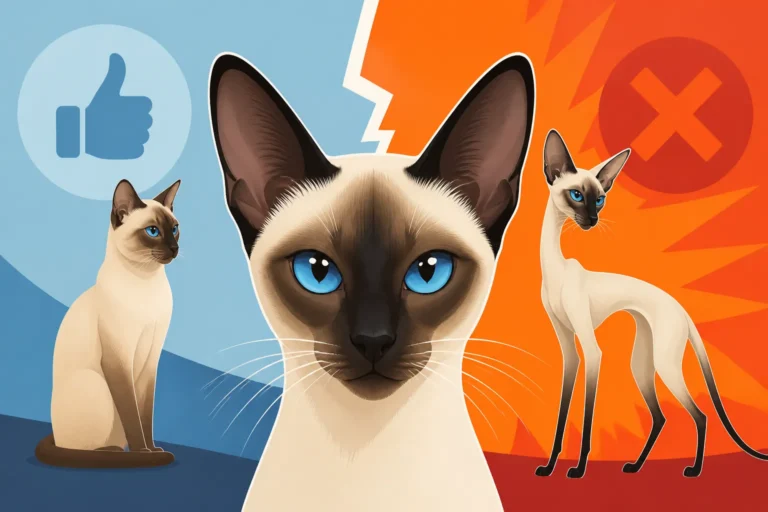
The Siamese breed itself has changed in appearance across different breeding traditions. Modern show Siamese are often more slender and fine-boned than some older examples, while other Siamese lines retain a more moderate look. Those shifts help explain why a Snowshoe’s body may not match every person’s mental picture of a Siamese. How the Siamese Cat's Head Changed Shape in Fifty Years gives more context on how selective breeding can alter a breed’s appearance over time.
The Snowshoe’s look is not a simple recipe
It is tempting to imagine the Snowshoe as the result of one fixed formula: cross a Siamese with an American Shorthair, and the kittens will all have white feet. In practice, breed development is less predictable. The history involves selection across generations, and breeders may use different lines and breeding choices to maintain or improve particular traits.
The goal is not merely to produce white markings. Breeders also look for the desired pointed pattern, blue eyes, appropriate build, and a recognizable overall appearance. A cat can have white socks without matching a Snowshoe standard, just as a pointed cat can look Siamese without being a Siamese. The full combination matters.
This distinction is useful for prospective owners. If you are looking for a Snowshoe, ask how the breeder identifies the cats and what documentation is available rather than relying on a photo or a color description. Breed history can explain where a look came from, but it cannot confirm an individual cat’s ancestry. For a broader look at the Siamese’s development and relatives, How the Balinese Came From the Siamese Cat and How the Tonkinese Came From the Siamese Cat show how different breeding goals produced distinct cats with Siamese connections.
What Snowshoe and Siamese cats share
Pointed coloring is a visible link
The most noticeable link is the pointed coat. In both breeds, the body is typically lighter than the cooler extremities, though the shade and contrast vary with genetics, age, and environment. Kittens of pointed cats are often born very pale because the warmer conditions before birth limit pigment development; their points become more visible as they grow.
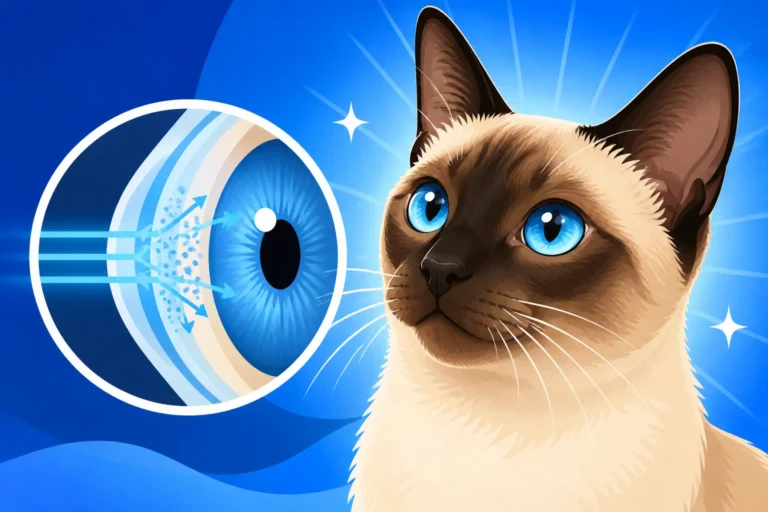
Blue eyes are another familiar feature associated with pointed cats. The same striking eye color can make a Snowshoe seem especially close to a Siamese, even though the two breeds have different histories and standards. People sometimes assume that a Snowshoe must have the same body shape or personality as a Siamese because of this resemblance. That is not a safe assumption: individuals vary, and appearance alone does not determine temperament.
Both breeds also have links to a wider story of cats shaped by human preferences. Breeders have selected for coat patterns and body types, while registries have defined which traits count for recognition. The relationship between modern and older Siamese types is one part of that story; How the Thai Split From the Siamese Cat explains how breed definitions and standards can influence the way related cats are classified.
A shared ancestry does not guarantee a shared personality
Siamese cats are often described as social, alert, and vocal, but those are broad tendencies, not a promise about every cat. The Snowshoe is also commonly portrayed as people-oriented and interactive, yet an individual’s behavior is shaped by more than breed labels. Early handling, home environment, health, age, and personality all matter.
For a family choosing a cat, it is more useful to meet the individual animal and ask about its habits than to rely on a breed stereotype. Does the cat seek attention or prefer to watch from a safe perch? Is it comfortable with visitors? How does it react to ordinary household noises? These everyday observations offer more practical guidance than assuming a Snowshoe will behave like a Siamese because it shares some ancestry.
If you are preparing for a Snowshoe kitten, plan for the same basic needs you would meet for any cat: a safe resting place, scratching options, play, food and water, and a clean litter setup. Chewy is one retailer where owners may browse everyday cat supplies, but the important part is choosing products that suit the individual cat and fit safely into your home. A shy kitten, for example, may need a quiet retreat more urgently than a large collection of toys.
How to recognize the Snowshoe story in a cat
Look at the whole pattern, not one feature
A white paw by itself does not make a cat a Snowshoe. A more complete visual picture includes pointed coloring, blue eyes, and white markings arranged in a characteristic pattern. Even then, appearance is only one clue. Similar combinations can occur in cats with different ancestry, and markings may vary considerably.
| Feature | What it can suggest | What it cannot confirm |
|---|---|---|
| Dark points on a pale body | A pointed coat pattern | That the cat is a Siamese or Snowshoe |
| Blue eyes | A trait often seen with pointed coloring | Breed identity or pedigree |
| White feet or facial markings | White spotting | That the cat belongs to the Snowshoe breed |
| A combination of points and white markings | A Snowshoe-like appearance | The cat’s documented ancestry |
| Pedigree and breeder records | Evidence of recorded lineage | A guarantee of personality or future health |
A photo can be a useful starting point, but coat appearance can be misleading when viewed without background. If a rescue describes a cat as “Snowshoe type,” that often communicates resemblance rather than a verified pedigree. That does not make the cat less lovable or less deserving of care; it simply distinguishes a visual description from a documented breed history.
For anyone comparing breed claims, ask what the wording means. Is the cat registered as a Snowshoe, or does it have a Snowshoe-like pattern? Are the parents known? Is there a pedigree or other record? Clear answers can prevent disappointment, especially if you are choosing a cat because you expect a particular appearance or temperament.
Focus on practical care rather than the label
A Snowshoe’s Siamese heritage does not create a special care routine by itself. Most day-to-day decisions should be based on the cat’s age, health, appetite, activity, and comfort. Keep fresh water available, offer food appropriate to the cat’s life stage, and arrange regular veterinary care. If the cat’s coat is short and close-lying, routine brushing may be enough for many individuals, though each cat’s grooming needs differ.
A new cat may also need time to settle in. Give it a quiet space, keep essential resources easy to find, and introduce other pets gradually. Watch how it responds rather than expecting it to act according to a breed description. Chewy and other pet retailers can be convenient places to look for basics such as food dishes, litter, or scratching supplies, but check product dimensions, materials, and suitability before buying.
As you gather supplies, avoid buying every item at once based on a checklist for a breed. A cat may ignore a particular bed but love a cardboard box; another may prefer a tall scratching post to a flat pad. Chewy can be one option for comparing everyday products, while a local pet shop or veterinary team may help you choose items for a specific need. The Snowshoe’s history makes it an interesting Siamese relative, but the individual cat in your home is the best guide to what it actually needs.
Disclaimer
This article is for general informational purposes only and does not constitute professional advice. Laws, prices and regulations vary by location and change over time. Consult a qualified professional for guidance on your specific situation.