The Age Amyloidosis Appears in a Siamese Cat
It's absolutely heartbreaking for any Siamese cat owner to learn about amyloidosis, a silent threat that can strike these wonderful companions far too early in their lives. The worry about when, or if, this genetic disease might manifest is a heavy burden, and figuring out the typical age of onset can feel like searching for a needle in a haystack of conflicting information. This guide aims to shed light on precisely when amyloidosis typically appears in Siamese cats, detailing the common age ranges, the organs it affects, and what you can realistically expect.
Understanding Amyloidosis in Siamese Cats
Before we dive into the timing, let's truly grasp what we're up against. Amyloidosis isn't just a scary word; it's a devastating condition that specifically targets our beloved Siamese cats, often leaving us feeling powerless and confused.
What is Amyloidosis?
At its core, amyloidosis is a disease characterized by the buildup of an abnormal protein called amyloid in various organs and tissues. Think of amyloid as a sticky, insoluble substance that, once deposited, starts to interfere with the normal function of those organs, slowly shutting them down. For Siamese cats, we're primarily talking about a specific form known as reactive amyloidosis, or AA amyloidosis. This type of amyloid is derived from a protein called Serum Amyloid A (SAA), which is an acute phase protein produced during inflammation. Normally, SAA helps the body respond to inflammation, but in affected Siamese cats, it doesn't clear properly and forms these damaging amyloid deposits.
The insidious nature of this disease is that it doesn't just pick one spot; it's a systemic problem, meaning it can affect multiple organs throughout the body. However, in Siamese cats, it shows a strong, often tragic, preference. While it's systemic, the primary organs that bear the brunt of this accumulation are typically the liver and, to a lesser but still significant extent, the kidneys. It's this targeted organ damage that ultimately leads to the severe symptoms and life-threatening complications we associate with the condition. If you want a deeper understanding of What Amyloidosis Does to a Siamese Cat, it's important to recognize that this protein accumulation is a gradual process, but its effects can be sudden and catastrophic.
Why Siamese Cats are Prone to It
The reason our sleek, vocal companions are so uniquely susceptible to amyloidosis is deeply rooted in their genetics. It’s not simply bad luck; it’s an inherited predisposition, passed down through generations. This genetic link is what makes the disease so profoundly heartbreaking for breeders and owners alike. We know that it's suspected to follow an autosomal recessive inheritance pattern, which means a cat needs to inherit two copies of the faulty gene (one from each parent) to develop the disease. Carriers, who only have one copy, don't show symptoms but can pass the gene to their offspring.
This genetic vulnerability means that despite our best efforts, Siamese cats, along with some of their close relatives like Oriental Shorthairs and Abyssinians, are simply wired differently when it comes to processing SAA proteins. Their bodies are less efficient at breaking down and clearing SAA, leading to its accumulation as amyloid fibrils. This is why responsible breeding practices are so crucial, though it's incredibly challenging to screen for a disease with no direct DNA test currently available for Siamese amyloidosis. The understanding of Why Siamese Cat Amyloidosis Is Inherited underscores the need for careful lineage tracking and a deep commitment from breeders to try and mitigate this risk, even when the tools are limited.
The Typical Onset Age of Amyloidosis
One of the most distressing aspects of amyloidosis in Siamese cats is that it doesn't typically wait for old age. Unlike many chronic diseases that often affect senior pets, amyloidosis can cut a cat's life short in what should be their prime.
The Frustrating Reality of Early to Middle Age Onset
The harsh truth about amyloidosis in Siamese cats is that it frequently manifests in young adults or middle-aged cats, which makes it particularly cruel. We're not usually talking about a disease that appears when your beloved feline is 15 years old and nearing the end of their natural life; instead, it often strikes when they are just beginning to enjoy their full maturity. The typical age range for the onset of clinical signs can be frustratingly wide, often falling anywhere from 1 to 7 years old, though cases outside this range are certainly not unheard of. Some cats might show signs as early as a year or two, while others might not develop noticeable issues until they are approaching seven or eight.
This early to middle-age onset is especially devastating for owners who expect their Siamese to live for The Fifteen to Twenty Years a Siamese Cat Gets. To have a cat suddenly fall ill and succumb to a fatal condition during what should be their healthiest, most playful years is truly tragic. It means that owners need to be vigilant from a relatively young age, not just when their cat starts to slow down with seniority. This period, when many cats are at their most active and integrated into family life, makes the diagnosis even more impactful.
Variations in Onset and Progression
It's crucial to understand that while there's a typical age range, amyloidosis isn't a strict, predictable timeline. Just as no two cats are exactly alike, the disease's onset and progression can vary significantly. You might have a cat who shows subtle, vague symptoms for months, leading to a slow decline, while another might experience a sudden, acute crisis with no prior warning. This variability is part of what makes the disease so challenging to manage and so emotionally draining for pet parents.
The rate at which amyloid accumulates and begins to impair organ function differs from cat to cat. Factors that influence this might include the specific genetic variant inherited, the overall health and immune response of the individual cat, and potentially, though less understood, certain environmental stressors or inflammatory conditions. While genetics are undoubtedly the primary driver, it's not always a clear-cut "on-off" switch. Some cats may have amyloid deposits building up silently for years before a critical threshold is reached, triggering visible signs. This means a cat might be carrying the disease long before any outward indication. For this reason, even cats within the typical age range can have dramatically different experiences with the disease, from subtle weight loss to a sudden medical emergency.
Common Organs Affected and Their Impact on Symptoms
While amyloidosis is a systemic disease, meaning amyloid can deposit anywhere, it has a distinct preference in Siamese cats. Understanding which organs are most commonly affected can help you recognize potential warning signs, even if they are tragically subtle.
The Liver: A Critical Target Organ
Without a doubt, the liver is the most common and often the most tragically affected organ in Siamese cats suffering from amyloidosis. The amyloid protein infiltrates the liver tissue, gradually replacing healthy cells and impairing its essential functions. The liver is a powerhouse, responsible for everything from detoxification and nutrient metabolism to producing clotting factors. When it's compromised by amyloid, the consequences can be severe and life-threatening.
As amyloid builds up, it makes the liver brittle and prone to injury. One of the most devastating outcomes is spontaneous liver rupture, which leads to internal bleeding. This is a medical emergency that often strikes without much warning, turning a seemingly healthy cat into a critical patient in a matter of hours. The internal hemorrhage can cause rapid shock and death if not addressed immediately, which is why Why a Siamese Cat's Liver Can Rupture Without Warning is such a dire concern for owners. Beyond rupture, a failing liver will exhibit various signs, including lethargy, loss of appetite, vomiting, jaundice (yellowing of the skin, eyes, or gums), and increased thirst. If you notice any of these, especially in a young to middle-aged Siamese, it's crucial to seek veterinary attention right away, as these could be Signs a Siamese Cat Has Liver Amyloidosis. Early recognition, even if amyloidosis itself isn't directly treatable, can sometimes buy precious time through supportive care.
Kidney Involvement and Systemic Amyloidosis
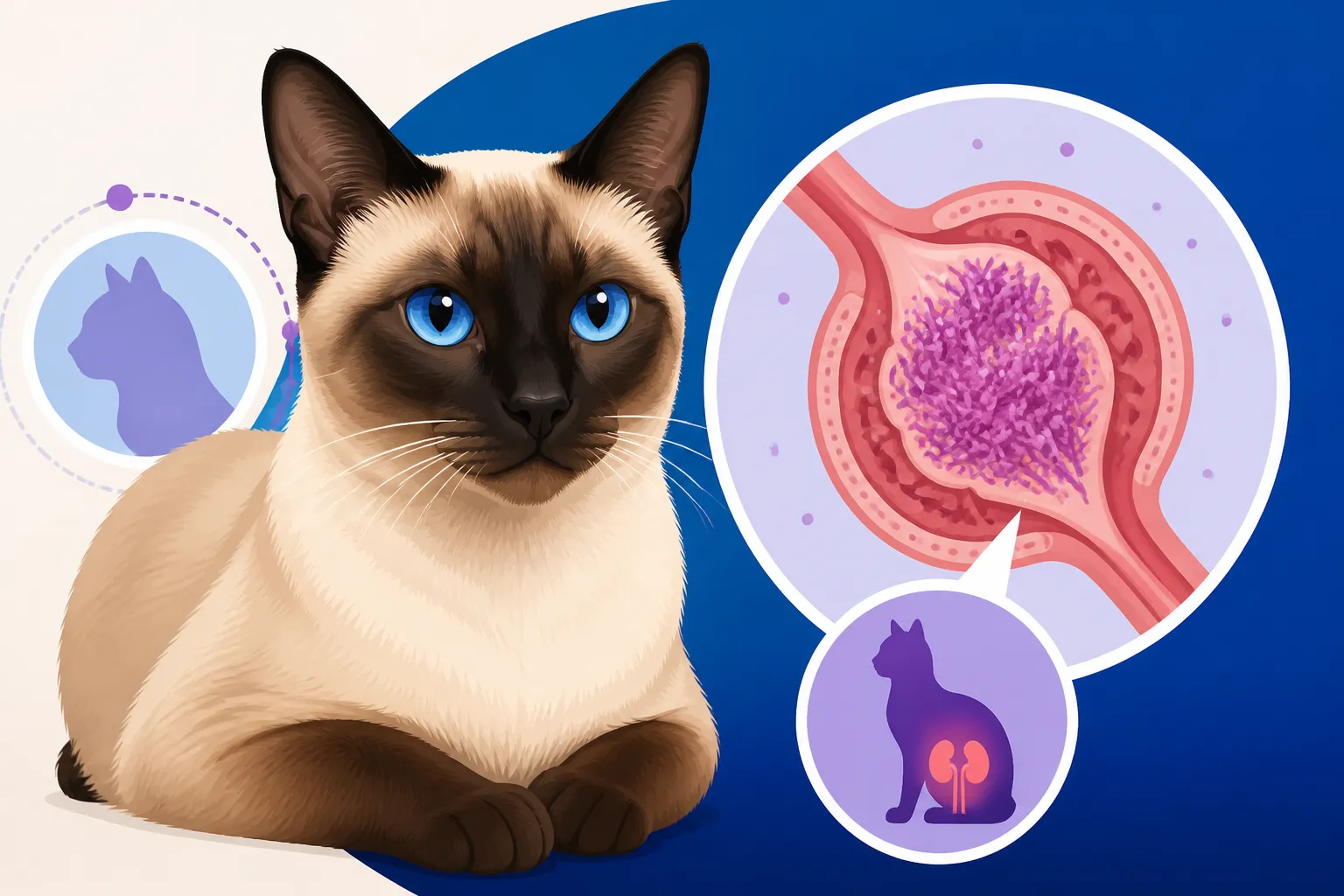
While the liver is often the primary focus, the kidneys are another critical organ frequently targeted by amyloid deposits in Siamese cats. When amyloid builds up in the kidneys, it impairs their ability to filter waste products from the blood and regulate fluid balance, eventually leading to chronic kidney disease and kidney failure. This is another devastating pathway for the disease, and it can occur concurrently with liver involvement or as the primary site of amyloid accumulation.
The insidious nature of kidney disease means that symptoms often don't become apparent until a significant portion of kidney function has already been lost. Cats are masters at hiding illness, and by the time you notice things like increased thirst and urination, weight loss, poor coat quality, or lethargy, the disease may be quite advanced. Understanding What Systemic Amyloidosis Does to a Siamese Cat's Kidneys highlights that while kidney failure might not lead to the sudden, acute crisis of a ruptured liver, it's a progressive and ultimately fatal condition that significantly impacts a cat's quality of life. In some cases, other organs, such as the spleen, gastrointestinal tract, or even the heart, can also develop amyloid deposits, leading to a complex array of symptoms depending on which systems are affected. However, liver and kidney involvement remain the most common and clinically significant manifestations of this terrible disease in our Siamese friends.
Early Detection and Diagnostic Challenges
The thought of catching amyloidosis early is something every Siamese cat owner dreams of, but the reality is often far more complicated and heartbreaking. The disease's nature makes early diagnosis incredibly challenging, often leading to it being discovered at advanced stages or even posthumously.
The Elusive Nature of Early Symptoms
One of the most frustrating aspects of amyloidosis is just how elusive its early symptoms truly are. As mentioned, Siamese cats are exceptionally stoic, often masking discomfort until a disease has progressed significantly. In the initial stages, any signs you might notice are vague and non-specific – things like a subtle decrease in appetite, a slight loss of energy, or perhaps a gradual, unexplained weight loss. These symptoms could point to a myriad of less serious conditions, or they could be so mild that they're easily overlooked by even the most attentive owner. You might just think your cat is having an "off day."
This lack of definitive, early warning signs means that by the time more obvious symptoms appear, such as vomiting, diarrhea, jaundice (yellowing of the skin or eyes), or abdominal distension, the disease has often reached a critical stage. It's truly heartbreaking because as owners, we desperately want to do everything we can, but the disease often works in the shadows. This is why Why Siamese Cat Amyloidosis Is Usually Found After Death is a tragic but common reality; the disease often progresses silently until an acute event, like a ruptured liver, brings it to light, sometimes too late for intervention. The frustration is immense, knowing that we could have had more time or offered more comfort if only we'd known sooner.
Diagnostic Tools and Their Limitations
Given the elusive nature of early symptoms, what diagnostic tools do veterinarians have at their disposal? Routine blood tests and urinalysis can provide clues, such as elevated liver enzymes or kidney values, or protein in the urine, indicating organ dysfunction. However, these are indicators of damage, not definitive diagnoses of amyloidosis itself. An ultrasound can visualize changes in organ size, texture, and look for fluid accumulation, which might suggest amyloid deposits or a ruptured liver. But again, Whether an Ultrasound Finds Siamese Cat Amyloidosis with certainty is tricky; it can suggest the presence of a problem but cannot definitively identify amyloid.
The gold standard for diagnosing amyloidosis is a tissue biopsy, where a small sample of the affected organ (usually the liver or kidney) is taken and examined under a microscope after being stained with Congo red, which highlights amyloid deposits. However, even a biopsy comes with significant limitations and risks. For a cat with amyloidosis, especially affecting the liver, the organ can be very fragile and prone to bleeding. This makes a liver biopsy a risky procedure that many vets are hesitant to perform on a potentially compromised patient. The question of Whether a Liver Biopsy Is Safe in a Siamese Cat often weighs heavily on owners and vets alike, as the risks of internal bleeding can outweigh the benefits of a definitive diagnosis, particularly if the cat is already showing severe symptoms. This creates a difficult situation where conclusive diagnosis is often delayed or considered too dangerous until it’s too late, further emphasizing the challenge of Whether Siamese Cat Amyloidosis Can Be Caught Early.
Managing the Disease and Supporting Your Siamese
Coming to terms with an amyloidosis diagnosis in your Siamese cat is incredibly difficult, made even more so by the lack of a definitive cure. However, focusing on management and supportive care can significantly improve your cat's quality of life for as long as possible.
Treatment Options and Supportive Care
Let's be upfront: there is currently no cure for amyloidosis in Siamese cats. This is a tough pill to swallow, but it’s the reality we face. Our efforts must therefore concentrate on managing the symptoms, slowing the progression of the disease where possible, and maintaining the best quality of life for our beloved felines. One medication that sometimes comes up in discussions is colchicine. This drug is thought by some to interfere with amyloid formation or deposition, and it's used in some human forms of amyloidosis. However, its efficacy specifically for feline amyloidosis, especially the type seen in Siamese cats, is debated within the veterinary community, and it's not a universally accepted or proven treatment to halt the disease. If you’re considering it, discuss Which Drugs Slow Amyloid in a Siamese Cat thoroughly with your veterinarian, understanding that it's often more about potential management than a cure.
Beyond specific drugs, supportive care is paramount. This can involve a multi-faceted approach depending on which organs are most affected. If kidney function is compromised, fluid therapy (subcutaneous fluids administered at home) can help flush toxins and maintain hydration. A therapeutic kidney diet, carefully selected with your vet, can reduce the workload on the kidneys. For liver involvement, diet changes may also be recommended, focusing on easily digestible proteins and supplementing with liver-supportive nutrients. Pain management is crucial if your cat is uncomfortable, and anti-nausea medications can help improve appetite and prevent further dehydration. Regular veterinary check-ups are non-negotiable, often including bloodwork and urinalysis every few months, to monitor organ function and adjust supportive therapies as needed. This ongoing care can be financially demanding, and having pet insurance like Healthy Paws can be a tremendous help in covering the costs of diagnostics, medications, and routine monitoring, allowing you to focus on your cat's comfort without added financial stress.
Living with a Diagnosis and Future Considerations
A diagnosis of amyloidosis brings immense emotional toll on owners. It's a journey filled with uncertainty, vigilance, and often, profound grief. Living with this diagnosis means becoming acutely attuned to your cat’s habits and health, watching for any subtle changes that might indicate progression or a crisis. Keeping a detailed log of their appetite, water intake, litter box habits, and energy levels can be incredibly helpful for your vet to track their condition.
Quality of life discussions become central as the disease progresses. When to say goodbye is one of the hardest decisions any pet parent faces, and it’s important to have honest conversations with your veterinarian about your cat’s comfort, pain, and overall well-being. From a broader perspective, the genetic nature of amyloidosis in Siamese cats also carries significant implications for breeders. It highlights the critical need for careful pedigree research and responsible breeding practices. While there isn't a direct genetic test for the disease, breeders should be tracking family histories and avoiding breeding lines where amyloidosis has been prevalent. This ethical consideration for Whether an Affected Siamese Cat's Relatives Should Be Bred is a challenging but necessary part of trying to reduce the incidence of this devastating condition in future generations of Siamese cats. It's a collective responsibility to protect this magnificent breed from such a cruel fate.
Here's a quick reference table to summarize the key points regarding amyloidosis onset and affected organs:
| Aspect | Liver Amyloidosis | Kidney Amyloidosis |
|---|---|---|
| Typical Onset Age | Young adult to middle-aged (1-7 years) | Young adult to middle-aged (1-7 years) |
| Key Early Signs | Often vague: lethargy, reduced appetite, weight loss | Often vague: increased thirst, increased urination, weight loss |
| Advanced Symptoms | Jaundice, vomiting, severe lethargy, abdominal pain, sudden internal bleeding/rupture | Severe lethargy, vomiting, poor coat, bad breath, muscle wasting |
| Progression | Can be slow or acute (e.g., sudden rupture) | Generally chronic, progressive kidney failure |
| Diagnostic Method | Biopsy (risky), ultrasound (suggestive), bloodwork (indicative of damage) | Biopsy (risky), urinalysis (proteinuria), bloodwork (elevated kidney values) |
| Prognosis | Poor, especially with rupture | Guarded to poor, progressive decline |
Disclaimer
This article is intended for informational purposes only and does not constitute veterinary advice. Always consult with a qualified veterinarian for any health concerns or before making any decisions about your pet's care.