Whether a Siamese Cat Appears in Thai Art
A Siamese-looking cat does appear in Thai visual culture, especially in illustrated cat manuscripts, but identifying it requires care. Historical Thai images do not always depict a modern, registered Siamese breed, and a pointed coat alone is not enough to prove a cat’s identity. This guide explains what the art shows, which sources matter, and where interpretation can go too far.
What Thai art can tell us about Siamese cats
The Wichianmat in Thai cat manuscripts
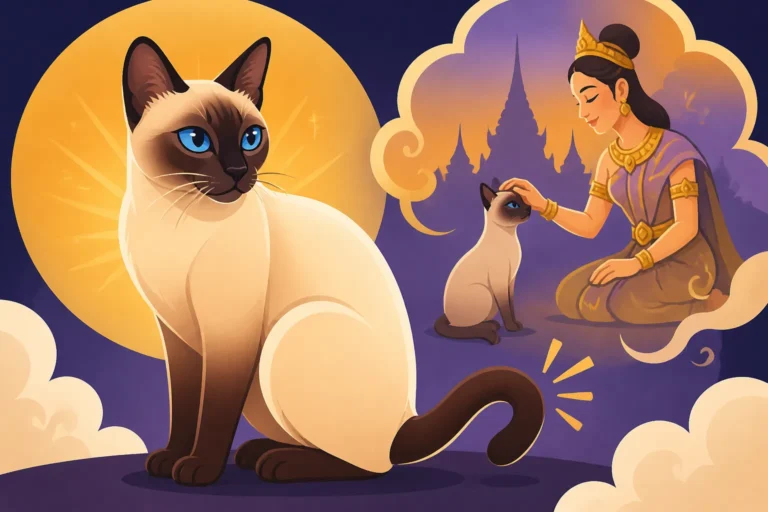
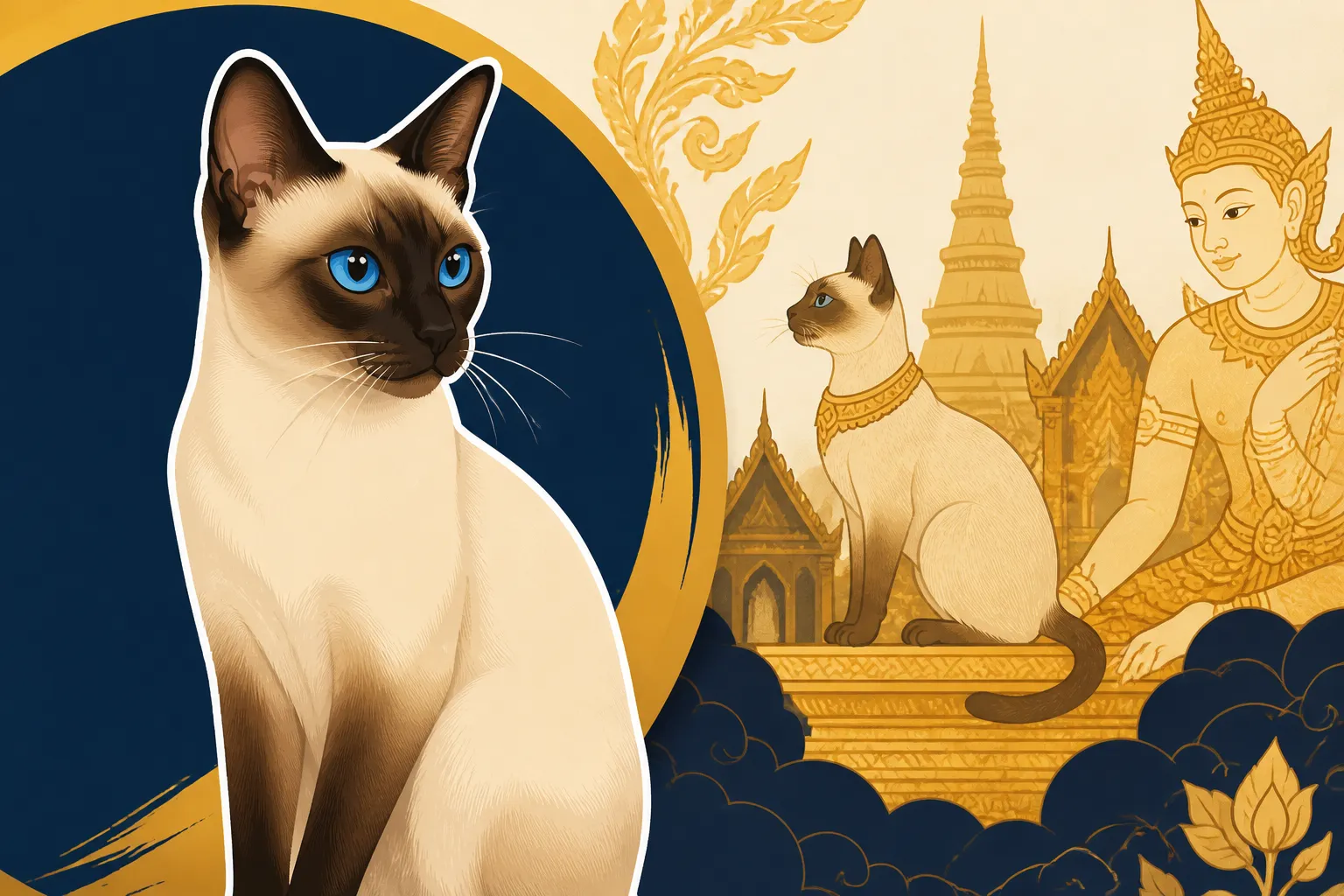
The clearest place to look for an early Thai cat resembling the Siamese is the illustrated manuscript tradition commonly known as the Tamra Maew, or “Treatise on Cats.” These manuscripts pair verses describing cats with drawings of animals regarded as auspicious or notable. One cat type is known as the Wichianmat, a name closely associated with the pointed cat that later became known internationally as the Siamese.
That connection is meaningful, but it needs a little context. A Wichianmat in a manuscript is not automatically a Siamese cat in the modern breed-registry sense. The drawings were made in different periods and may be copies of earlier material. Their purpose was not to create a precise veterinary or breeding record. They show a culturally recognized kind of cat, rendered according to the conventions of the artist and manuscript.
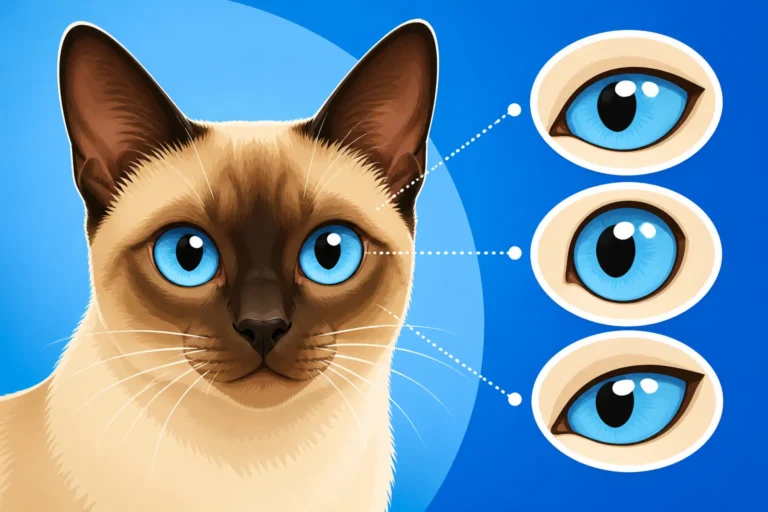
In descriptions of the Wichianmat, readers often notice features that sound familiar: a pale body, darker coloring at the extremities, and blue eyes. Those traits make the historical cat recognizable to many present-day Siamese owners. For a closer look at the name and its meaning, see What Wichianmat Behind the Siamese Cat Is.
Why manuscript illustrations are especially valuable
Thai manuscripts offer a different kind of evidence from a modern photograph. They reveal that people in Siam had a visual and literary category for a distinctive pointed cat, and that the cat was important enough to be described and illustrated. The verses can tell us what qualities mattered to the writers, while the image gives us a sense of how an artist represented those qualities.
Still, illustrations are not photographs. Artists may have worked from memory, copied a previous drawing, or followed a familiar visual formula. A cat’s proportions, facial shape, and markings might be simplified or stylized. That makes it unwise to compare a manuscript cat feature by feature with today’s show standards and conclude that the two are identical.
It is more accurate to say that Thai cat manuscripts preserve a historical image and description of a pointed cat associated with Siam. They are part of the cultural background of the modern Siamese cat, rather than a full genetic or breeding history. The manuscript tradition is explored further in What the Tamra Maew Manuscripts Show About the Siamese Cat and Whether the Tamra Maew Pictures a Modern Siamese Cat.
How to recognize a Siamese-like cat in Thai art
Coat pattern is a clue, not conclusive proof
The color pattern is usually the most noticeable clue. A pointed cat has a lighter torso and darker coloring on areas such as the face, ears, legs, and tail. This pattern can look very much like the seal-point or other point colors familiar to Siamese owners. If an image includes blue eyes as well, the resemblance becomes stronger.
But a single visual trait cannot settle the identification. Art may use dark markings to create contrast or indicate a particular kind of animal without aiming for anatomical precision. A faded or damaged manuscript can also make colors hard to interpret. Even when an image clearly shows a pointed cat, it does not tell us whether that individual animal belonged to a continuous, closed breed population as modern breed definitions would require.
A useful way to read the image is to separate three questions: Does the cat look pointed? Does the text describe a cat type with traits associated with the Siamese? And does the source identify that type by a historical Thai name? When all three align, the identification is more convincing than when a modern viewer simply recognizes a familiar face.
The modern Siamese is not a one-to-one match
The appearance of Siamese cats has changed through selective breeding. Some modern Siamese have long, fine bodies, large ears, and a narrow, wedge-shaped head. Other cats that people casually call “traditional” or “applehead” Siamese have a rounder face and sturdier build. Historical paintings and manuscript drawings do not necessarily match either type exactly.
That difference does not make the historical association false. It means that breed appearance is not frozen across centuries. A manuscript artist was recording a cat understood in that time and place, not drawing a specimen to satisfy a present-day standard. The history of shifting head shape is covered in How the Siamese Cat's Head Changed Shape in Fifty Years, while What a Siamese Cat Looks Like by the Standard explains the modern visual criteria.
| Evidence in a Thai image | What it can suggest | What it cannot prove by itself |
|---|---|---|
| Pale body with darker extremities | A pointed coat pattern associated with the Wichianmat and Siamese cats | That the cat is a modern registered Siamese |
| Blue eyes | A feature commonly linked with pointed cats | The animal’s exact ancestry or breed status |
| A caption or verse naming Wichianmat | A stronger historical connection to the Thai pointed-cat tradition | That every later Siamese breed feature was already present |
| A drawing in a cat manuscript | That the cat type had cultural and literary significance | That the image is a naturalistic portrait |
| A cat in a temple mural | That cats appeared in a religious or everyday visual setting | That it is specifically a Siamese cat without supporting details |
Cats in Thai murals and sacred spaces
A cat in a mural is not automatically a Siamese
Visitors sometimes hear that Siamese cats appear in Thai temple art and assume that every cat painted on a temple wall must be one. That claim is harder to establish than it sounds. Murals may include cats as part of a larger scene, but the animal could be a domestic cat with no breed-specific identity, a stylized figure, or a symbolic detail. Without a clear pointed pattern, accompanying text, or other context, calling it Siamese may go beyond what the image supports.
The same caution applies to stories about cats serving as temple guardians. Siamese cats have inspired legends and associations with royal or sacred settings, but a familiar story is not the same thing as documented evidence in a particular painting. To make a reliable claim about a mural, one needs to know where it is, what period it comes from, what else appears in the scene, and whether any inscription or historical description helps identify the cat.
This distinction does not diminish the importance of cats in Thai art. It simply avoids turning a broad cultural presence into a confident breed label. For more on the difference between a temple-cat story and evidence, read Whether the Siamese Cat Was a Temple Cat and Whether Siamese Cats Really Guarded Temple Vases.
Religious stories and historical evidence are different things
A Siamese cat’s association with royalty, temples, or sacred duties is part of the breed’s popular history. Such stories can be compelling, especially when they describe cats guarding objects or living in protected spaces. However, a tale repeated in later accounts may not be traceable to a contemporary Thai source, and an image of a cat in a religious setting does not necessarily validate every version of the story.
When assessing a specific artwork, ask what the image itself supports. Is the cat clearly identifiable by coat pattern? Is there a label or verse? Is the cat central to the scene, or just one detail among people, animals, and decorative motifs? Has the painting been dated and interpreted by people familiar with its setting? These questions help separate the evidence from an appealing but unsupported explanation.
The broader question of whether Siamese cats were treated as sacred animals is also more complicated than a simple yes or no. Some cats may have been valued, admired, or associated with status, but that does not mean every Siamese cat held a formal religious role. Whether Siamese Cats Were Once Sacred explores that distinction in more detail.
How to interpret the art without overclaiming
Use the source’s own vocabulary first
When reading historical material, begin with the name used in the source rather than immediately substituting a modern breed label. If a manuscript calls a cat Wichianmat, preserve that term and explain its association with the Siamese. This respects the historical language and avoids implying that modern breed categories existed in exactly the same form centuries ago.
Then consider the visual evidence. A pointed coat and blue eyes may make the connection persuasive, but the source’s text and historical setting matter too. If the image is damaged, ambiguous, or separated from its original caption, describe the uncertainty plainly. “A pointed cat resembling the Wichianmat” is more responsible than “a Siamese cat” when the evidence is incomplete.
It is also useful to keep the distinction between cultural continuity and biological continuity in view. The manuscripts show that a recognizable pointed-cat type was known in Siam. They do not, on their own, document the ancestry of any particular modern cat or prove an unbroken breeding line. The historical naming tradition and modern breed development are related, but they are not interchangeable.
Follow the cat’s changing name and identity
The word “Siamese” became familiar outside Thailand as cats from the region were introduced to Europe and North America. In Thailand, the historical name Wichianmat remains important when discussing the cat described in traditional sources. A modern Siamese breed and a Thai cat type may share a historical relationship, while differing in how they are defined and recognized today.
That is why one artwork can be described in several careful ways: a pointed cat in Thai art, a cat identified as Wichianmat in a manuscript, or a historical image associated with the ancestry of the Siamese. Which description is best depends on what the source actually says and shows. For a related overview of names and relationships, see What Thai People Call the Siamese Cat Today and Which Thai Cats Are Related to the Siamese Cat.
If you are looking at a reproduction, museum label, or online image, check whether the caption identifies the manuscript, location, or date. A caption that simply says “ancient Siamese cat” may be using a broad modern shorthand. A more informative label will identify the source and explain why the cat is understood as Wichianmat or as a pointed cat. That small bit of provenance often makes the difference between an evocative image and a well-supported historical claim.
Disclaimer
This article is for general informational purposes only and does not constitute professional advice. Laws, prices and regulations vary by location and change over time. Consult a qualified professional for guidance on your specific situation.